Compare
Ice vs Heat for Sore Muscles
The rule that actually holds up is simpler than the arguments about it: cold suits fresh, inflamed, swollen tissue, and heat suits stiff, chronic ache. For ordinary next-day soreness, the honest answer is that either is fine for comfort and neither does much for recovery.
By Stephen V.Published
Disclosure:Grip & Gait earns a commission when you buy through links on this page, at no extra cost to you. It never changes what we recommend or the order we rank things in — here is exactly how we’re funded.
Quick picks
Ranked on published manufacturer specs and what they mean for the job, not on testing we have not done. Tap a row for the full reasoning. How we score.
| # | Product | Best for | Score | Price |
|---|---|---|---|---|
| 1 |  GeToo Cryosphere Cold Massage Roller Ball Cold plus pressure in one pass, holding temperature long enough to finish a session. | Acute, inflamed, fresh injury | 7.9 | $39.99 · View on Amazon Price as of October 21, 2026. #ad How we’re funded |
| 2 |  GENIANI Electric Heating Pad Heat for a stiff, guarding muscle. Moist-heat option and auto-shutoff. | Stiffness and chronic ache | 8.0 | |
| ✕ |  Boileau XXXL Electric Heating Pad (17 × 33 in) Large enough to cover a full lower back. Skip it if you only need a small spot warmed. Skip this | Whole-area warmth | 7.7 |
Ice and heat are the oldest recovery tools there are, and the argument over which to use has outlasted most of the gadgets that came after them. The good news is that the rule that actually holds up is simple. Coldsuits tissue that is fresh, inflamed and swollen — it narrows blood flow, numbs the area and keeps swelling down. Heatsuits tissue that is stiff, chronic and achy — it opens blood flow and eases the sensation of tightness. The confusion mostly comes from applying the right tool at the wrong moment.
The one honest exception is ordinary next-day muscle soreness, the deep ache you get a day after unfamiliar hard work. That is not really a job for either — both can make it feel a little better for comfort, and neither has strong evidence for speeding recovery. The table sorts the common situations; the rest of the page explains why, and where the evidence is genuinely thin.
| Use case | Winner | Why |
|---|---|---|
| Fresh acute injury (first day or two) | Ice | Cold narrows blood flow and limits swelling in the early, inflamed phase. Heat here makes swelling worse. |
| Next-day DOMS | Either | Use whichever feels better. The evidence that either shortens delayed-onset soreness is modest. |
| Stiff chronic ache | Heat | Warmth opens blood flow and reduces the sensation of stiffness in a guarding muscle. |
| Visible swelling | Ice | Cold and gentle compression suit an area that is puffy. Heat draws more fluid in. |
| Before activity or warm-up | Heat | Warm, pliable tissue moves better going in. Cold, numb tissue is the wrong state to load. |
| After hard eccentric work | Either | Pick for comfort. Recovery evidence is modest either way, so do not expect faster healing. |
What cold actually does
Cold narrows local blood vessels, slows the tissue down and numbs the area. In the early phase of a fresh injury — a knock, a tweak, a strain — that is genuinely useful, because it keeps swelling and the sensation of pain in check while the tissue is at its most inflamed and reactive. The classic mistake is warming a fresh injury: heat opens blood flow to something that is already pooling fluid, and the swelling gets worse. So for the first day or two after something acute, and for anything visibly puffy, cold is the sensible default.
The cheapest version of cold is a bag of frozen peas or a frozen water bottle, and honestly that does most of the job. What a purpose-made cold roller adds is cold and pressure in a single pass, and a stainless ball that holds its temperature long enough to finish a session rather than warming up almost immediately — convenient rather than essential. Whatever you use, put a thin layer between it and skin and keep sessions short: a cold burn is a real thing, and longer is not better.
What heat actually does
Heat is the opposite input. It raises local tissue temperature, opens blood flow and reduces the sensation of stiffness, which makes it the tool for a muscle that is stiff, guarding or chronically achy rather than freshly injured. It is passive and broad — it reaches everything under the pad at once and asks nothing of you but lying still — and that suits a stiff back or a tight, long-standing ache far better than cold does. It is also the better choice ahead of activity: warm, pliable tissue moves better going into a session than cold, numbed tissue does, which is why a warm-up is warm and not cold. We cover pads in full on our heating pads guide, and the one specification that changes the experience is area — get one large enough to cover what hurts, with auto-shutoff.
Where heat goes wrong is on fresh, inflamed, swollen tissue, and on any area with reduced sensation, where you cannot feel a burn developing. Beyond that, its natural home is stiffness and chronic ache, and it does that job comfortably and cheaply.
Why the old advice has softened
For years the standard line was to ice everything, straight away and often. That has quietly relaxed, and it is worth understanding why: the inflammation cold suppresses is not purely the enemy — it is also part of how tissue repairs itself, so reflexively icing every ache may blunt the very process you are trying to help. This does not make cold useless. It means the sensible use is narrower than the old habit implied: reach for it to control pain and swelling in the sharp early phase of a genuine injury, rather than as a ritual after every session. For the everyday stiffness and soreness most people actually carry, warmth or simply gentle movement is usually the more comfortable and more useful choice.
The other thing the arguments tend to skip is how much of the benefit, either way, is comfort and the ordinary value of doing something deliberate for a sore body. That is not a criticism. Taking a few quiet minutes to tend to yourself has real worth, and if a warm pad or a cold roller is what gets you to do it, it earns its place on that alone. Just do not mistake the comfort for a cure, and do not let icing or heating a niggle stand in for the boring, effective things — sleep, gradual loading, and not repeating whatever hurt you before it has settled.
None of this is a reason to agonize over the choice. Cold when it is fresh and swollen, heat when it is stiff and old, either when it is simply sore — get that much right and you are already ahead of most of the confident advice you will read online.
The DOMS question, answered honestly
The case people most often ask about is delayed-onset muscle soreness — the deep, dull ache that arrives a day or so after hard or unfamiliar work, and peaks a couple of days in. Here the honest answer is unsatisfying: neither ice nor heat has strong evidence for shortening it. Use whichever feels better in the moment, understanding that you are buying comfort, not faster recovery.
It helps to see how modest the evidence is even for the hands-on tools that have been studied far more than a heating pad or an ice pack. A meta-analysis of massage for DOMS found only modest, temporary relief; a randomized trial of percussion massage found immediate relief without actually accelerating recovery; and a comparison of foam rolling and percussive massage for DOMS reached similarly limited conclusions. If the most-studied recovery tools only move the needle modestly and briefly, it would be dishonest to promise you that ice or heat — less rigorously tested for this — does more. For after hard eccentric work in particular, pick the one that feels good and do not expect it to heal you faster. Our DOMS page goes further into what actually helps.
A simple way to decide in the moment
When you are standing there unsure, a short checklist gets it right most of the time:
- Is it fresh, from a specific incident?Cold. The early, inflamed phase is cold’s job.
- Is it visibly swollen or puffy? Cold. Heat draws more fluid in.
- Is it stiff, tight or a long-standing ache with no new injury? Heat. Warmth loosens what is guarding.
- Are you about to move or train?Heat, to warm the tissue up — never numbing cold going into load.
- Is it just next-day soreness? Either, for comfort. Neither will speed things up, so choose what feels better.
Some people alternate the two for a chronic problem, and there is no harm in that as long as heat is kept away from anything freshly inflamed. But do not overthink it: the difference between perfect and merely sensible timing is small compared with the difference between doing something soothing and doing nothing at all.
Which should you buy?
If you mostly deal with fresh tweaks and swelling, buy for cold. A frozen water bottle costs nothing and does most of the work; a dedicated cold roller earns its keep only if you want cold and pressure together and a ball that stays cold through a whole session. Keep it in the freezer where you will actually reach for it.
If you mostly deal with stiffness and chronic ache, buy for heat. A heating pad is cheap, passive and forgiving, and it suits the stiff-back, tight-muscle problems most people actually have day to day. Get one sized to the area that hurts, with auto-shutoff, and a moist-heat option if you can — an oversized pad is our skip unless you genuinely need to cover a whole lower back at once.
If it is just soreness after training, you do not strictly need to buy anything. Either helps you feel better and neither speeds recovery, so use what you already have and save the money. If you want to compare heat against a mechanical tool for the same stiff muscle, our massage gun vs heating pad page lays that out, and the heating pad vs TENS page covers the pain-masking side.
Every pick, in full
Specs below are the manufacturer’s own published figures, each linked to the page it came from. Where a maker does not publish a number, the table says so and names the page we checked — that absence is information too.
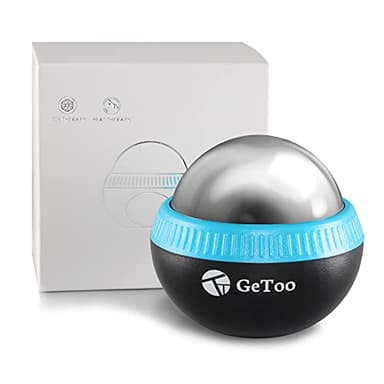
Price as of October 21, 2026. #ad How we’re funded
GeToo Cryosphere Cold Massage Roller Ball
Cold and pressure in a single pass, and the stainless ball holds temperature long enough to finish a session rather than warming up in ninety seconds.
What it gets right
- Holds cold for hours rather than minutes
- Rolls freely in its housing so you are not dragging a frozen lump across skin
What it does not
- Costs several times a frozen water bottle that does most of the same job
- Needs freezer space
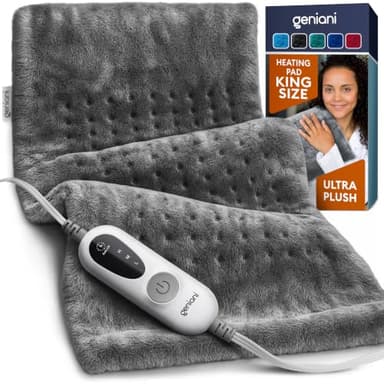
GENIANI Electric Heating Pad
Moist-heat capable with an auto-shutoff, which is the specification that decides whether a heating pad is safe to use lying down — and lying down is when you want it.
What it gets right
- Auto shutoff — the safety feature that matters if you fall asleep on it
- Moist-heat option penetrates better than dry
- Machine-washable cover
What it does not
- Corded, so your position is fixed
- Smaller than the XXL pads
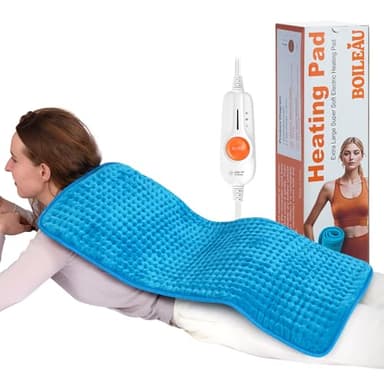
Boileau XXXL Electric Heating Pad (17 × 33 in)
Large enough to cover a whole lumbar region and both sides of it at once, which a standard pad cannot do — and area is the only heating-pad spec that changes the experience.
What it gets right
- 17 × 33 in covers the full lumbar span rather than a patch of it
- Multiple heat settings with auto shutoff
What it does not
- Bulky to store
- Takes longer to reach temperature
Common questions
Should I use ice or heat for sore muscles?
Match it to the tissue. Cold for anything fresh, inflamed or swollen — it narrows blood flow and keeps swelling down in the early phase. Heat for a stiff, chronic ache with no new injury — it opens blood flow and eases stiffness. For ordinary next-day soreness, either is fine for comfort and neither reliably speeds recovery, so use whichever feels better.
Is ice or heat better for delayed-onset muscle soreness (DOMS)?
Honestly, neither has strong evidence for shortening DOMS, so choose for comfort. Even the hands-on tools studied far more than ice or heat — massage, foam rolling, percussion — only give modest, temporary relief without clearly speeding recovery. Use whichever of ice or heat feels better on the day, and do not expect it to make the soreness resolve faster.
Can you alternate ice and heat on the same muscle?
You can, for a chronic problem, and some people find alternating soothing — but keep heat away from anything freshly injured or swollen, where it makes swelling worse. There is no need to overthink the timing; the useful distinction is fresh and inflamed (cold) versus stiff and chronic (heat). If pain is severe, radiates, or follows a clear injury, stop and see a clinician rather than experimenting.
Sources
- 1.Massage Alleviates Delayed Onset Muscle Soreness after Strenuous Exercise: A Systematic Review and Meta-Analysis (PMC5623674)
- 2.Percussion massage therapy and recovery from delayed onset muscle soreness — randomized controlled trial (PMC11979224)
- 3.Foam Rolling or Percussive Massage for Muscle Recovery: Insights into DOMS (PMC12286022)