Disclosure:Grip & Gait earns a commission when you buy through links on this page, at no extra cost to you. It never changes what we recommend or the order we rank things in — here is exactly how we’re funded.
What actually separates these devices
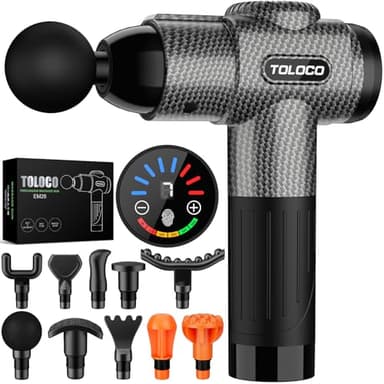
Every massage gun listing leads with speed — 3,200 percussions per minute, ten attachments, five speeds. Speed is the least important spec in the category, and attachment count is a listing feature rather than a therapeutic one.
The two numbers that decide whether a device reaches the muscle you are aiming at are amplitude — how far the head travels on each stroke, which is the depth it can physically reach — and stall force, how hard you can press before the motor stops moving. A long stroke that collapses under pressure is not a long stroke when you are using it.
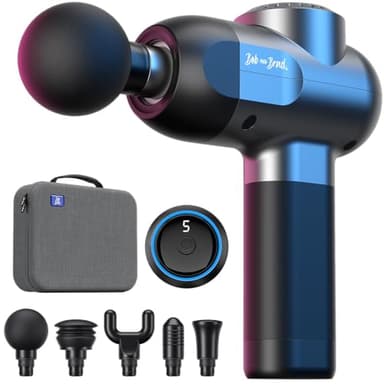
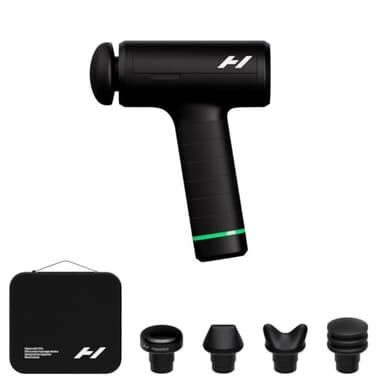
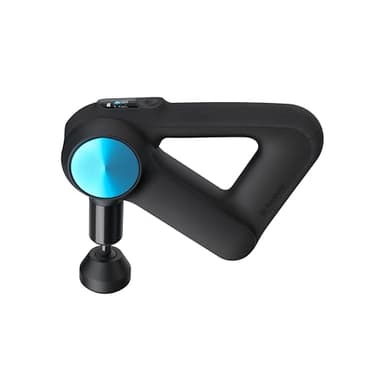
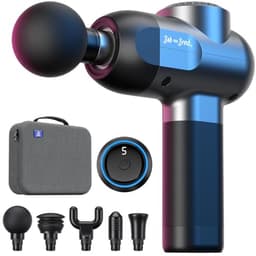
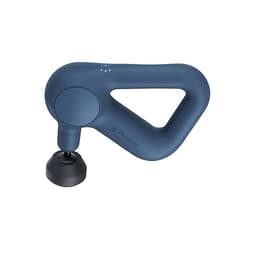
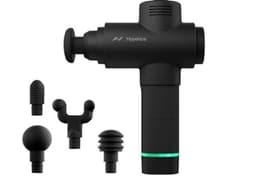
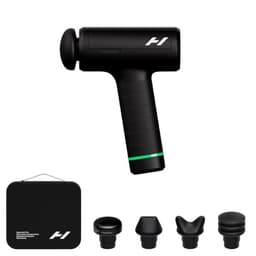
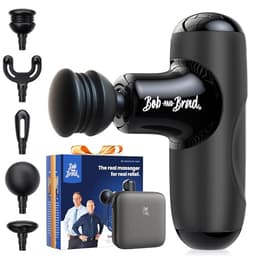
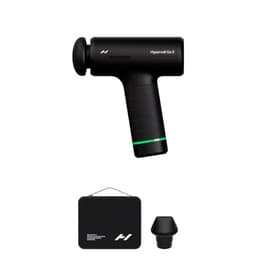
We went looking for both on every manufacturer’s own product page on 24 July 2026. Therabody’s current US Theragun Prime page publishes dimensions, weight, battery and warranty, and does not publish amplitude, stall force, percussions per minute or noise. Hyperice’s Hypervolt 2 page publishes weight, dimensions, motor wattage, speeds and battery, and no amplitude at all. Bob and Brad publish all four — on a gun that costs a fraction of either.
That is not an accusation of anything. Both companies build good hardware and both quote figures elsewhere in their marketing. But if you are on a product page trying to work out whether a device will reach your glute, and the two numbers that answer that question are not on it, you are being asked to buy on brand. We would rather point that out than score a number we cannot cite. The full side-by-side is in cheap vs expensive massage guns.
What the evidence actually supports
Real, narrow, and considerably less dramatic than the marketing. Percussive therapy reliably reduces measured tissue stiffness and improves range of motion in the short term, and a systematic review supports improvements in acute and explosive muscle strength. On soreness the picture is weaker: a randomized controlled trial found percussion did not accelerate recovery from delayed onset muscle soreness until 72 hours after eccentric exercise, though it gave immediate temporary relief each time it was applied.
Read together: a massage gun makes you move better in the short term and feels good while you use it. It does not reliably make you recover faster. Every source is linked on the deep-tissue roundup, and how we research explains the standard we hold ourselves to.
Where a gun is the wrong purchase
Regularly. For a plantar fascia, a $6 spiked ball applies more concentrated pressure than any handheld gun because your body weight does the work rather than a motor. For the muscle under your shoulder blade, a lacrosse ball against a wall reaches where no gun head can. For a broad quad, a foam roller covers more area per minute at a fifth of the price. For a back in spasm, heat suits guarding in a way percussion actively does not.
We wrote gun vs foam roller, gun vs massage ball and gun vs heating padprecisely because the honest answer is often “neither, and here is the cheaper thing.”