Compare
Massage Gun vs Massage Ball
Do the arithmetic and the $8 rubber ball generates more pressure per square inch than a $330 percussion device. That is not a rhetorical flourish, it is force divided by area — and it decides most of this comparison.
By Stephen V.Published
Disclosure:Grip & Gait earns a commission when you buy through links on this page, at no extra cost to you. It never changes what we recommend or the order we rank things in — here is exactly how we’re funded.
Quick picks
Ranked on published manufacturer specs and what they mean for the job, not on testing we have not done. Tap a row for the full reasoning. How we score.
| # | Product | Best for | Score | Price |
|---|---|---|---|---|
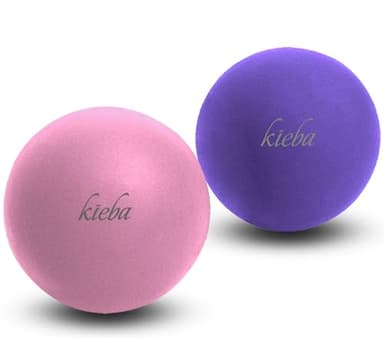
| 1 |  Kieba Massage Lacrosse Balls Your whole body weight through a coin-sized patch. No motor competes with that. | Maximum pressure per dollar | 8.9 | $7.99 · View on Amazon Price as of October 21, 2026. #ad How we’re funded |
| 2 |  Bob and Brad C2 Massage Gun Where a gun genuinely wins: places you cannot lie on, and pressure you can dial down. | Reach, repetition, comfort | 8.6 | |
| 3 |  5BILLION Peanut Massage Ball The one shape that lets you work the lower back safely, because the gap straddles the bone. | Either side of the spine | 8.1 | |
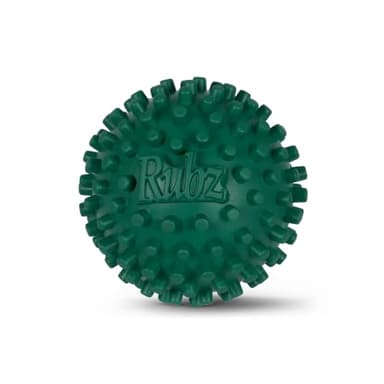
| 4 |  Due North Foot Rubz Massage Ball Spiked, small, cheap. For a plantar fascia this beats every gun on this website. | The foot specifically | 8.3 | $5.88 · View on Amazon Price as of October 21, 2026. #ad How we’re funded |
The arithmetic, since nobody else shows it
Pressure is force divided by contact area. Take a 175 lb person lying with a lacrosse ball under one glute. Even if only a third of their body weight loads that point — call it 58 lb — and the ball’s contact patch under load is roughly one square inch, that is about 58 lb per square inch.
Now take the best-specified massage gun in our deep-tissue roundup. Bob and Brad publish over 44 lb of stall force for the C2 — and that is the point at which the motor stops, not the pressure it comfortably sustains. Spread across a ball-head contact patch larger than a lacrosse ball’s, the working pressure is lower still.
The rubber ball wins on pressure, and it is not close. Every figure above is either a published manufacturer spec or straightforward arithmetic you can redo — no measurement of ours is involved, because we do not measure things.
So why does anyone buy the gun?
Because pressure is not the only variable, and for a lot of real situations it is not even the binding one.
| Use case | Winner | Why |
|---|---|---|
| Deep glute / piriformis | Ball | Sit on it. Nothing a motor produces competes with your own body weight through one square inch. |
| Under the shoulder blade | Ball | Against a wall, a ball gets under the scapula. No gun head reaches there. |
| Plantar fascia / arch | Ball | Underfoot, standing, with weight you control by leaning. The cheapest correct answer on this site. |
| Your own upper trapezius | Gun | You cannot get body weight onto it, and a ball against a wall is awkward at that angle. |
| Forearms | Gun | Small, awkward, and impossible to load with a ball. |
| Broad quads and hamstrings | Neither | A foam roller covers these far faster than either. |
| When you cannot get on the floor | Gun | A ball needs the floor or a wall. A gun works seated. |
| When you want less intensity | Gun | You can dial a gun down. A ball is as intense as your body weight, which is not adjustable. |
| Travel | Ball | It is a rubber ball. It weighs nothing and cannot run out of battery. |
| Lowest possible spend | Ball | Under ten dollars for the tool that generates the most pressure. |
What each one is genuinely good at
The ball: pressure and access
- Unmatched local pressure. The arithmetic above.
- Reaches under structures. Against a wall it slips under a shoulder blade; on the floor it gets into a deep glute. Percussion heads are too broad and too shallow for either.
- Nothing to fail. No battery, no motor, no warranty, no charger in another room.
- Costs less than a sandwich. Being wrong about it is not a financial event.
The gun: reach, repetition, and control
- Reaches what you cannot lie on. Own shoulder, own upper back, forearm.
- Adjustable intensity. The single biggest advantage, and it is under-rated. A ball delivers exactly your body weight and no less. A gun turns down. For anyone with sensitive tissue, thin skin, or a low pain tolerance, that is the difference between a usable tool and an unusable one.
- Covers ground with less effort. Ninety seconds standing up, versus getting on the floor and arranging yourself over a ball.
- Works seated. A genuine accessibility advantage that we take seriously — see the massage guns for seniors page.
What the research supports for either
The literature treats both as self-myofascial release and does not distinguish between them. What it establishes: a systematic review of percussive therapy supports improvements in acute and explosive muscle strength; a study on percussive therapy and hamstring range of motion found reduced tissue stiffness and improved range; and a meta-analysis of massage for delayed onset soreness supports an effect on perceived soreness.
We have found nothing that compares a ball against a gun directly. The comparison on this page is mechanical reasoning from published specs and contact area, and we would rather label it as such than present it as an experimental result.
The honest recommendation
Buy the ball first, always. It costs under ten dollars, it produces more pressure than anything else you can buy, and it will tell you within a week whether concentrated pressure is what your problem actually wants. If it is, you have solved the problem for the price of a coffee. If it is too intense, you have learned something useful for ten dollars instead of three hundred.
Then buy the gun if the answer turns out to be your own upper back, if you need adjustable intensity, or if getting on the floor is difficult. Those are the three cases where the ball genuinely cannot serve you, and they are common enough that plenty of people should own both.
And if what you are treating is a large leg muscle rather than a specific point, the answer is neither — it is a foam roller. That comparison is here.
Every pick, in full
Specs below are the manufacturer’s own published figures, each linked to the page it came from. Where a maker does not publish a number, the table says so and names the page we checked — that absence is information too.
Price as of October 21, 2026. #ad How we’re funded
Kieba Massage Lacrosse Balls
The highest work-per-dollar tool on this entire site. A hard rubber sphere concentrates all your body weight into one square inch, which is more pressure than any handheld gun can generate.
What it gets right
- Concentrates body weight into a single point — more local pressure than any percussion device
- Nothing to charge, nothing to break, fits in a coat pocket
- Reaches under the shoulder blade against a wall, which a roller physically cannot
What it does not
- Unforgiving — very easy to overdo on a first session
- Wrong tool for broad surfaces like quads or lats
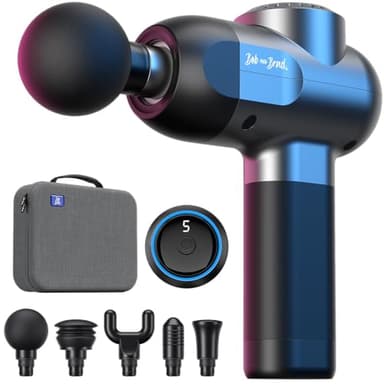
Bob and Brad C2 Massage Gun
The only gun in this roundup whose maker publishes all four numbers that decide whether it reaches the muscle — amplitude, stall force, speed range and noise — and the stall-force figure is higher than the premium units that hide theirs.
What it gets right
- Publishes amplitude, stall force, speed range and noise — the two market leaders publish none of the first three
- Published stall force of over 44 lb is higher than the figure Therabody publishes for the Prime
- 1.5 lb is light enough to hold overhead against your own shoulder without your arm giving out first
- FSA/HSA eligible, which quietly makes it cheaper again for a lot of buyers
What it does not
- 10 mm amplitude is genuinely shorter than a 16 mm premium stroke — that difference is real for glutes and thick back muscle
- No app, no pressure-feedback screen, no ecosystem
- Five fixed speeds rather than a continuous range
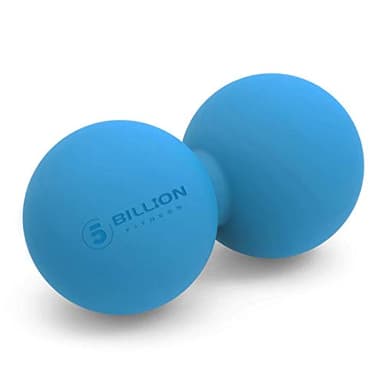
5BILLION Peanut Massage Ball
The waist between the two lobes straddles the spine, so you get pressure on the muscle either side of it and none on the bone — the specific problem a single ball cannot solve.
What it gets right
- Straddles the spine by design — the one shape that solves the paraspinal problem safely
- Works against a wall as well as on the floor
What it does not
- Too bulky for the foot arch
- The double lobe rolls awkwardly on carpet
Price as of October 21, 2026. #ad How we’re funded
Due North Foot Rubz Massage Ball
The cheapest thing on this site that genuinely competes with a $400 device for a specific job — a spiked rubber ball under a plantar fascia is hard to beat and impossible to overspend on.
What it gets right
- Spikes concentrate pressure into the fascia rather than spreading across the sole
- Small enough to keep beside the bed, which is where it needs to be
- Costs less than a coffee
What it does not
- Spikes are too sharp for some people barefoot
- Small contact area only
Common questions
Is a lacrosse ball better than a massage gun?
For concentrated pressure, yes, and by a wide margin — your body weight through a coin-sized contact patch exceeds what any handheld motor produces. For reach, adjustable intensity and use while seated, the gun wins. Buy the ball first because it is under ten dollars and answers the question quickly.
Can a massage ball replace a massage gun?
For glutes, feet, the muscle under a shoulder blade and most specific trigger points, yes. It cannot replace a gun for your own upper trapezius, for forearms, when you need to turn the intensity down, or when getting on the floor is a problem. Those four cases are the gun’s genuine territory.
How long should I use a massage ball for?
Sixty to ninety seconds per spot. It applies more pressure per square inch than a motorized device, so the tolerance window is shorter than people expect. The classic bad first experience is eight minutes and a bruise.
What size massage ball should I buy?
A standard lacrosse ball at around 6.3 cm is the general-purpose size and suits glutes, shoulder blades and calves. Smaller, spiked balls suit the foot arch specifically. A peanut or double-lobe ball is the one to buy for anything either side of the spine, because the gap between the lobes keeps pressure off the bone.
Sources
- 1.Bob and Brad — C2 massage gun product page — over 44 lb published stall force, used in the arithmetic above
- 2.The Effect of Percussive Therapy on Musculoskeletal Performance and Experiences of Pain: A Systematic Literature Review (PubMed 37020441)
- 3.Acute Effects of Theragun Percussive Therapy on Viscoelastic Tissue Dynamics and Hamstring Range of Motion (PMC10499144)
- 4.Massage Alleviates Delayed Onset Muscle Soreness after Strenuous Exercise: A Systematic Review and Meta-Analysis (PMC5623674)
- 5.Therabody — Product Safety & Precautions