Rollers & Balls
The Best Foam Roller for Back Pain
A foam roller is one of the best tools there is for a stiff upper back and one of the worst for a sore lower back, and most people buy one for the second. Here is which roller suits which part of the back, the shape that keeps pressure off the spine, and the one to skip.
By Stephen V.Published
Disclosure:Grip & Gait earns a commission when you buy through links on this page, at no extra cost to you. It never changes what we recommend or the order we rank things in — here is exactly how we’re funded.
Quick picks
Ranked on published manufacturer specs and what they mean for the job, not on testing we have not done. Tap a row for the full reasoning. How we score.
| # | Product | Best for | Score | Price |
|---|---|---|---|---|
| 1 |  Amazon Basics High-Density Foam Roller (18 in) 18 in of smooth dense foam is long enough to lie along, which the 13 in rollers are not. The right first roller for a thoracic spine. | Upper back, most people | 8.6 | $15.29 · View on Amazon Price as of September 17, 2026. #ad How we’re funded |
| 2 |  5BILLION Peanut Massage Ball The waist straddles the vertebrae so the pressure lands on muscle and none on bone. Solves the one problem a cylinder cannot. | Either side of the spine | 8.4 | |
| 3 |  TriggerPoint GRID Foam Roller (13 in) A rigid hollow core and a multi-density surface. Better on a stiff upper back that a plain cylinder no longer reaches; 13 in is short to lie along. | Firmer, and it holds its shape | 7.9 | |
| 4 |  321 STRONG Foam Roller Triple-density surface at close to plain-cylinder money. The sensible middle if the flat roller feels blunt. | Textured, on a budget | 7.4 | $21.99 · View on Amazon Price as of September 17, 2026. #ad How we’re funded |
| ✕ |  Hyperice Vyper 3 Vibrating Foam Roller Vibration is pleasant on a quad and adds nothing over a plain foam cylinder on a back, at many times the price and 2.7 lb. Skip this | The one to skip for a back | 6.1 |
The short version
Roll the upper and mid-back freely. Do not roll the lower back. For the muscle either side of the spine, use a peanut ball instead of a roller. That one distinction decides whether a foam roller helps your back or makes it worse, and it is the reason this page is not simply the beginner roller roundup with a different title. The back is two different problems wearing the same name.
Why the upper back and the lower back are different jobs
The upper and mid-back — the thoracic spine — is built for it. The ribs attach here, which makes the segment stiff and stable, and lying across a roller loads the vertebrae in extension against a structure designed to take it. The muscles across it (the rhomboids, the lower traps, the erectors either side of the spine) are broad, superficial and easy to reach with body weight. Rolling it feels good because it is doing something mechanically sensible.
The lower back — the lumbar spine — has none of that. There are no ribs, the vertebrae are large and mobile, and there is no bony cage to spread the load. Lie across a roller at the lumbar spine and your body weight drives the vertebrae into extension with nothing to stop it, while the muscles either side clamp down to protect the segment. Most people who roll their lower back report that it feels tight afterward. That is not the roller failing; it is the muscle guarding. The lumbar muscles that hurt are usually tight because something below them — the glutes, the hip flexors, the hamstrings — is not doing its job, and those are the things to roll. Our page on lower back pain walks through that routing.
| Where it hurts | Roll it? | What to use instead, or how |
|---|---|---|
| Between the shoulder blades, stiff after a desk day | Yes | Smooth 18 in roller across the upper back, arms crossed, slow passes from the base of the neck to the bottom of the ribs. |
| One tender spot beside the spine | Peanut | A peanut ball on the floor or against a wall, waist over the spine, so the lobes work the muscle and nothing touches bone. |
| Under the edge of the shoulder blade | Ball | A single lacrosse ball against a wall reaches where no roller physically can. |
| The lower back itself | No | Heat for the guarding, then roll the glutes, hip flexors and hamstrings that feed the problem. Nothing on the lumbar spine. |
| Pain that shoots down a leg | No | This is not a rolling problem. See the sciatica page and, if it is new or worsening, a clinician. |
How we ranked these for a back
- Length. For the upper back you lie along the roller as often as across it, and a 13 in roller is shorter than your spine. 18 in is the useful minimum for that position; it is why the plain long cylinder outranks the branded short one here.
- Surface. A smooth surface spreads pressure, which is what most backs want. Ridges and knobs concentrate it, which suits a very stiff thoracic spine that no longer responds to the flat cylinder and suits a first-timer badly. A randomized trial of three roller densities found no significant difference between soft, medium and hard rollers in range of motion or pressure-pain threshold after a two-minute session. Density is a comfort preference, not a result. Start smooth.
- Shape that avoids the spine. A cylinder cannot work the muscle beside the spine without also pressing on the spine. A peanut can. That is not a preference; it is geometry, and it is why a massage ball sits second in a foam roller roundup.
- Price against what it does. Every roller here applies body weight to muscle. The expensive ones add vibration or a brand. For a back, neither changes the mechanism, and the priciest roller is the skip.
What the evidence supports, and what it does not
Foam rolling has a reasonable body of research behind it for range of motion and for soreness, and almost none specifically for back pain, which is worth saying plainly. A meta-analysis of foam rolling training across eleven trials found a moderate improvement in joint range of motion from several weeks of rolling, with the caveat that the gains were muscle-specific and needed more than four weeks to show. A separate meta-analysis of sixteen trials found rolling after exercise reduced soreness, with the effect clearer at 24 hours than immediately. Neither studied backs. What we can honestly say is that a stiff thoracic spine reliably moves better for a while after rolling, that the effect is temporary, and that for the lumbar spine the mechanical argument runs the other way regardless of what the trials on hamstrings found.
The upper-back technique, in four positions
- Across, arms crossed. Roller under the shoulder blades, knees bent, feet flat, hands across your chest so the shoulder blades move out of the way. Lift the hips an inch and roll slowly from the base of the neck to the bottom of the ribs. Stop at the ribs.
- Across, extension. Same position, hips down. Instead of rolling, let your upper back arch back over the roller for a breath or two, then move the roller a hand-width and repeat. This is the mobility version and it does more for a desk-stiff back than rolling.
- Along. Lie lengthwise on an 18 in roller, head and tailbone both supported, knees bent, and let your arms fall open. Nothing moves. Two or three minutes. This is the position the short rollers cannot do.
- Peanut, beside the spine. Peanut ball under the upper back with the waist over the spine, roll an inch either way, pause where it is tender. Against a wall if the floor is too much.
Two or three passes of 45–60 seconds each, most days, beats a single heroic session. Full technique across the whole body is in how to foam roll properly.
Which roller for a back, in one line each
- Most people, upper back: the 18 in Amazon Basics cylinder. Long enough to lie along, smooth enough to start on, and cheap enough that being wrong about it costs nothing.
- The tender spot beside the spine: the 5BILLION peanut. It is the answer to the question a cylinder cannot answer, and it costs about the same as lunch.
- A stiff back that the flat roller no longer reaches:the TriggerPoint GRID. Firmer, holds its shape for years, and its ridges find what smooth foam skates over — but 13 in is short to lie along, so keep the cylinder too. The full comparison is in TriggerPoint GRID vs Amazon Basics.
- Texture on a budget:the 321 STRONG. Most of the GRID’s idea at closer to plain-cylinder money.
The Vyper 3 is the skip. Vibration genuinely makes rolling a quad more tolerable, and it has its place; on a back, where the useful positions are slow and static, it adds a motor, 2.7 lb and a battery to a job a piece of foam does. If your back tightness is really a neck-and-shoulder problem, the neck and shoulder page routes it, and if it sits between the shoulder blades specifically, upper and mid-back pain goes deeper than this page can. Whatever you buy, the rule holds: roll the upper back, roll what feeds the lower back, and keep the roller off the lumbar spine.
Every pick, in full
Specs below are the manufacturer’s own published figures, each linked to the page it came from. Where a maker does not publish a number, the table says so and names the page we checked — that absence is information too.
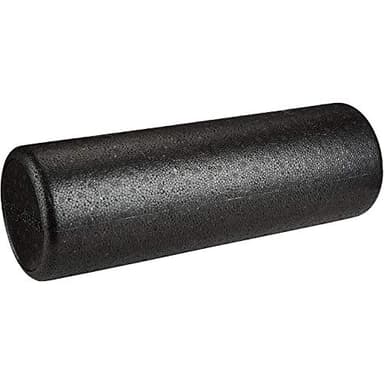
Price as of September 17, 2026. #ad How we’re funded
Amazon Basics High-Density Foam Roller (18 in)
A dense foam cylinder does the same mechanical job as a textured roller for a fraction of the money, and for a first roller that is the correct purchase.
What it gets right
- Does the actual mechanical work — sustained pressure across a broad contact area
- Nothing to break; no core, no seams, no electronics
- 18 in is long enough to lie along your spine, which the 13 in rollers are not
What it does not
- Flat surface spreads pressure rather than concentrating it
- Solid EVA softens over a few years of heavy use
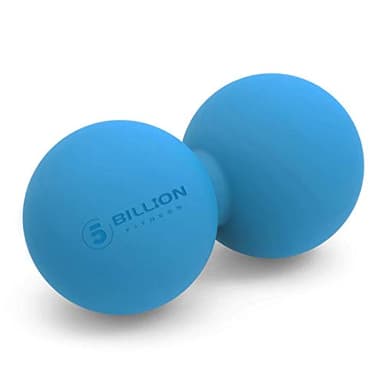
5BILLION Peanut Massage Ball
The waist between the two lobes straddles the spine, so you get pressure on the muscle either side of it and none on the bone — the specific problem a single ball cannot solve.
What it gets right
- Straddles the spine by design — the one shape that solves the paraspinal problem safely
- Works against a wall as well as on the floor
What it does not
- Too bulky for the foot arch
- The double lobe rolls awkwardly on carpet
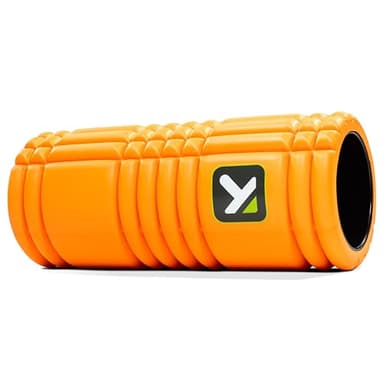
TriggerPoint GRID Foam Roller (13 in)
The multi-density surface is the reason to buy this over a plain foam cylinder: the raised sections concentrate pressure in strips instead of spreading it flat, which is what makes it usable on an IT band without needing to hold your breath.
What it gets right
- Hollow rigid core does not compress into a soft log the way plain EVA foam does after a year
- Multi-density surface gives you three pressure intensities on one roller
- 13 in length fits in a gym bag; the 26 in version does not
What it does not
- Costs roughly three times a plain high-density cylinder that also works
- The hollow core makes it noisier on a hard floor
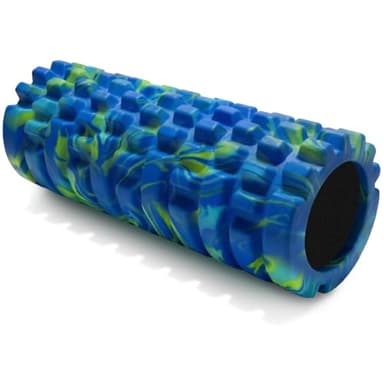
Price as of September 17, 2026. #ad How we’re funded
321 STRONG Foam Roller
Textured like the premium rollers at close to plain-cylinder money — the sensible middle purchase if the flat cylinder feels too blunt and the branded one feels too dear.
What it gets right
- Triple-density surface at roughly a third of the branded price
- Rigid core holds shape
What it does not
- Knobs are more aggressive than the GRID's, which some people cannot tolerate on the IT band
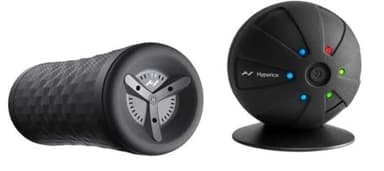
Hyperice Vyper 3 Vibrating Foam Roller
Three speeds of vibration on a 34 W motor, and the honest question is whether vibration adds enough over a $13 cylinder to justify twenty times the price — for most people it does not.
What it gets right
- Published motor, weight, dimensions and battery — more transparency than Hyperice gives its guns
- Vibration genuinely reduces the discomfort of rolling, which means people actually do it
What it does not
- Twenty times the price of a foam cylinder that does the mechanical part
- 2.7 lb and a 2-hour battery — it is a device, not a lump of foam
Common questions
Is it OK to foam roll your lower back?
We do not recommend it. The lumbar spine has no rib cage to spread the load, so lying across a roller drives the vertebrae into extension with nothing to stop it, and the muscles either side tend to clamp down in response — which is why a rolled lower back usually feels tighter afterward. Roll the glutes, hip flexors and hamstrings that feed lower back tightness instead, and use heat on the back itself.
What is the best foam roller for upper back pain?
A smooth, dense roller at least 18 inches long. The length matters because the most useful upper-back position is lying along the roller with the head and tailbone supported, which a 13 inch roller cannot do. Start smooth; move to a ridged roller like the TriggerPoint GRID only if a stiff thoracic spine stops responding to the flat cylinder. For the tender spot beside the spine, a peanut ball beats any roller.
Does foam rolling help back pain?
For a stiff upper and mid-back, it reliably improves how the segment moves for a while and most people find it eases the ache. The research base is on range of motion and post-exercise soreness in the limbs rather than on back pain specifically, so we will not claim more than that. For the lower back, rolling the spine itself tends to make guarding worse; the useful work is on the hips and legs below it.
Sources
- 1.Foam Rolling Training Effects on Range of Motion: A Systematic Review and Meta-Analysis - Sports Medicine 2022 (PMC9474417) — moderate ROM gains from rolling training over four-plus weeks; muscle-specific
- 2.Preventive effect of foam rolling on muscle soreness after exercise: a systematic review and meta-analysis - Journal of Bodywork and Movement Therapies 2024 (PubMed 39593540) — rolling after exercise reduced soreness, clearer at 24 h
- 3.Comparison of Three Different Density Type Foam Rollers on Knee Range of Motion and Pressure Pain Threshold: A Randomized Controlled Trial - International Journal of Sports Physical Therapy (PMC6044602) — no significant between-group difference in ROM or pressure-pain threshold across three densities