Recovery Tech
Compression Boots for Older Adults and Poor Circulation
Most people searching this are not athletes. They have heavy, swollen legs at the end of the day, or a parent who does, and they have seen the boots advertised as a circulation fix. Some of them should not use one without asking a doctor first. Here is who, why, and what to check before buying for the rest.
By Stephen V.Published
Disclosure:Grip & Gait earns a commission when you buy through links on this page, at no extra cost to you. It never changes what we recommend or the order we rank things in — here is exactly how we’re funded.
The short version
Compression boots move pooled fluid up the leg while they are running. They are not a treatment for circulatory disease, and for several conditions common after sixty-five they are contraindicated. If the legs swell because of a long day sitting or standing and go down overnight, a sequential system used in the evening with the legs raised can make them feel lighter, and that is a fair reason to own one. If the swelling has a medical cause — and after sixty-five it frequently does — the boots are the wrong response and possibly a dangerous one. Read the next section before anything else.
Who should not use these without a doctor’s say-so
Compression devices are on the contraindication list for a set of conditions that are much more common in older adults than in the runners the boots are marketed to. We are not going to soften this. If any of the following apply to you or the person you are buying for, this is a conversation with a clinician before it is a purchase:
- A history of deep vein thrombosis or any clotting disorder. Squeezing a leg that may contain a clot can move it. This is the one that matters most and it is the one nobody mentions in a listing.
- Peripheral artery disease, or poor arterial circulation. Compression is for fluid returning up the veins. On a leg whose problem is blood not getting down the arteries, external pressure makes that worse. Cold feet, pain in the calves on walking that stops with rest, and shiny hairless shins are the signs.
- Heart failure, or swelling in both legs that the doctor has not explained. Fluid that the heart or kidneys are failing to clear is not something to push back into the system.
- An active skin infection, an ulcer, an open wound, or very fragile skin. Inflatable sleeves rub. On thin, older skin that is a wound waiting to happen.
- Diabetes with reduced sensation in the feet or legs.The boot’s safety margin depends on you feeling when the pressure is too much. If you cannot, there is no safety margin.
- Swelling in one leg only, or swelling with pain, heat or redness. Not a compression problem. A clinician, today.
That is a long list, and it is meant to be. The people the boots are safe and pleasant for are the ones with ordinary end-of-day heaviness and none of the above. If that is you, keep reading.
What the boots do, and what the evidence says
The mechanism is not controversial. Chambers inflate in sequence from the foot upward, each one squeezing fluid past the next, and pneumatic compression was a hospital intervention long before it was a recovery gadget. That is exactly why the contraindications above are known: the clinical devices come with them printed on the box.
What consumer boots do for a healthy older person’s tired legs is a different question, and the honest answer is that the clinical evidence is not about them. A 2026 systematic review of randomized trials of intermittent pneumatic compression for lower-limb lymphedema found seven eligible trials, all in patients with a diagnosed chronic condition, using prescribed advanced devices under supervision, and all excluding anyone with arterial disease or an active clot. That tells you how the devices are used in medicine; it does not tell you what a home unit does for ordinary puffiness. On the recovery-marketing side, a systematic review with meta-analysis found moderate-certainty evidence that pneumatic compression does not reduce muscle soreness at 24 hours compared with control. What owners reliably report is subjective: legs feel lighter and less heavy afterward. We think that is real, we think it is modest, and it is the only claim on this page we will make.
| What is going on | Reasonable tool | Why |
|---|---|---|
| Heavy, puffy legs by evening; fine by morning; none of the conditions above | Sequential boots, legs raised, low pressure | Moves pooled fluid and feels good. The one case the boots are for. |
| Puffy feet and ankles only | A compression foot massager | Smaller, cheaper, easier to get in and out of. See the foot massager for circulation page. |
| Cramping calves at night, no swelling | Heat, then a gentle stick or roller | That is a muscle problem, not a fluid one. See the calf page. |
| Any of the conditions listed above | A clinician before any device | Compression may be unsafe, and the swelling may be telling you something that matters more than comfort. |
What to look for, when buying for an older user
- Sequential inflation, not simultaneous. The listing must say the chambers inflate one after another from the foot upward. A sleeve that inflates all at once is a leg-shaped cuff, and it does not move fluid anywhere. How to tell from a listing that will not say is in the best budget compression boots.
- A sleeve that starts at the foot. Swelling in older legs sits around the ankle and in the foot. A boot that begins above the ankle has skipped the part that matters.
- A genuinely low pressure setting. Older skin and older veins do not want the settings a marathoner uses. The lowest setting is the one that will be used, so it has to be low enough to be comfortable and the controls have to make it easy to stay there.
- Simple controls. A remote with a large on/off, a pressure up and down, and a timer is the whole requirement. An app is a barrier, not a feature, for a lot of the people this page is for.
- Sizing for a leg that swells. Sleeves are sized garments and this is where most complaints come from. Measure the calf and thigh at the end of the day, when they are largest, and buy the size that fits then. A sleeve that will not zip over an evening leg will not be used.
- Getting in and out unaided. Long zips, sleeves that open flat, and a pump that can sit beside a chair rather than on the floor. If the user cannot put them on alone, they will be used only when someone is visiting.
The cheaper things that do most of the same job
Before a device: raise the legs above the heart for twenty minutes in the evening, walk for a couple of minutes every half hour when sitting, and do slow calf raises at the kitchen counter. The calf muscle is the pump that returns fluid from the legs, and a boot is a poor substitute for using it. Properly fitted compression stockings, if a clinician recommends them, are the standard answer to venous swelling and cost a fraction of any boot. None of that is on this site to sell; it is on this page because it is true.
What we would actually buy, once the checklist is clear
Three options in order of how much leg they cover, chosen for sequential inflation, foot coverage and simple controls rather than for the badge on the pump.
Most older users
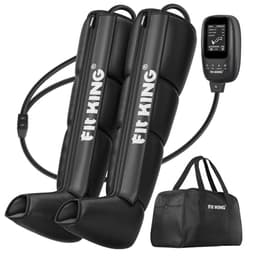
FIT KING Air Compression Recovery Boots
Genuinely sequential, sized rather than one-size, and a fraction of the premium price. Measure the calf in the evening and buy that size; the louder pump is the trade.
Swelling that starts in the foot
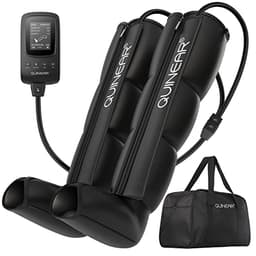
QUINEAR Leg Recovery Compression System
Foot, calf and thigh in one sleeve, so the wave begins where the fluid has actually pooled instead of above the ankle.
Price as of September 17, 2026. #ad How we’re funded
Feet and ankles only
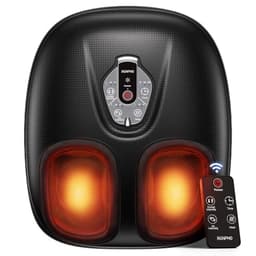
RENPHO Foot Massager with Heat
If the swelling never climbs past the ankle, a compression foot massager is smaller, cheaper, and far easier to get in and out of than a full leg sleeve. FSA eligible.
The premium system is deliberately not on that list. It is the most refined pump in the category and the price gap buys refinement rather than a different mechanism, which is why it is the skip on the main compression boot roundup and why Normatec 3 vs FIT KING comes down the way it does. For a parent or grandparent who has been through the list above and cleared it, the mid-priced sequential systems deliver the thing you are buying. If the question is still whether any boot is worth it, are compression boots worth it is the honest place to settle it, and if you are buying as a gift, gifts for parents and grandparents with aches covers the safer alternatives alongside it.
Common questions
Are compression boots safe for elderly people?
For a healthy older adult with ordinary end-of-day leg heaviness, used on a low setting with the legs raised, generally yes. But several conditions that are common after sixty-five are contraindications: a history of blood clots, peripheral artery disease, heart failure, fragile or broken skin, and diabetes with reduced sensation. Swelling in one leg or with pain, heat or redness needs a clinician, not a device. If any of those apply, ask a doctor before buying.
Do compression boots help poor circulation?
They move pooled fluid up the leg while they are running, which makes heavy, puffy legs feel lighter for a while. They do not treat circulatory disease, and for poor arterial circulation — blood not reaching the feet — external compression can make things worse. The clinical evidence for pneumatic compression is in diagnosed lymphedema under supervision; we have found no evidence that a home unit improves circulation in any lasting sense.
What are the best compression boots for swollen legs in older adults?
Once a doctor has cleared them: a sequential system whose sleeve starts at the foot, with a genuinely low pressure setting, simple controls, and sizing that fits the leg at the end of the day when it is largest. Mid-priced sequential boots deliver that; the premium system adds refinement, not a different mechanism. If the swelling stays in the feet and ankles, a compression foot massager is smaller and easier to use than a full leg sleeve.
Sources
- 1.A systematic review of contemporary randomized controlled trials for treatment of lower extremity lymphedema by intermittent pneumatic compression devices - Journal of Vascular Surgery: Venous and Lymphatic Disorders 2026 (PMC13197773) — seven RCTs in diagnosed lower-limb lymphedema; arterial disease and active thrombosis excluded
- 2.Effects of photobiomodulation, intermittent pneumatic compression and neuromuscular electrical stimulation on muscle recovery: systematic review with meta-analysis - Journal of Bodywork and Movement Therapies 2025 (PubMed 40954632) — moderate-certainty evidence that IPC does not reduce muscle soreness at 24 h vs control