Rollers & Balls
Lacrosse Ball vs Peanut Ball
The difference is pure geometry: a single hard ball drives your body weight into one point, while a two-lobed peanut straddles a ridge like the spine so pressure lands on the muscle beside the bone and never on it. That one fact decides which to use where.
By Stephen V.Published
Disclosure:Grip & Gait earns a commission when you buy through links on this page, at no extra cost to you. It never changes what we recommend or the order we rank things in — here is exactly how we’re funded.
Quick picks
Ranked on published manufacturer specs and what they mean for the job, not on testing we have not done. Tap a row for the full reasoning. How we score.
| # | Product | Best for | Score | Price |
|---|---|---|---|---|
| 1 |  Kieba Massage Lacrosse Balls A single hard sphere concentrates body weight into one point. The highest work-per-dollar tool on the site. | Glutes, feet, shoulder blade | 8.7 | $7.99 · View on Amazon Price as of October 21, 2026. #ad How we’re funded |
| 2 |  5BILLION Peanut Massage Ball The waist straddles the spine, so you get the muscle beside it and nothing on the bone. | Either side of the spine | 8.1 | |
| ✕ |  Due North Foot Rubz Massage Ball A different job: a spiked ball is shaped for the plantar fascia, not the back or glute. Skip it for spine work. Skip this | The foot specifically | 8.0 | $5.88 · View on Amazon Price as of October 21, 2026. #ad How we’re funded |
The short answer
These are two solutions to the same problem — getting concentrated pressure into a muscle your body weight can reach — and the difference between them is entirely geometric. A lacrosse ball is a single hard sphere, so it presses one point as hard as your body weight allows. A peanut ball is two spheres joined at a waist, and that waist is the whole point: it lets the two lobes sit either side of a ridge, most usefully the spine, so pressure lands on the muscle beside the bone and never on the bone itself.
For almost everything, the single ball is the tool, and it is the highest work-per-dollar purchase on this site. The peanut earns its place for one specific job the single ball cannot do safely, and once you understand that split the choice stops being a versus and becomes an and.
One sphere versus two lobes
Pressure is force divided by area, and in both cases the force is your body weight, which does not change. What changes is the contact patch. A single sphere touches the smallest area of anything you can lie on, which is why it produces more local pressure than a foam roller or a handheld percussion device — the entire load funnels into one point. That is the source of both its power and its capacity to hurt.
A peanut spreads that same load across two contact points and, more importantly, leaves a protected channel down the middle. On the floor, the two lobes straddle a structure and the waist bridges over it. That is a different mechanical job from concentrating pressure — it is placing pressure precisely to one side of something you must not press on — and it is the reason the peanut exists as a separate shape rather than a gimmick.
The practical upshot is that the two shapes are not competing for the same jobs as often as the shelf implies. A single ball is a precision instrument for a point; a peanut is a placement instrument for a channel. When people are disappointed by one, it is almost always because they bought it for the other’s job — a peanut feels vague on a glute because it was never meant to concentrate, and a single ball feels frightening near the spine because it was never meant to straddle. Match the shape to the geometry of the target and both feel obvious.
Where the single ball wins
Most targets are not near a bony ridge you have to avoid, and for those the single ball is simply better because it concentrates harder.
- Glutes and piriformis. Deep and awkwardly shaped, sitting on a single ball reaches them in a way a roller skates over the top of. The routing for that specific area is on the glutes and piriformis page.
- Under the shoulder blade. A ball trapped between your back and a wall gets into the muscle along the edge of the shoulder blade that a roller physically cannot reach.
- The foot.Rolled underfoot, a firm ball works the arch and the sole with your standing weight controlling the pressure — though for the plantar fascia specifically there is a purpose-built shape, which is where the third pick comes in.
- A specific spot in a calf. When the tender point is inside the muscle belly rather than along its length, the ball finds it and holds it in a way a long tool cannot.
The single ball’s drawback is the flip side of its power: it is unforgiving and very easy to overdo, and it is the wrong tool for broad surfaces like the quads or the lats, where it would take an age to cover ground a roller crosses in a couple of passes.
Where the peanut wins: either side of the spine
The one job the single ball cannot do safely is the muscles that run either side of the spine, and it is precisely the job people most often try to force it into. Lay a single ball under your back and it wants to roll onto the spine itself, which is exactly what you must not load. The peanut solves this by design: the waist sits over the spine, the two lobes press the paraspinal muscles on each side, and the bone is left alone.
Used against a wall, the same geometry lets you work up and down the muscles beside the spine while standing, adjusting pressure by how hard you lean. It is the safest way to give the back-of-the-torso muscles direct pressure without a second person, and it is the reason the peanut belongs in the basket even though the single ball does more everywhere else.
The spine, specifically
This deserves stating on its own, because it is the one place the wrong choice does harm rather than just wasting time. Do not put a single ball, or a roller, directly on the lumbar spine. The lower back has no bony protection behind it, the muscles either side are the actual target, and loading the spine itself tends to make those muscles guard and can make a sore back worse. The peanut’s entire reason to exist is to press beside the spine and not on it, and that is the distinction worth buying the second shape for.
Why the foot ball is a different job
Our skip here is not a bad tool; it is the right tool for the wrong page. A spiked ball is shaped for the plantar fascia — the spikes concentrate pressure into the band under the arch rather than spreading it across the sole — and for that job it is hard to beat and impossible to overspend on. But it is built for the foot, not the back or the glute, and buying it as your answer to a lacrosse-ball-versus-peanut question means buying a tool for a problem you were not asking about. If your problem is underfoot, read the plantar fasciitis page; if it is anywhere else, the spikes are simply the wrong texture and the wrong size for the muscle you are trying to reach.
Using each without overdoing it
The single ball rewards patience and punishes enthusiasm. Lower onto it slowly, let your weight settle, and give a tender point time to ease rather than grinding across it; a short pass on one spot is a session, and the people who decide they hate massage balls almost always spent far too long on their first. The peanut asks for the opposite mindset — because it is gentler and safer beside the spine, you can spend a little longer working slowly up and down the paraspinal muscles, breathing out as you sink into each level. With either ball, you control the pressure with how much weight you commit, on the floor or against a wall, so back off the instant a sensation turns sharp.
What the evidence supports
Both balls sit under the heading of self-myofascial release, and the evidence for that heading is real but modest. A comparison of foam rolling and percussive massage found this kind of pressure work helped recover the muscle properties disrupted by soreness while not reducing pain much more than rest did, and a systematic review and meta-analysis of massage for delayed onset soreness supports a genuine effect on how sore a muscle feels. Nothing we can find compares a single ball against a peanut directly; that split is mechanical reasoning from contact geometry, not an experimental result, and we would rather say so than dress it up as evidence.
The honest recommendation
Buy the single ball first. For the money, nothing else on this site does as much, and it handles the glutes, the feet, the shoulder blade and the stubborn calf spot that a roller cannot. Add the peanut when your target is the muscles either side of the spine, because that is the one place the single ball is not just worse but genuinely the wrong shape. Skip the spiked foot ball unless the foot is the actual problem — then it moves to the top of a different list. If you are still choosing between a ball and a cylinder in general, that comparison is foam roller vs massage ball, and if you are new to all of this, start with the best foam roller for beginners.
Every pick, in full
Specs below are the manufacturer’s own published figures, each linked to the page it came from. Where a maker does not publish a number, the table says so and names the page we checked — that absence is information too.
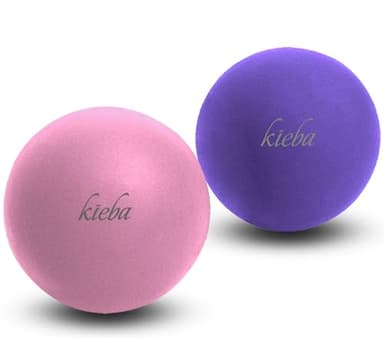
Price as of October 21, 2026. #ad How we’re funded
Kieba Massage Lacrosse Balls
The highest work-per-dollar tool on this entire site. A hard rubber sphere concentrates all your body weight into one square inch, which is more pressure than any handheld gun can generate.
What it gets right
- Concentrates body weight into a single point — more local pressure than any percussion device
- Nothing to charge, nothing to break, fits in a coat pocket
- Reaches under the shoulder blade against a wall, which a roller physically cannot
What it does not
- Unforgiving — very easy to overdo on a first session
- Wrong tool for broad surfaces like quads or lats
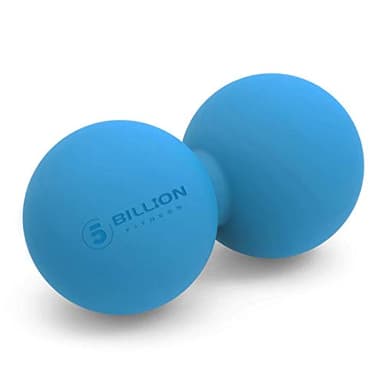
5BILLION Peanut Massage Ball
The waist between the two lobes straddles the spine, so you get pressure on the muscle either side of it and none on the bone — the specific problem a single ball cannot solve.
What it gets right
- Straddles the spine by design — the one shape that solves the paraspinal problem safely
- Works against a wall as well as on the floor
What it does not
- Too bulky for the foot arch
- The double lobe rolls awkwardly on carpet
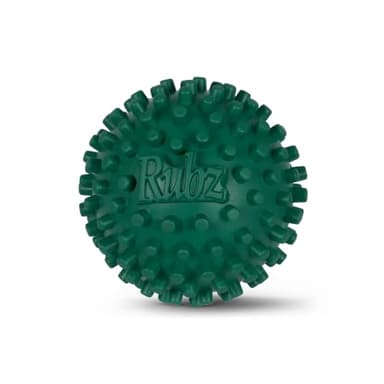
Price as of October 21, 2026. #ad How we’re funded
Due North Foot Rubz Massage Ball
The cheapest thing on this site that genuinely competes with a $400 device for a specific job — a spiked rubber ball under a plantar fascia is hard to beat and impossible to overspend on.
What it gets right
- Spikes concentrate pressure into the fascia rather than spreading across the sole
- Small enough to keep beside the bed, which is where it needs to be
- Costs less than a coffee
What it does not
- Spikes are too sharp for some people barefoot
- Small contact area only
Common questions
Should I get a lacrosse ball or a peanut ball?
Start with the single lacrosse ball. It concentrates your body weight into one point, which makes it the best value tool on this site for the glutes, the feet, the muscle under the shoulder blade and a specific knot in a calf. Add a peanut ball when you want to work the muscles either side of the spine, because its two lobes straddle the bone and press the muscle beside it — the one job a single ball cannot do safely.
Can you use a lacrosse ball on your spine?
Not on the spine itself. A single ball placed under your back tends to roll onto the bones of the spine, which is exactly what you must not load. The muscles that run either side of the spine are a fair target, but the safe way to reach them is a peanut ball, whose waist bridges over the spine while the two lobes press the muscle on each side. Keep any single ball off the lower back entirely.
Is a peanut ball better than a single massage ball?
Only for the specific job it is shaped for. A peanut is better beside the spine, because it protects the bone in the channel between its lobes. Everywhere else — glutes, feet, the shoulder blade, a single tender point in a muscle — a single ball concentrates pressure harder and reaches into places the wider peanut cannot. They are complementary, not rivals; most people are best served owning both.