Recovery Tech
Are Compression Boots Worth It?
For most people buying their first recovery device, no — the money buys more elsewhere. There are four situations where the answer flips, and the deciding factor is usually not what the marketing emphasizes.
By Stephen V.Published Updated
Disclosure:Grip & Gait earns a commission when you buy through links on this page, at no extra cost to you. It never changes what we recommend or the order we rank things in — here is exactly how we’re funded.
Quick picks
Ranked on published manufacturer specs and what they mean for the job, not on testing we have not done. Tap a row for the full reasoning. How we score.
| # | Product | Best for | Score | Price |
|---|---|---|---|---|
| 1 |  Musugy Sequential Leg Compression Massager Cheapest genuinely sequential system. The right way to find out whether this does anything for you. | If you are trying the category | 7.8 | |
| 2 |  FIT KING Air Compression Recovery Boots Sequential, real size options, a third of the category leader's price. | If you have decided | 8.5 | |
| 3 |  TriggerPoint GRID Foam Roller (13 in) Included honestly: a roller, a ball and a gun together cost less and cover far more of the body. | What the money buys instead | 8.4 | |
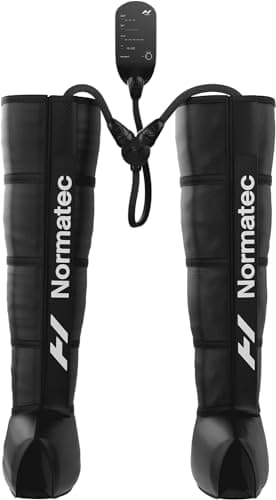
| ✕ | 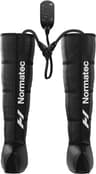 Hyperice Normatec 3 Recovery System A superb system. The gap over a sequential competitor buys refinement, and refinement is not the mechanism. Skip this | Very few home buyers | 6.9 | $899.00 · View on Amazon Price as of October 21, 2026. #ad How we’re funded |
The direct answer
For most people: no. A first recovery purchase gets more from a foam roller, a massage ball and a well-specified massage gun, which between them cost less than an entry-level compression system and cover your whole body rather than two legs.
For four specific situations: yes, clearly. They are below, and they have one thing in common that most reviews of this category miss.
The four cases where it flips
1. You stand all day for work
The most under-served use case in this entire category, and arguably the strongest. Twelve hours on a hard floor produces genuinely heavy, swollen legs and feet, and sequential compression is a direct match for that — it is the mechanism, applied to the exact problem it was clinically developed for.
Nurses, hospitality staff, retail workers, surgeons, anyone on their feet. If that is you, this is a better buy than any massage gun, and nobody markets to you.
2. You train at genuine volume
Back-to-back hard days, marathon blocks, multi-day events, two-a-days. When recovery time is the constraint on training rather than motivation, a passive intervention you can run for thirty minutes while doing something else has real value.
3. You will not do active recovery, and you know it
This is the honest one. A foam roller works better per dollar than anything, and requires you to get on the floor and put effort in. Plenty of people will not, repeatedly, over years.
A device that requires nothing but sitting down gets used. A tool that requires twenty minutes of attention and mild discomfort does not. Consistency beats efficacy, and paying several hundred dollars for compliance is a rational trade if you know that about yourself.
4. Your legs are the whole problem
If it is genuinely both legs, whole length, general heaviness — rather than one calf or a specific knot — then compression fits and a targeted tool does not. That is a narrower case than the marketing suggests, but it is real.
The common thread across all four: whole-limb and passive. Whenever the problem is local, or you are willing to do active work, something cheaper does it better.
The cost arithmetic
A quality foam roller, a pair of massage balls and a well-specified massage gun cost roughly a third to a half of an entry-level sequential compression system, and cover your entire body rather than two legs. That is the comparison the category avoids making.
Against a premium system, the gap widens to the point where you could buy the roller, the balls, the gun, a heating pad and a TENS unit and still have money left. Whether that matters depends entirely on whether your problem is the one compression is for — but it is worth seeing the number before deciding.
What we can honestly say about the evidence
The mechanism is established. Sequential external pneumatic compression moves fluid proximally; that is why it exists clinically and it long predates its use in sport.
Whether it accelerates recovery in a healthy trained person is less settled, and we have not located a body of evidence on that specific claim we are prepared to summarize here. Rather than write “studies show” over a gap in our own reading, we would rather flag the gap. That is the standard we set in how we research, and it applies to products we earn from as much as to anything else.
What is consistently reported is subjective: legs feel lighter and less heavy afterward. Given that heavy legs is the actual complaint most buyers have, that is not a trivial outcome — but it is a smaller claim than the marketing makes.
If you decide to buy
- Sequential inflation is non-negotiable. Ankle, then calf, then thigh. A simultaneous-inflation system is not doing the thing the category is named for.
- Check whether the foot is included. Many budget systems start at the calf and the foot is where much of the swelling sits.
- Measure before ordering. Fit is the number-one complaint and it cannot be fixed afterward.
- Buy the cheapest genuinely sequential system first. Find out whether this does anything for you before spending the premium. It might do nothing you notice, and finding that out cheaply is worth more than a nicer pump.
- Consider pump noise. If the whole point is doing something else while you recover, a loud pump defeats it.
The summary
Compression boots are a real device with a real mechanism, sold with claims larger than what we can verify. They are worth it if you stand all day, train at volume, know you will not do active recovery, or genuinely have a whole-legs problem. Otherwise, a roller, a ball and a gun cost less and do more.
If you are buying, start cheap and sequential. That is the version of this advice we would give a friend, and it is the version that earns us the least.
One comparison changes the answer for lifters specifically. The other passive option people weigh against boots is cold immersion, and cold after every strength session measurably cut twelve-week strength and muscle growth in the trial that tested it: compression boots vs an ice bath sets out which to use after which session.
Every pick, in full
Specs below are the manufacturer’s own published figures, each linked to the page it came from. Where a maker does not publish a number, the table says so and names the page we checked — that absence is information too.
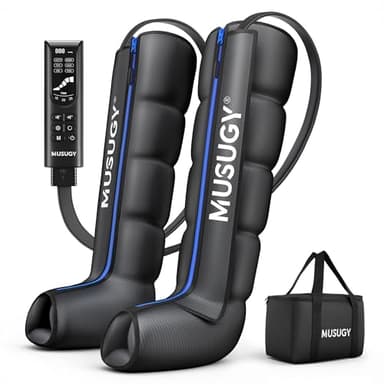
Musugy Sequential Leg Compression Massager
The cheapest genuinely sequential system here — the entry point at which compression boots stop being an aspiration and start being a thing you own.
What it gets right
- Sequential inflation at the lowest price in the category
- Full-leg coverage
What it does not
- Basic controls
- Build quality reflects the price
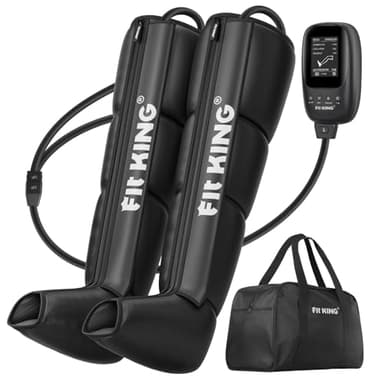
FIT KING Air Compression Recovery Boots
Sequential chamber inflation — the mechanism that actually distinguishes recovery boots from a leg-shaped pressure cuff — at a third of what the category leader charges.
What it gets right
- Genuinely sequential: chambers fire ankle-upward rather than all at once
- Sized options rather than one-size-fits-nobody
- A fraction of the premium system price
What it does not
- Louder pump than the premium units
- Bulky to store and not remotely portable
- Sizing runs specific — measure before buying
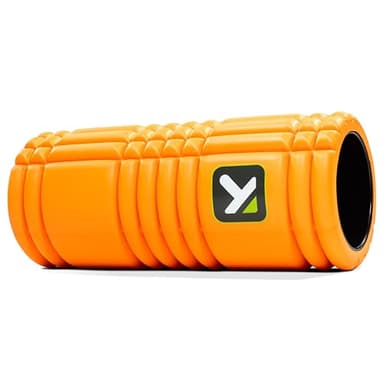
TriggerPoint GRID Foam Roller (13 in)
The multi-density surface is the reason to buy this over a plain foam cylinder: the raised sections concentrate pressure in strips instead of spreading it flat, which is what makes it usable on an IT band without needing to hold your breath.
What it gets right
- Hollow rigid core does not compress into a soft log the way plain EVA foam does after a year
- Multi-density surface gives you three pressure intensities on one roller
- 13 in length fits in a gym bag; the 26 in version does not
What it does not
- Costs roughly three times a plain high-density cylinder that also works
- The hollow core makes it noisier on a hard floor
Price as of October 21, 2026. #ad How we’re funded
Hyperice Normatec 3 Recovery System
The reference system in the category, and also the one whose price gap over a sequential competitor buys refinement rather than a different mechanism — which is why it is our skip for a home buyer.
What it gets right
- The most refined pressure control and the quietest pump in the category
- The system most likely to still be supported in five years
What it does not
- Several times the price of boots that inflate sequentially the same way
- The added refinement does not change the mechanism
Common questions
Are compression boots worth the money?
For most first-time recovery buyers, no — a roller, a ball and a massage gun cost less and cover the whole body. They are worth it if you stand all day for work, train at genuine volume, know you will not do active recovery, or genuinely have a whole-legs problem rather than a local one. The common thread is whole-limb and passive.
Are compression boots dangerous?
For most people, used at sensible pressures for 20–30 minutes, they are a low-risk device. But sequential compression is a clinical mechanism with a genuine contraindication list: known or suspected deep vein thrombosis, active infection or cellulitis in the limb, severe peripheral arterial disease, uncontrolled congestive heart failure, an open wound or recent skin graft, and significantly reduced sensation all warrant asking a clinician first.
Do compression boots actually work?
The mechanism is established — sequential external compression moves fluid proximally, which is why it exists clinically. Whether it accelerates recovery in a healthy trained person is less settled, and we have not read enough on that specific claim to summarize it here. What is consistently reported is subjective: legs feel lighter afterward. Given that heavy legs is the actual complaint, that is not trivial — but it is a smaller claim than the marketing.
Are compression boots good for your legs?
For heavy, tired or swollen legs after long standing or hard training, most users report they feel better afterward and the mechanism supports that. They are not a treatment for any circulatory condition, and if you have one, that is precisely the case where you should ask a clinician before using them rather than after.