Recovery Tech
Compression Boots: Before or After a Workout?
After, almost always. The reasoning is straightforward once you separate what compression does from what a warm-up needs to do — and there are two exceptions worth knowing.
By Stephen V.Published
Disclosure:Grip & Gait earns a commission when you buy through links on this page, at no extra cost to you. It never changes what we recommend or the order we rank things in — here is exactly how we’re funded.
Quick picks
Ranked on published manufacturer specs and what they mean for the job, not on testing we have not done. Tap a row for the full reasoning. How we score.
| # | Product | Best for | Score | Price |
|---|---|---|---|---|
| 1 |  FIT KING Air Compression Recovery Boots Sequential, sized, sanely priced. The system to own if you are doing this properly. | Post-session recovery | 8.5 | |
| 2 |  QUINEAR Leg Recovery Compression System Foot-to-thigh coverage, which matters more the longer you have been standing. | Including the foot | 8.2 | |
| 3 |  Bob and Brad C2 Massage Gun If you want something before training, this is the one with evidence behind it - not the boots. | The pre-workout tool instead | 8.4 |
The direct answer
After. Compression boots are a recovery intervention, and the thing they do — moving fluid proximally through sustained sequential pressure — is not what a body needs immediately before hard effort. A warm-up needs to raise tissue temperature and activate muscle. Lying still in a pair of inflating sleeves does neither.
Twenty to thirty minutes after a session, or later the same evening. Both work. The evening slot is often more practical and there is nothing lost by it.
| Situation | When | Why |
|---|---|---|
| Normal training day | After | Recovery intervention. Nothing about it prepares tissue for effort. |
| Evening after morning training | After, later | Works fine and is usually more practical. Nothing is lost by the delay. |
| Between two sessions the same day | Between | The strongest case for mid-day use - you are recovering from session one, not warming up for two. |
| Multi-day event or stage race | Each evening | Cumulative fatigue is the whole problem, and this is the situation the device suits best. |
| Long day on your feet at work | After | Arguably the best use case for these full stop. |
| Before a race or hard session | Skip | Warm up by moving. Compression does not raise tissue temperature or activate anything. |
| Rest day | Optional | No harm, modest benefit. Fine if you enjoy it. |
| Acute injury, first 48 hours | Do not | See a clinician. External compression on a fresh injury is not a self-treatment decision. |
Why ‘before’ does not make sense
A warm-up has two jobs: raise tissue temperature and activate the muscles you are about to use. Compression boots do neither. They are passive, you are lying still, and the mechanism is fluid movement rather than metabolic or neural preparation.
There is also a practical objection. Thirty minutes lying down immediately before hard effort is thirty minutes of getting cold and settling into a resting state. Whatever compression contributes, that works against you.
If you want something before training, use a massage gun or a foam roller for a short pass and then move. There is a study examining exactly this — massage gun and foam roller use during a warm-up in trained athletes — which is more than exists for pre-workout compression.
The two exceptions
1. Between two sessions on the same day
If you train in the morning and again in the evening, a compression block in the middle is recovery from session one rather than preparation for session two. That is the correct frame and it is a genuinely good use — it is arguably what these are for.
2. Multi-day events
Stage races, tournaments, back-to-back competition days. Cumulative fatigue is the actual constraint and each evening’s session is recovery for the next day. Same logic, longer timescale.
How long, and how often
- 20–30 minutes is the standard block and there is no strong reason to go longer. Most systems time out there.
- Once a day is plenty for ordinary training. Twice on very heavy days if you want.
- Start at a lower pressure than you expect to want. The first several sessions should be gentler; you can build once you know how your legs respond.
- Elevate slightly if you can. Legs level with or above the hips works with the mechanism rather than against it, and costs nothing.
What to do while you are in them
Something else. That is the actual argument for this device over every other tool on this site: it is the only recovery intervention that does not need your attention. Work, read, eat, answer email.
Which is why pump noise is a more important specification than it appears. If the pump is loud enough that you cannot take a call or concentrate, you have bought a device that demands the thirty minutes rather than one that gives them back.
A note on expectations
The realistic outcome is that your legs feel lighter afterward. That is what users consistently report and it is what the mechanism plausibly delivers.
We have not located evidence we are prepared to summarize on whether compression measurably accelerates recovery in healthy trained people, and we would rather say so than write “studies show” over a gap in our own reading. For the percussion alternative, at least, the randomized trial on soreness gives a clear picture: temporary relief, no accelerated recovery until 72 hours. Recovery tools in general do less than they are sold as doing, and knowing that in advance makes them easier to use well.
Every pick, in full
Specs below are the manufacturer’s own published figures, each linked to the page it came from. Where a maker does not publish a number, the table says so and names the page we checked — that absence is information too.
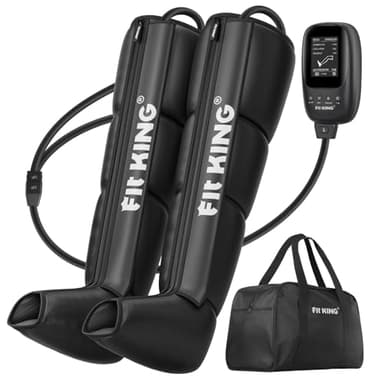
FIT KING Air Compression Recovery Boots
Sequential chamber inflation — the mechanism that actually distinguishes recovery boots from a leg-shaped pressure cuff — at a third of what the category leader charges.
What it gets right
- Genuinely sequential: chambers fire ankle-upward rather than all at once
- Sized options rather than one-size-fits-nobody
- A fraction of the premium system price
What it does not
- Louder pump than the premium units
- Bulky to store and not remotely portable
- Sizing runs specific — measure before buying
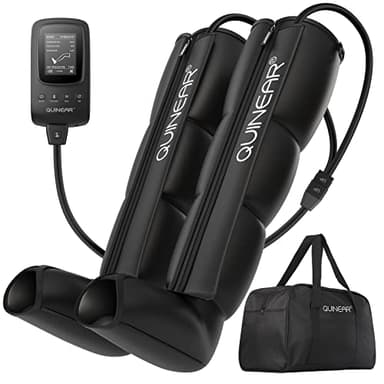
QUINEAR Leg Recovery Compression System
Covers foot, calf and thigh in one sleeve, which matters because the foot is where most budget systems stop and where a lot of the swelling sits.
What it gets right
- Includes the foot, which many systems omit
- Multiple pressure levels and modes
What it does not
- Pump noise
- Not portable
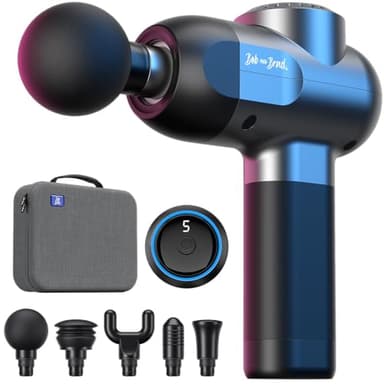
Bob and Brad C2 Massage Gun
The only gun in this roundup whose maker publishes all four numbers that decide whether it reaches the muscle — amplitude, stall force, speed range and noise — and the stall-force figure is higher than the premium units that hide theirs.
What it gets right
- Publishes amplitude, stall force, speed range and noise — the two market leaders publish none of the first three
- Published stall force of over 44 lb is higher than the figure Therabody publishes for the Prime
- 1.5 lb is light enough to hold overhead against your own shoulder without your arm giving out first
- FSA/HSA eligible, which quietly makes it cheaper again for a lot of buyers
What it does not
- 10 mm amplitude is genuinely shorter than a 16 mm premium stroke — that difference is real for glutes and thick back muscle
- No app, no pressure-feedback screen, no ecosystem
- Five fixed speeds rather than a continuous range
Common questions
Should I use compression boots before or after a workout?
After. Compression boots are a recovery intervention — they move fluid proximally, which is not what a body needs before hard effort. A warm-up must raise tissue temperature and activate muscle, and lying still in inflating sleeves does neither. Twenty to thirty minutes after a session, or later the same evening; both work.
How long should you use compression boots for?
Twenty to thirty minutes, which is where most systems time out anyway, and there is no strong reason to go longer. Once a day is plenty for ordinary training. Start at a lower pressure than you expect to want for the first several sessions, and elevate the legs slightly if you can — it works with the mechanism and costs nothing.
Can you use compression boots every day?
Yes, for most people, at sensible pressures and for 20–30 minutes. Daily use is reasonable if you are training daily or on your feet all day. It is not doing anything that needs a recovery day of its own — but if a limb becomes newly swollen, red, warm or painful in one area, stop and get it looked at rather than continuing.
Should I use compression boots on rest days?
You can. No harm and a modest benefit — it is the same intervention whether or not you trained. If you enjoy it and it fits your day, there is no reason not to. It is not doing anything that requires a preceding workout to make sense.
Sources
- 1.Does Massage Gun or Foam Roller Use During a Warm-Up Improve Performance in Trained Athletes? (PMC12473898)
- 2.Percussion massage therapy and recovery from delayed onset muscle soreness — randomized controlled trial (PMC11979224)
- 3.Foam Rolling or Percussive Massage for Muscle Recovery: Insights into DOMS (PMC12286022)