Symptoms
Best Tools for Wrist & Forearm Tightness
Forearm aching from typing, gripping or repetitive work almost always lives in the muscle, not the wrist joint. A ball rolled under the forearm on a desk does more than any powered device here, and it costs almost nothing — but the wrist itself, and anything that tingles into the hand, is a place to keep tools away from and a clinician in the picture.
By Stephen V.Published Updated
Disclosure:Grip & Gait earns a commission when you buy through links on this page, at no extra cost to you. It never changes what we recommend or the order we rank things in — here is exactly how we’re funded.
For forearm tightness from typing, gripping or repetitive work, a small ball rolled under the forearm muscle — on a desk, with pressure you control — is the most useful tool, and a scraper or a gun on a light setting can help the muscle belly. The wrist joint itself, and any numbness or tingling into the hand, is not a target for pressure tools; that is nerve territory and belongs with a clinician.
What is actually happening
The muscles that move your fingers and wrist sit in the forearm, and their tendons run down through the wrist into the hand. Typing, mouse work, gripping tools and repetitive lifting keep those forearm muscles contracting for hours, and they fatigue and tighten much like any overused muscle — producing an ache along the forearm, sometimes with tender spots near the elbow. This is muscular, and pressure and rest help it.
Where it gets more careful is the wrist and hand. Tingling, numbness or a “pins and needles” feeling in the fingers, or pain in the wrist joint itself, points toward the nerves and tendons that pass through the narrow wrist — not the forearm muscle — and that is not something to press, percuss or work aggressively. The distinction between muscular forearm ache (fine to work) and wrist or nerve symptoms (hands off, see someone) is the whole safety message of this page.
Which class of tool fits
| Tool class | Cost | Why it does or doesn’t work here | Verdict |
|---|---|---|---|
| Massage ball (on the forearm) | Cost: Budget | Rest your forearm on a desk, put a ball under the muscle, and lean with pressure you control. Reaches the forearm muscle precisely, and you can do it at your desk between tasks.Where it fails: Not on the wrist joint or the bony parts, and not if it produces tingling into the hand. | Start here |
| Rest, grip changes and breaks | Cost: Budget | The actual fix for overuse. Reducing the repetitive load, taking breaks, and adjusting how you grip and type is what lets an overworked forearm settle.Where it fails: It is not a purchase, which is exactly why it gets skipped for a gadget. | Start here |
| Scraper / gua sha | Cost: Budget | The forearm is a classic place practitioners scrape, and the geometry suits the long muscle. Use light pressure with an emollient.Where it fails: Very easy to bruise, the evidence is thin, and it belongs on the muscle, never the wrist or a nerve. | Sometimes |
| Massage gun (light) | Cost: Mid-range | On the fleshy forearm muscle at a low setting it can loosen tightness, particularly nearer the elbow.Where it fails: Not on the wrist, not on bone, and not near the front of the wrist where nerves and vessels pass. A ball is easier to control here. | Sometimes |
| Stretching | Cost: Budget | Gentle wrist-flexor and extensor stretches complement the pressure work and are easy to do at a desk.Where it fails: Stop if a stretch reproduces tingling or numbness into the hand; that is a nerve signal, not a tight muscle. | Sometimes |
What we would actually buy
Buy this first
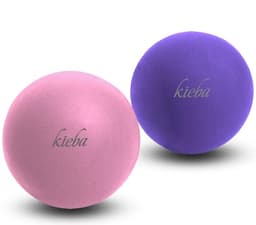
Kieba Massage Lacrosse Balls
A hard ball under the forearm on a desk gives controllable, targeted pressure on the exact muscle that types and grips all day. Costs less than a sandwich and lives in a drawer.
Price as of October 21, 2026. #ad How we’re funded
For the muscle, light hand only
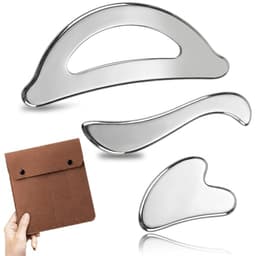
Rena Chris Gua Sha & Muscle Scraper Tool
Stainless scraping tools suit the long forearm muscle and hold a consistent edge. Use light pressure with an emollient, keep it off the wrist, and stop if anything tingles.
Price as of October 21, 2026. #ad How we’re funded
For a quick loosening near the elbow
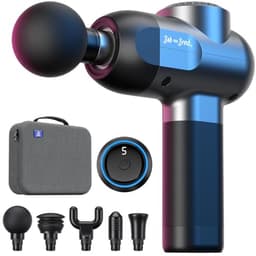
Bob and Brad C2 Massage Gun
Percussion on the fleshy forearm muscle at a low setting, especially up near the elbow. Light, published specs, and it turns down far enough to stay gentle here.
The overlap with tennis elbow — and the difference
Forearm tightness and tennis elbow are neighbors. Tennis elbow is specifically pain at the outer elbow where the forearm extensor tendons attach, and general forearm aching often accompanies it. If your pain is concentrated at the bony point on the outside of the elbow, read the tennis elbow page— the tendon attachment needs a slightly different, more cautious approach than the muscle belly does. Working the forearm muscle can help both, but neither is helped by hammering the painful tendon itself.
There is a third neighbor worth separating out: a hand that feels weak rather than tight. Weakness is a training question rather than a soft-tissue one, and the tools are different — a gripper, extension bands and, more usefully than either, something heavy to carry. That is weak grip and hand strength.
“Neurologic conditions resulting in loss or altered sensation; peripheral vascular insufficiency or disease; bleeding disorders; medications that thin the blood or alter sensations; local tissue inflammation, bruises, or tumors.”
If climbing or hangboarding is what loads your forearms, the balance work matters more than anything you can rub: the flexors get trained constantly and the extensors never. Recovery tools for climbers covers the antagonist loading and the places a gun must not go on a hand.
If the problem is tingling and numbness in the thumb, index and middle finger rather than an aching forearm — especially if it wakes you — that is nerve compression and a different page: carpal tunnel: what helps and what makes it worse covers the one item worth buying and the three that make it worse.
Common questions
What is the best tool for tight, aching forearms?
A small hard ball rolled under the forearm muscle on a desk, with pressure you control. It targets the exact muscle that types and grips, and you can use it between tasks. A scraper or a massage gun on a light setting can help the muscle belly too. All of them stay on the forearm muscle and off the wrist joint — and none of them is appropriate if you have tingling or numbness in the hand.
Can I use a massage gun on my wrist or carpal tunnel?
No. The front of the wrist is where nerves and blood vessels pass through a narrow space, and percussion there can irritate them. Carpal tunnel symptoms — tingling and numbness in the fingers — are a nerve problem that needs assessment, not a massage tool. You can work the forearm muscle above the wrist at a light setting, but keep any tool off the wrist itself and stop if anything tingles into the hand.
Why do my forearms ache from typing?
Because the muscles that move your fingers and wrist sit in the forearm and contract continuously while you type, mouse and grip — so they fatigue and tighten like any overused muscle, producing an ache and tender spots, often near the elbow. Pressure on the muscle and, more importantly, breaks and grip changes settle it. Tingling or numbness in the fingers is different — that is a nerve signal and needs a clinician.