Guides
Recovery Tools by Runner Problem
Six problems that account for most of what runners try to self-treat, each routed to the cheapest tool that genuinely addresses it - and, where the honest answer is that no tool does, a plain statement to that effect rather than a product.
By Stephen V.Published Updated
Disclosure:Grip & Gait earns a commission when you buy through links on this page, at no extra cost to you. It never changes what we recommend or the order we rank things in — here is exactly how we’re funded.
Quick picks
Ranked on published manufacturer specs and what they mean for the job, not on testing we have not done. Tap a row for the full reasoning. How we score.
| # | Product | Best for | Score | Price |
|---|---|---|---|---|
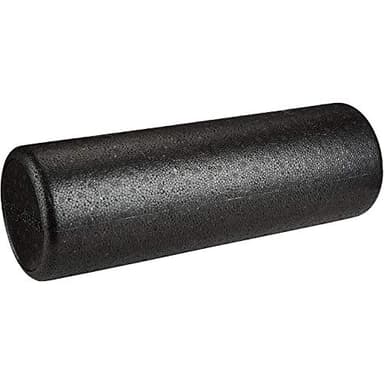
| 1 |  Amazon Basics High-Density Foam Roller (18 in) One firm 18 in cylinder covers more runner problems than anything else on this site, and body position gives you the whole intensity range without a second purchase. | Calves, quads, hamstrings - the biggest share of runner soreness | 8.8 | $15.29 · View on Amazon Price as of October 21, 2026. #ad How we’re funded |
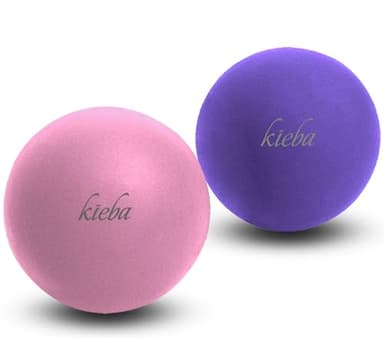
| 2 |  Kieba Massage Lacrosse Balls A roller cannot get into the muscles that tension the IT band. Two firm balls and a wall can, for less than the price of lunch. | Hips, glutes and the TFL behind lateral knee pain | 8.6 | $7.99 · View on Amazon Price as of October 21, 2026. #ad How we’re funded |
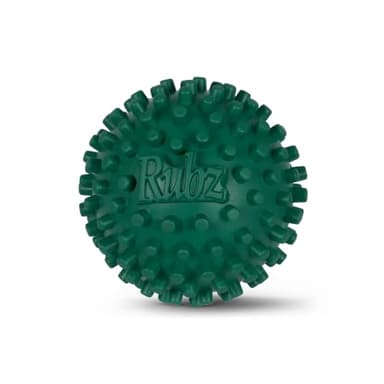
| 3 |  Due North Foot Rubz Massage Ball The cheapest item on the site, and for plantar heel pain it does most of what any tool here can do. Sitting down, not standing on it. | Arch and morning heel pain | 8.4 | $5.88 · View on Amazon Price as of October 21, 2026. #ad How we’re funded |
| 4 |  Bob and Brad C2 Massage Gun The only gun in our roundup whose maker publishes amplitude, stall force, speed range and noise. Reaches a TFL standing, which a ball does not. | When getting on the floor is the reason you skip sessions | 8.2 | |
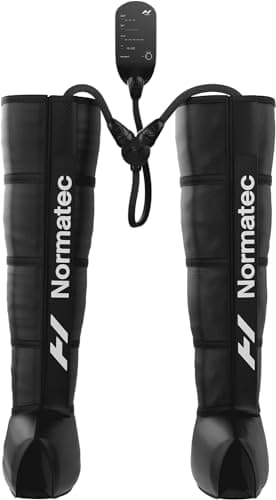
| ✕ | 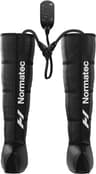 Hyperice Normatec 3 Recovery System A serious device for general post-session recovery. It is the wrong answer to a specific Achilles, IT band or shin problem, and it costs many times everything above it combined. Skip this | Whole-leg recovery, at a price no niggle justifies | 6.8 | $899.00 · View on Amazon Price as of October 21, 2026. #ad How we’re funded |
How to use this page
Find the problem, read the one-line answer, then follow the technique link. Every recommendation below is the cheapest tool that genuinely addresses the problem rather than the most impressive one, because in this category those are almost never the same object.
Running injuries are common and concentrated. A systematic review of long distance runners found the incidence of lower-extremity injuries ranged from 19.4% to 79.3% across studies, with the knee the predominant site, and it found strong evidence that a history of previous injury is a risk factor for another. That last point is the reason a $17 cylinder used consistently beats a $500 device used in January.
| Problem | Buy | What it does, and what it does not |
|---|---|---|
| Achilles and heel | Foam roller | Works the calf that pulls on the tendon. It does not treat the tendon - progressive loading does, and that is not a purchase. |
| IT band / lateral knee | Massage ball | Reaches the TFL and glute medius that tension the band. Rolling the band itself did not change measured band stiffness in a controlled trial. |
| Shin splints | Foam roller, for the calf | No treatment for shin splints came out of a systematic review recommendable. The calf work is comfort; the training load is the actual variable. |
| Plantar fascia | Spiked arch ball | Does most of the available work for a few dollars. The free plantar-fascia stretch has better trial evidence than any product here. |
| Tight calves | Foam roller or stick | The most cooperative muscle on the body for a roller. A stick is the answer if standing on the foot hurts. |
| Sore quads and hamstrings after a hard session | Foam roller | Short-term comfort and range of motion, reliably. Effects on next-day soreness are modest whatever the marketing says. |
1. Achilles and heel pain
The tool: a firm foam roller, used on the calf. Not on the tendon, which is dense collagen inserting onto bone with almost nothing between the two.
The part that works: progressive loading. A randomized controlled trial of 58 patients with chronic midportion Achilles tendinopathy compared twelve weeks of eccentric training with twelve weeks of heavy slow resistance training; both produced significant improvements in function, symptoms and pain during activity that were still present at 52 weeks. Get the specific program from a physical therapist.
Read: foam rolling for Achilles tendonitis for the technique, and Achilles and heel pain for the full tool routing.
2. IT band and lateral knee pain
The tool: a firm massage ball, used on the tensor fasciae latae and gluteus medius. A roller for the outer quad. Nothing for the band itself.
The part that works: hip abductor strengthening. A 2024 systematic review of conservative treatment in runners found it the common strategy across thirteen studies, with reported pain reduction of 27% to 100% and functional improvement of 10% to 57% over two to eight weeks — with large heterogeneity between studies, so read those as a spread of findings rather than a promise.
Read: IT band trigger points for where the tender spots actually sit, and IT band pain for the tool routing.
3. Shin splints
The tool: a foam roller for the calf, and light work on the strip of muscle beside the shin bone. Nothing on the bone itself.
The honest position: a systematic review of eleven trials of treatments for medial tibial stress syndrome concluded that none of the studies were sufficiently free from methodological bias to recommend any of the treatments investigated — and specifically listed stretching and strengthening exercises, compression stockings and lower leg braces as not proven effective at that level of evidence. Nothing sold on this site treats shin splints. Training load is the variable that moves.
Read: foam rolling shins and calves, and shin splints.
4. Plantar fascia and morning heel pain
The tool: a firm or spiked ball under the arch, used sitting down. This is the one problem on the list where a few dollars buys most of what is available.
The part that works: plantar fascia-specific stretching, which a two-year follow-up trial found outperformed Achilles tendon stretching for chronic plantar fasciitis. Add the calf: a randomized trial of 60 patients with plantar heel pain found stretching plus soft-tissue work on the calf musculature beat stretching alone on physical function and bodily pain.
Read: rolling the plantar fascia, and plantar fasciitis.
5. Tight calves
The tool: a foam roller if you can get on the floor, a roller stick if standing on the foot hurts. Both muscles matter — gastrocnemius with the leg straight, soleus with the knee bent and the roller lower down. Which roller, ranked for a runner’s legs specifically, is in the best foam roller for runners.
Why it earns its place: calf tension pulls through the Achilles into the heel and onward into the fascia, which is why the same two minutes of calf work appears in three of the six problems on this page. If you buy one thing, this is the muscle it should be aimed at.
Read: foam rolling shins and calves, and tight calves and shin pain.
6. Sore quads and hamstrings after a hard session
The tool: a foam roller. Large muscles, broad contact, body weight does the work — this is the job foam rollers are unambiguously good at.
The size of the effect: modest and short-term. The comparison of foam rolling and percussive massage for muscle recovery is the honest place to calibrate expectations. Both do something for comfort; neither abolishes next-day soreness.
Read: how to foam roll properly, and DOMS and muscle soreness.
Which roller, given the above
Four of the six problems point at a foam roller, so the density question comes up immediately. The short answer is that it matters less than the listings suggest: a randomized trial comparing soft, medium and hard rollers found no significant between-group difference in knee range of motion or pressure pain threshold. Buy a firm smooth cylinder and regulate the pressure with body position, which is free. The full reasoning is in foam roller density, explained.
If you already own a massage gun
All six problems have a gun version, and all six have a line you should not cross with one — the tendon, the band over the femur, the shin crest, the point of the heel. Head choice and stopping lines for each area are in massage gun for Achilles, IT band and shin pain, and the head shapes themselves are in massage gun attachments explained.
What we would not buy first
Compression boots and premium percussion devices are good at what they do, and what they do is general post-session recovery rather than a specific problem. If your complaint is a particular Achilles, a particular IT band or a particular shin, the tools above address it directly for a small fraction of the money. Buy the specific thing first; the general thing is a purchase for someone who has already solved the specific one.
One category is deliberately absent from the routing above because it is not aimed at a problem: pneumatic compression treats the whole limb rather than the structure that hurts. It still has a place in a mileage block, and the fit measurement that decides whether it works at all is in the best compression boots for runners.
Court and field athletes load the same tissues on a different schedule. Recovery tools for basketball players covers the jumping sport where ankles and knees are 41% of injuries, and recovery tools for tennis players covers the one where half of all injuries are still in the lower limb.
Every pick, in full
Specs below are the manufacturer’s own published figures, each linked to the page it came from. Where a maker does not publish a number, the table says so and names the page we checked — that absence is information too.
Price as of October 21, 2026. #ad How we’re funded
Amazon Basics High-Density Foam Roller (18 in)
A dense foam cylinder does the same mechanical job as a textured roller for a fraction of the money, and for a first roller that is the correct purchase.
What it gets right
- Does the actual mechanical work — sustained pressure across a broad contact area
- Nothing to break; no core, no seams, no electronics
- 18 in is long enough to lie along your spine, which the 13 in rollers are not
What it does not
- Flat surface spreads pressure rather than concentrating it
- Solid EVA softens over a few years of heavy use
Price as of October 21, 2026. #ad How we’re funded
Kieba Massage Lacrosse Balls
The highest work-per-dollar tool on this entire site. A hard rubber sphere concentrates all your body weight into one square inch, which is more pressure than any handheld gun can generate.
What it gets right
- Concentrates body weight into a single point — more local pressure than any percussion device
- Nothing to charge, nothing to break, fits in a coat pocket
- Reaches under the shoulder blade against a wall, which a roller physically cannot
What it does not
- Unforgiving — very easy to overdo on a first session
- Wrong tool for broad surfaces like quads or lats
Price as of October 21, 2026. #ad How we’re funded
Due North Foot Rubz Massage Ball
The cheapest thing on this site that genuinely competes with a $400 device for a specific job — a spiked rubber ball under a plantar fascia is hard to beat and impossible to overspend on.
What it gets right
- Spikes concentrate pressure into the fascia rather than spreading across the sole
- Small enough to keep beside the bed, which is where it needs to be
- Costs less than a coffee
What it does not
- Spikes are too sharp for some people barefoot
- Small contact area only
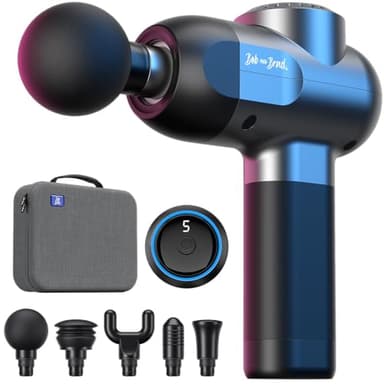
Bob and Brad C2 Massage Gun
The only gun in this roundup whose maker publishes all four numbers that decide whether it reaches the muscle — amplitude, stall force, speed range and noise — and the stall-force figure is higher than the premium units that hide theirs.
What it gets right
- Publishes amplitude, stall force, speed range and noise — the two market leaders publish none of the first three
- Published stall force of over 44 lb is higher than the figure Therabody publishes for the Prime
- 1.5 lb is light enough to hold overhead against your own shoulder without your arm giving out first
- FSA/HSA eligible, which quietly makes it cheaper again for a lot of buyers
What it does not
- 10 mm amplitude is genuinely shorter than a 16 mm premium stroke — that difference is real for glutes and thick back muscle
- No app, no pressure-feedback screen, no ecosystem
- Five fixed speeds rather than a continuous range
Price as of October 21, 2026. #ad How we’re funded
Hyperice Normatec 3 Recovery System
The reference system in the category, and also the one whose price gap over a sequential competitor buys refinement rather than a different mechanism — which is why it is our skip for a home buyer.
What it gets right
- The most refined pressure control and the quietest pump in the category
- The system most likely to still be supported in five years
What it does not
- Several times the price of boots that inflate sequentially the same way
- The added refinement does not change the mechanism
Common questions
What is the one recovery tool a runner should buy first?
A firm 18 in foam roller. Four of the six most common runner complaints — Achilles, shins, calves and post-session quad and hamstring soreness — are addressed by working the calf and thigh with a cylinder, and body position gives you the full intensity range without a second purchase. The second thing to buy is a pair of firm balls for the hips.
What helps IT band pain in runners?
Working the muscles that tension the band — tensor fasciae latae, gluteus medius and the outer quad — rather than the band itself, plus hip abductor strengthening. A 2024 systematic review of conservative treatment in runners found hip abductor strengthening the common strategy across thirteen studies, with reported pain reduction of 27% to 100% over two to eight weeks and large heterogeneity between studies.
Is there a tool that treats shin splints?
No. A systematic review of eleven trials of interventions for medial tibial stress syndrome concluded that none of the studies were sufficiently free from methodological bias to recommend any of the treatments investigated. Rolling the calf is worth doing for comfort. The variable that actually moves shin splints is training load, worked out with someone who can watch you run.
Are compression boots worth it for a runner with a specific injury?
They are the wrong shape of answer. Compression boots address general post-session leg recovery, not a particular Achilles, IT band or shin problem, and they cost many times everything else on this page combined. If you have a specific complaint, buy the specific tool. General recovery devices are a purchase for someone who has already dealt with the specific thing.
How often should a runner do this work?
Most days, briefly, beats twice a week at length. Four to five minutes covers a calf, a hip and a foot. Consistency is what makes any of it worth owning, which is also the strongest argument for buying the tool you find tolerable rather than the one that looks most serious.
When should a runner stop self-treating and see someone?
Pain that concentrates into one small point on a bone, worsens through a run rather than settling, or wakes you at night. Any knee that swells, locks or gives way. A calf that is swollen, warm or painful without exercise. Numbness, tingling or pain radiating down a limb. And anything that has not improved over several weeks of sensible management.
Sources
- 1.Incidence and determinants of lower extremity running injuries in long distance runners: a systematic review - British Journal of Sports Medicine (PMC2465455) — incidence 19.4% to 79.3%; knee the predominant site; previous injury a risk factor for another
- 2.Heavy Slow Resistance Versus Eccentric Training as Treatment for Achilles Tendinopathy: A Randomized Controlled Trial - American Journal of Sports Medicine (PubMed 26018970) — 58 patients; eccentric and heavy slow resistance training both improved significantly and held at 52 weeks
- 3.Effects of conservative treatment strategies for iliotibial band syndrome on pain and function in runners: a systematic review - Frontiers in Sports and Active Living (PubMed 39247485) — 13 studies, 201 participants; hip abductor strengthening the common strategy
- 4.Treatment of medial tibial stress syndrome: a systematic review - Sports Medicine (PubMed 23979968) — eleven trials; none sufficiently free from bias to recommend any treatment
- 5.Plantar fascia-specific stretching improves outcomes in chronic plantar fasciitis — two-year follow-up (PubMed 16882901) — plantar fascia-specific stretching outperformed Achilles tendon stretching at two years
- 6.Effectiveness of myofascial trigger point manual therapy combined with a self-stretching protocol for the management of plantar heel pain: a randomized controlled trial - JOSPT (PubMed 21285525) — stretching plus calf soft-tissue work beat stretching alone on physical function and bodily pain
- 7.Comparison of Three Different Density Type Foam Rollers on Knee Range of Motion and Pressure Pain Threshold: A Randomized Controlled Trial - International Journal of Sports Physical Therapy (PMC6044602) — no significant between-group difference between soft, medium and hard rollers
- 8.Foam Rolling or Percussive Massage for Muscle Recovery: Insights into DOMS (PMC12286022)