Guides
Recovery Tools for Basketball Players
Ankles and knees account for 41% of basketball injuries and the most common injury type is a ligament sprain - which is the first thing to be honest about, because no recovery tool prevents a sprain. What tools do help with is the other half: the calves, quads and feet that take every jump and stop. Here is the kit, and what to do instead for the part it cannot touch.
By Stephen V.Published
Disclosure:Grip & Gait earns a commission when you buy through links on this page, at no extra cost to you. It never changes what we recommend or the order we rank things in — here is exactly how we’re funded.
The short version
Buy an 18-inch high-density foam roller first. It covers calves, quads and the thoracic spine, it costs very little, and those are the tissues that absorb a season of jumping and decelerating. Add a gun that publishes its numbers if you want faster targeted work on a calf between games, and a ball for the feet, which take every stop and split-step. What nothing on this page will do is prevent the injury you are most likely to get, and the data below is unusually clear about why.
Where basketball players actually get hurt
The 2025 systematic review and meta-analysis of injury incidence in basketball players pooled 22 studies that reported incidence per athlete exposure or exposure hours. The headline numbers:
- Ankle injuries were 25.8% of injuries and knee injuries 15.5%— 41.3% of everything reported, between two joints.
- Ligament sprains were the most common injury type (incidence rate 0.102 per 100 athlete exposures), ahead of muscle and tendon strains (0.037) and concussions (0.028).
- Player contact was the most common mechanism at 42.9%, with non-contact at 25.0%.
- Head and facial injuries made up 16.3%, which the authors flagged as concerning, particularly among female players.
- Female players had significantly higher incidence of ball-contact injuries, knee injuries, dislocations and concussions than male players, and incidence was consistently higher in games than in practice, and higher in collegiate than in high-school players.
A separate 2025 cross-sectional study of British basketball found the same shape in a different population: 122 athletes reported 140 injuries at a median incidence of 2.1 injuries per 1,000 athlete-exposure hours, with lower-limb injuries 70.7% of the total — ankle 32.9% and knee 25.7%. Guards and forwards had higher incidence than centres.
Read those together and the honest conclusion is awkward for a site that sells recovery tools: most basketball injuries are acute, contact or landing events at the ankle and knee. A foam roller does not stop someone landing on your foot. What reduces ankle sprain recurrence is bracing, taping and balance training — we do not currently cover braces or balance equipment in our product registry, and we would rather say so than route you to something adjacent that we do sell.
What to treat, by body part
| The problem | What to use | Why |
|---|---|---|
| Calves and Achilles after a jumping week | Roller or gun | Every jump and landing goes through here, and muscle and tendon strains were the second most common injury type in the meta-analysis. This is the tissue tools are genuinely good for. |
| Quads and patellar tendon | Roller, loading for the tendon | Deceleration loads the quad and its tendon. Rolling manages the muscle; what changes a tendon is graded loading. |
| Feet after back-to-back games | Foot roller or ball | Stops, split-steps and landings all land on the plantar surface. Two minutes a foot is the cheapest habit in the sport. |
| Hips and glutes from defensive stance | Massage ball | A low stance holds the glutes and hip flexors under tension for long stretches. A ball against a wall or floor reaches both. |
| A rolled ankle | Clinician, then rehab | Ankle injuries are 25.8% of basketball injuries and ligament sprains the most common type. This is an assessment and a rehab program, not a recovery-tool problem. |
| Any head contact | Stop playing, get assessed | Head and facial injuries were 16.3% of injuries in the meta-analysis. Nothing on this site has any role here at all. |
What to look for in the tools themselves
- Length over cleverness in a roller. Eighteen inches spans a calf, a quad and the thoracic spine. Short travel rollers are for bags, not for a season.
- Published amplitude and stall force in a gun. Those are the only two numbers that separate percussion from vibration, and plenty of expensive guns publish neither.
- Something you can use courtside or on a bus. Back-to-back games are the scenario. A ball in a bag gets used; a 2.5 lb gun at home does not.
- Density you will tolerate on a sore calf. The hardest roller is not the best roller; a medium-density surface you actually use beats a punishing one you avoid.
- Nothing claiming to prevent sprains. The injuries that dominate the data are contact and landing events, and no massage device has any claim on them.
What we would actually buy
Three items, in the order a jumping sport justifies them: the legs tool, the targeted tool, and the feet tool.
Buy this first
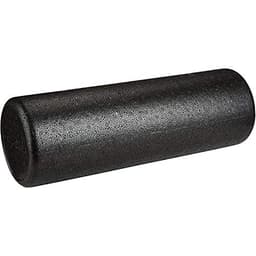
Amazon Basics High-Density Foam Roller (18 in)
Eighteen inches of high-density foam covers both calves, both quads and the thoracic spine, costs very little and will outlast your playing career. The default kit for a jumping sport.
Price as of October 20, 2026. #ad How we’re funded
For targeted work between games
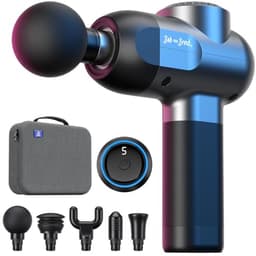
Bob and Brad C2 Massage Gun
Publishes amplitude and stall force at a budget price, which almost no premium gun manages. Thirty seconds on each calf before a second game in two days is what this is for.
For the feet
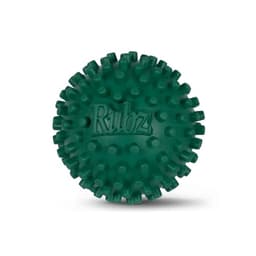
Due North Foot Rubz Massage Ball
A pocket-sized spiky ball you can roll under a foot sitting on the bench or on the bus home. Every stop and landing in basketball goes through the plantar surface, and nothing else in the kit reaches it.
Price as of October 20, 2026. #ad How we’re funded
A week that fits a game schedule
Incidence was consistently higher in games than in practice in the meta-analysis, which means the recovery that matters sits between games rather than between practices. Keep it simple.
Match day plus one: five minutes rolling calves and quads, two minutes a foot, and a ball on the glutes if you spent the game in a low stance. Nothing aggressive on anything that took a direct hit. Match day plus two: this is the day to use a gun on a specific tight calf or quad, under a minute per area, and to do whatever tendon loading you have been given. Through the week: balance and landing work, because that is the half of the problem tools cannot touch, and it is aimed at the 41% of injuries that happen at the ankle and knee.
If you are playing two games in three days, the honest priority order is sleep, food, then everything on this page. A roller is not a substitute for either.
Where to go next
By body part: Achilles and heel pain, calf and shin pain, knee pain and quad tightness cover the four tissues a jumping sport loads hardest. For the kit, the starter recovery kit is the cheapest sensible set and the foam roller roundup goes deeper on density and length. Other court and field sports: tennis players, soccer players and runners, by problem.
Common questions
What are the most common basketball injuries?
Ankles and knees, and mostly sprains. The 2025 systematic review and meta-analysis of 22 studies found ankle injuries were 25.8% of injuries and knee injuries 15.5% — 41.3% between the two — with ligament sprains the most common injury type at an incidence of 0.102 per 100 athlete exposures, ahead of muscle and tendon strains at 0.037 and concussions at 0.028. Player contact was the leading mechanism at 42.9%. A British basketball study the same year found lower-limb injuries made up 70.7% of the total.
Do recovery tools prevent basketball injuries?
Not the ones that dominate the data. Most basketball injuries are acute contact or landing events at the ankle and knee, and no roller, ball or massage gun has any claim on those. What reduces ankle sprain recurrence is bracing or taping and balance training, which is a conversation with a physiotherapist rather than a purchase here. Recovery tools help with the other half: calves, quads, hips and feet under a heavy schedule.
How do you recover between back-to-back games?
Sleep and food first, then five minutes rolling calves and quads, two minutes under each foot, and a ball on the glutes if you played a lot of minutes in a low defensive stance. Save targeted percussion for the day after rather than immediately before a game, keep it under a minute per area, and leave anything that took a direct hit alone.
Should basketball players use a massage gun on the knees?
Not on the knee itself. Percussion over a joint line, the kneecap or any bony surface is useless at best and aggravating at worst. Use it on the quad above the knee and the calf below it, which is where the muscle doing the work actually is. For a knee that swelled after a twist or that gives way, stop and get it assessed — knee injuries are 15.5% of basketball injuries in the meta-analysis and that is not a category to self-manage.
Sources
- 1.Injury Incidence Rate According to Mechanism, Body Location, and Type in Basketball Players: A Systematic Review and Meta-Analysis - Sports Medicine 2025 (PMID 41091317) — 22 studies; ankle 25.8% and knee 15.5% of injuries; ligament sprains the most common type
- 2.Epidemiology of injuries in British basketball: a retrospective cross-sectional study - BMJ Open Sport & Exercise Medicine 2025 (PMC12530424) — 122 athletes, 140 injuries, median 2.1/1,000 AE-hours; lower limb 70.7%
- 3.Preventive effect of foam rolling on muscle soreness after exercise: a systematic review and meta-analysis - Journal of Bodywork and Movement Therapies 2024 (PubMed 39593540) — what rolling does for soreness, which is the claim we make for the legs
- 4.camelcamelcamel — Amazon Basics foam roller price history — price history for the first pick