Rollers & Balls
The Best Massage Sticks
A stick is the one rolling tool where you set the pressure with your arms instead of your body weight, which makes it the right answer for anyone who cannot get on the floor and the wrong answer for anyone chasing maximum force. Here is which stick to buy, the design detail that decides whether you keep using it, and the honest limit of what any of them do.
By Stephen V.Published
Disclosure:Grip & Gait earns a commission when you buy through links on this page, at no extra cost to you. It never changes what we recommend or the order we rank things in — here is exactly how we’re funded.
Quick picks
Ranked on published manufacturer specs and what they mean for the job, not on testing we have not done. Tap a row for the full reasoning. How we score.
| # | Product | Best for | Score | Price |
|---|---|---|---|---|
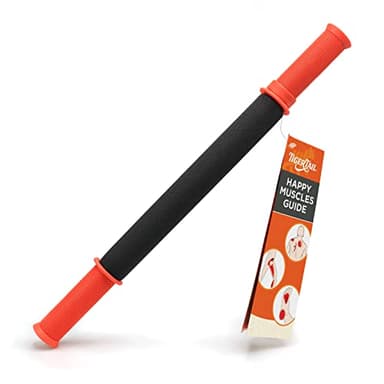
| 1 |  Tiger Tail 18 in Massage Stick One smooth sleeve rather than segmented beads, which is the single design decision that stops a stick pinching skin and leg hair. Rigid enough to apply real pressure. | Best overall | 8.5 | $39.95 · View on Amazon Price as of October 21, 2026. #ad How we’re funded |
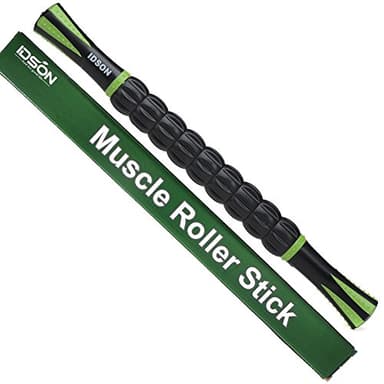
| 2 |  Idson Muscle Roller Stick The segmented-bead stick in every team bag. It does the core job on a calf for the price of a sandwich, and the beads that let it roll are also the ones that pinch. | Best value, under ten dollars | 8.0 | $8.89 · View on Amazon Price as of October 21, 2026. #ad How we’re funded |
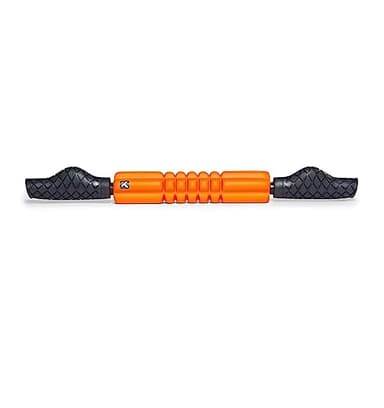
| 3 | 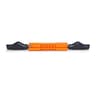 TriggerPoint GRID STK Handheld Roller (21 in) At 21 in it is the longest stick here, which is what lets you cover a whole hamstring or quad end to end instead of in three overlapping passes. | Long muscles in one pass | 8.1 | $42.99 · View on Amazon Price as of October 21, 2026. #ad How we’re funded |
| 4 |  THERABAND Roller Massager+ The one we hand to someone who needs to back off instantly - a flare-prone shin, a post-op leg, an older user. Least able to generate real force, which is the trade. | Fine pressure control | 7.7 | $35.50 · View on Amazon Price as of October 21, 2026. #ad How we’re funded |
| ✕ |  Hyperice Vyper 3 Vibrating Foam Roller The upgrade people buy instead of a stick. It is a good vibrating roller, but it is a floor tool at twenty times the price, and it does not reach a calf while you sit in a chair. Skip this | The one to skip | 6.3 |
What a stick is actually for
Every rolling tool on this site is a way of pressing something firm into a muscle. What separates them is where the force comes from.
With a foam roller, the force is your body weight and the floor. With a ball against a wall or under your hip, it is your body weight concentrated into a small area. Both of those give you a lot of pressure and almost no fine control: you are either on the roller or off it, and the amount of load is set by your mass and the angle of your limbs.
A stick inverts that. You hold it in two hands and push, so the pressure comes from your arms. That has three consequences that decide whether this is the right purchase for you:
You can treat a calf sitting in a chair.No floor, no getting down, no getting back up. This is the stick’s real advantage and it is routinely underrated by people who can get on the floor without thinking about it. For anyone with a knee that does not kneel, a hip replacement, a pregnancy, or simply an office with a carpet they are not lying on, a stick is not a lesser roller — it is the only one of the three that fits the situation.
You can stop instantly. Your arms have a reflex your body weight does not. On a shin that flares, a calf that has just cramped, or a quad the day after something hard, being able to come off the pressure in a fraction of a second is worth more than a higher ceiling you would not use.
You cannot match body weight.This is the honest limit. If what you want is the deepest possible pressure into a glute or a dense quad, a stick will not get you there and a lacrosse ball under your own weight will. Different tools, different jobs — the full comparison is in foam roller vs massage stick.
The design detail that decides whether you keep using it
Massage sticks come in two shapes. One is a rigid rod with a row of independently spinning beads or segments threaded along it. The other is a rigid rod inside a single continuous sleeve.
The beaded design exists for a good reason: each segment rotates on its own, so the stick rolls along the limb instead of dragging across the skin. It is also cheaper to make, which is why almost every stick under fifteen dollars is built this way.
The problem is the gaps between the segments. Run a beaded stick down a hairy calf under real pressure and some of those gaps will catch skin and hair, and the pinch is sharp enough that people stop using the tool rather than work out which direction avoids it. A smooth one-piece sleeve cannot pinch because there is nothing for anything to be caught between. That is the whole argument for spending four times as much, and for most people it is a good argument — a ten-dollar tool you have stopped using is more expensive than a forty-dollar one you use twice a week.
If your legs are smooth or you shave them, the beaded stick’s drawback mostly disappears and it becomes a genuinely excellent buy.
How we ranked these
- Sleeve design, weighted heaviest. Smooth beats segmented for most people, for the pinching reason above. We do not treat it as a tie.
- Working length. The part of the stick that actually contacts muscle, not the overall length including handles. A longer working surface covers a hamstring in one pass; a short one turns the same job into three, and three passes is where people get bored.
- Rigidity. A stick that flexes under pressure is converting your effort into bending the tool. The core needs to be stiff enough that everything you push goes into the leg.
- Grip at the ends. You are pushing with your palms for sixty to ninety seconds per muscle. Handles that rotate freely and are wide enough to lean on matter more than the texture of the middle.
- Price against a foam roller. A plain dense roller costs about ten dollars and covers more muscle faster. A stick has to justify itself on access and control, not on being a better roller, and we rank down anything priced as if it were a premium device.
What the research supports, and what it does not
Sticks have barely been studied in isolation. What has been studied is rolling as a category, and that work is reasonably encouraging about two specific outcomes and silent about everything else.
A systematic review and meta-analysis on range of motion supports rolling as a way to improve joint range, and a meta-analysis on post-exercise soreness found a preventive effect on soreness after exercise. A 2024 meta-analysis comparing static stretch training with foam rolling found the two broadly comparable for range-of-motion gains — which is the honest framing of what you are buying: a convenient way to do mobility work, not a replacement for doing it.
Two findings are worth knowing before you spend extra. A randomized controlled trial comparing three roller densities on knee range of motion and pressure pain threshold is the reason we treat firmness as a comfort preference rather than a performance spec, and the same logic applies to a stick’s surface texture. And a study on rolling different tissue types is a useful corrective to the idea that you are reshaping anything: what changes acutely is range of motion and how the area feels.
What no study supports is the claim that rolling breaks down adhesions, lengthens fascia, or flushes anything out of a muscle. If you came for that, the honest version is in scar tissue and fascia.
Muscle by muscle, with a stick
Calves.The stick’s best muscle. Sit in a chair, ankle relaxed, and run the stick from just above the ankle to just below the knee, slowly, with moderate pressure. Thirty to sixty seconds a side. Stay off the Achilles tendon itself and off the bony back of the heel. If calves and shins are why you are here, the full routine is in foam rolling shins and calves.
Shins.Work the muscle on the outside of the shin bone, never the bone itself. This is the one place a stick clearly beats a foam roller, because you can aim either side of the tibia precisely and a roller just presses on the whole front of the leg. Shin pain has its own evidence base — a systematic review on medial tibial stress syndrome is the reason we treat load management as the actual treatment and the stick as symptom relief. Start at shin splints.
Quads. Sitting, leg extended, knee to hip. A roller covers a quad faster, but a stick reaches the inner part just above the knee that a roller rolls straight past. See quad tightness.
Hamstrings. Awkward with every tool. Seated with the leg out and the heel on the floor, push down the back of the thigh. This is where the longest stick earns its money.
IT band and the outside of the thigh. Go easy and read why first. A randomized trial on the immediate effects of rolling and stretching on IT band stiffness is the reason we tell people to treat the muscle feeding the band rather than grinding the band itself — the detail is in IT band pain.
Not your lower back. No stick, roller or ball goes on the lumbar spine. Nothing on the back of the knee, the front of the hip crease, or any bony prominence.
Which stick for which person, in one line each
- You want one stick and you are not thinking about it again: the Tiger Tail. Smooth one-piece sleeve so it cannot pinch, rigid enough to apply real pressure, and the design detail you are paying for is the one that decides whether a stick stays in use.
- You want to spend the least possible: the Idson. Under ten dollars, does the core job on a calf, and the beads are both why it rolls nicely and why it can catch skin and leg hair. Smooth legs make this the best value on the page by a distance.
- Your targets are hamstrings and quads:the TriggerPoint GRID STK. 21 in of working length covers a long muscle in one pass, with the brand’s multi-density surface rather than bare plastic. The most expensive stick here and the least packable.
- You need to be able to back off instantly:the THERABAND Roller Massager+. The arm-controlled pressure that is every stick’s advantage is most pronounced here, and the ceiling is correspondingly lowest. The one we would put in a rehab setting.
- Skip the vibrating roller if you came here for a stick. The Hyperice Vyper 3 is a capable tool and a completely different purchase: a floor-based roller at many times the price that cannot be used on a calf while you sit at a desk. If vibration is what you are actually weighing up, read vibrating foam rollers and massage gun vs vibrating roller before spending.
Stick, roller, ball or gun
If you can comfortably get on the floor and you want to cover large muscles quickly, buy a foam roller first — the best foam roller for beginners is the page, and foam roller densityexplains why firmness is a preference. If what you need is deep pressure on one point, a ball beats both — see the best massage balls and foam roller vs massage ball. If you want to treat yourself sitting up, without getting on the floor, and be able to stop instantly, a stick is the right tool and this page ranks them. And if you are weighing a stick against a motor, massage gun vs foam rollercovers the trade honestly — a gun reaches what a stick rolls past, a stick covers ground a gun treats an inch at a time, and the roller is cheaper than both.
Every pick, in full
Specs below are the manufacturer’s own published figures, each linked to the page it came from. Where a maker does not publish a number, the table says so and names the page we checked — that absence is information too.
Price as of October 21, 2026. #ad How we’re funded
Tiger Tail 18 in Massage Stick
A single smooth sleeve rather than segmented beads, which means it will not pinch skin or hair — a small design decision that turns out to matter a lot on hairy calves.
What it gets right
- Smooth one-piece sleeve does not pinch
- Rigid enough to apply real pressure
What it does not
- Costs more than segmented sticks
- No texture variation
Price as of October 21, 2026. #ad How we’re funded
Idson Muscle Roller Stick
The segmented-bead stick that every team bag has, for less than a pair of socks — it does the core job of a stick, and the independently spinning beads are both its feature and its flaw.
What it gets right
- Costs a fraction of the branded sticks and does the same basic job on a calf
- Independently spinning beads roll with the limb rather than dragging the skin
- Light, short and genuinely packable
What it does not
- Segmented beads can pinch skin and leg hair — the one complaint the smooth-sleeve sticks exist to solve
- Shorter than the full-size sticks, so you cover less per pass
- No published dimensions or load rating of any kind
Price as of October 21, 2026. #ad How we’re funded
TriggerPoint GRID STK Handheld Roller (21 in)
At 21 in it is the longest stick we cover, which is the spec that decides whether you can work a whole hamstring or quad in one pass instead of three.
What it gets right
- 21 in of working length covers a hamstring or a quad end to end
- The same multi-density GRID surface as the brand's foam rollers rather than bare plastic
- Rigid core takes real pressure without flexing away
What it does not
- The most expensive stick here by a wide margin
- Too long to be a travel item in the way a short stick is
- The textured surface is a preference, not an improvement — a smooth sleeve is kinder on hairy legs
Price as of October 21, 2026. #ad How we’re funded
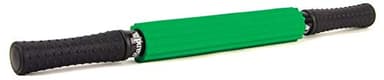
THERABAND Roller Massager+
A handheld stick lets you control the pressure with your arms instead of your body weight, which is the whole argument for it — you can treat a calf sitting in a chair, and you can back off instantly.
What it gets right
- You set the pressure with your arms, so you can stop the instant it is too much
- Usable on a calf without getting on the floor — a genuine accessibility point
- Nothing to charge
What it does not
- Cannot generate the pressure body weight on a ball produces
- Awkward on your own back
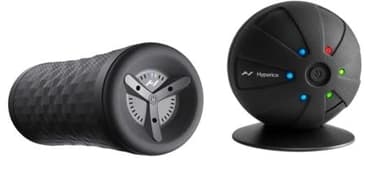
Hyperice Vyper 3 Vibrating Foam Roller
Three speeds of vibration on a 34 W motor, and the honest question is whether vibration adds enough over a $13 cylinder to justify twenty times the price — for most people it does not.
What it gets right
- Published motor, weight, dimensions and battery — more transparency than Hyperice gives its guns
- Vibration genuinely reduces the discomfort of rolling, which means people actually do it
What it does not
- Twenty times the price of a foam cylinder that does the mechanical part
- 2.7 lb and a 2-hour battery — it is a device, not a lump of foam
Common questions
What is the best massage stick?
The Tiger Tail, because its single smooth sleeve cannot pinch skin or leg hair — the one complaint that makes people abandon a stick. If you want to spend under ten dollars, the Idson beaded stick does the same core job on a calf and the beads are the pinch risk. For hamstrings and quads, the 21 in TriggerPoint GRID STK covers a long muscle in a single pass.
Is a massage stick better than a foam roller?
Neither is better; they take the force from different places. A roller uses your body weight and the floor, so it delivers more pressure and covers large muscles faster. A stick uses your arms, so you can treat a calf sitting in a chair, aim either side of a shin bone precisely, and come off the pressure instantly. If you cannot comfortably get on the floor, the stick is not the compromise — it is the only one of the two that fits.
Do beaded massage sticks pinch?
They can. The gaps between the independently spinning segments are what let the stick roll along a limb instead of dragging, and they are also what can catch skin and leg hair under real pressure. It is sharp enough that people stop using the tool. A one-piece smooth sleeve has nothing to pinch with, which is the main reason to pay more. If your legs are smooth, a beaded stick is an excellent buy.
What does a massage stick actually do?
It improves range of motion acutely and appears to reduce post-exercise soreness, which is what the rolling literature supports: meta-analyses find range-of-motion gains and a preventive effect on soreness, and a 2024 meta-analysis found rolling and static stretch training broadly comparable for range of motion. What no evidence supports is breaking down adhesions, lengthening fascia or flushing anything out of a muscle.
Sources
- 1.Foam Rolling Training Effects on Range of Motion: A Systematic Review and Meta-Analysis - Sports Medicine 2022 (PMC9474417) — rolling training effects on range of motion
- 2.Preventive effect of foam rolling on muscle soreness after exercise: a systematic review and meta-analysis - Journal of Bodywork and Movement Therapies 2024 (PubMed 39593540) — preventive effect of rolling on post-exercise soreness
- 3.Static Stretch Training versus Foam Rolling Training Effects on Range of Motion: A Systematic Review and Meta-Analysis - Sports Medicine 2024 (PMC11393112) — static stretch training and rolling broadly comparable for range of motion
- 4.Comparison of Three Different Density Type Foam Rollers on Knee Range of Motion and Pressure Pain Threshold: A Randomized Controlled Trial - International Journal of Sports Physical Therapy (PMC6044602) — three roller densities compared; why firmness is a comfort preference
- 5.The Effects of an Acute Bout of Foam Rolling on Hip Range of Motion on Different Tissues - International Journal of Sports Physical Therapy (PMC6088119) — acute rolling across different tissues - range of motion changes, not structure
- 6.The Immediate Effects of Foam Rolling and Stretching on Iliotibial Band Stiffness: A Randomized Controlled Trial - International Journal of Sports Physical Therapy (PMC8169023) — immediate effects of rolling and stretching on IT band stiffness
- 7.Treatment of medial tibial stress syndrome: a systematic review - Sports Medicine (PubMed 23979968) — medial tibial stress syndrome; load management as the treatment