
Compare Recovery Tools
Every other site in this category compares products within one aisle, because that is the aisle it sells. The more useful question crosses aisles: gun or roller, ball or gun, heat or percussion — and quite often, none of them.
Disclosure:Grip & Gait earns a commission when you buy through links on this page, at no extra cost to you. It never changes what we recommend or the order we rank things in — here is exactly how we’re funded.
Our top pick
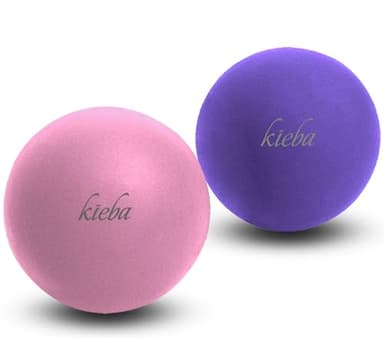
Kieba Massage Lacrosse Balls
Across every head-to-head on this page, one tool keeps winning on the arithmetic: your body weight through a coin-sized contact patch generates more pressure per square inch than any handheld motor. If you own nothing and want the single most useful purchase, it is not the thing that gets advertised.
Price as of October 21, 2026. #ad How we’re funded
Why cross-category comparison is the honest version
A massage gun site compares massage guns. A foam roller brand compares foam rollers. Both answer from their own inventory, and neither will tell you that the correct answer to your problem sits in the other aisle — or that it costs eight dollars.
That is the gap this section exists to fill. Each comparison below gives a verdict per use caserather than declaring an overall winner, because the honest answer to “gun or roller” genuinely depends on which muscle you are treating and whether you can get on the floor.
The one mechanical fact that decides most of them
Pressure is force divided by contact area. Every comparison here reduces to how force gets delivered and over how much of you.
- A ball puts your body weight through roughly one square inch. Maximum local pressure, minimum coverage, cheapest.
- A roller puts the same weight through a strip several inches wide. Tolerable, fast across large muscles, and it doubles as a mobility fulcrum.
- A gun substitutes a motor for your body weight. Less pressure than a ball, but it reaches places you cannot lie on and it turns down.
- Compression applies moderate pressure to an entire limb, passively. Different problem entirely.
- Heat applies no pressure at all — which is exactly right when the tissue is guarding and pressure would make it guard harder.
- TENS applies no mechanical input at all. It is aimed at pain signaling, which makes it the option when an area is too tender to touch.
What the evidence says about all of them together
One study has compared foam rolling directly against percussive massage for muscle recovery. Both accelerated the recovery of muscle properties disrupted by delayed onset soreness. Neither significantly reduced pain compared with resting.
A randomized controlled trial on percussion found immediate, temporary relief in perceived soreness at 24, 48 and 72 hours after eccentric exercise, without accelerating recovery until the 72-hour mark. A systematic review supports improvements in acute and explosive muscle strength, and a controlled study found reduced tissue stiffness and improved range of motion.
That is the whole picture, and it is consistent across the category: these tools make you feel and move better in the short term, and they do not reliably shorten recovery. Which means choose on mechanics and cost — the evidence is not going to choose for you, and any comparison claiming otherwise is overstating what exists.
Everything in Compare
Best Cross-Category Pick
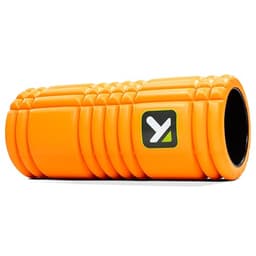
Massage Gun vs Foam Roller
The most-searched comparison in recovery, answered by use case. A roller wins more often than the price difference suggests.
Top pick: TriggerPoint GRID Foam Roller (13 in)
Highest Work per Dollar
Massage Gun vs Massage Ball
Force divided by area, worked through properly. The ball wins on pressure; the gun wins on reach. Both cost less than you think.
Top pick: Kieba Massage Lacrosse Balls
Price as of October 21, 2026. #ad How we’re funded
Best for Stiff Backs
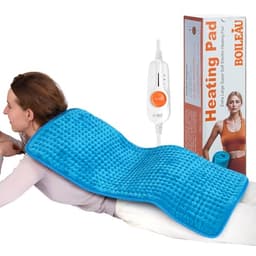
Massage Gun vs Heating Pad
Mechanical versus thermal. Which suits spasm, stiffness, acute strain and nerve pain - and why the sequence matters.
Top pick: Boileau XXXL Electric Heating Pad (17 × 33 in)
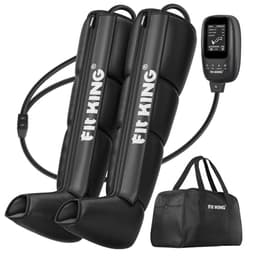
Best for Whole-Leg Recovery
Massage Gun vs Compression Boots
Local and active versus whole-limb and passive. Which fits which problem, and an honest look at the price gap.
Top pick: FIT KING Air Compression Recovery Boots
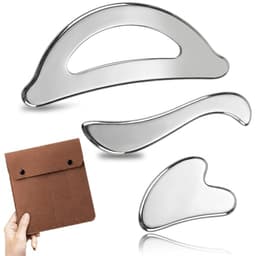
Massage Gun vs Cupping
Compression versus decompression. What each does mechanically, what the evidence supports, and why the circular marks prove nothing.
Top pick: Bob and Brad C2 Massage Gun
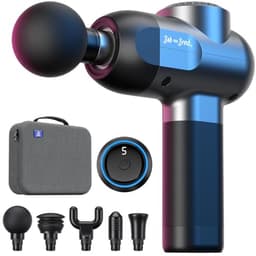
Massage Gun vs a Massage Therapist
The cost math is not the interesting part. What a person does that no device can, and when the device is genuinely the better buy.
Top pick: Bob and Brad C2 Massage Gun
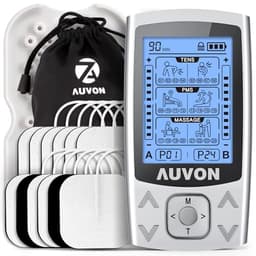
Best Electrical Stim Explainer
TENS vs EMS
Nerve stimulation for pain versus motor stimulation for contraction. Which you need, and why the mode count on the box is noise.
Top pick: AUVON Dual Channel TENS Unit
Price as of October 21, 2026. #ad How we’re funded
Percussion vs Stimulation
Massage Gun vs TENS Unit
A gun works muscle mechanically; TENS talks to nerves about pain. Not rivals. Which fits soreness, tightness and nerve pain.
Top pick: Bob and Brad C2 Massage Gun
Percussion vs Vibration
Massage Gun vs Vibrating Foam Roller
Percussion targets and reaches; a vibrating roller covers broad muscle you can lie on. Which fits your body, budget and floor.
Top pick: Bob and Brad C2 Massage Gun
Boots vs Stimulation
Compression Boots vs TENS Unit
Boots move fluid up a swollen leg; TENS masks a specific pain by gating nerves. Different jobs. Which fits heavy legs, nerve pain and DOMS.
Top pick: FIT KING Air Compression Recovery Boots
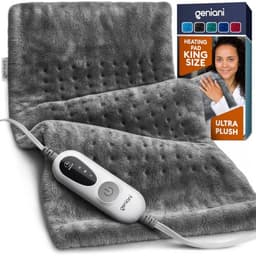
Heat vs Stimulation
Heating Pad vs TENS Unit
Heat relaxes stiff, guarding muscle; TENS gates a specific pain electrically. Both symptomatic. Which fits stiffness, spasm and nerve pain.
Top pick: GENIANI Electric Heating Pad
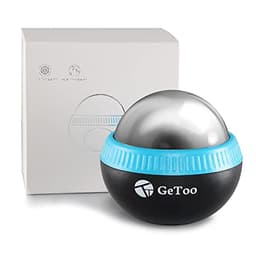
Ice vs Heat
Ice vs Heat for Sore Muscles
Cold for fresh, inflamed injury; heat for stiff, chronic ache. For next-day soreness, either for comfort and the evidence is modest.
Top pick: GeToo Cryosphere Cold Massage Roller Ball
Price as of October 21, 2026. #ad How we’re funded
Percussion vs Stretching
Massage Gun vs Stretching
The trials that put percussion against static stretching, why the winner depends on before-or-after, the order that works, and where a gun cannot replace a stretch.
Top pick: Bob and Brad C2 Massage Gun
Massage Gun vs Shockwave Therapy
A clinic procedure with randomized trials in five named tendinopathies against a handheld you own. The mechanism difference, which problem belongs to which, why no home device delivers shockwave, and what to buy for the part you can treat yourself.
Top pick: Bob and Brad C2 Massage Gun
Boots vs Cold
Compression Boots vs Ice Bath
Cryotherapy ranked top for soreness and jump recovery across 57 studies; cold immersion also cut 12-week strength and type II fibre growth versus active recovery. Compression boots do neither well nor badly. Which to use after which session, with live prices.
Top pick: FIT KING Air Compression Recovery Boots
Gun vs Handheld
Massage Gun vs Handheld Massager
Percussion versus kneading and vibration: what the published amplitude and stroke-rate numbers actually mean, which problems want depth and which want comfort, and the cheaper answer for anyone who typed 'neck massager'. Live prices.
Top pick: Bob and Brad C2 Massage Gun
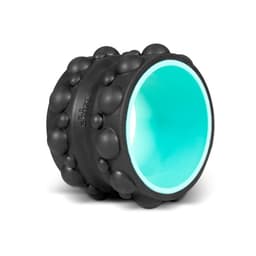
Roller vs Wheel
Foam Roller vs Chirp Wheel
A cylinder is whole-body and cheap; a wheel does thoracic extension with the spine in a channel and little else. Which to buy first, 4-inch versus 6-inch, what the foam-rolling trials support, and where a wheel is the wrong idea. Live prices.
Top pick: Amazon Basics High-Density Foam Roller (18 in)
Price as of October 21, 2026. #ad How we’re funded
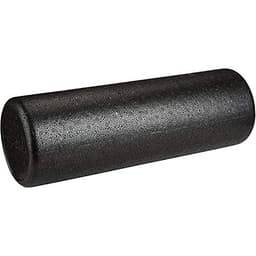
Mat vs Roller
Acupressure Mat vs Foam Roller
Thousands of superficial points versus pressure along one muscle. What the foam-rolling meta-analyses support, what we found when we searched for acupressure mat trials, which complaint suits which object, and the safety list for the mat. Live prices.
Top pick: Amazon Basics High-Density Foam Roller (18 in)
Price as of October 21, 2026. #ad How we’re funded
The quick answers
- Broad leg muscles — quads, hamstrings, calves, IT band: foam roller.
- A specific deep point — glute, under a shoulder blade, foot arch: massage ball. More pressure than any motor, under ten dollars.
- Your own upper back or a forearm: massage gun. You cannot get body weight onto either.
- A back in spasm: heat. Percussion on a guarding muscle makes it guard harder.
- Too tender to touch at all: TENS.
- Whole legs, heavy, after a long effort: compression boots — and only then.
- You do not know what is wrong, or it keeps returning: a person. See massage gun vs a massage therapist — the diagnostic value of trained hands is the one thing no device replaces.
Start from the problem instead
If you arrived with a symptom rather than a product in mind, these pages route the problem to the tool class that fits it — including the times the answer is not in this category at all.
Common questions
Is a massage gun better than a foam roller?
Not in general. A published study comparing both for muscle recovery found each accelerated recovery of disrupted muscle properties, and neither significantly reduced pain compared with rest. Choose on mechanics: roller for broad muscle and mobility work, gun for places you cannot apply body weight and for precise targeting.
What is the single most useful recovery tool?
A pair of dense rubber massage balls, on the arithmetic. Your body weight through a coin-sized patch generates more pressure per square inch than any handheld motor, they reach under a shoulder blade and into a deep glute where nothing else does, and they cost less than a sandwich with no battery and no failure mode.
Should I use heat or a massage gun?
Heat if the muscle is spasming or guarding — percussion on an already-contracting muscle usually makes it guard harder. Percussion for dull, general stiffness without a sharp catch. With both, the productive sequence is heat, then gentle movement, then brief percussion, then stretching.
Can a device replace a massage therapist?
It replaces the frequency, not the expertise. A device is available daily at no marginal cost, which for maintenance matters more than intensity. What it cannot do is palpate, find the problem you did not know you had, vary pressure continuously by feel, reach your own mid-back, or recognize when the issue is not a massage problem at all.
Prices and product images come from Amazon’s live data. How we research and score · How we’re funded. Canonical: https://gripandgait.com/compare