Compare
Acupressure Mat vs Foam Roller
Two cheap passive-looking objects that get recommended for the same complaint - a back that aches after a desk day - and they work nothing like each other. The roller is the one with a literature behind it and the one that treats a specific muscle. The mat is the one you can use while doing nothing, which is a real advantage and not a clinical claim.
By Stephen V.Published
Disclosure:Grip & Gait earns a commission when you buy through links on this page, at no extra cost to you. It never changes what we recommend or the order we rank things in — here is exactly how we’re funded.
Quick picks
Ranked on published manufacturer specs and what they mean for the job, not on testing we have not done. Tap a row for the full reasoning. How we score.
| # | Product | Best for | Score | Price |
|---|---|---|---|---|
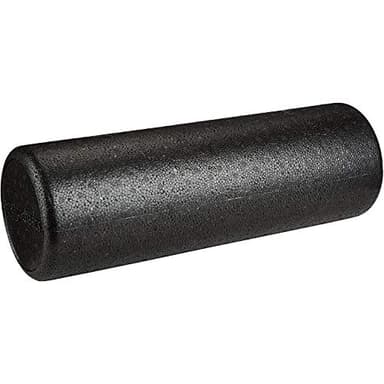
| 1 |  Amazon Basics High-Density Foam Roller (18 in) A plain high-density cylinder works on quads, calves, hamstrings, glutes, lats and the mid-back, and it is the object the range-of-motion meta-analyses were run on. Cheapest useful tool on the site. | Buy this first | 8.4 | $15.29 · View on Amazon Price as of October 21, 2026. #ad How we’re funded |
| 2 |  ProsourceFit Acupressure Mat and Pillow Set For the person who will not do a rolling routine but will lie on something for fifteen minutes. Pleasant for many people, uncomfortable for the first few sessions, and no trial evidence behind the mat itself. | Lying still and feeling better | 7.4 | |
| 3 |  TriggerPoint GRID Foam Roller (13 in) Hollow core with a textured surface, so some parts press harder than others. The one cylinder worth paying more for if you already roll regularly. | The roller upgrade | 8.3 | |
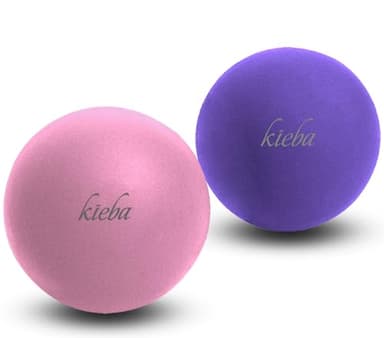
| 4 |  Kieba Massage Lacrosse Balls Neither object above reaches the spot beside a shoulder blade or deep in a glute. A ball against a wall does, for less than either. | When you need to be precise | 8.6 | $7.99 · View on Amazon Price as of October 21, 2026. #ad How we’re funded |
The short answer
If you are buying one of them, buy the foam roller. It treats a specific muscle, it works on six body parts rather than one surface, and it is the object the range-of-motion and soreness meta-analyses actually studied. Buy the acupressure matif you know yourself well enough to admit you will not do a rolling routine but you will lie on something for fifteen minutes with a podcast on — that is a real distinction and the mat is cheap. What you should not do is buy the mat expecting it to do what the roller does, or expect either to fix a problem that is really a loading or posture problem.
They do not work the same way at all
An acupressure mat is a foam pad covered in plastic discs, each ringed with small spikes. There are thousands of points, and the mechanism is simply distribution: your bodyweight is spread over enough points that none of them breaks skin, producing a sharp sensation for a few minutes that most people report fades into warmth. The pressure is superficial and broad— skin and the tissue immediately under it, across your whole back at once. You do nothing while it happens.
A foam roller is a cylinder you move your bodyweight across. The pressure is deeper and local, applied to one muscle group at a time along its length, and you control it by how much of your weight you commit and how fast you move. It is work. It is also directional: you can take a quad, a calf or a lat and systematically cover it, which is precisely what a mat cannot do.
So the honest framing is passive-and-broad versus active-and-targeted. Those suit different people and different complaints, and almost nobody needs to choose on principle — together they cost less than one mid-range massage gun.
What the evidence says about each
For rolling, there is a modest but real literature. The 2022 meta-analysis in Sports Medicine on foam rolling training effects on range of motion supports range-of-motion gains from rolling, and the meta-analysis on foam rolling and muscle soreness supports a small effect on soreness. A 2025 randomized trial in the Journal of Sport Rehabilitation randomized 36 healthy adults to foam-roller work on the thoracolumbar fascia plus exercise, exercise alone, or nothing, three days a week for four weeks; flexibility, muscular endurance and dynamic balance improved in both active groups, with the change scores favoring the group that added the rolling. Small trial, healthy young participants, supportive rather than decisive. And the density trial is the one that saves you money: soft, medium and firm rollers produced no statistically significant difference in knee range of motion or pressure pain threshold.
For acupressure mats, here is what we can honestly report. We searched PubMed on 17 October 2026for randomized controlled trials of acupressure or spike mats for back pain and found none under those terms. The acupressure literature that does exist studies pressure applied by a practitioner at specific points, which is a different intervention from lying on a mat covered in several thousand of them. That absence is not proof the mat does nothing — people describe genuine relief and the sensation itself is a plausible counter-irritant — but it does mean nobody should sell you one on the strength of research. Our acupressure mat guide says the same thing at length.
Net: one of these objects has a small, replicated effect on range of motion and soreness, and the other has a pleasant sensation and a lot of testimonials. Both cost about the same as a takeaway.
| What you are dealing with | Which one | Why |
|---|---|---|
| Tight quads, calves or hamstrings after training | Roller | Targeted pressure along a long muscle is exactly the job a cylinder exists for. A mat cannot reach a calf in any meaningful way. |
| Generally achy back after a desk day | Either - mat if you want it passive | A mat covers the whole back at once while you lie still. A roller does more per minute but requires you to actually do it. |
| You will not keep up a routine | Mat | The best tool is the one you use. Fifteen minutes lying on a mat is a habit people keep; a ten-minute rolling sequence often is not. |
| Limited range of motion you want to improve | Roller | This is the outcome the meta-analyses measured. Nothing comparable exists for mats. |
| A specific knot beside a shoulder blade | Neither - a ball | Both of these spread load. A lacrosse ball against a wall concentrates it exactly where you aim. |
| Trouble winding down in the evening | Mat | Fifteen minutes lying still with a strong sensory input is a relaxation ritual, and relaxation approaches are the half of the tension-headache literature that carried effects. |
| Nerve pain, numbness or burning | Neither | Not a muscle problem. See the symptom pages, and the mat is specifically a bad idea on skin with reduced sensation. |
The first two weeks on a mat, which decides whether you keep it
Nearly every abandoned acupressure mat was abandoned in week one, and the reason is almost always the same: somebody lay down on bare skin, found it genuinely painful, and never went back. The way through is boring and it works. Wear a thin t-shirt for the first several sessions. Start at five to ten minutes. Lie down in stages rather than dropping onto it, and let the sharpness settle — most people report it fading into warmth after two or three minutes. Once that is comfortable, go to bare skin if you want more intensity, and build to fifteen or twenty minutes.
The same applies to the neck pillow most mats ship with: it concentrates the same points on a much smaller, bonier area, so treat it as a separate thing you work up to rather than part of session one. And set the thing up where you will see it. A mat rolled up in a cupboard is a mat you own, not a mat you use, and since its entire advantage over a roller is that it demands nothing of you, losing the convenience loses the point.
What a mat is genuinely good at
Three things, none of which a roller does. It covers the whole back at once, which suits diffuse aching better than a tool that treats one muscle at a time. It requires no technique, so there is nothing to get wrong, no spot to bruise and nothing to learn — a real advantage for anyone who has read our rolling guides and quietly concluded that is too much homework. And it builds a habit shaped like rest: fifteen minutes lying still with a strong sensory input, usually in the evening, which people maintain far more reliably than a ten-minute sequence of positions on the floor.
That third one deserves more credit than the research can give it. Relaxation approaches are one of the two things the chronic tension-type headache meta-analysis found effective, and while nobody has tested a spike mat as a relaxation intervention, a nightly ritual of lying down and breathing is not nothing. We just will not dress that up as a mechanism.
The honest cons of each
- Mat:the first few sessions are genuinely unpleasant, which is why so many end up in a cupboard — use a thin t-shirt for the first week. It does nothing targeted, nothing for range of motion, and nothing for a specific muscle. It sheds the odd plastic spike over time. And the claims printed on the packaging reliably exceed the evidence.
- Roller:it is work, and technique matters — people roll the lumbar spine directly, which we advise against, or spend five minutes on a sore spot and bruise it. It is awkward on glutes and hips without practice. It does nothing while you are not using it, which sounds obvious until you compare it to a mat you can lie on with no skill at all.
What they cost, and what to buy in which order
Both sit in the budget bracket; a mat and a plain cylinder together still cost less than one mid-range massage gun, and considerably less than a single physiotherapy appointment. So the order matters more than the choice.
Buy the cylinder firstif you train, if you have a specific tight muscle, or if range of motion is what you want to change — that is the outcome with the meta-analyses behind it. Buy the mat first if your honest assessment is that you will not do a routine, if the complaint is diffuse evening achiness rather than a tight muscle, or if what you actually want is a reason to lie down for fifteen minutes. Add the second one later; neither purchase forecloses the other. Live prices for both, stamped with the date checked, are in the table above.
What to read next
The long version of the mat argument is acupressure mats: what they do. For the roller, the beginner roundup ranks the cylinders and how to foam roll is the technique page. If your complaint is specifically a back, the best foam rollers for back pain and lower back pain are better aimed than this comparison, and foam roller vs Chirp Wheel covers the other shape people weigh for a stiff mid-back. If you are choosing between whole classes of tool, start at massage gun vs foam roller or the starter recovery kit.
Every pick, in full
Specs below are the manufacturer’s own published figures, each linked to the page it came from. Where a maker does not publish a number, the table says so and names the page we checked — that absence is information too.
Price as of October 21, 2026. #ad How we’re funded
Amazon Basics High-Density Foam Roller (18 in)
A dense foam cylinder does the same mechanical job as a textured roller for a fraction of the money, and for a first roller that is the correct purchase.
What it gets right
- Does the actual mechanical work — sustained pressure across a broad contact area
- Nothing to break; no core, no seams, no electronics
- 18 in is long enough to lie along your spine, which the 13 in rollers are not
What it does not
- Flat surface spreads pressure rather than concentrating it
- Solid EVA softens over a few years of heavy use
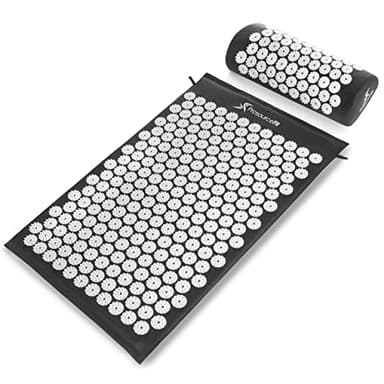
ProsourceFit Acupressure Mat and Pillow Set
Thousands of plastic spikes and a very thin evidence base — cheap enough to try, and we are not going to tell you it does more than the research supports.
What it gets right
- Costs very little
- Some people find it genuinely relaxing
- Nothing to charge or break
What it does not
- The published evidence is thin and mostly small-sample
- Uncomfortable for the first several sessions
- Not usable on bare skin by everyone
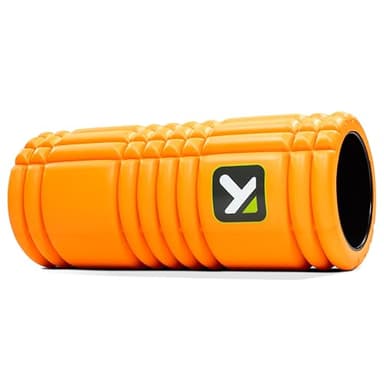
TriggerPoint GRID Foam Roller (13 in)
The multi-density surface is the reason to buy this over a plain foam cylinder: the raised sections concentrate pressure in strips instead of spreading it flat, which is what makes it usable on an IT band without needing to hold your breath.
What it gets right
- Hollow rigid core does not compress into a soft log the way plain EVA foam does after a year
- Multi-density surface gives you three pressure intensities on one roller
- 13 in length fits in a gym bag; the 26 in version does not
What it does not
- Costs roughly three times a plain high-density cylinder that also works
- The hollow core makes it noisier on a hard floor
Price as of October 21, 2026. #ad How we’re funded
Kieba Massage Lacrosse Balls
The highest work-per-dollar tool on this entire site. A hard rubber sphere concentrates all your body weight into one square inch, which is more pressure than any handheld gun can generate.
What it gets right
- Concentrates body weight into a single point — more local pressure than any percussion device
- Nothing to charge, nothing to break, fits in a coat pocket
- Reaches under the shoulder blade against a wall, which a roller physically cannot
What it does not
- Unforgiving — very easy to overdo on a first session
- Wrong tool for broad surfaces like quads or lats
Common questions
Is an acupressure mat better than a foam roller?
Not for most purposes. A roller applies deeper, targeted pressure to one muscle group at a time and is the object the range-of-motion and soreness meta-analyses studied; a mat spreads bodyweight across thousands of superficial points while you lie still, and we found no randomized trials of mats for back pain when we searched PubMed in October 2026. The mat’s genuine advantage is that it needs no technique and no effort, which matters if the alternative is doing nothing.
Can you use an acupressure mat and a foam roller together?
Yes, and it is the sensible answer for a lot of people: roll the specific muscle that is tight, then lie on the mat for ten to fifteen minutes as the passive half. Together they cost less than one mid-range massage gun. Just do not expect the mat to replace the rolling for range of motion, or the rolling to replace the mat as a way of winding down.
How long should you lie on an acupressure mat?
Ten to twenty minutes is the usual session, starting shorter. Wear a thin t-shirt for the first several sessions and move to bare skin once you have acclimatized if you want more intensity — going straight to bare skin on a new mat is the most common reason people try one once and never again. Stop if you get numbness, tingling or any skin breaking.
Which is better for lower back pain?
Neither treats the cause, and we would not roll the lumbar spine directly in any case. For a generally achy low back, a mat gives broad passive relief and heat gives more; for the hips and mid-back that usually drive it, a roller is the right tool. The things with the strongest evidence for persistent low back pain are movement and graded loading, which is the uncomfortable answer a product page is not supposed to give you.
Sources
- 1.Foam Rolling Training Effects on Range of Motion: A Systematic Review and Meta-Analysis - Sports Medicine 2022 (PMC9474417) — the range-of-motion evidence for the roller side
- 2.Preventive effect of foam rolling on muscle soreness after exercise: a systematic review and meta-analysis - Journal of Bodywork and Movement Therapies 2024 (PubMed 39593540) — the soreness half of the rolling literature
- 3.The Effect of Myofascial Release Applied to Thoracolumbar Fascia on Flexibility, Muscular Endurance, and Balance in Healthy Young Adults: A Randomized Controlled Trial - Journal of Sport Rehabilitation 2025 (PubMed 39832508) — 36 adults, 4 weeks; rolling added to exercise beat exercise alone on flexibility, endurance and balance
- 4.Comparison of Three Different Density Type Foam Rollers on Knee Range of Motion and Pressure Pain Threshold: A Randomized Controlled Trial - International Journal of Sports Physical Therapy (PMC6044602) — soft, medium and firm rollers produced no significant difference - buy the density you tolerate