Symptoms
How to Loosen Tight Hip Flexors
The deepest hip flexor runs from the lumbar spine through the pelvis, and you cannot press on most of it from the outside. What you can reach is the muscle at the front of the hip and everything around it — plus the thing actually causing it.
By Stephen V.Published Updated
Disclosure:Grip & Gait earns a commission when you buy through links on this page, at no extra cost to you. It never changes what we recommend or the order we rank things in — here is exactly how we’re funded.
To loosen tight hip flexors: work the front of the hip and the quadriceps with a ball or roller, stretch the hip into extension consistently over weeks, and reduce the number of hours you spend with the hip flexed. The last of those three does more than the first two combined, and it is free.
The anatomy that decides what is possible
The main hip flexor group is the iliopsoas: the psoas major, which originates on the lumbar vertebrae and runs down through the pelvis, and the iliacus, which lines the inside of the pelvic bowl. Both attach to the top of the femur.
That means most of the muscle sits inside the pelvis and behind the abdominal contents. Any technique that claims to release the psoas by pressing into your abdomen is pressing through a great deal of other tissue to reach it, and it is not something we would recommend anyone do to themselves with a tool.
What you can reach: the rectus femoris (the quadriceps head that also crosses the hip), the tensor fasciae latae at the side, and the tissue at the front of the hip below the bony point. Those are all worth working and they are all more accessible than the muscle everybody names.
Why they are tight
Sitting keeps the hip in a flexed position for hours at a time. Over years, a muscle held short adapts to being short. That is the mechanism, it is not complicated, and it means the highest-leverage intervention is a change to the load pattern rather than a tool.
A ten-minute session cannot undo eight hours a day. Standing up every 30–45 minutes for even thirty seconds does more than the ten minutes does, and it costs nothing. We would rather tell you that at the top of the page than bury it under product recommendations.
Which class of tool fits
| Tool class | Cost | Why it does or doesn’t work here | Verdict |
|---|---|---|---|
| Hip flexor stretch | Cost: Budget | Free, and the only thing here that produces a lasting change in what the joint can do. Half-kneeling lunge position, hips square, squeeze the glute on the back leg.Where it fails: Requires weeks of consistency. A stretch done once has not changed anything. | Start here |
| Massage ball (front of hip) | Cost: Budget | Face down with a ball just below and inside the bony point at the front of the hip reaches tissue a roller cannot get an angle on.Where it fails: Go gently. There are structures here you do not want to lean hard on, and if you get anything radiating or pulsing, move. | Start here |
| Foam roller (quads and TFL) | Cost: Budget | The rectus femoris crosses the hip as well as the knee, so working the quad is genuinely working a hip flexor. Broad muscle, broad tool.Where it fails: Stop below the bony point at the front of the hip. Rolling onto that is unpleasant and pointless. | Start here |
| Massage gun | Cost: Mid-range | On the quad and the front of the hip, faster than rolling and easier to angle. Longer amplitude genuinely helps on thick quad tissue.Where it fails: Not into the abdomen, ever, and not onto the bony point at the front of the hip. | Sometimes |
| Glute work (ball) | Cost: Budget | Tight hip flexors and underused glutes usually travel together - the glute is the muscle that extends the hip, and the position that shortens the flexor lengthens the glute.Where it fails: Working the glute alone will not change the flexor. Do both. | Sometimes |
| Pressing into the abdomen | Cost: Budget | Nothing we would recommend.Where it fails: Reaching the psoas that way means pressing through abdominal contents including major vessels. This is not a self-treatment technique and we will not describe one. | Not for this |
What we would actually buy
Buy this first
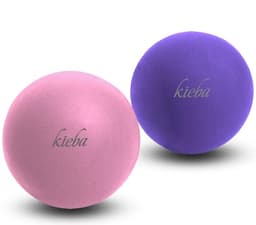
Kieba Massage Lacrosse Balls
Reaches the front of the hip and the glute, both of which a roller cannot get a proper angle on. Costs less than a sandwich and does more here than anything motorized.
Price as of October 21, 2026. #ad How we’re funded
For the quads
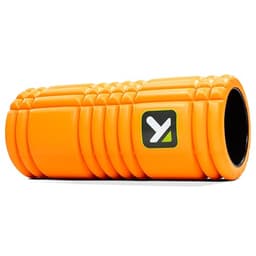
TriggerPoint GRID Foam Roller (13 in)
The rectus femoris crosses the hip as well as the knee, so working the quad is working a hip flexor. A roller covers it in three passes.
If you want it faster
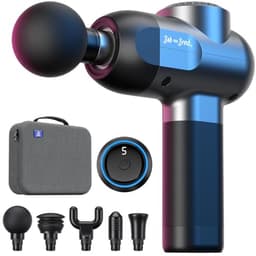
Bob and Brad C2 Massage Gun
Quads are thick tissue where percussion genuinely suits, and a gun does standing what a roller does on the floor.
If what you want is something passive for the evening rather than another thing to do, heat over the whole region is the cheapest useful purchase, and a hip needs a bigger pad than you would buy for a knee: the best heating pads for hip pain ranks them on whether they cover the outer hip, the glute and the low back at once.
The stretch, done properly
- Half-kneeling. One knee down, other foot forward, both at roughly ninety degrees. Pad under the down knee.
- Square the hips and tuck the pelvis. This is the step everyone skips and it is the step that makes it work. Without the posterior tilt you extend through your lower back instead of the hip, and feel nothing where you want to.
- Squeeze the glute on the kneeling side. Actively contracting the muscle opposite the one you are stretching helps it let go.
- Shift forward slightly. Small movement. If you have to lunge a long way to feel it, the pelvis is not tucked.
- Hold 30–60 seconds, both sides, most days. Lasting range comes from weeks of consistency and not from one long session.
Hamstrings, since people ask in the same breath
“How to loosen tight hamstrings” and “how to loosen tight hip flexors” get searched together, and there is a reason. If the pelvis sits tilted forward from short hip flexors, the hamstrings are held at length all day and feel tight without being short — which is why stretching them aggressively often achieves nothing.
In that situation, working the front of the hip does more for the back of the thigh than stretching the back of the thigh does. Roll the hamstrings by all means; just do not expect them to be the answer if the problem sits at the front.
What the evidence supports
Percussive therapy reduces measured tissue stiffness and improves range of motion in the short term, and foam rolling shows comparable effects. Both are short-lived.
For lasting change in what a hip can do, the evidence points at stretching consistently over weeks and at not spending eight hours a day in flexion. Tools make it more comfortable to get there. They are not the mechanism.
A note on buying a gun specifically for this region: the useful spec is reach, not power, because the hip flexors are easy to get to and the glutes feeding them are not. The best massage gun for glutes and hips ranks the shortlist on handle angle and weight, and marks the crease of the hip as off limits.
If the hip is painful rather than simply stiff, electrical stimulation is a cheap symptom tool and the placements are region-specific: the best TENS units for hip pain covers where the pads go on a joint you cannot reach directly.
Common questions
How do you loosen tight hip flexors?
Work the front of the hip and the quadriceps with a ball or roller, stretch the hip into extension consistently over weeks in a half-kneeling position with the pelvis tucked, and reduce the hours you spend sitting with the hip flexed. The last of those does more than the first two combined and costs nothing.
Can you massage your psoas?
Not properly from the outside, and we would not recommend trying. The psoas originates on the lumbar vertebrae and runs down through the pelvis, so most of it sits behind the abdominal contents. Techniques that press deep into the abdomen to reach it are pressing through major vessels, and that is not a self-treatment technique we will describe.
Why are my hip flexors always tight?
Sitting holds the hip in a flexed position for hours, and over years a muscle held short adapts to being short. That is the mechanism. A ten-minute session cannot undo eight hours a day — standing up every 30 to 45 minutes for even thirty seconds does more than the session does.
How do you loosen tight hamstrings?
Often by working the front of the hip rather than the back of the thigh. If the pelvis sits tilted forward from short hip flexors, the hamstrings are held at length all day and feel tight without being short — which is why stretching them aggressively frequently achieves nothing. Roll them by all means; just address the front too.
What is the best hip flexor stretch?
Half-kneeling, with the pelvis tucked. One knee down, other foot forward, both at roughly ninety degrees, hips square, then tuck the pelvis under and squeeze the glute on the kneeling side before shifting forward slightly. The pelvic tuck is the step everyone skips and it is the one that makes it work — without it you extend through the lower back instead.
Sources
- 1.Acute Effects of Theragun Percussive Therapy on Viscoelastic Tissue Dynamics and Hamstring Range of Motion (PMC10499144)
- 2.Foam Rolling or Percussive Massage for Muscle Recovery: Insights into DOMS (PMC12286022)
- 3.The Effect of Percussive Therapy on Musculoskeletal Performance and Experiences of Pain: A Systematic Literature Review (PubMed 37020441)
- 4.Therabody — Product Safety & Precautions