Rollers & Balls
Foam Rolling vs Stretching
These get framed as competitors, and they answer different questions. One changes how a tissue feels under pressure right now; the other changes what a joint can do over months. The useful version of this comparison is about timing.
By Stephen V.Published
Disclosure:Grip & Gait earns a commission when you buy through links on this page, at no extra cost to you. It never changes what we recommend or the order we rank things in — here is exactly how we’re funded.
Quick picks
Ranked on published manufacturer specs and what they mean for the job, not on testing we have not done. Tap a row for the full reasoning. How we score.
| # | Product | Best for | Score | Price |
|---|---|---|---|---|
| 1 |  TriggerPoint GRID Foam Roller (13 in) Multi-density surface, rigid core. The roller most people should own if they are going to own one. | The rolling half | 8.4 | |
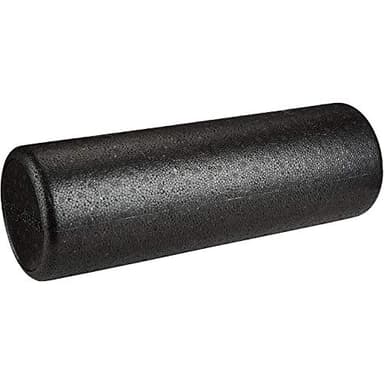
| 2 |  Amazon Basics High-Density Foam Roller (18 in) 18 in - long enough to lie along your spine, which is where rolling and mobility work overlap. | Starting from nothing | 8.0 | $15.29 · View on Amazon Price as of October 21, 2026. #ad How we’re funded |
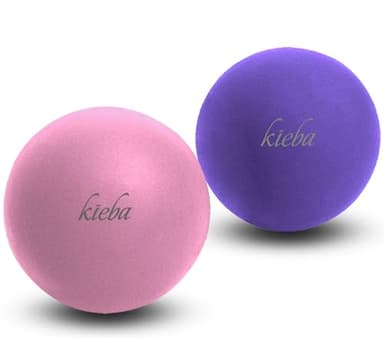
| 3 |  Kieba Massage Lacrosse Balls Glutes and shoulder blades. Neither rolling nor stretching reaches these; a ball does. | The spots a roller misses | 8.8 | $7.99 · View on Amazon Price as of October 21, 2026. #ad How we’re funded |
| 4 |  THERABAND Roller Massager+ A stick does the pressure part seated. Genuinely useful if getting down and up is the barrier. | Rolling without the floor | 7.8 | $35.50 · View on Amazon Price as of October 21, 2026. #ad How we’re funded |
The short version
Foam rolling applies sustained mechanical pressure to a tissue. Its measurable effect is a short-term reduction in perceived stiffness and a short-term improvement in range of motion. That effect fades — it is measured in minutes to hours, not weeks.
Stretching loads a tissue at length, repeatedly, over time. Its measurable effect is a longer-term change in what a joint can do. That effect takes weeks of consistent practice and persists.
So: rolling is a now tool, stretching is a program. Asking which is better is like asking whether a warm-up is better than training.
Use rolling when
- Before you train. A short pass reduces perceived stiffness without the strength cost that used to be attributed to long static holds. That is the standard use case and it is well established in practice.
- Something specifically feels tight and you want it to stop. Immediate, local, temporary — and sometimes that is exactly what you want.
- Before stretching.Rolling a tissue first often lets you get further into a stretch. This is the answer to “which one first” and it is the reason the two belong in sequence rather than in competition.
- After hard eccentric work. The study comparing foam rolling against percussive massage found both accelerated recovery of muscle properties disrupted by delayed onset soreness — though neither significantly reduced pain compared with rest, which is worth knowing before you expect too much.
Use stretching when
- You want a lasting change in range. This is the case where stretching wins outright and rolling is not a substitute at any dose. If you cannot reach your toes and want to be able to in three months, that is a stretching program.
- A specific structure needs loading at length. The clearest documented example is the foot. A prospective trial with two-year follow-up found plantar fascia-specific stretching produced substantially better outcomes than Achilles-tendon stretching in chronic plantar fasciitis, with a marked decrease in pain and functional limitation. A double-blind randomized controlled trial comparing treatment modalities found plantar fascia stretching produced the most significant improvement in both function scores, ahead of heat with a silicone heel pad and ahead of calf stretching.
- After training, or on its own. The old warning about static stretching before power output applies to long holds immediately before maximal effort — it is not an argument against stretching generally.
What each one is not
Rolling does not lengthen anything permanently. Whatever changes in a two-minute pass is not a structural change to connective tissue — it is largely a change in how you tolerate and perceive that tissue, plus some short-term mechanical effect. That is useful and it is not the same claim the marketing makes.
Rolling does not break down scar tissue or fascia. The pressures involved are nowhere near what would be required. We go into this on the scar tissue and fascia page.
Stretching does not warm anything up. A stretch is not a warm-up; movement is. Stretching a cold muscle is neither dangerous nor especially productive.
Neither treats an injury. If a tissue is inflamed, torn or genuinely injured, both pressure and load are potentially the wrong idea. That is a clinician question, not a shopping question.
The sequence that actually works
- Move first. Two or three minutes of easy general movement. This is the actual warm-up.
- Roll second, briefly.30–60 seconds per area on whatever feels restricted. Not ten minutes; the returns fall off fast.
- Then train, or then stretch. If the goal is a session, go train. If the goal is range, stretch now — the rolling has bought you a slightly better position to stretch from.
- Longer holds later. If you are chasing lasting range, the stretching that produces it is a separate, consistent practice — most days, over weeks. That is the part nobody sells you a product for.
Where a ball beats both
There are targets neither rolling nor stretching reaches well: the muscle under a shoulder blade, the deep glute, a specific point inside a calf belly. Those want concentrated pressure, which means a massage ball. Roll the broad muscle, ball the specific spot, stretch for lasting range. Those three cover essentially everything a home user needs, and they cost less between them than a mid-range massage gun. If the gun is the thing you are weighing against stretching, that comparison has its own page: massage gun vs stretching.
The honest summary
Rolling gives you a temporary, local improvement in how a tissue feels and moves. Stretching gives you a slower, lasting change in what a joint can do. Use rolling before training and before stretching; use stretching as an ongoing practice when range is the goal. For plantar fasciitis in particular, the evidence points at the stretch first and the equipment second — and we will keep saying so even though we sell the equipment.
Every pick, in full
Specs below are the manufacturer’s own published figures, each linked to the page it came from. Where a maker does not publish a number, the table says so and names the page we checked — that absence is information too.
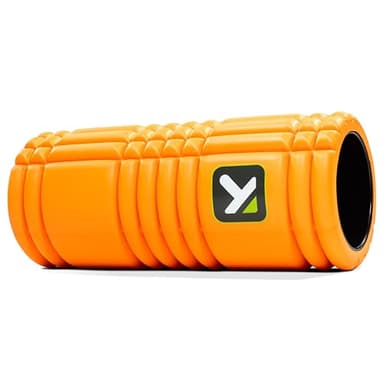
TriggerPoint GRID Foam Roller (13 in)
The multi-density surface is the reason to buy this over a plain foam cylinder: the raised sections concentrate pressure in strips instead of spreading it flat, which is what makes it usable on an IT band without needing to hold your breath.
What it gets right
- Hollow rigid core does not compress into a soft log the way plain EVA foam does after a year
- Multi-density surface gives you three pressure intensities on one roller
- 13 in length fits in a gym bag; the 26 in version does not
What it does not
- Costs roughly three times a plain high-density cylinder that also works
- The hollow core makes it noisier on a hard floor
Price as of October 21, 2026. #ad How we’re funded
Amazon Basics High-Density Foam Roller (18 in)
A dense foam cylinder does the same mechanical job as a textured roller for a fraction of the money, and for a first roller that is the correct purchase.
What it gets right
- Does the actual mechanical work — sustained pressure across a broad contact area
- Nothing to break; no core, no seams, no electronics
- 18 in is long enough to lie along your spine, which the 13 in rollers are not
What it does not
- Flat surface spreads pressure rather than concentrating it
- Solid EVA softens over a few years of heavy use
Price as of October 21, 2026. #ad How we’re funded
Kieba Massage Lacrosse Balls
The highest work-per-dollar tool on this entire site. A hard rubber sphere concentrates all your body weight into one square inch, which is more pressure than any handheld gun can generate.
What it gets right
- Concentrates body weight into a single point — more local pressure than any percussion device
- Nothing to charge, nothing to break, fits in a coat pocket
- Reaches under the shoulder blade against a wall, which a roller physically cannot
What it does not
- Unforgiving — very easy to overdo on a first session
- Wrong tool for broad surfaces like quads or lats
Price as of October 21, 2026. #ad How we’re funded
THERABAND Roller Massager+
A handheld stick lets you control the pressure with your arms instead of your body weight, which is the whole argument for it — you can treat a calf sitting in a chair, and you can back off instantly.
What it gets right
- You set the pressure with your arms, so you can stop the instant it is too much
- Usable on a calf without getting on the floor — a genuine accessibility point
- Nothing to charge
What it does not
- Cannot generate the pressure body weight on a ball produces
- Awkward on your own back
Common questions
Should I foam roll or stretch first?
Roll first, then stretch. Rolling a tissue tends to let you get further into a stretch, which makes the stretch more productive. Before either, do two or three minutes of easy general movement — that is the actual warm-up, and neither rolling nor stretching substitutes for it.
Is foam rolling better than stretching?
They answer different questions. Rolling produces a short-term reduction in perceived stiffness and a short-term improvement in range that fades within hours. Stretching produces a slower, lasting change in what a joint can do, over weeks of consistent practice. If you want a lasting change in range, stretching wins and rolling is not a substitute at any dose.
Does foam rolling actually lengthen muscles?
No. Whatever changes in a two-minute pass is not a structural change to connective tissue. It is largely a change in how you tolerate and perceive pressure in that tissue, plus a short-term mechanical effect on stiffness. That is genuinely useful and it is a different claim from the one most marketing makes.
How long should I foam roll for?
30 to 60 seconds per area, and the returns fall off quickly after that. Long sessions are not more effective and are a common way to end up bruised. If you have ten minutes to spend on your body, spend two rolling and eight on the stretching or the training that produces lasting change.
What is the best stretch for plantar fasciitis?
The plantar fascia-specific stretch has the strongest published support. A prospective trial with two-year follow-up found it produced substantially better outcomes than Achilles-tendon stretching in chronic plantar fasciitis, and a double-blind randomized controlled trial found it produced the most significant improvement in function scores among the modalities compared. Both are linked in our sources.
Sources
- 1.Foam Rolling or Percussive Massage for Muscle Recovery: Insights into DOMS (PMC12286022)
- 2.Plantar fascia-specific stretching improves outcomes in chronic plantar fasciitis — two-year follow-up (PubMed 16882901)
- 3.Comparing the Role of Different Treatment Modalities for Plantar Fasciitis: A Double Blind Randomized Controlled Trial (PubMed 32257015)
- 4.Does Massage Gun or Foam Roller Use During a Warm-Up Improve Performance in Trained Athletes? (PMC12473898)
- 5.Massage Alleviates Delayed Onset Muscle Soreness after Strenuous Exercise: A Systematic Review and Meta-Analysis (PMC5623674)