Guides
Foam Rolling Shins and Calves
These two get searched together and treated the same, which is the problem. The back of the lower leg is thick muscle that rewards a roller. The front is a bone with a thin strap of muscle beside it, and almost everything people do to it is aimed at the bone.
By Stephen V.Published Updated
Disclosure:Grip & Gait earns a commission when you buy through links on this page, at no extra cost to you. It never changes what we recommend or the order we rank things in — here is exactly how we’re funded.
The short version
Roll the calf freely; roll only the strip of muscle to the outside of the shin bone, and only lightly. Run your thumb down the front of your lower leg and you will find a sharp ridge — the front edge of the tibia. Everything directly on that ridge is bone with skin over it. Roughly a thumb’s width to the outside of it is tibialis anterior, a thin muscle, and that is the only part of the front of the lower leg worth touching.
Calves: the easiest muscle on the body to roll
The calf is superficial, long, thick and easy to load with body weight, and you can change the pressure by an order of magnitude without changing equipment. That combination is rare. It is also two muscles rather than one: gastrocnemius, which crosses the knee and is the visible bulge, and soleus underneath it, which does not cross the knee and is reached with a bent knee instead of a straight one.
Four positions, easiest to hardest
- Seated, hips down. Legs out in front, roller under one calf, hips on the floor, drag the leg across the roller with your hands. Almost no load. This is the version for a genuinely sore calf.
- Seated, hips lifted. Same setup, hips off the floor. Now the calf carries the leg’s weight.
- Stacked. Cross the other ankle on top. Roughly double the pressure, so treat it as a step up rather than a default.
- Bent knee, for soleus. Sit with the working knee bent about 90 degrees and the roller under the lower calf, and press down through the knee with your hands. Straight-leg positions bias the gastrocnemius; this one gets the muscle beneath it.
Roll from just above the ankle to just below the back of the knee. Add a slight turn out and a slight turn in to catch the inside and outside borders, which usually feel different from the middle. Two or three passes of 45–60 seconds per side, at about ten seconds per length. Then stop, because the marginal value of minute four is very close to zero.
Shins: mostly bone, and that changes everything
The tibia sits directly under the skin along the whole front of the lower leg. There is no muscle over it to absorb pressure, which is why hitting a shin on a coffee table hurts so much more than hitting a thigh. Every tool on this site works by putting mechanical force into tissue, and there is no tissue there to put it into.
The one thing you can work is tibialis anterior, the strap of muscle immediately to the outside of the bony crest. It is the muscle that lifts the foot, and in runners it does get genuinely sore. It is also thin, so it needs far less pressure than a calf.
How to roll tibialis anterior without rolling your tibia
- Kneel on all fours with the roller under one shin, near the ankle end.
- Rotate the leg outward about 30 degrees so the roller sits on the muscle beside the crest rather than on the crest. If it feels sharp and bony, you are still on the bone.
- Take weight onto your hands, not into the shin. Move slowly from just above the ankle to just below the knee.
- Two passes. This muscle does not want four.
If kneeling on a roller is uncomfortable regardless of angle — and for many people it is — a roller stick is the better instrument here, because you set the pressure with your hands and can feel exactly where the bone ends.
| Area | Roll it? | What to know |
|---|---|---|
| Calf belly (gastrocnemius) | Yes | Straight-leg positions. The most cooperative muscle on the body for a roller, and pressure is adjustable across a huge range. |
| Soleus (deeper, lower) | Yes | Bent knee, roller lower down the calf. Missed entirely by straight-leg rolling. |
| Tibialis anterior (outside the crest) | Lightly | Kneeling, leg rotated about 30 degrees out. Thin muscle, so two slow passes and no grinding. |
| The shin bone itself | No | Bone directly under skin. Nothing to work, and pressure on a painful tibia is the classic shin-splints mistake. |
| Back of the knee | No | Nerves and vessels in a shallow space. Stop below it. |
| The Achilles tendon | No | Dense collagen against bone. Covered in the Achilles rolling guide. |
What we would actually buy
For the calves
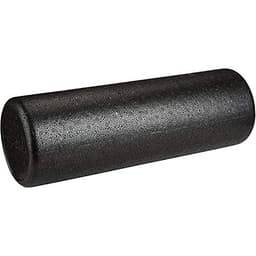
Amazon Basics High-Density Foam Roller (18 in)
18 in of dense smooth foam is the whole job for a calf, and the flat surface is the right choice for a thin muscle like tibialis anterior where a knobbed roller is too pointed.
Price as of October 21, 2026. #ad How we’re funded
For the shin
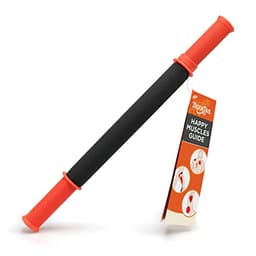
Tiger Tail 18 in Massage Stick
You set the pressure with your hands and can feel where the bone edge is, which is the single most useful property of any tool on the front of a lower leg.
Price as of October 21, 2026. #ad How we’re funded
After a hard run
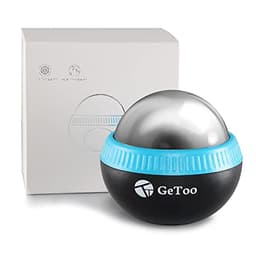
GeToo Cryosphere Cold Massage Roller Ball
Cold with light pressure over a sore shin is comfort, not treatment - but it is the option that asks nothing of an area you should not be grinding on.
Price as of October 21, 2026. #ad How we’re funded
The honest state of the evidence on shin splints
Medial tibial stress syndrome — shin splints — is the reason most people search this. The evidence for treating it is thin, and pretending otherwise would be the easy sale. A systematic review in Sports Medicine assessed eleven trials of any intervention for MTSS and concluded that none of the studies were sufficiently free from methodological bias to recommend any of the treatments investigated. The review specifically lists stretching and strengthening exercises, sports compression stockings, lower leg braces, low-energy laser and pulsed electromagnetic fields as not proven effective at that level of evidence.
So no, a foam roller is not a proven treatment for shin splints, and nothing else in this category is either. What is not in dispute is that shin splints track with training load — how much, how quickly you increased it, and on what surface. The thing that changes the outcome is usually a change to the running, worked out with someone who can watch you run.
Where the tools genuinely help: the calf. Calf tension pulls through the Achilles into the heel and affects how the whole lower leg absorbs impact, and a comfortable calf is easier to run on. That is a supporting role, and it is worth about $17.
“Local tissue inflammation, bruises; bone fracture or myositis ossificans; recent surgery or injury; connective tissue disorders; peripheral vascular insufficiency or disease; medications that thin the blood or alter sensations.”
“Bone fracture” is on that list for a reason that matters here. A stress fracture in the tibia can feel like shin splints early on, with the difference being that the pain narrows to a specific point on the bone, gets worse rather than better with activity, and can hurt at night. That is an assessment, not a foam-rolling session.
The routine, if you want one
- Calf, straight leg — 45–60 seconds each side.
- Calf, bent knee for soleus — 30 seconds each side.
- Tibialis anterior — two slow passes, rotated off the crest.
- Nothing on the bone. Ever, at any speed, with any tool.
Under five minutes. Most days beats hard twice a week, which is true of every technique on this site and is the reason we keep pushing people toward the roller they will tolerate rather than the one that looks most serious.
Everything above can be done with a stick instead of a roller, and for the shins specifically it is the easier tool: you can aim either side of the tibia rather than pressing on the whole front of the leg, and you can do it seated. The best massage sticks covers which one to buy and why the sleeve design matters more than the price.
Common questions
Can you foam roll your shins?
Only the strip of muscle to the outside of the shin bone, and only lightly. The front edge of the tibia sits directly under the skin with no muscle over it, so rolling the ridge itself is pressing a hard cylinder onto a bone. Kneel with the roller under the shin and rotate the leg about 30 degrees outward so you land on tibialis anterior instead. Two slow passes is enough for a muscle that thin.
How do you foam roll calves properly?
Sit with the roller under one calf and roll from above the ankle to below the back of the knee, two or three passes of 45–60 seconds, about ten seconds per length. Start with your hips on the floor if the calf is sore, lift the hips for more pressure, and stack the other ankle on top for roughly double. Add a bent-knee position with the roller lower down to reach soleus, which straight-leg rolling misses.
Does foam rolling help shin splints?
Not as a treatment. A systematic review of eleven trials of interventions for medial tibial stress syndrome concluded that none of the studies were sufficiently free from methodological bias to recommend any of the treatments investigated. Rolling the calf is worth doing because a comfortable calf is easier to run on, but the thing that changes shin splints is usually the training load, worked out with someone who can watch you run.
What is the difference between rolling the gastrocnemius and the soleus?
Gastrocnemius crosses the knee, so it is loaded and reached with the leg straight — the standard seated position. Soleus sits underneath it and does not cross the knee, so it is reached with the knee bent about 90 degrees and the roller lower down the calf. If your calf work has only ever been straight-legged, you have been missing one of the two muscles feeding your Achilles.
When is shin pain a stress fracture rather than shin splints?
The usual distinguishing pattern is location and progression. Shin splints tend to produce a diffuse ache spread over several inches of the inner shin that eases as you warm up. Pain that concentrates into one small spot you could cover with a fingertip, worsens through a run rather than settling, or hurts at night is the pattern that warrants assessment rather than self-treatment.
Is a massage gun better than a roller for calves and shins?
On the calf, either works; the gun is faster and needs no floor space, the roller costs a fraction as much and applies broader pressure. On the shin, both have the same problem — bone directly under skin — and percussion concentrates force more than a roller does, so it is the worse of the two options there. Neither belongs on the bony ridge.
Sources
- 1.Treatment of medial tibial stress syndrome: a systematic review - Sports Medicine (PubMed 23979968) — eleven trials; none sufficiently free from methodological bias to recommend any treatment investigated
- 2.Therabody — Product Safety & Precautions — contraindication list quoted verbatim above
- 3.Comparison of Three Different Density Type Foam Rollers on Knee Range of Motion and Pressure Pain Threshold: A Randomized Controlled Trial - International Journal of Sports Physical Therapy (PMC6044602) — soft, medium and hard rollers produced similar effects on knee ROM and pressure pain threshold
- 4.Foam Rolling or Percussive Massage for Muscle Recovery: Insights into DOMS (PMC12286022)
- 5.Incidence and determinants of lower extremity running injuries in long distance runners: a systematic review - British Journal of Sports Medicine (PMC2465455)