Guides
Rolling the Plantar Fascia
This is the one body part on the site where a $6 object does nearly all of the available work. What matters is where under the foot you put it, how much weight goes through it, and remembering that the calf above is part of the same chain.
By Stephen V.Published
Disclosure:Grip & Gait earns a commission when you buy through links on this page, at no extra cost to you. It never changes what we recommend or the order we rank things in — here is exactly how we’re funded.
The short version
Sit down, put a ball under the arch, and roll slowly from just in front of the heel to just behind the ball of the foot for one to two minutes per foot. Sitting, not standing — standing puts your entire body weight through a contact patch the size of a coin, which is far more pressure than this tissue wants. Then stretch, and then do the calf.
Where the fascia actually is
The plantar fascia is a thick band running along the sole from the heel bone forward to the base of the toes. Classic plantar heel pain is worst at the inside of the heel where that band anchors, and it is worst on the first few steps out of bed because the tissue has been shortened and still for hours.
Two implications for rolling. First, the target is the length of the arch, not the point of the heel — the heel is where the bone is, and grinding a ball into the most painful spot is the most common self-inflicted setback in this whole category. Second, pulling the toes back as you roll puts the band on tension, which makes the same pressure feel like more and reach more of the tissue.
The technique, step by step
- Sit in a chair. Feet flat, ball under the arch of one foot.
- Press down with about a third of your leg’s weight. If you are gripping the chair, it is too much.
- Roll heel to toe slowly — five seconds each way, not a fast scrub.
- Work three lines: the inside of the arch, the middle, the outside. They feel different.
- Pause on the tender areas for 20–30 seconds with steady pressure rather than movement.
- One to two minutes per foot. Then stop.
Ball, frozen bottle or foot roller?
All three do the same mechanical job — sustained pressure moving along the arch. They differ in how much of the foot they contact, how much control you get, and whether cold is part of the deal.
| Tool | Best when | The trade-off |
|---|---|---|
| Spiked or firm ball | Most people, most of the time | Smallest contact patch, so the most pressure per pound and the most precision. Also the easiest to overdo, which is why you sit down. |
| Frozen water bottle | The foot is angry after standing all day | Free, and cold makes it tolerable. Cold is comfort rather than treatment, and a bottle rolls where you push it rather than where you aim it. |
| Contoured foot roller | You want the arch shape supported | Broader contact spread along the arch, so gentler and easier to do daily. Less able to get into one specific tender area. |
| Massage gun on the sole | You already own one | Works, with a flat or ball head at a low setting. Buying a gun for this alone is a poor trade when a ball is a few dollars. |
What we would actually buy
Start here
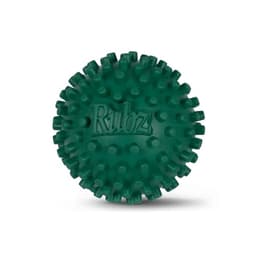
Due North Foot Rubz Massage Ball
A hard spiked ball sized for an arch. It is the cheapest thing on this site and for morning heel pain it does the large majority of what any tool here can do.
Price as of October 21, 2026. #ad How we’re funded
If the ball is too pointed
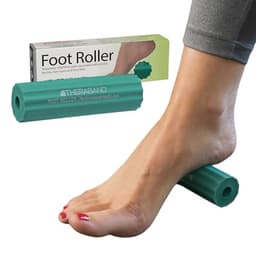
THERABAND Foot Roller
A contoured roller spreads the same pressure along the whole arch, which is the difference between a session you dread and one you do every evening.
Price as of October 21, 2026. #ad How we’re funded
For a foot that is angry by evening
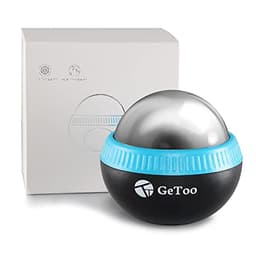
GeToo Cryosphere Cold Massage Roller Ball
Cold plus light pressure in one pass, and the stainless ball actually holds temperature. A frozen bottle does the same job for nothing if you do not mind the mess.
Price as of October 21, 2026. #ad How we’re funded
Do not skip the calf
The calf pulls through the Achilles into the heel, and the heel is where the fascia anchors. A tight calf keeps tension on that attachment all day, which is why calf work keeps appearing in plantar heel pain programs that have nothing to do with feet.
There is trial support for treating the calf as part of the same problem. A randomized controlled trial of 60 patients with plantar heel pain compared a self-stretching program alone against the same stretching plus soft-tissue trigger point manual therapy applied to the calf musculature. The combined group did better on the study’s primary outcomes, physical function and bodily pain. Pressure pain thresholds were assessed over the gastrocnemii and soleus as well as over the calcaneus — the calf was treated as part of the heel problem, not as a separate one.
Practically: after the foot, spend a minute on each calf. The technique is in the shins and calves guide.
The stretch, which has better evidence than anything we sell
A two-year follow-up trial found that plantar fascia-specific stretching outperformed Achilles tendon stretching for chronic plantar fasciitis. It costs nothing and takes about two minutes:
- Sit down and cross the affected foot over the opposite knee.
- Pull the toes back toward the shin with your hand until you feel a stretch along the arch.
- Feel along the arch with your other thumb — the band should be tight like a guitar string. That is how you know you have it.
- Hold ten seconds. Ten repetitions. Three times a day, including before your first steps.
We sell nothing here and it has better support than any product on the page. That ordering matters: the rolling makes the stretching more comfortable, and the stretching is the part with the trial behind it.
Morning routine, which is when this matters most
- Before your feet touch the floor: toe pulls, ten holds of ten seconds.
- Then the ball, sitting on the edge of the bed, one minute per foot.
- Then stand. In that order. First steps on a cold, shortened fascia are the ones that hurt.
- Supportive shoes for the first hour rather than a bare floor, if the morning is your worst time.
Common questions
How do you roll your plantar fascia properly?
Sitting down, with a ball under the arch, rolling slowly from just in front of the heel to just behind the ball of the foot for one to two minutes per foot. Work three lines — inside, middle and outside of the arch — and pause on tender areas with steady pressure for 20–30 seconds rather than scrubbing. Stay off the point of the heel.
Should you stand or sit when rolling a ball under your foot?
Sit. Standing puts your entire body weight through a contact patch the size of a coin, which is far more pressure than irritated tissue wants and is how people set themselves back. Seated, you can regulate the load precisely with how much you press down — about a third of your leg’s weight is a sensible starting point.
Is a frozen water bottle better than a massage ball?
It is free, and the cold makes an angry foot easier to tolerate, which is a real advantage. It is also less precise — a bottle rolls where you push it rather than where you aim it — and the cold is comfort rather than treatment. Most people end up using a ball for the technique and cold separately when the foot has had a long day.
Why does my calf matter for plantar fascia pain?
The calf pulls through the Achilles into the heel, and the heel is where the fascia anchors, so calf tension keeps load on that attachment all day. In a randomized trial of 60 patients with plantar heel pain, adding soft-tissue trigger point manual therapy to the calf musculature on top of a self-stretching program produced better results on physical function and bodily pain than stretching alone.
How long before rolling helps?
Rolling often makes the foot feel better within a single session, which is comfort rather than tissue change. Meaningful improvement in plantar heel pain is usually measured in weeks of consistent stretching, calf work and footwear management. If several weeks of that has produced nothing, the next step is an assessment rather than a harder ball.
What is the best stretch for plantar fasciitis?
Plantar fascia-specific stretching: sit, cross the affected foot over the opposite knee, and pull the toes back toward the shin until the band under the arch feels tight like a guitar string. Hold ten seconds, ten repetitions, three times a day. A two-year follow-up trial found it outperformed Achilles tendon stretching for chronic plantar fasciitis.
Sources
- 1.Effectiveness of myofascial trigger point manual therapy combined with a self-stretching protocol for the management of plantar heel pain: a randomized controlled trial - JOSPT (PubMed 21285525) — 60 patients; stretching plus calf trigger point manual therapy beat stretching alone on physical function and bodily pain
- 2.Plantar fascia-specific stretching improves outcomes in chronic plantar fasciitis — two-year follow-up (PubMed 16882901) — plantar fascia-specific stretching outperformed Achilles tendon stretching at two-year follow-up
- 3.Comparing the Role of Different Treatment Modalities for Plantar Fasciitis: A Double Blind Randomized Controlled Trial (PubMed 32257015)
- 4.Effect of a multimodal rehabilitation program on pain, function and plantar fascia thickness in plantar fasciitis — RCT (PMC12930778)
- 5.Reliability of physical examination for diagnosis of myofascial trigger points: a systematic review of the literature - The Clinical Journal of Pain (PubMed 19158550) — on the limits of identifying trigger points by examination