Rollers & Balls
Vibrating Foam Rollers
The mechanical work of foam rolling is done by your body weight against a firm cylinder. Vibration is added on top of that. The honest question is whether the addition is worth up to twenty times the price.
By Stephen V.Published Updated
Disclosure:Grip & Gait earns a commission when you buy through links on this page, at no extra cost to you. It never changes what we recommend or the order we rank things in — here is exactly how we’re funded.
Quick picks
Ranked on published manufacturer specs and what they mean for the job, not on testing we have not done. Tap a row for the full reasoning. How we score.
| # | Product | Best for | Score | Price |
|---|---|---|---|---|
| 1 | No image FITINDEX Vibrating Foam Roller Five speeds and FSA eligibility at a fraction of the branded price. If you want vibration, buy it here. | Vibration without the premium tax | 8.3 | |
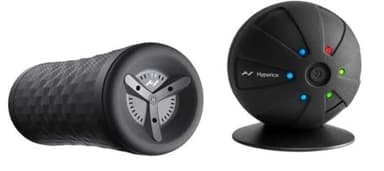
| 2 |  Hyperice Vyper 3 Vibrating Foam Roller 34 W motor, 2.7 lb, 2 h battery, published dimensions - more spec transparency than Hyperice gives its guns. | The reference build | 7.6 | |
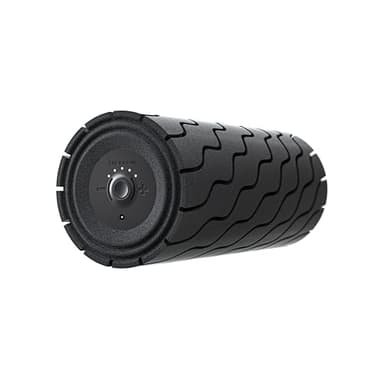
| 3 |  Therabody Wave Roller The wave surface works well on quads and lats. Also the most expensive way to press on a thigh that exists. | Large muscle groups | 7.2 | $179.99 · View on Amazon Price as of October 21, 2026. #ad How we’re funded |
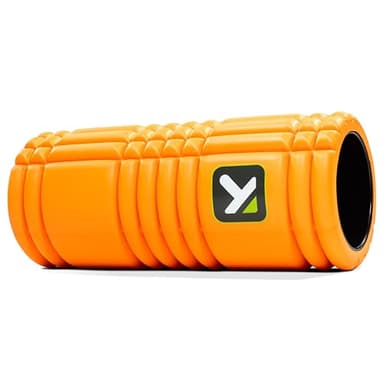
| 4 |  TriggerPoint GRID Foam Roller (13 in) Included deliberately: the textured roller most vibrating models are trying to improve on, at a fraction of the price. | The non-vibrating comparison | 8.4 | |
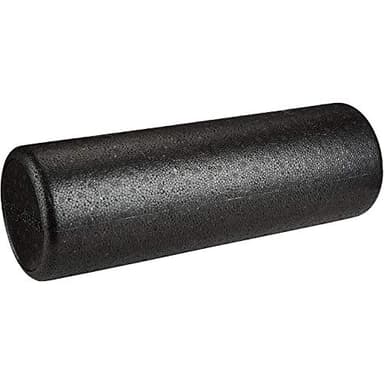
| ✕ |  Amazon Basics High-Density Foam Roller (18 in) Does the mechanical work for the price of a takeaway. Buy this first and find out whether you actually roll. Skip this | The honest baseline | 8.0 | $15.29 · View on Amazon Price as of October 21, 2026. #ad How we’re funded |
What vibration actually adds
Two things, and it is worth separating them because only one is about physiology.
The first is comfort, and it is the real one. Vibration measurably reduces how unpleasant sustained pressure feels. That sounds like a soft benefit until you notice that the single biggest determinant of whether foam rolling helps anyone is whether they actually do it. A tool that makes an uncomfortable activity tolerable gets used three times a week instead of twice a month, and three times a week beats a theoretically superior tool gathering dust.
The second is a claimed physiological addition — that oscillation on top of pressure produces a greater effect on tissue than pressure alone. This is plausible and it is the basis for most of the marketing. It is not something we can support from the sources we have been able to read, and we are not going to assert it.
The price question, stated plainly
A plain high-density foam cylinder and a premium vibrating roller can be separated by a factor of twenty. What that money buys, concretely:
- A motor with three to five speed settings
- A rechargeable battery — around two hours on the units that publish a figure
- Roughly 2.5–2.7 lb of device instead of a light foam tube
- Something that can fail, need charging, or go out of warranty
Against a cylinder that has no battery, no motor, no failure mode, weighs almost nothing, and applies exactly the same body weight to exactly the same muscle.
There is a middle option that most roundups skip: a mid-price vibrating roller with five speeds at roughly a quarter of the premium price. If vibration is the feature you want, that is where to buy it. Paying the premium gets you a published motor wattage, a slightly better-built shell and a brand — not more vibration.
What the research supports about rolling generally
The evidence is for foam rolling as a practice, not for vibration specifically. A study comparing foam rolling against percussive massage found both accelerated the recovery of muscle properties disrupted by delayed onset soreness, and that neither significantly reduced pain compared with rest. A study on massage gun and foam roller use during a warm-up looked at performance in trained athletes.
Notice what is being measured: recovery of muscle properties, and performance. Not pain relief, which is the outcome most buyers are actually shopping for. That gap between what is studied and what is wanted runs through this entire category, and it is why we keep saying the effects are real but narrow.
Who should buy one
- People who own a roller and do not use it because it hurts. This is the strongest case by some distance. If vibration converts a tool you avoid into one you use, it has paid for itself.
- People with a genuine low tolerance for sustained pressure. Vibration takes the edge off in a way that changes who can use the tool at all.
- People who already roll consistently and want a marginal upgrade. Fine, buy it knowingly — as an incremental improvement, not a different category of tool.
Who should not
- Anyone who has never owned a roller. Buy the $13 cylinder. Find out whether you roll at all. Most people do not, and discovering that costs $13 instead of $300.
- Anyone buying it for the deepest possible pressure. That is a massage ball, and it costs under ten dollars.
- Anyone who wants portability.A vibrating roller is a 2.5–2.7 lb device with a battery. A foam cylinder is a light tube. For travel neither is great; a ball wins outright.
What to look for if you are buying one
- Firmness of the surface. The mechanical work is still done by pressure. A vibrating roller soft enough to compress under your weight has traded the actual mechanism for a feature.
- Speed settings. Three is enough. Five is fine. The count matters less than whether the lowest setting is genuinely low, because that is the one you will use on anything tender.
- Battery life. Two hours is typical among units that publish it. Sessions are minutes long, so this is really a question of how often you have to remember to charge it — which is the most common reason a device like this stops being used.
- Length. 13 inches fits a bag; 18 inches lets you lie along your spine for thoracic extension work. Different jobs.
- Published specs. Buy from a maker that states motor wattage, weight and battery. Hyperice publishes all three for the Vyper 3 — notably more than it publishes for its massage guns.
The verdict
Vibration is a comfort feature that improves adherence, and adherence is what makes rolling work. That makes it a genuinely reasonable purchase — at the mid-price end. At the premium end you are paying several times over for a better shell and a published wattage, on top of a mechanism your body weight was already providing for the price of a takeaway meal.
Buy the cylinder first. If you find you roll regularly and dislike it, upgrade to a mid-price vibrating model. That path costs less than buying the premium roller outright, and it answers the only question that matters — whether you will use it — before you spend the money.
If you are choosing between adding vibration to a roller and buying a gun instead — the two most common upgrades from a plain roller — massage gun vs vibrating roller puts the two mechanisms side by side and says which one a given muscle actually wants.
Every pick, in full
Specs below are the manufacturer’s own published figures, each linked to the page it came from. Where a maker does not publish a number, the table says so and names the page we checked — that absence is information too.
FITINDEX Vibrating Foam Roller
Five vibration speeds at a quarter of the premium vibrating roller's price, and FSA eligible — if vibration is the feature you want, this is where to buy it.
What it gets right
- Five speeds
- FSA/HSA eligible
- A fraction of the branded vibrating-roller price
What it does not
- Shorter than a full 18 in roller
- Battery adds weight over plain foam
Hyperice Vyper 3 Vibrating Foam Roller
Three speeds of vibration on a 34 W motor, and the honest question is whether vibration adds enough over a $13 cylinder to justify twenty times the price — for most people it does not.
What it gets right
- Published motor, weight, dimensions and battery — more transparency than Hyperice gives its guns
- Vibration genuinely reduces the discomfort of rolling, which means people actually do it
What it does not
- Twenty times the price of a foam cylinder that does the mechanical part
- 2.7 lb and a 2-hour battery — it is a device, not a lump of foam
Price as of October 21, 2026. #ad How we’re funded
Therabody Wave Roller
The wave-pattern surface plus vibration is a real combination, and it is also the most expensive way to apply pressure to a quad that exists.
What it gets right
- Wave surface works well on quads and lats
- Bluetooth-guided routines if you want them
What it does not
- Very expensive against a foam cylinder
- Heavy
TriggerPoint GRID Foam Roller (13 in)
The multi-density surface is the reason to buy this over a plain foam cylinder: the raised sections concentrate pressure in strips instead of spreading it flat, which is what makes it usable on an IT band without needing to hold your breath.
What it gets right
- Hollow rigid core does not compress into a soft log the way plain EVA foam does after a year
- Multi-density surface gives you three pressure intensities on one roller
- 13 in length fits in a gym bag; the 26 in version does not
What it does not
- Costs roughly three times a plain high-density cylinder that also works
- The hollow core makes it noisier on a hard floor
Price as of October 21, 2026. #ad How we’re funded
Amazon Basics High-Density Foam Roller (18 in)
A dense foam cylinder does the same mechanical job as a textured roller for a fraction of the money, and for a first roller that is the correct purchase.
What it gets right
- Does the actual mechanical work — sustained pressure across a broad contact area
- Nothing to break; no core, no seams, no electronics
- 18 in is long enough to lie along your spine, which the 13 in rollers are not
What it does not
- Flat surface spreads pressure rather than concentrating it
- Solid EVA softens over a few years of heavy use
Common questions
Are vibrating foam rollers worth it?
For someone who owns a roller and avoids it because it hurts, yes — vibration makes sustained pressure more tolerable, and the biggest determinant of whether rolling helps is whether you actually do it. For someone who has never owned a roller, no: buy the plain cylinder first and find out whether you roll at all. The mechanical work is done by your body weight either way.
Does vibration make foam rolling more effective?
It reliably makes it more comfortable, which improves how consistently people use it. The stronger claim — that oscillation on top of pressure produces a greater tissue effect than pressure alone — is plausible and is the basis for most of the marketing, but we have not found a source we can cite that establishes it, so we are not going to assert it.
How long does a vibrating foam roller battery last?
Around two hours among the units that publish a figure — Hyperice states up to two hours for the Vyper 3. Since sessions are minutes long, the practical question is how often you have to remember to charge it, which is the most common reason a device like this stops getting used.
Vibrating roller or massage gun?
Different jobs. A vibrating roller covers broad muscle with gentle, wide-area pressure — quads, hamstrings, lats. A massage gun delivers concentrated percussion to a small area and reaches places you cannot get body weight onto. If you want the deepest concentrated pressure of all, neither wins: that is a massage ball, and it costs under ten dollars.
Sources
- 1.Hyperice — Vyper 3 product page — 3 speeds, 2.7 lb, up to 2 h battery, 34 W motor, 13 x 5.4 x 5.4 in
- 2.Foam Rolling or Percussive Massage for Muscle Recovery: Insights into DOMS (PMC12286022)
- 3.Does Massage Gun or Foam Roller Use During a Warm-Up Improve Performance in Trained Athletes? (PMC12473898)
- 4.Massage Alleviates Delayed Onset Muscle Soreness after Strenuous Exercise: A Systematic Review and Meta-Analysis (PMC5623674)