Massage Guns
Massage Gun for Achilles, IT Band and Shin Pain
Every one of these four areas has a bone or a tendon sitting just under the surface, and every one has a muscle nearby that takes percussion perfectly well. The difference between a useful session and a bruise is knowing which is which, and which head to fit.
By Stephen V.Published
Disclosure:Grip & Gait earns a commission when you buy through links on this page, at no extra cost to you. It never changes what we recommend or the order we rank things in — here is exactly how we’re funded.
The one-paragraph answer
On all four of these, the gun goes on muscle and stops before tendon or bone. Achilles: the calf belly, not the cord. IT band: the tensor fasciae latae and the outer quad, not the band over the femur and nowhere near the outside of the knee. Shin: the strip of muscle beside the crest, at a low speed, never the crest itself. Plantar fascia: the arch with a flat head, seated, not the point of the heel. Ball or flat head for almost all of it.
Why these four in particular
Running injuries cluster in the lower leg. A systematic review of lower-extremity running injuries in long distance runners put the incidence at between 19.4% and 79.3% across the studies it examined, with the knee the predominant site. These four areas are where people reach for a gun, and they share one awkward property: the structure that hurts is usually a tendon, a fascia or a bone, while the tissue that takes percussion well is a muscle nearby.
Percussion concentrates force more than a roller does. That is the point of the device, and it is also why aiming matters more with a gun than with a cylinder you lie on.
Area by area
Achilles and heel
Where: the calf belly, from a few inches above the ankle up to just below the back of the knee. Head: ball for general work, flat if the calf is sore. Speed: low to medium; there is no reason to run a calf at the top setting. Time: 60–90 seconds per calf, gliding rather than pressing.
Where not: the tendon itself and the bony back of the heel. The Achilles is dense collagen inserting directly onto bone with almost nothing between the two, and percussion into that is repeated mechanical impact on an irritated structure lying against a bone.
The one exception: a fork head straddling the tendon so the two prongs land on the tissue either side of it, at a low setting, is defensible. It requires the aim to be reliable. If it is not, use the calf and leave it there. The full technique for the calf, including the roller version, is in foam rolling for Achilles tendonitis.
IT band and lateral thigh
Where: tensor fasciae latae at the front-outside of the hip, gluteus medius at the side, and vastus lateralis on the outer thigh — rotate about 30 degrees off the band so you are on quad rather than on fascia. Head: ball on the quad, flat or ball on the TFL. Speed: medium. Time: 30–60 seconds per area.
Where not: the band itself over the mid-thigh, the bony point at the side of the hip, and the outside of the knee. That last one matters — the common peroneal nerve runs close to the surface just below and behind the outside of the knee, and a percussion head parked there produces tingling or a shock sensation down the leg. That signal means move immediately, not press harder.
The reason to work the muscles rather than the band is not just safety. A study comparing rolling the IT band against rolling the gluteal muscles concluded that working a myofascial group increases passive range of motion while working the band itself does not. Where the tender spots actually sit is mapped in IT band trigger points.
Shins
Where: tibialis anterior only — the strap of muscle roughly a thumb’s width to the outside of the sharp front edge of the tibia. Head: flat, always; the ball is too concentrated for tissue this thin and the bullet has no business here at all. Speed: lowest. Time: 20–30 seconds, once.
Where not: the crest of the tibia, at any speed, with any head. There is skin over bone and nothing else. This is the single most common way people hurt themselves with a gun on a lower leg.
And a wider caveat about expectations: a systematic review of treatments for medial tibial stress syndrome concluded that none of the eleven trials it examined were sufficiently free from methodological bias to recommend any of the treatments investigated. A gun is not a treatment for shin splints. It is a way to make a tight calf more comfortable.
Plantar fascia and arch
Where: the arch, between the heel and the ball of the foot, seated. Head: flat or ball at a low setting. Some people get on with the bullet on an arch; it is the one place on the body where that head has a routine use, and it is still the easiest way to overdo this. Time: 30–60 seconds.
Where not: the point of the heel, where the fascia anchors onto bone. Also remember the calf: it pulls through the Achilles into the heel, which is why calf work keeps appearing in heel pain programs. Technique for the foot is in rolling the plantar fascia.
| Area | Head | Where the session stops |
|---|---|---|
| Calf belly (for the Achilles) | Ball, or flat if sore | Where the tissue turns into a hard cord. A fork straddling the tendon at low speed is the only defensible contact with it. |
| TFL and gluteus medius | Ball or flat | Off the bony point at the side of the hip. Small circles, not long strokes - there is not much room. |
| Outer quad (vastus lateralis) | Ball | Well above the outside of the knee. Rotate off the band onto muscle first. |
| Tibialis anterior | Flat only | A thumb's width outside the crest, never on it. Lowest speed, 20-30 seconds. |
| Arch of the foot | Flat or ball | Forward of the point of the heel. Seated, so you set the pressure rather than your body weight. |
| The band, the tendon, the tibia, the heel point | None | No head shape makes bone or dense collagen a good target. There is no setting that fixes this. |
Settings, honestly
- Speed does not equal depth. Amplitude — how far the head travels per stroke — is the spec that decides reach, and it is fixed by the device. Turning the speed up mostly makes it louder.
- Glide, do not press. Let the device’s own force do the work and keep the head moving. Pressing hard converts percussion into a blunt object.
- Short. 60–90 seconds on a big muscle, 20–30 on a small or thin one. Longer is not more.
- Head shape changes distribution, not depth. Which is why the flat head is the right answer near bone: same force, spread over more area, so lower pressure per square inch. The full head-by-head breakdown is in massage gun attachments explained.
What we would actually buy
Start here
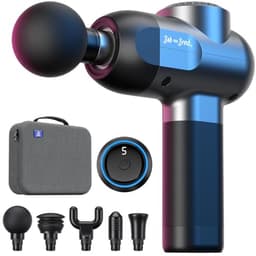
Bob and Brad C2 Massage Gun
The only gun in our roundup whose maker publishes amplitude, stall force, speed range and noise. If you are buying one gun for legs, buy the one whose numbers exist.
If you want it small
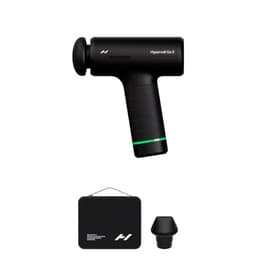
Hyperice Hypervolt Go 3
A one-handed unit is easier to aim on a TFL or a shin, which matters more on these areas than raw power does. Hyperice publishes its speed range and decibel figure.
Price as of October 21, 2026. #ad How we’re funded
If percussion is too much
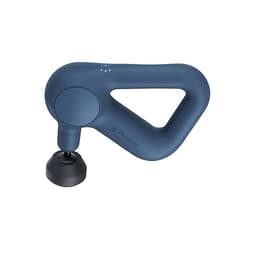
Therabody Theragun Relief
Therabody's deliberately gentler model. On irritable tissue near a tendon, less aggressive is the point rather than a compromise.
Price as of October 21, 2026. #ad How we’re funded
The manufacturer’s own list of where not to use any of them
No head shape makes a contraindicated area safe, and this list applies regardless of which one is fitted:
“Deep vein thrombosis, osteomyelitis; bone fracture or myositis ossificans; bleeding disorders; peripheral vascular insufficiency or disease; medications that thin the blood or alter sensations; pacemaker, ICD.”
Two of those are directly relevant to runners. “Bone fracture” covers the stress fracture that can masquerade as shin splints early on — pain narrowing to one small point on the bone, worsening through a run rather than settling. And a calf that is swollen, warm or painful without exercise should not be massaged at all until it has been assessed.
Common questions
Can you use a massage gun on the Achilles tendon?
Not on the tendon itself. It is dense collagen inserting directly onto bone with almost nothing between the two, so percussion there is repeated impact on an irritated structure lying against a bone. Work the calf belly above it with a ball or flat head at a low to medium speed. A fork head straddling the tendon so pressure lands either side, at a low setting, is the one defensible exception.
Which massage gun head should I use on the shin?
The flat head, at the lowest speed, and only on the strip of muscle roughly a thumb’s width to the outside of the sharp front edge of the tibia. Tibialis anterior is thin, so a ball concentrates too much and a bullet has no business there at all. Nothing goes on the crest itself at any speed with any head.
Can I use a massage gun on my IT band?
Use it on the muscles that tension the band rather than the band itself: tensor fasciae latae at the front-outside of the hip, gluteus medius at the side, and the outer quad with your body rotated about 30 degrees off the band. Stay off the bony point at the side of the hip and well away from the outside of the knee, where the common peroneal nerve runs close to the surface.
Does a massage gun help shin splints?
Not as a treatment. A systematic review of eleven trials of interventions for medial tibial stress syndrome concluded that none were sufficiently free from methodological bias to recommend any of the treatments investigated. What a gun can do is make a tight calf more comfortable, which is worth doing and is a smaller claim than the marketing makes.
What speed should I use on legs?
Low to medium on a calf or quad, lowest on the shin. Speed is not depth — amplitude, how far the head travels per stroke, is the spec that decides reach and it is fixed by the device. Running a higher speed mostly makes the unit louder. Keep the head gliding rather than pressed in, and keep sessions to 60–90 seconds on big muscles.
Is a massage gun or a foam roller better for these areas?
For the calf and outer quad either works, and the roller costs a fraction as much. The gun wins where aiming matters or getting on the floor is the barrier — the TFL is much easier to reach standing with a gun than lying on a ball. On the shin, both face bone under skin, and percussion concentrates force more than a roller does, so it is the more easily misused of the two there.
Sources
- 1.Therabody — Product Safety & Precautions — contraindication list quoted verbatim above
- 2.Treatment of medial tibial stress syndrome: a systematic review - Sports Medicine (PubMed 23979968) — eleven trials; none sufficiently free from bias to recommend any treatment for shin splints
- 3.The Effects of an Acute Bout of Foam Rolling on Hip Range of Motion on Different Tissues - International Journal of Sports Physical Therapy (PMC6088119) — working a myofascial group increased passive range of motion; working the IT band itself did not
- 4.Incidence and determinants of lower extremity running injuries in long distance runners: a systematic review - British Journal of Sports Medicine (PMC2465455) — incidence of lower extremity running injuries 19.4% to 79.3%; knee the predominant site
- 5.The Effect of Percussive Therapy on Musculoskeletal Performance and Experiences of Pain: A Systematic Literature Review (PubMed 37020441)