Symptoms
Best Tools for Golfer's Elbow
Golfer's elbow is the flexor-tendon counterpart to tennis elbow: the same overload problem, but on the inner side of the elbow. The productive target is the forearm flexor muscle, not the bony point that hurts, and the real fix is managing the load on the tendon. Keep every tool off the funny-bone groove, where the ulnar nerve runs.
By Stephen V.Published Updated
Disclosure:Grip & Gait earns a commission when you buy through links on this page, at no extra cost to you. It never changes what we recommend or the order we rank things in — here is exactly how we’re funded.
For golfer’s elbow, work the forearm flexor muscles that run from the inner elbow down toward the wrist — a hard ball rolled against a table, or a stick, does this well — and keep every tool off the bony point of the inner elbow itself and off the groove just behind it, where the ulnar nerve runs. The tissue that is actually overloaded is the tendon where those flexor muscles attach, and the thing that changes a tendon is graded loading, not massage. A tool eases the tight forearm and buys comfort; it does not fix the tendon. That is the whole page in three sentences, but the details of where to press and where not to are worth getting right.
What is actually happening
Golfer’s elbow — medial epicondylitis — is pain at the medial epicondyle, the bony bump on the inner side of the elbow. That bump is where the muscles that flex the wrist and grip the hand attach through a common tendon. Overload that tendon — a lot of gripping, wrist flexion, throwing, climbing, swinging a club, or repetitive manual work — and the attachment becomes painful and tender. It is the mirror image of tennis elbow, which is the same kind of problem on the outer side of the elbow, where the wrist extensor tendons attach. Inner elbow, flexors: golfer’s. Outer elbow, extensors: tennis. Neither is fussy about which sport you actually play.
The key thing for tool selection is that this is a tendon problem, and the sorest spot is a tendon attaching to bone. That bony point is the one place none of these tools belong. Pressing, scraping or hammering the medial epicondyle itself does nothing useful and can make an irritated attachment angrier. What responds to tools is the forearm flexor muscle belly, the meat of the forearm below the elbow, which is usually tight and overworked and which you can safely and usefully work.
There is a second reason to be careful on the inner elbow: the ulnar nerve. It runs in a groove directly behind the medial epicondyle — the “funny bone” you have banged and felt zing into your little finger. That nerve sits close to the surface with almost nothing over it, so a ball, a scraper or a percussion device pressed there can irritate it directly. Keep every tool off the bony point and off that groove. Everything productive happens further down the forearm. We are describing a common pattern, not diagnosing you.
Which class of tool fits
| Tool class | Cost | Why it does or doesn’t work here | Verdict |
|---|---|---|---|
| Massage ball | Cost: Budget | Rolled against a table or a wall, a hard ball works the forearm flexor muscles where the problem actually sits, with pressure you control by leaning in or backing off.Where it fails: Not for the bony point of the elbow itself, and not in the groove behind it where the ulnar nerve runs. | Start here |
| Massage stick | Cost: Mid-range | Rolls the forearm flexors with controllable pressure set by your arms, easy to do seated at a desk.Where it fails: Awkward on the small muscles right up near the elbow, where a ball is more precise. | Sometimes |
| Scraper / gua sha | Cost: Budget | Practitioners use it along the forearm flexors and the geometry fits the long muscle belly.Where it fails: The evidence for scraping is thin and it bruises easily; light hand only, with emollient, and never over the bony point or the nerve groove. | Sometimes |
| Massage gun | Cost: Mid-range | A low setting on the forearm flexor muscle belly can loosen tightness that comes with the problem.Where it fails: Never on the bony inner elbow or the funny-bone groove, where percussion can irritate the ulnar nerve directly. | Sometimes |
| Rest / load management | Cost: Budget | This is a tendon-load problem, and graded loading of the wrist flexors is the evidence-supported fix that actually rebuilds the tendon's capacity.Where it fails: Not a purchase, so it gets skipped in favor of a tool that treats the tight forearm instead of the tendon. | Start here |
In practice: rest your forearm on a table, palm up, put a hard ball under the flexor muscle below the elbow, and lean slowly along the muscle belly toward the wrist, pausing where it is tender. Stay on the meat of the forearm. Do not roll up onto the bony point of the elbow, and do not let the ball sit in the groove behind it. If you feel anything zing or tingle into the ring and little finger, you have found the ulnar nerve — move off it immediately.
What we would actually buy
Buy this first
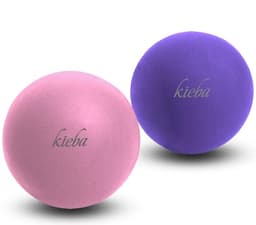
Kieba Massage Lacrosse Balls
A hard ball rolled under the forearm against a table concentrates pressure exactly where the flexor muscles sit, with the depth set by how much you lean in. Cheap, precise, and easy to keep off the bony point.
Price as of October 21, 2026. #ad How we’re funded
For the forearm
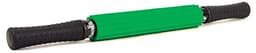
THERABAND Roller Massager+
A stick lets you roll the forearm flexors seated at a desk, with the pressure controlled by your arms so you can back off the instant it is too much near the elbow.
Price as of October 21, 2026. #ad How we’re funded
If you try scraping
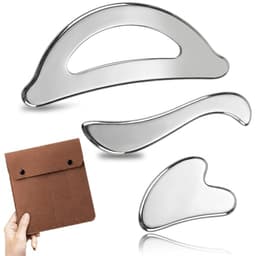
Rena Chris Gua Sha & Muscle Scraper Tool
A stainless edge suits the long forearm muscle belly if you want to try scraping. The evidence is thin, so use a light hand with emollient and keep it off the bony point and the nerve groove.
Price as of October 21, 2026. #ad How we’re funded
The part that is not a purchase
Here is the honest center of it: golfer’s elbow is a tendon-load problem, and the thing that changes a tendon is load, not massage. A tendinopathy is essentially a mismatch between what you are asking the tendon to do and what it can currently do, and the treatment that actually rebuilds its capacity is graded, progressive loading of the wrist flexors — controlled exercise that starts well within tolerance and builds up over weeks. That is the part no tool sells you, and it is the part that lasts.
The tools have a real but limited role. Rolling the tight forearm flexors makes the arm more comfortable and can take the edge off the constant ache, and comfort is worth something while you do the slow work of reloading the tendon. But a ball, a stick, a scraper or a gun does not mend the attachment, and grinding harder or more often does not speed it up — if anything an already-irritated tendon does worse with aggression. So the sensible pattern is: reduce the gripping and wrist-flexion load that set it off, work the forearm muscle for comfort, and reload the tendon gradually rather than resting it into weakness or pushing straight back into the activity that hurt it. The mechanics carry straight over from the tennis elbow page; only the side of the elbow changes. If the tightness runs down into the wrist, our wrist and forearm page covers that too.
“Skin rash, open wounds, blisters, local tissue inflammation, bruises, or tumors; deep vein thrombosis, osteomyelitis; bone fracture or myositis ossificans; bleeding disorders; peripheral vascular insufficiency or disease.”
If golf is what caused it rather than the name it happens to carry, the rest of the kit is worth getting right too — the lower back takes the rotation and the lead forearm takes the strike. Recovery tools for golfers covers both, including the pre-round routine with a randomized trial behind it.
Common questions
What is the best tool for golfer's elbow?
A hard massage ball rolled under the forearm flexor muscles against a table, because that is where the overloaded tissue sits. Keep it strictly on the muscle belly of the forearm and off the bony point of the inner elbow and the groove behind it. A stick works too for a seated, controllable option. But the tool is only for comfort; the fix is graded loading of the wrist flexors.
Can I use a massage gun on golfer's elbow?
On the forearm flexor muscle belly at a low setting, yes, it can loosen tightness that comes with the problem. But never on the bony inner elbow or the funny-bone groove behind it, where the ulnar nerve runs close to the surface and percussion can irritate it directly. And a gun does not mend the tendon — that takes graded loading, not percussion.
What is the difference between golfer's elbow and tennis elbow?
Same kind of problem, different side of the elbow. Golfer’s elbow is pain at the inner bony bump, where the wrist flexor tendons attach; tennis elbow is the outer bump, where the wrist extensor tendons attach. Both are tendon-load problems, both respond to graded loading rather than massage, and for both the tools work the forearm muscle, not the sore bony point.
Sources
- 1.Therabody — Product Safety & Precautions — quoted above