Feet & Gait
The Best Foot Massager for Circulation and Swollen Feet
If your feet and ankles are puffy and heavy by evening, the thing you want is compression, not kneading, and the honest first question is why they swell at all. Here is which machine actually moves fluid, which one to skip, and the short list of people who should ask a doctor before buying any of them.
By Stephen V.Published
Disclosure:Grip & Gait earns a commission when you buy through links on this page, at no extra cost to you. It never changes what we recommend or the order we rank things in — here is exactly how we’re funded.
Quick picks
Ranked on published manufacturer specs and what they mean for the job, not on testing we have not done. Tap a row for the full reasoning. How we score.
| # | Product | Best for | Score | Price |
|---|---|---|---|---|
| 1 |  RENPHO Foot Massager with Heat Air compression around the whole foot plus kneading and heat. The compression is the part that does the circulation job. FSA eligible. | Feet and ankles, most people | 8.3 | |
| 2 |  FIT KING Air Compression Recovery Boots Sequential chambers that inflate ankle-upward, which is how fluid is actually moved. Sized sleeves; measure first. | Swelling that reaches the calf | 8.1 | |
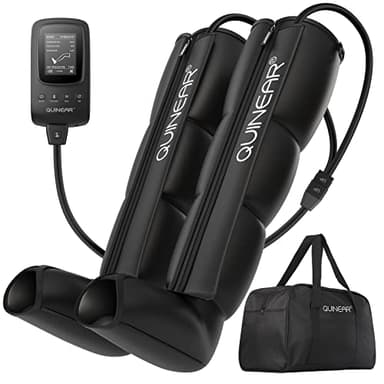
| 3 |  QUINEAR Leg Recovery Compression System Foot, calf and thigh in one sleeve. Includes the foot, where the swelling sits and where many budget boots stop. | Sleeve that starts at the foot | 7.7 | $359.99 · View on Amazon Price as of September 17, 2026. #ad How we’re funded |
| 4 |  RENPHO Foot Massager Machine with Heat Intensity adjusts down as well as up and heat runs separately. The one to choose if you cannot fully trust pain as a signal. | Altered sensation, adjustable low | 7.6 | |
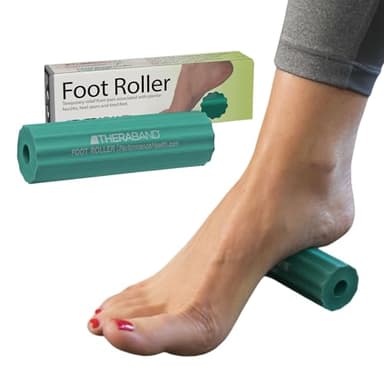
| ✕ |  THERABAND Foot Roller A brilliant tool for a stiff arch and the wrong one for fluid. A roller moves tissue, not what is pooled in it. Skip this | The one to skip for swelling | 5.8 | $20.03 · View on Amazon Price as of September 17, 2026. #ad How we’re funded |
Start with why the feet swell
Feet and ankles that are fine in the morning and puffy by evening are, for most people, a gravity problem: a long day standing or sitting with the feet down, not much calf muscle activity to pump fluid back up, and it pools. That is the swelling a foot massager can genuinely help with, and it is worth being precise that “help” means moving pooled fluid and making tired feet feel lighter — not fixing anything about your circulation.
Some swelling is not that, and a machine is the wrong response to it. Swelling in one leg only, swelling with pain, warmth or redness, swelling that arrived suddenly, swelling with shortness of breath, or swelling that does not go down overnight are all reasons to see a clinician before you buy anything. So is a diagnosis you already have — heart failure, kidney disease, peripheral artery disease, diabetes with reduced sensation, a history of clots — because several of those are on the contraindication list for compression devices. We will not sell you a machine for a symptom that needs a doctor.
Kneading versus compression: the distinction that decides this page
Most foot massagers knead. Rollers or nodes under the sole press upward into the arch, which feels wonderful on a foot that is tight and does little for a foot that is full of fluid. Kneading works tissue. Swelling is not a tissue problem; it is a plumbing problem, and the tool for plumbing is compression— air bladders that squeeze the foot and ankle, ideally in sequence from the toes upward, so that fluid is pushed the direction it needs to go.
That is why this list is not the same as our heated foot massager roundup or the plantar fasciitis one. For an aching arch, kneading is the whole point. For a swollen ankle, kneading is the pleasant part and compression is the working part, and the machines that lead here are the ones that have it.
| What you have | Tool | Why |
|---|---|---|
| Puffy feet and ankles by evening, fine by morning | Compression foot massager | Air compression around the whole foot moves pooled fluid; kneading and heat make it pleasant. |
| Swelling that reaches the calf or shin | Sequential leg boots | Chambers that fire ankle-upward push fluid out of the whole lower leg, not only the foot. |
| Tired, aching, stiff feet with no real swelling | Kneading massager or a roller | That is a tissue problem. See the standing-all-day page. |
| Swelling in one leg, or with pain, warmth, redness or breathlessness | A clinician, today | Not a massage problem. Compression over a clot or an infection is dangerous. |
What we can and cannot say about the evidence
We are not going to claim that a consumer foot massager improves your circulation, treats edema, or prevents anything. We have not found evidence for those claims about consumer kneading machines and we are not going to invent it. The mechanism behind sequential compression is not in dispute — external pressure applied in sequence moves fluid proximally, and pneumatic compression was a clinical intervention long before it was a recovery gadget. What clinical evidence exists is for clinical devices in clinical populations: a 2026 systematic review of randomized trials of intermittent pneumatic compression for lower-limb lymphedema, for instance, deals with prescribed advanced devices in patients with a diagnosed condition, under supervision, and with people who had circulatory disease excluded. It does not tell you what an inexpensive home unit does for ordinary end-of-day puffiness.
What is reliably reported by owners is subjective and, we think, real: feet and ankles feel lighter and less tight afterward, and the visible puffiness goes down for a while. That is a fair reason to own one. It is a smaller claim than the listings make, and it is the one we can stand behind. The equally cheap alternative is putting your feet up above heart level for twenty minutes, which does most of the same thing for nothing, and which is worth trying before you spend.
What to look for, in order
- Air compression, not only kneading.The listing will say “air compression” or “air pressure” if it has it. If the only mechanism is rollers under the sole, it is a kneading machine and belongs on a different page.
- Coverage.Does the compression wrap the ankle, or only the foot? Swelling sits around the ankle bones as much as in the foot, and a machine that squeezes the sole and stops at the instep has missed half the job. If the puffiness climbs into the calf, no foot machine reaches it, and you want leg sleeves — and specifically ones whose sleeve starts at the foot, which is where many budget boots do not.
- Intensity that adjusts down. Compression that is too firm on a swollen ankle is genuinely unpleasant. Look for a low setting worth the name, and if your sensation is reduced for any reason, look for the widest adjustable range you can find and start at the bottom of it.
- Heat you can switch off. Heat is pleasant and it is the setting to be most careful with if your feet do not report temperature reliably. Independent heat control is worth having.
- Open or enclosed. An enclosed unit holds heat and compresses the whole foot; an open-top unit lets you lift your foot out instantly. For a swollen foot, enclosed is the right shape. For a foot with altered sensation, being able to leave in a second matters more.
Using it so it actually helps
Timing matters more than settings. The useful session is in the evening, after the standing is over and before the fluid has had a night to redistribute on its own, and it is twenty minutes or so with the feet at least level with the hips — on the sofa with the machine on a footstool, not on the floor with the legs hanging down. Elevation and compression together do more than either alone. Start at the lowest compression and the heat off; move up only if the low setting feels like nothing. Afterward, keep the feet up for another ten minutes rather than standing straight back up, or you undo the session on the walk to the kitchen.
Alongside the machine, the cheap things that reduce evening swelling are the ones nobody sells: getting up and walking for two minutes every half hour if you sit, doing calf raises at the counter if you stand, and putting the feet up when you get home. The calf muscle is the pump that returns fluid from the feet, and a machine is a poor substitute for using it.
Which one, in a line each
- Feet and ankles, most people: the RENPHO foot massager with air compression, kneading and heat. The compression is what earns it the top spot; the kneading is why you will use it. FSA eligible. It sits opposite its open-top rival in Nekteck vs RENPHO.
- Swelling that climbs the leg: the FIT KING sequential boots. Ankle-upward chambers, sized sleeves, a sane price. The full boot roundup and the sizing warnings are in the best compression boots.
- Puffy feet and lower legs together: the QUINEAR, whose sleeve runs from the foot to the thigh, so the wave starts where the fluid has actually pooled.
- Reduced sensation in the feet:the RENPHO with the wide intensity range and separate heat control, started at the bottom of its range — and read the neuropathy page first, because the cautions there apply.
The foot roller is the skip, and it is the only skip on this site we feel bad about. A contoured roller under the arch is one of the best things you can buy for a stiff, sore foot, which is why it leads our standing-all-day picks. It just does not move fluid, and buying it for swelling is buying the right tool for the wrong problem. If what you actually have is aching feet rather than swollen ones, go there instead — you will spend less and get more.
Every pick, in full
Specs below are the manufacturer’s own published figures, each linked to the page it came from. Where a maker does not publish a number, the table says so and names the page we checked — that absence is information too.
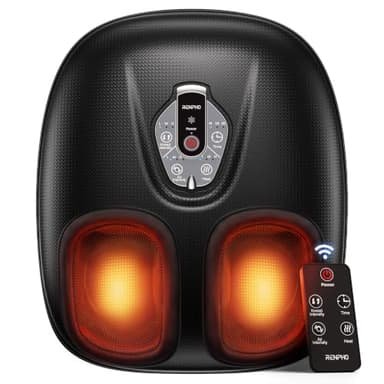
RENPHO Foot Massager with Heat
Compression plus kneading plus heat in one enclosed unit, and FSA eligible — the compression element is what separates it from a machine that only presses on the sole.
What it gets right
- Air compression works the whole foot, not only the contact points
- FSA/HSA eligible
- Enclosed design holds heat better than an open-top unit
What it does not
- Enclosed means you cannot pull your foot out instantly
- Bulky to store
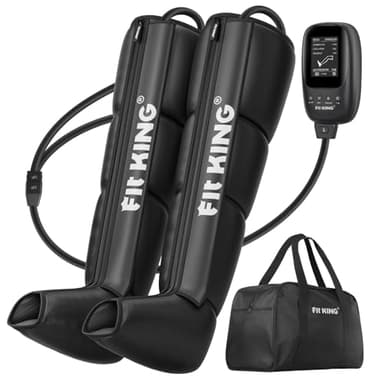
FIT KING Air Compression Recovery Boots
Sequential chamber inflation — the mechanism that actually distinguishes recovery boots from a leg-shaped pressure cuff — at a third of what the category leader charges.
What it gets right
- Genuinely sequential: chambers fire ankle-upward rather than all at once
- Sized options rather than one-size-fits-nobody
- A fraction of the premium system price
What it does not
- Louder pump than the premium units
- Bulky to store and not remotely portable
- Sizing runs specific — measure before buying
Price as of September 17, 2026. #ad How we’re funded
QUINEAR Leg Recovery Compression System
Covers foot, calf and thigh in one sleeve, which matters because the foot is where most budget systems stop and where a lot of the swelling sits.
What it gets right
- Includes the foot, which many systems omit
- Multiple pressure levels and modes
What it does not
- Pump noise
- Not portable
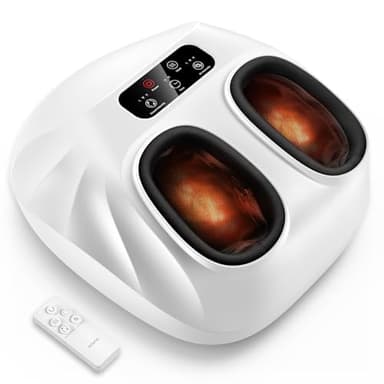
RENPHO Foot Massager Machine with Heat
Adjustable intensity across a wider range than most, which is the specification that actually matters when sensation is altered and you cannot trust pain as a feedback signal.
What it gets right
- Wide intensity range, adjustable down as well as up
- Heat can be run independently of the kneading
- FSA/HSA eligible
What it does not
- Expensive
- Large footprint
Price as of September 17, 2026. #ad How we’re funded
THERABAND Foot Roller
Shaped for the arch specifically rather than being a general-purpose ball, and it can be chilled — which covers both jobs a first-thing-in-the-morning heel needs.
What it gets right
- Contoured to the arch instead of a plain sphere
- Freezes, so you get cold and pressure in one pass
- Costs less than a takeaway lunch
What it does not
- Fixed shape suits some arches better than others
- Not usable anywhere but the foot
Common questions
Do foot massagers help circulation?
A machine with air compression can move pooled fluid out of tired, swollen feet and make them feel lighter for a while; a kneading-only machine mostly works tissue and does little for swelling. Neither improves your circulation in any lasting sense, and we have found no evidence that a consumer unit treats edema or circulatory disease. If swelling is one-sided, painful, sudden, or comes with breathlessness, see a clinician rather than buying a machine.
What is the best foot massager for swollen feet and ankles?
One with air compression that wraps the ankle, not only the sole. For most people that is an enclosed unit combining compression with kneading and switchable heat. If the swelling reaches the calf, a foot machine cannot follow it and sequential leg sleeves that start at the foot are the right tool. Use it in the evening with the feet at hip height or above, on the lowest compression first.
Who should not use a compression foot massager?
Anyone with a history of blood clots, peripheral artery disease, heart failure, an open wound or skin infection on the foot or leg, or diabetes with reduced sensation should talk to a doctor before using one. Compression over a clot or an infection can be dangerous, and swelling caused by the heart or kidneys is not something to squeeze. One-sided, painful or sudden swelling needs assessment, not a massager.
Sources
- 1.A systematic review of contemporary randomized controlled trials for treatment of lower extremity lymphedema by intermittent pneumatic compression devices - Journal of Vascular Surgery: Venous and Lymphatic Disorders 2026 (PMC13197773) — clinical IPC devices in diagnosed lower-limb lymphedema; arterial disease and active thrombosis excluded - not evidence about consumer units