Guides
Scar Tissue and Fascia: What Tools Can and Cannot Do
"Breaks up scar tissue" and "releases fascia" appear on almost every product page in this category. Neither claim survives much scrutiny, and the things these tools genuinely do are interesting enough not to need them.
By Stephen V.Published Updated
Disclosure:Grip & Gait earns a commission when you buy through links on this page, at no extra cost to you. It never changes what we recommend or the order we rank things in — here is exactly how we’re funded.
Quick picks
Ranked on published manufacturer specs and what they mean for the job, not on testing we have not done. Tap a row for the full reasoning. How we score.
| # | Product | Best for | Score | Price |
|---|---|---|---|---|
| 1 |  Bob and Brad C2 Massage Gun Reduced stiffness and improved range are real, documented effects. Buy it for those, not for the fascia claim. | What percussion genuinely does | 8.6 | |
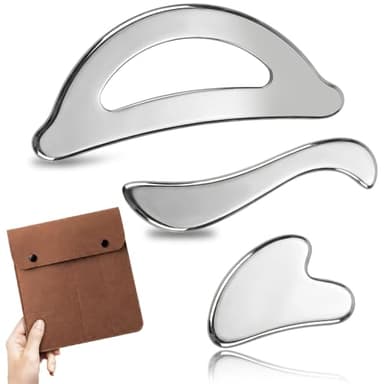
| 2 |  Rena Chris Gua Sha & Muscle Scraper Tool Same overclaim, thinner evidence base. Cheap and usable, and we are honest about what it is. | The scraping version of the claim | 7.4 | $14.99 · View on Amazon Price as of October 21, 2026. #ad How we’re funded |
| 3 |  TriggerPoint GRID Foam Roller (13 in) Same real effects, larger contact area, a fraction of the price of a percussion device. | The broad-tissue option | 8.3 |
The two claims
Almost every product in this category is sold on one or both of: it breaks up scar tissue, and it releases fascia. Both appear in massage gun listings, on scraping-tool packaging, and in a good deal of the content written about them.
We have looked for evidence supporting either as literally described, and we have not found it. Here is what we think is actually going on.
Scar tissue: what it is and what would be required
Scar tissue is collagen laid down during healing, arranged less regularly than the tissue it replaced. Mature scar tissue is dense, well-organized and mechanically robust — remodeling it is a biological process taking months, driven largely by loading over time.
The forces a handheld percussion device produces are not in the range that would mechanically disrupt organized collagen. The best-specified gun on this site publishes over 44 lb of stall force, and that figure is the point at which the motor stops — the working force delivered through a head into tissue is considerably less, distributed over a contact patch. Whatever that is doing, mechanically shearing mature collagen is not a plausible description of it.
What may genuinely happen: improved local mobility around a scarred area, reduced sensitivity to pressure there, and the general short-term stiffness reduction percussion produces. Useful, real, and different from what the claim says.
Fascia: what “release” would mean
Fascia is connective tissue that wraps and separates muscle. It is strong, and the load required to produce meaningful deformation in dense fascial tissue is substantial — considerably beyond what a handheld device applies.
So what changes when a “fascial release” technique appears to work? The most defensible account is neurological rather than structural: sustained or rhythmic pressure alters how the nervous system regulates tension in the area, and what you experience as release is a change in tone and in your perception of stiffness. That is a real effect. It is not the tissue being physically restructured under your hands.
This distinction matters practically. If the mechanism is neurological, then how much you can tolerate matters more than how hard you press — which is exactly the opposite of what the “break it up” framing implies, and it is why over-pressing makes sessions worse rather than better.
What percussion measurably does
The documented effects are narrower than the marketing and better than nothing.
- A study on Theragun percussive therapy and hamstring range of motion found a significant reduction in tissue stiffness levels and improved range of motion.
- A systematic review of percussive therapy supports improvements in acute and explosive muscle strength.
- A study on percussive massage after eccentric exercise-induced muscle damage found improved range of motion without affecting isometric strength from 24 to 72 hours afterward.
- A randomized controlled trial found immediate, temporary relief in perceived soreness — and no accelerated recovery until 72 hours.
Notice what none of them say. Not one describes structural change to scar tissue or fascia. They describe stiffness, range of motion, perceived soreness and short-term strength — which is a coherent picture of a tool that changes tone and perception in the short term.
Why the overclaim persists
Two reasons, and neither is fraud.
First, the experience is convincing. Working over a stiff area often produces a genuine sensation of something giving way, plus a real improvement in movement immediately afterward. “Something broke up” is a natural explanation for that experience even when it is not what happened.
Second, it is a better sales pitch. “Breaks up scar tissue” is concrete and mechanical. “Produces a short-term reduction in measured tissue stiffness, probably via neurological mechanisms” is accurate and does not sell devices.
What actually helps a stiff, restricted area
- Loading it, progressively, over time. Connective tissue remodels in response to load. That is a program of weeks and months, and it is the intervention with the strongest theoretical basis — and the one nobody can sell you in a box.
- Moving it through range regularly. Frequency beats intensity.
- Stretching, for lasting range. See foam rolling vs stretching.
- Then the tools, as an adjunct — to reduce stiffness and discomfort enough that you can do the first three. That is a genuinely useful role and it is smaller than the box says.
The tools sold hardest on the fascia story are the steel scrapers, and they are the ones with the most interesting split in the literature: the best muscle scraping tools quotes both the review that supports them and the 46-trial update that found no clinically meaningful effect, then ranks them on edge shape rather than claims.
If you are buying anyway
Buy for the effects that are documented — reduced stiffness, improved short-term range, immediate relief in perceived soreness. Those are real and worth having.
Do not buy on the promise of structural change, and be more suspicious of a product page the harder it leans on that claim. It is a reasonable proxy for how carefully the rest of the page was written.
And press less than feels right. If the mechanism is neurological rather than mechanical, then tolerable pressure applied consistently beats aggressive pressure applied once — which is also what our how-to guide says for entirely practical reasons.
Every pick, in full
Specs below are the manufacturer’s own published figures, each linked to the page it came from. Where a maker does not publish a number, the table says so and names the page we checked — that absence is information too.
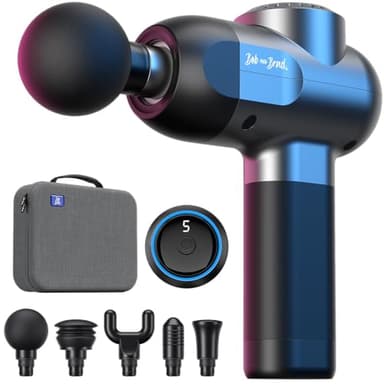
Bob and Brad C2 Massage Gun
The only gun in this roundup whose maker publishes all four numbers that decide whether it reaches the muscle — amplitude, stall force, speed range and noise — and the stall-force figure is higher than the premium units that hide theirs.
What it gets right
- Publishes amplitude, stall force, speed range and noise — the two market leaders publish none of the first three
- Published stall force of over 44 lb is higher than the figure Therabody publishes for the Prime
- 1.5 lb is light enough to hold overhead against your own shoulder without your arm giving out first
- FSA/HSA eligible, which quietly makes it cheaper again for a lot of buyers
What it does not
- 10 mm amplitude is genuinely shorter than a 16 mm premium stroke — that difference is real for glutes and thick back muscle
- No app, no pressure-feedback screen, no ecosystem
- Five fixed speeds rather than a continuous range
Price as of October 21, 2026. #ad How we’re funded
Rena Chris Gua Sha & Muscle Scraper Tool
Stainless rather than the jade sold for facial use — the edge profile is the whole product, and a stone tool will not hold one against a plantar fascia.
What it gets right
- Stainless holds a consistent edge profile; stone chips
- Multiple edge radii for different structures
- Wipes clean
What it does not
- Very easy to bruise yourself with — this needs emollient and a light hand
- The evidence base for scraping is thin and we say so on the page
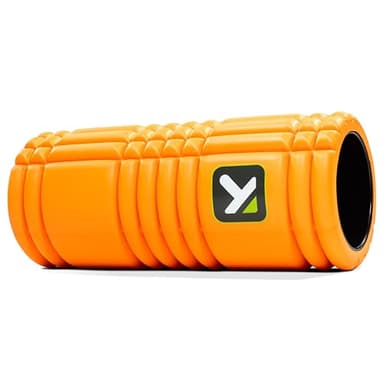
TriggerPoint GRID Foam Roller (13 in)
The multi-density surface is the reason to buy this over a plain foam cylinder: the raised sections concentrate pressure in strips instead of spreading it flat, which is what makes it usable on an IT band without needing to hold your breath.
What it gets right
- Hollow rigid core does not compress into a soft log the way plain EVA foam does after a year
- Multi-density surface gives you three pressure intensities on one roller
- 13 in length fits in a gym bag; the 26 in version does not
What it does not
- Costs roughly three times a plain high-density cylinder that also works
- The hollow core makes it noisier on a hard floor
Common questions
Do massage guns break up scar tissue?
We have not found evidence supporting that as literally described. Mature scar tissue is dense, organized collagen, and the forces a handheld device delivers are not in the range that would mechanically disrupt it. What may genuinely happen is improved local mobility, reduced sensitivity to pressure, and the general short-term stiffness reduction percussion produces — all real, all different from the claim.
What does 'fascial release' actually mean?
The most defensible account is neurological rather than structural: sustained or rhythmic pressure alters how the nervous system regulates tension in an area, and what you feel as release is a change in tone and in your perception of stiffness. Fascia is strong, and the load needed to meaningfully deform it is well beyond what a handheld device applies.
How do you loosen tight fascia?
Load it progressively over weeks and months, move it through range regularly, and stretch for lasting change. Connective tissue remodels in response to load — that is the intervention with the strongest theoretical basis, and it is the one nobody can sell you in a box. Tools are a useful adjunct that make the first three more comfortable to do.
Can I use a massage gun on a surgical scar?
Not without asking the clinician who managed the surgery. Scar management after surgery is a real discipline normally started under supervision with attention to timing — too early is a genuine problem. Therabody’s published precautions name recent surgery and injury, and advise against direct pressure over a surgical site or hardware.
Why does it feel like something released?
Because something did change — just not structurally. Working over a stiff area often produces a genuine sensation of release plus a real improvement in movement immediately afterward, and “something broke up” is a natural explanation for that experience even when what changed was tone and perception rather than tissue architecture.
Sources
- 1.Acute Effects of Theragun Percussive Therapy on Viscoelastic Tissue Dynamics and Hamstring Range of Motion (PMC10499144)
- 2.The Effect of Percussive Therapy on Musculoskeletal Performance and Experiences of Pain: A Systematic Literature Review (PubMed 37020441)
- 3.Effects of Percussive Massage Treatments on Symptoms Associated with Eccentric Exercise-Induced Muscle Damage (PMC10915620)
- 4.Percussion massage therapy and recovery from delayed onset muscle soreness — randomized controlled trial (PMC11979224)
- 5.Therabody — Product Safety & Precautions
- 6.Bob and Brad — C2 massage gun product page — published stall force used in the force discussion above