Feet & Gait
The Best Foot Massager for Plantar Fasciitis
The uncomfortable truth about this search is that the best answer is one of the cheapest things on the site, and the most expensive machines are close to the wrong tool. Plantar fasciitis is a load and stretch problem first. Here is what to actually put under your foot, and what a machine is really for.
By Stephen V.Published
Disclosure:Grip & Gait earns a commission when you buy through links on this page, at no extra cost to you. It never changes what we recommend or the order we rank things in — here is exactly how we’re funded.
Quick picks
Ranked on published manufacturer specs and what they mean for the job, not on testing we have not done. Tap a row for the full reasoning. How we score.
| # | Product | Best for | Score | Price |
|---|---|---|---|---|
| 1 |  Due North Foot Rubz Massage Ball A spiked ball under the arch concentrates pressure where a smooth sphere spreads it, for less than a coffee. | The fascia, cheapest | 8.6 | $5.88 · View on Amazon Price as of October 21, 2026. #ad How we’re funded |
| 2 |  THERABAND Foot Roller Contoured to the arch and freezable, so a stiff heel gets cold and pressure in one pass. | First thing in the morning | 8.2 | $19.57 · View on Amazon Price as of October 21, 2026. #ad How we’re funded |
| 3 |  Vive Massage Ball Set (4-piece) Four firmness levels let you start soft and work up. | If unsure of your tolerance | 7.6 | $19.95 · View on Amazon Price as of October 21, 2026. #ad How we’re funded |
| 4 |  RENPHO Foot Massager Machine with Heat Adjustable intensity and heat if you want a machine. Overkill for most, useful for some. | A powered option | 7.2 | |
| ✕ |  Nekteck Shiatsu Foot Massager with Heat Firm shiatsu nodes work the sole, not the arch. The wrong shape for the plantar fascia. Skip this | The one to skip for PF | 6.5 |
Start here: this is a load and stretch problem
Plantar fasciitis is not a soreness you rub away. The plantar fascia is a thick band of tissue running along the sole from the heel to the base of the toes, and the condition is what happens when that band is loaded harder or more often than it can currently tolerate — a degenerative overload of the tissue near the heel rather than a simple inflammation you can massage out. That distinction matters for shopping, because it means the thing that helps most is changing how the fascia is loaded and stretched over weeks, not how hard you press on it for ten minutes.
The evidence points the same way, and it points away from gadgets. A trial with two-year follow-up found that a plantar fascia-specific stretch produced substantially better outcomes than the alternatives it was compared against, and it costs nothing. A double-blind randomized controlled trial comparing several treatment modalities found the same stretch delivered the best function-score improvement of the options tested. And a randomized trial of a multimodal rehabilitation program found that combining loading and stretching work improved pain and function together. None of those studies found a foot massager, powered or otherwise, that fixes plantar fasciitis. What a tool does is make the stretching and self-treatment more comfortable and more likely to actually happen — which is a real reason to own one, and a smaller claim than the marketing makes.
So read this page in that order. The tool is the junior partner to a stretch and a change in how much your fascia is asked to do each day. The best tool is the one that gets used, targets the right structure, and costs little enough that you buy it and keep it beside the bed.
The morning-step pattern, and what it is telling you
The signature of plantar fasciitis is pain in the first few steps out of bed, or after sitting for a while, that eases as you move and then returns as the day wears on. That pattern is not random. Overnight the fascia shortens and stiffens while you are off your feet, and the first load of the morning re-stresses tissue that has not been eased back into length. It is the single most recognizable thing about the condition, and it tells you exactly when your tool needs to be within reach: at the bedside, before those first steps, not in a cupboard across the house.
This is why placement quietly beats power. A small ball or a contoured roller you can reach from the edge of the bed, roll under the arch for a minute, and follow with a calf and fascia stretch before you stand, will do more for that first-step pain than a large appliance you have to fetch, plug in and sit down at. The best plantar fasciitis tool is the one that is physically where the problem is when the problem happens.
Why the cheapest tool competes with the most expensive machine
Here is the mechanical argument, and it is arithmetic rather than opinion. Pressure is force divided by area. When you roll a small, firm ball under your arch and lean your leg through it, your own body weight is concentrated into a contact patch the size of a fingertip. A powered foot machine, by contrast, spreads its work across the whole sole through broad kneading nodes or air bladders. It feels thorough and pleasant, but it cannot deliver the concentrated, controllable pressure onto the specific band of the fascia that a ball under your body weight can — and it cannot let you steer that pressure to the exact spot that is tender.
A spiked ball goes one step further than a smooth one. The raised points concentrate pressure into the fascia instead of letting it wash across the sole, which is why a few-dollar spiked ball is genuinely hard to beat here and impossible to overspend on. A contoured foot roller does the same job with a shape built for the arch, and it has one extra trick: it can be frozen, so you get cold and pressure together in a single pass. For a stiff, sore heel first thing, that combination is closer to what the foot actually wants than warmth is.
That is the whole reason this is the one category on the site where a five-dollar tool beats a hundred-dollar machine for a specific job. It is not that the machines are bad. It is that they are built for a different job — general comfort across a tired whole foot — and plantar fasciitis is a targeting problem.
How we ranked these
Criteria first, in this order, because the order is the whole point.
- Does it target the arch and fascia specifically? A tool that spreads pressure broadly across the sole is comfortable but off-target for this condition. We rank the shapes that concentrate on the band that hurts.
- Can it live beside the bed? Because the pain is a first-step problem, a tool that is small enough to keep at the bedside gets used at the one moment that matters most. Size and simplicity are features here, not compromises.
- Can it deliver cold? A freezable tool gives cold and pressure in one pass, which suits a first-thing-in-the-morning heel better than heat does.
- Can you control the intensity?Fascia that is genuinely irritated does not want to be attacked. Being able to start gentle and work up — whether by easing off your own body weight or by a set of graded firmnesses — keeps you from making it worse.
- Cost and running cost. The best-evidenced treatment is a free stretch. The tool should be cheap enough that it never becomes the reason you stop.
The picks, and who each is for
The spiked ball is the pick for almost everyone. It concentrates your body weight into the fascia through its raised points, it is small enough to keep beside the bed where it needs to be, and it costs less than a coffee. The only caution is that the spikes are sharp for some people barefoot, so ease into it and back off pressure by taking weight through your leg rather than the foot.
The contoured foot roller is the pick if you want a shape built for the arch and the option of cold. It is molded to the arch rather than being a general-purpose sphere, and it freezes, so a stiff heel gets cold and pressure in one movement first thing in the morning. A fixed shape suits some arches better than others, which is its one real limitation.
The four-ball set is the pick if you do not yet know how much pressure your foot will take. Buying a single ball is a gamble when the fascia is irritated; a graded set lets you start with the softest and work up as tolerance improves, and it includes a chillable ball. You will end up mostly using one of the four, but paying a little to find out which is a fair trade when the wrong firmness can set you back.
The adjustable powered machineis here for the person who genuinely wants a machine and will use it. Its wide, adjustable intensity range — three kneading levels and three compression intensities — and its 15 or 30 minute timer make it the least bad powered choice for a foot that also gets tired and stiff across a long day. It is overkill for the fascia itself, and it is the most expensive way to address plantar fasciitis specifically — but if you will use a machine and you will not use a ball, the machine that gets used wins.
The shiatsu machine is our skip for this job. Its firm rotating nodes work the sole broadly and there is no gentle setting worth the name, so it is comfortable general foot relief but the wrong shape for the plantar fascia. It is a fine machine and a poor fit for this specific condition, and telling you that is more useful than selling it to you. If your problem is whole-foot fatigue rather than heel pain, it belongs on a different page.
Arch support does more all day than any tool does in ten minutes
If plantar fasciitis is a load problem, the highest-leverage purchase is often not a massager at all — it is something that changes how the fascia is loaded across every hour you are on your feet. A supportive insole reduces the strain the arch takes with each step, all day, in a way that a ten-minute session with any tool cannot match. Ten minutes of targeted pressure treats the symptom pleasantly; the insole addresses the mechanics that keep re-provoking it. We compared the drugstore, sized-orthotic and heavier-duty options on insoles and arch support, and for a lot of people that page matters more than this one does.
Think of it as the two halves of the same job. The insole manages the load through the day; the ball or roller and the stretch ease the tissue back into length at the start and end of it. Neither is a cure on its own, and neither needs to be expensive.
Where a machine earns its place, and where it does not
A powered foot massager is a comfort device, and a good one. For a whole foot that is tired after a long shift, broad kneading and warmth over the entire sole is exactly what it does well, and it does it effortlessly while you sit. If your feet ache generally and you value comfort and heat over precision, a machine is a legitimate and pleasant purchase — we cover the whole-foot, all-day case on the best foot tools for standing all day and the warmth-first case on the best heated foot massager.
What a machine does not do is treat the plantar fascia specifically. It cannot concentrate pressure on the tender band, it cannot be steered to the exact spot, and it cannot sit beside the bed for the first-step moment. For plantar fasciitis, a machine is comfort layered on top of the real work, not a substitute for it. Buy one because you want warm, effortless whole-foot comfort, not because you expect it to fix your heel — and if that is the pitch that drew you here, the honest answer is that the cheap ball is the better spend.
A routine that beats any single purchase
The best results come from a small, boring routine rather than the perfect gadget. Before your first steps in the morning, roll a chilled ball or roller under the arch for a minute, then do a plantar fascia-specific stretch and a calf stretch before you stand. Keep supportive footwear or an insole on through the day so the fascia is not re-provoked hour after hour. Roll again in the evening if the foot is sore. Give it weeks, not days — the research that shows stretching works measured its results over months, not sessions.
We route the whole condition, red flags included, on the plantar fasciitis symptom page, and cover the closely related heel and Achilles pain that people often confuse with it on Achilles and heel pain. If you want to understand why the small tools win across the whole category, the best massage balls page makes the same pressure-per-square-inch argument in general.
Which to buy, in one line each
- For almost everyone: the spiked ball. Concentrated pressure on the fascia, beside the bed, for pocket change.
- For the morning and for cold: the contoured, freezable arch roller.
- If you do not know your tolerance: the four-firmness ball set, so you can start soft.
- If you genuinely want a machine and will use it: the adjustable powered unit, understanding it is comfort rather than treatment for the fascia.
- Skip for this job:the firm shiatsu machine — right for a tired whole foot, wrong shape for the plantar fascia.
Every pick, in full
Specs below are the manufacturer’s own published figures, each linked to the page it came from. Where a maker does not publish a number, the table says so and names the page we checked — that absence is information too.
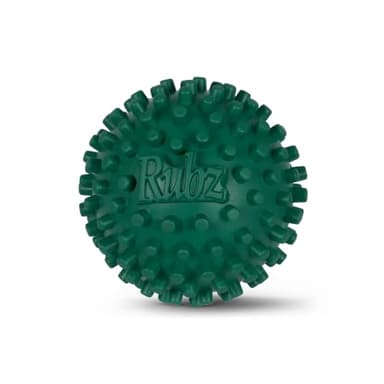
Price as of October 21, 2026. #ad How we’re funded
Due North Foot Rubz Massage Ball
The cheapest thing on this site that genuinely competes with a $400 device for a specific job — a spiked rubber ball under a plantar fascia is hard to beat and impossible to overspend on.
What it gets right
- Spikes concentrate pressure into the fascia rather than spreading across the sole
- Small enough to keep beside the bed, which is where it needs to be
- Costs less than a coffee
What it does not
- Spikes are too sharp for some people barefoot
- Small contact area only
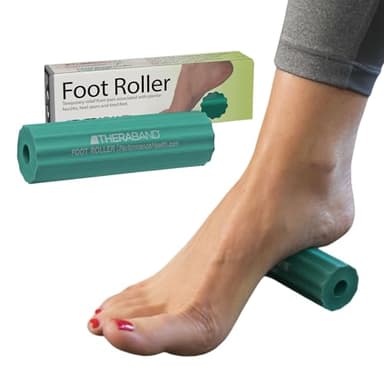
Price as of October 21, 2026. #ad How we’re funded
THERABAND Foot Roller
Shaped for the arch specifically rather than being a general-purpose ball, and it can be chilled — which covers both jobs a first-thing-in-the-morning heel needs.
What it gets right
- Contoured to the arch instead of a plain sphere
- Freezes, so you get cold and pressure in one pass
- Costs less than a takeaway lunch
What it does not
- Fixed shape suits some arches better than others
- Not usable anywhere but the foot
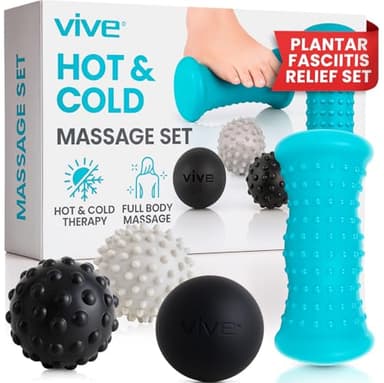
Price as of October 21, 2026. #ad How we’re funded
Vive Massage Ball Set (4-piece)
Four densities in one box, which solves the real problem with buying a single ball — you do not yet know how much pressure your foot will tolerate.
What it gets right
- Four firmness levels means you can start soft and work up
- Includes a chillable ball
What it does not
- You will end up using one of the four
- Softest ball is too soft to do much
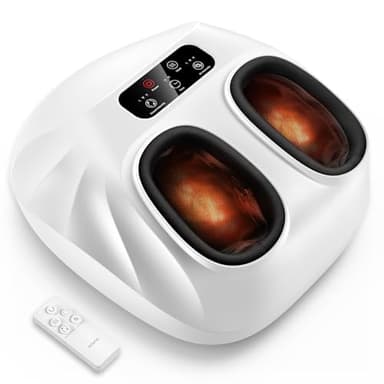
RENPHO Foot Massager Machine with Heat
Adjustable intensity across a wider range than most, which is the specification that actually matters when sensation is altered and you cannot trust pain as a feedback signal.
What it gets right
- Three kneading levels and three compression intensities, so it adjusts down as well as up
- A 15 or 30 minute timer, which is the control that limits heat exposure on this machine
- FSA/HSA eligible
What it does not
- Expensive
- Large footprint — RENPHO publishes 18.5 × 16.9 × 11.8 in and 12 lb
- RENPHO does not document a way to run the kneading with the heat off
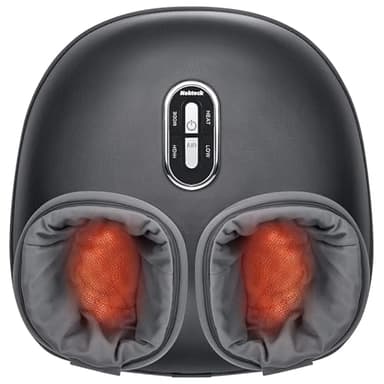
Nekteck Shiatsu Foot Massager with Heat
The entry point where shiatsu foot machines stop being a novelty — deep kneading nodes plus heat, in an open-top design your foot can leave instantly if a node lands wrong.
What it gets right
- Open-top design means you can lift your foot out immediately — not true of enclosed boot-style units
- Heat plus kneading, which is the combination that works on stiff morning feet
- Washable, removable cover
What it does not
- Kneading nodes are firm; there is no gentle setting worth the name
- Works the sole and not the arch specifically
Common questions
What is the best foot massager for plantar fasciitis?
For the fascia specifically, a small spiked ball or a contoured, freezable foot roller beats any powered machine. You concentrate your own body weight onto the exact band that hurts, you can keep it beside the bed for the first-step pain, and a freezable tool gives cold and pressure together. Powered machines are comfort for a whole tired foot, not targeted treatment for the fascia — and they cost far more. Pair whichever tool with the plantar fascia-specific stretch, which has the strongest evidence of anything here.
Do electric foot massagers help plantar fasciitis?
They help comfort more than they help the condition. A powered machine kneads the whole sole pleasantly and adds heat, which feels good on a tired, stiff foot, but it cannot concentrate pressure on the plantar fascia or be steered to the tender spot the way a ball under your body weight can. We have not found evidence that a foot massager fixes plantar fasciitis, and we are not going to claim it does. Buy one for whole-foot comfort; buy a cheap ball and do the stretch for the fascia.
Should I use heat or cold for plantar fasciitis?
For the first-step pain of an irritated fascia, most people do better with cold and pressure together, which is why a freezable roller or a chilled ball is a good morning tool. Heat is comforting for a stiff foot and can help you relax before stretching, but it does not target the fascia. Whichever you prefer, the pressure and the stretch matter more than the temperature. Cold that eases pain enough to let you do the stretch is doing its job.
Sources
- 1.Plantar fascia-specific stretching improves outcomes in chronic plantar fasciitis — two-year follow-up (PubMed 16882901) — stretching outperformed alternatives at two years
- 2.Comparing the Role of Different Treatment Modalities for Plantar Fasciitis: A Double Blind Randomized Controlled Trial (PubMed 32257015) — best function-score improvement among modalities
- 3.Effect of a multimodal rehabilitation program on pain, function and plantar fascia thickness in plantar fasciitis — RCT (PMC12930778) — loading plus stretching improved pain and function