Rollers & Balls
The Best Foam Roller for Runners
A runner's legs are the case foam rollers were made for: long, superficial muscles that take body weight well and get tight on a schedule. Here is which roller suits which leg, what the trials actually found about rolling the IT band, and the one to skip.
By Stephen V.Published
Disclosure:Grip & Gait earns a commission when you buy through links on this page, at no extra cost to you. It never changes what we recommend or the order we rank things in — here is exactly how we’re funded.
Quick picks
Ranked on published manufacturer specs and what they mean for the job, not on testing we have not done. Tap a row for the full reasoning. How we score.
| # | Product | Best for | Score | Price |
|---|---|---|---|---|
| 1 |  TriggerPoint GRID Foam Roller (13 in) The ridged surface concentrates pressure in strips, which is what makes a quad or the outside of a thigh tolerable. 13 in fits a gym bag; the rigid core lasts. | Quads and IT band, most runners | 8.5 | |
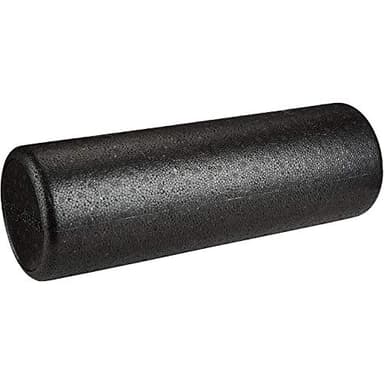
| 2 |  Amazon Basics High-Density Foam Roller (18 in) Smooth dense foam is the whole job for a calf, and 18 in is long enough to do both legs at once. Costs less than a race entry. | Calves and a first roller | 8.2 | $15.29 · View on Amazon Price as of September 17, 2026. #ad How we’re funded |
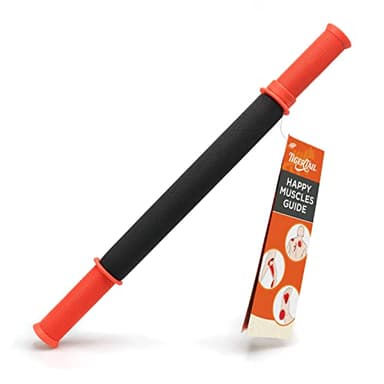
| 3 |  Tiger Tail 18 in Massage Stick A smooth-sleeved stick you control with your hands. The tool for a calf after a long run when the floor is a long way down. | Calves and shins, seated | 7.8 | $39.95 · View on Amazon Price as of September 17, 2026. #ad How we’re funded |
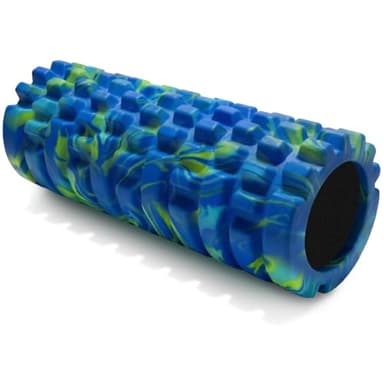
| 4 |  321 STRONG Foam Roller Most of the GRID's idea for closer to plain-cylinder money. Rigid core, triple-density surface. | Texture on a budget | 7.3 | $21.99 · View on Amazon Price as of September 17, 2026. #ad How we’re funded |
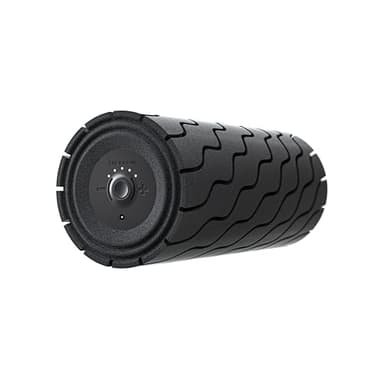
| ✕ |  Therabody Wave Roller Wave surface plus vibration is a real combination and the most expensive way to press on a quad that exists. Not what a runner's legs are waiting for. Skip this | The one to skip | 6.0 | $179.99 · View on Amazon Price as of September 17, 2026. #ad How we’re funded |
Why runners and rollers suit each other
Most of what a runner wants to roll is on the list of things a roller is genuinely good at: the calves, the quads, the hamstrings, the glutes and the outside of the thigh. These are long, superficial muscles that sit close to the skin and take body weight cleanly, and they get tight in a predictable way — after a long run, after a hard session, after a week where the mileage crept up. A roller is also the cheapest tool on this site by a wide margin, which for a sport that already costs a fortune in shoes is not nothing.
The one place the runner-roller marriage breaks down is the IT band, which is the thing most runners buy a roller for, and we get to that below. The other is anything that is really a tendon problem — an Achilles, a patellar tendon, a plantar fascia — where a roller pressing on collagen against bone is the wrong idea entirely.
What the trials actually say
There is decent research on rolling and range of motion, some on rolling and soreness, and a specific, deflating finding on the IT band. A meta-analysis of foam rolling training found a moderate improvement in joint range of motion from several weeks of rolling — with the note that gains were muscle-specific: hamstrings and quads improved, while rolling the calves did not improve ankle dorsiflexion. A separate meta-analysis of sixteen trials found rolling after exercise reduced soreness, with the effect clearer at 24 hours than immediately. A study of foam roller and massage gun use in a warm-up examined whether either improved performance in trained athletes; short pre-run rolling does not hurt performance, which is the useful takeaway.
The IT band finding is the one to read twice. A randomized controlled trial measured iliotibial band stiffness with ultrasound elastography and found no significant change from a single episode of either foam rolling or stretching, and a study on rolling different tissue types found that rolling a muscle group increased hip range of motion while rolling the IT band itself did not. The band is a sheet of dense connective tissue; it does not release under a roller the way a muscle does. What responds is the muscle that pulls on it — the tensor fasciae latae at the hip and the outer quad beneath it. That changes where you put the roller, and it is the whole of our IT band trigger points guide.
How we ranked these for a runner
- Surface for the job. A calf wants smooth foam: it is thick and easy to load, and a ridged surface just hurts. A quad and the outer thigh want something that concentrates pressure, because flat foam skates over the dense middle of a quad. A runner ideally owns one of each, and they are cheap enough that this is not a hard ask.
- Durability. A runner rolls more often than anyone. Solid EVA foam softens over a few years of daily use; a rigid hollow core does not. The GRID and the 321 STRONG hold their shape; the plain cylinder eventually becomes a soft log, which is fine at its price.
- Portability. A 13 in roller fits a gym bag and a race-weekend suitcase. An 18 in roller does not, and it is the better length at home. This is why the GRID leads for a runner and the long cylinder leads on our back pain roller page.
- Whether you will get on the floor. After a long run a lot of people will not. A handheld stick treats a calf from a chair and lets you set the pressure with your arms; it cannot match body weight, and for a tired calf it does not need to.
Leg by leg
Calves. The easiest muscle on the body to roll. Seated, roller under the calf, hips on the floor for a sore one and lifted for a stiff one, slow passes from above the ankle to below the knee. Turn the leg in and out to catch the borders, and add a bent-knee position for the soleus underneath. Full technique in foam rolling shins and calves. Stay off the Achilles.
Quads.Face down, roller under the thigh, forearms on the floor. Most of the weight goes through your arms until you know your tolerance. Work the middle, then rotate to the inside and the outside — the outer quad is where most runners are tightest, and it is the muscle that actually responds when people think they are “releasing” the IT band. Stop above the kneecap.
Hamstrings. Underrated on a roller because body weight is hard to get onto them. Sit on the roller, one leg out, hands behind you, and stack the other ankle on top for more. Tight hamstrings in runners are often a nerve-tension or hip problem rather than a muscle-length one; the tight hamstrings page covers when rolling is the wrong answer.
Glutes and the outer hip. Sit on the roller, cross one ankle over the opposite knee, lean into the hip of the crossed leg. This is the position that does the IT-band job, because it works the muscle that tensions the band. A lacrosse ball does it better still.
Shins. Mostly bone. The strip of muscle to the outside of the shin bone can take light rolling; the ridge itself cannot. If shin pain is why you are here, shin splints is the page, and the honest news there is that the evidence for any treatment is thin.
Before a run, after a run, or on a rest day?
All three, with different intent. Before: thirty seconds per muscle, fast passes, purely to feel less stiff at the start; the warm-up trial is the reason to keep it short and not expect a performance change. After: a minute or two per muscle, slow, within an hour or so; the soreness meta-analysis is where the payoff sits, and it shows up the next day rather than immediately. Rest days: this is where range of motion actually changes, and it needs weeks rather than sessions. The runner who rolls for five minutes most days gets more than the one who rolls for thirty minutes after a race.
Which roller for a runner, in one line each
- Most runners, one roller: the TriggerPoint GRID. Ridges for the quad and the outer thigh, a core that lasts, a length that travels. The full case against the plain cylinder is in TriggerPoint GRID vs Amazon Basics.
- Calves first, or a first roller: the 18 in Amazon Basics. Smooth, dense, long enough to do both calves at once, and cheap enough to own alongside the GRID.
- You will not get on the floor after a long run: the Tiger Tail stick. Seated calf work, no pinching, pressure set by your hands. The stick-versus-roller question is in foam roller vs massage stick.
- Texture on a budget: the 321 STRONG. Close enough to the GRID for most legs.
The Wave Roller is the skip. Vibration makes rolling more tolerable and has a place for people who hate rolling, but a runner’s legs tolerate a roller better than any muscle on the body, and paying a premium to make an easy job easier is the wrong place to spend. If you would rather spend the gap on something that does a different job, a massage gun reaches a calf while you sit down — massage gun vs foam roller says when that is worth it and when the foam is. And for the whole body-part map of what hurts runners and which tool fits each, start from recovery tools by runner problem.
Every pick, in full
Specs below are the manufacturer’s own published figures, each linked to the page it came from. Where a maker does not publish a number, the table says so and names the page we checked — that absence is information too.
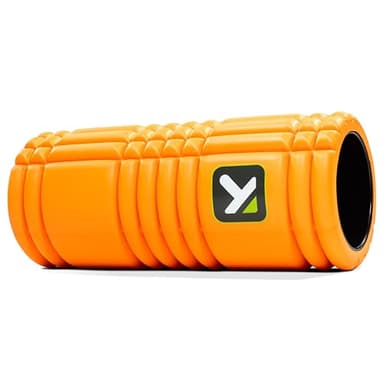
TriggerPoint GRID Foam Roller (13 in)
The multi-density surface is the reason to buy this over a plain foam cylinder: the raised sections concentrate pressure in strips instead of spreading it flat, which is what makes it usable on an IT band without needing to hold your breath.
What it gets right
- Hollow rigid core does not compress into a soft log the way plain EVA foam does after a year
- Multi-density surface gives you three pressure intensities on one roller
- 13 in length fits in a gym bag; the 26 in version does not
What it does not
- Costs roughly three times a plain high-density cylinder that also works
- The hollow core makes it noisier on a hard floor
Price as of September 17, 2026. #ad How we’re funded
Amazon Basics High-Density Foam Roller (18 in)
A dense foam cylinder does the same mechanical job as a textured roller for a fraction of the money, and for a first roller that is the correct purchase.
What it gets right
- Does the actual mechanical work — sustained pressure across a broad contact area
- Nothing to break; no core, no seams, no electronics
- 18 in is long enough to lie along your spine, which the 13 in rollers are not
What it does not
- Flat surface spreads pressure rather than concentrating it
- Solid EVA softens over a few years of heavy use
Price as of September 17, 2026. #ad How we’re funded
Tiger Tail 18 in Massage Stick
A single smooth sleeve rather than segmented beads, which means it will not pinch skin or hair — a small design decision that turns out to matter a lot on hairy calves.
What it gets right
- Smooth one-piece sleeve does not pinch
- Rigid enough to apply real pressure
What it does not
- Costs more than segmented sticks
- No texture variation
Price as of September 17, 2026. #ad How we’re funded
321 STRONG Foam Roller
Textured like the premium rollers at close to plain-cylinder money — the sensible middle purchase if the flat cylinder feels too blunt and the branded one feels too dear.
What it gets right
- Triple-density surface at roughly a third of the branded price
- Rigid core holds shape
What it does not
- Knobs are more aggressive than the GRID's, which some people cannot tolerate on the IT band
Price as of September 17, 2026. #ad How we’re funded
Therabody Wave Roller
The wave-pattern surface plus vibration is a real combination, and it is also the most expensive way to apply pressure to a quad that exists.
What it gets right
- Wave surface works well on quads and lats
- Bluetooth-guided routines if you want them
What it does not
- Very expensive against a foam cylinder
- Heavy
Common questions
Should runners foam roll before or after running?
Both, briefly and for different reasons. Before a run, thirty seconds per muscle with quick passes reduces stiffness; a warm-up study in trained athletes found no meaningful performance change either way, so keep it short. After a run, one to two minutes per muscle, slowly, is where a meta-analysis found reduced soreness, mostly showing up at 24 hours. Range of motion changes come from weeks of regular rolling, not from either session.
Does foam rolling the IT band work for runners?
Rolling the band itself does not do what people think. A study on rolling different tissue types found that rolling a muscle group improved hip range of motion while rolling the IT band did not, and the band is dense connective tissue rather than muscle. What responds is the muscle that tensions it — the outer hip and the outer quad. Roll those, and use a ball on the glute and hip rather than grinding a roller down the outside of the thigh.
What is the best foam roller for runners' calves?
A smooth, dense one. The calf is thick and easy to load with body weight, so it does not need ridges, and a textured roller on a calf mostly hurts. An 18 inch plain cylinder is long enough to do both calves at once. If you will not get on the floor after a long run, a smooth-sleeved massage stick treats a calf from a chair with the pressure set by your hands.
Sources
- 1.Foam Rolling Training Effects on Range of Motion: A Systematic Review and Meta-Analysis - Sports Medicine 2022 (PMC9474417) — moderate ROM gains over four-plus weeks; hamstrings and quads yes, ankle dorsiflexion no
- 2.Preventive effect of foam rolling on muscle soreness after exercise: a systematic review and meta-analysis - Journal of Bodywork and Movement Therapies 2024 (PubMed 39593540) — rolling after exercise reduced soreness, clearer at 24 h
- 3.Does Massage Gun or Foam Roller Use During a Warm-Up Improve Performance in Trained Athletes? (PMC12473898) — pre-session use and performance in trained athletes
- 4.The Immediate Effects of Foam Rolling and Stretching on Iliotibial Band Stiffness: A Randomized Controlled Trial - International Journal of Sports Physical Therapy (PMC8169023) — no significant change in IT band stiffness after a single episode of rolling or stretching
- 5.The Effects of an Acute Bout of Foam Rolling on Hip Range of Motion on Different Tissues - International Journal of Sports Physical Therapy (PMC6088119) — rolling a muscle group increased hip ROM; rolling the IT band itself did not