Symptoms
Best Tools for Tight Quads
The quadriceps are a broad, superficial slab of muscle across the front of the thigh, which happens to be the exact job a foam roller does best. A roller is the right first tool here, but the tightness usually ties back to the hip and the knee, and no amount of rolling loosens a quad that your training load or your desk chair keeps tightening.
By Stephen V.Published
Disclosure:Grip & Gait earns a commission when you buy through links on this page, at no extra cost to you. It never changes what we recommend or the order we rank things in — here is exactly how we’re funded.
For tight quads, a foam roller is the right first tool: the quadriceps are a broad, superficial slab of muscle across the front of the thigh, and broad superficial muscle is exactly what a roller is best at. Roll knee to hip, keep off the kneecap, and treat the hip and knee as part of the same picture — because a tight quad is very often a downstream symptom rather than the cause. A massage ball, a stick or a gun all have a place here, but they are second choices for a job the humble roller already does well and cheaply.
What is actually happening
The quadriceps are four muscles running down the front of the thigh — a large, relatively superficial mass that crosses both the hip and the knee. That anatomy is the whole story for tool selection. A big flat muscle near the surface is precisely the shape a foam roller is built to press: you get your own body weight spread across a broad contact area, sustained for long enough to matter. There is nothing pinpoint about a tight quad, so there is nothing a roller cannot reach on it.
“Tight” is a sensation, not a diagnosis. Most of the time it follows load — a hard leg session, a run full of downhill or hills, a long day on the bike, or the opposite problem, hours of sitting with the hip flexors shortened and the quads never taken through a full range. Because the quad crosses the knee, a chronically tight one can tug on how the kneecap tracks, which is why quad work and front-of-knee pain keep turning up together. And because the deepest of the four quad muscles blends into the hip flexors, a quad that will not settle is often a tight hip wearing a different hat. We are describing a common pattern, not diagnosing you.
The practical upshot: the tissue you want to work is broad and forgiving, which is good news, because it means the cheapest tool in the category is also the correct one. What a roller cannot do is change the training spike or the sitting posture that keeps re-tightening the muscle — that is the part no purchase covers, and it is covered further down.
Which class of tool fits
| Tool class | Cost | Why it does or doesn’t work here | Verdict |
|---|---|---|---|
| Foam roller | Cost: Budget | Broad, superficial muscle is exactly what a roller is best at. You get body weight spread over a wide contact area, knee to hip, which is the whole quad in a few passes.Where it fails: A flat roller skims a truly stubborn spot near the knee or the top of the hip that wants a smaller, harder point. | Start here |
| Massage ball | Cost: Budget | Pins one stubborn point the roller rolls straight past, concentrating all your weight into a single spot the broad tool cannot isolate.Where it fails: Wrong tool for the broad sweep of the quad; too pinpoint to cover a big muscle efficiently. | Sometimes |
| Massage stick | Cost: Mid-range | Lets you work the quad seated, with the pressure set by your arms rather than your body weight, which some people find easier to control.Where it fails: Cannot load as heavily as body weight on a roller, so on a dense quad it is the gentler, slower option. | Sometimes |
| Massage gun | Cost: Mid-range | Fine for loosening the quad before activity at a low setting, and easy to aim at one section without getting on the floor.Where it fails: Not a fix, and never over the kneecap or the bone at the top of the thigh; keep it on muscle belly only. | Sometimes |
| Stretching / mobility work | Cost: Budget | The not-a-purchase half. Taking the quad and hip flexor through their full range is what rolling alone cannot do, and the two together beat either on its own.Where it fails: It is free, which is exactly why it gets skipped in favor of buying another gadget. | Start here |
The technique that matters more than the tool: lie face down over the roller and work along the length of the muscle, from just above the kneecap up toward the hip, not across it and not on the kneecap itself. Move slowly, pause where it is tender, and control the pressure by how much of your weight you let the roller carry — stacking your other leg on top adds load, lifting onto your forearms takes it away. Rolling one leg at a time lets you tip slightly inward or outward to reach the inner and outer parts of the quad rather than only the middle, and turning the whole thigh a little brings the section nearest the hip into contact. If one spot near the knee or the very top of the thigh stays stubborn after the broad passes, that is the moment a ball earns its place — but treat it as an occasional visitor, not a nightly grind, because more pressure and more frequency is not what settles a quad.
What we would actually buy
Buy this first
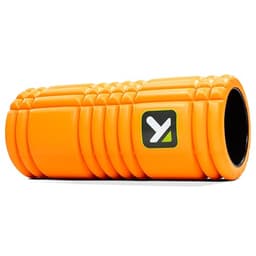
TriggerPoint GRID Foam Roller (13 in)
The multi-density surface concentrates pressure in strips rather than spreading it dead flat, which makes a broad muscle like the quad easier to work without holding your breath. The hollow core also holds its shape for years.
Cheapest that works
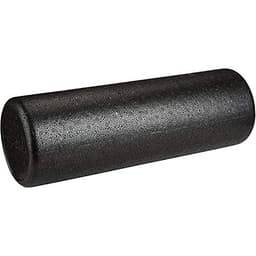
Amazon Basics High-Density Foam Roller (18 in)
A plain dense cylinder does the same mechanical job on a quad as a textured roller for a fraction of the money. For a first roller this is the honest purchase, and it is long enough to lie along.
Price as of October 21, 2026. #ad How we’re funded
For the stubborn spot
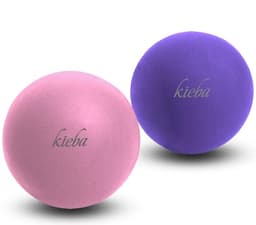
Kieba Massage Lacrosse Balls
When one point near the knee or the top of the thigh will not release under the broad roller, a hard ball pins it precisely and puts more local pressure into it than any roller can.
Price as of October 21, 2026. #ad How we’re funded
The part that is not a purchase
Here is the honest center of it: rolling a tight quad feels good and buys you some short-term range, but it does not address why the quad keeps tightening. The research is consistent and unglamorous about this. A review of foam rolling and massage-gun use in a warm-up found the effect on actual performance is mixed at best in trained athletes, even where short-term range of motion improves — the roller is a warm-up comfort tool, not a performance upgrade. And when foam rolling is compared head to head with percussive massage for muscle soreness, both give some short-term relief without clearly speeding recovery. Neither tool is doing anything to the cause.
So the unpaid half of the job is the half that lasts. Take the quad and the hip flexor through their full range with actual stretching and mobility work. Look at the load that set it off — the sudden jump in volume, the downhill, the long ride, or the hours sitting with the hip permanently bent — and change that, gradually. If the tightness rides with the hip or the knee, work those too, because a quad that keeps tightening in isolation usually is not working in isolation. The roller makes you more comfortable while you do the free part; it is not a substitute for it. Our guide to foam rolling properly covers the technique in detail.
“Skin rash, open wounds, blisters, local tissue inflammation, bruises, or tumors; deep vein thrombosis, osteomyelitis; bone fracture or myositis ossificans; bleeding disorders; peripheral vascular insufficiency or disease.”
Common questions
What is the best tool for tight quads?
A foam roller, because the quad is a broad, superficial muscle and that is exactly the shape a roller works well. Lie face down over it and roll along the muscle from above the kneecap up toward the hip, controlling the pressure with how much body weight you let it carry. Reach for a massage ball only when one specific spot will not release under the broad roller.
Can I use a massage gun on my quads?
Yes, on the muscle belly of the thigh at a low setting, which can help loosen tightness before activity. Keep it strictly on muscle: never run it over the kneecap or the bony top of the hip, which is covered by manufacturer precautions about bone. It is a comfort and warm-up tool, not a fix for whatever keeps the quad tightening.
Why do my quads keep getting tight?
Usually load or posture rather than the muscle itself. A jump in training volume, lots of downhill running, long rides, or hours sitting with the hip flexors shortened all leave the quad short and complaining. Because the quad crosses the hip and the knee, tightness often rides with tight hips or front-of-knee pain, so addressing those and the load that set it off lasts longer than rolling ever will.