Symptoms
Achilles and Heel Pain
The Achilles is a tendon under enormous load with very little tissue around it. Working it directly is the instinct and the mistake — the calf above it is where the tools belong, and progressive loading is what actually changes things.
By Stephen V.Published
Disclosure:Grip & Gait earns a commission when you buy through links on this page, at no extra cost to you. It never changes what we recommend or the order we rank things in — here is exactly how we’re funded.
Work the calf muscle above the Achilles, not the tendon itself. The tendon has almost no tissue around it and sits directly against bone at its insertion — percussion and hard pressure there are more likely to aggravate than to help. The intervention that changes outcomes for tendon problems is progressive loading over weeks, and it is not a purchase.
Achilles or plantar fascia?
These get confused constantly because both produce heel pain and both are worst in the morning.
| Feature | Achilles | Plantar fascia |
|---|---|---|
| Where it hurts | Back of the heel and up the tendon | Underside of the heel and along the arch |
| Morning pattern | Stiff and sore, eases as you move | Sharp on first steps, eases after a few minutes |
| What provokes it | Pushing off, running uphill, calf raises | First steps after sitting, standing all day |
| Tender to pinch | The tendon itself, between finger and thumb | Under the heel and along the arch |
| Where the tools go | The calf above it | Under the arch, and the calf above |
| The free intervention | Progressive loading - controlled calf raises | Plantar fascia-specific stretching |
Both share one thing: the calf is a productive target for either, because calf tension pulls through the Achilles into the heel and onward into the fascia. If you are not sure which you have, working the calf is useful either way. See the plantar fasciitis page for the other half.
Why not to work the tendon directly
A tendon is dense collagen transmitting force from muscle to bone. It has relatively poor blood supply, very little tissue around it, and at the heel it inserts directly onto bone.
Percussion into that structure is applying repeated mechanical impact to something already irritated, sitting against bone, with nothing to absorb it. Therabody’s published precautions cover local tissue inflammation and bone explicitly. The calf muscle above, however, is thick, superficial, easy to load, and is the thing pulling on the tendon.
One partial exception: a fork attachment used to straddle the tendon so pressure lands on the tissue either side of it, gently, at a low setting. That is defensible. Percussing the tendon itself is not.
Which class of tool fits
| Tool class | Cost | Why it does or doesn’t work here | Verdict |
|---|---|---|---|
| Progressive loading | Cost: Budget | Tendons respond to gradual controlled load over weeks - typically slow, heavy calf raises. This is the intervention with the best support for tendon problems and it costs nothing.Where it fails: Slow, and the protocol matters. Get a specific one from someone qualified rather than guessing at volume. | Start here |
| Foam roller (calf) | Cost: Budget | The calf pulls on the tendon, and it is the easiest muscle on the body to load with body weight. Regulate intensity by stacking the other leg on top.Where it fails: Stop above the tendon. Rolling down onto the Achilles is the mistake this page exists to prevent. | Start here |
| Roller stick (calf) | Cost: Mid-range | You set the pressure with your arms, and you can work a calf sitting in a chair - useful when the foot is sore to stand on.Where it fails: Less pressure than body weight on a roller. | Start here |
| Massage gun (calf only) | Cost: Mid-range | On the calf belly, fast and effective. A fork attachment straddling the tendon at a low setting is defensible.Where it fails: Not on the tendon itself, and not on the bony back of the heel. Dense collagen against bone is the wrong target. | Sometimes |
| Heel lifts / supportive shoes | Cost: Budget | A small heel lift reduces the length the tendon has to work at, which offloads it through the day rather than for two minutes.Where it fails: A management tool, not a fix - and going back to flat shoes abruptly reverses it. | Sometimes |
| Cold | Cost: Mid-range | Comfortable after activity when the area is irritable, and it asks nothing of you.Where it fails: Comfort rather than treatment. It does not change the tendon. | Sometimes |
What we would actually buy
For the calf
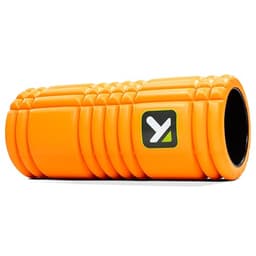
TriggerPoint GRID Foam Roller (13 in)
The calf is what pulls on the tendon and the roller is the best tool-to-muscle match on the site. Rigid core, multi-density surface, fits a gym bag.
If standing hurts
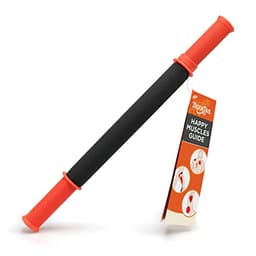
Tiger Tail 18 in Massage Stick
Work a calf sitting in a chair, with pressure set by your arms. A smooth one-piece sleeve that will not pinch.
Price as of October 21, 2026. #ad How we’re funded
For after activity
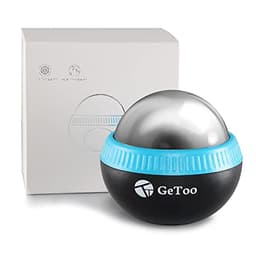
GeToo Cryosphere Cold Massage Roller Ball
Cold and gentle pressure in one pass, and the stainless ball holds temperature long enough to finish rather than warming up in ninety seconds.
Price as of October 21, 2026. #ad How we’re funded
The loading part, because it is what works
For tendon problems generally, the intervention with the strongest support is progressive loading — typically slow, controlled calf raises, gradually increasing over weeks. The tendon adapts to load applied consistently, and that adaptation is the actual mechanism of recovery.
Two things about that. It is slow, measured in weeks and months rather than sessions. And the protocol matters — how much, how often, how heavy, and whether to work through some discomfort are all specific decisions. Get a program from someone qualified rather than assembling one from the internet, including from us.
The tools on this page make the calf more comfortable so the loading program is easier to do. That is a genuine supporting role, and it is the honest size of it.
For the technique itself — the four rolling positions, where the roller has to stop, and how long to spend on each — see foam rolling for Achilles tendonitis.
“Local tissue inflammation, bruises; bone fracture or myositis ossificans; recent surgery or injury; connective tissue disorders; peripheral vascular insufficiency or disease; medications that thin the blood or alter sensations.”
The morning routine
- Before your first steps, move the ankle gently. Point and flex, ankle circles, while still sitting. Tendons are stiffest after hours of immobility.
- Roll or stick the calf for 60–90 seconds if it is available.
- Then stand. Not the other way around.
- Loading work later in the day, not first thing on a cold tendon.
What the evidence supports
The percussion literature — reduced tissue stiffness and improved range of motion and improvements in acute muscle strength — concerns muscle in healthy participants, not tendon problems. We are not extrapolating it to an irritated Achilles.
On the neighboring problem, the plantar fascia literature is clearer and worth knowing here too: a two-year follow-up trial found plantar fascia-specific stretching outperformed Achilles-tendon stretching for plantar fasciitis — which is a useful reminder that these two problems are not interchangeable and neither are their treatments.
Common questions
Can you use a massage gun on your Achilles tendon?
Not on the tendon itself. It is dense collagen with very little tissue around it, sitting directly against bone at the heel, so percussion there applies repeated impact to something already irritated with nothing to absorb it. Work the calf above it instead. A fork attachment straddling the tendon at a low setting so pressure lands either side is defensible.
Is it Achilles tendonitis or plantar fasciitis?
Achilles pain is at the back of the heel and up the tendon, stiff in the morning and eased by moving, and provoked by pushing off or calf raises. Plantar fasciitis is under the heel and along the arch, sharp on the first steps out of bed, and provoked by standing. Fortunately the calf is a productive target either way, so working it is useful while you work out which.
What actually helps Achilles tendonitis?
Progressive loading — typically slow, controlled calf raises gradually increasing over weeks. The tendon adapts to load applied consistently and that adaptation is the mechanism of recovery. It is slow, and the protocol matters, so get a specific program from someone qualified. The tools here make the calf more comfortable so the loading is easier to do.
When is Achilles pain an emergency?
A sudden sharp pain at the back of the ankle — often described as feeling like being kicked or struck — sometimes with an audible pop, followed by difficulty pushing off or standing on your toes. That is how an Achilles rupture presents and it needs assessment immediately. Do not apply anything to it.
Do heel lifts help Achilles pain?
A small heel lift reduces the length the tendon has to work at, offloading it through the whole day rather than for the two minutes you are treating it. That is a genuine management benefit. It is not a fix, and returning abruptly to flat shoes reverses it — so treat it as temporary support alongside a loading program.
Sources
- 1.Therabody — Product Safety & Precautions — quoted verbatim above
- 2.Plantar fascia-specific stretching improves outcomes in chronic plantar fasciitis — two-year follow-up (PubMed 16882901)
- 3.Acute Effects of Theragun Percussive Therapy on Viscoelastic Tissue Dynamics and Hamstring Range of Motion (PMC10499144)
- 4.The Effect of Percussive Therapy on Musculoskeletal Performance and Experiences of Pain: A Systematic Literature Review (PubMed 37020441)