Compare
Massage Gun vs Heating Pad
Percussion is mechanical; heat is thermal. They are not competitors so much as two different answers, and the case that decides between them is usually whether the tissue is spasming or just stiff.
By Stephen V.Published
Disclosure:Grip & Gait earns a commission when you buy through links on this page, at no extra cost to you. It never changes what we recommend or the order we rank things in — here is exactly how we’re funded.
Quick picks
Ranked on published manufacturer specs and what they mean for the job, not on testing we have not done. Tap a row for the full reasoning. How we score.
| # | Product | Best for | Score | Price |
|---|---|---|---|---|
| 1 |  Boileau XXXL Electric Heating Pad (17 × 33 in) 17 x 33 in covers the full lumbar span. Area is the only heating-pad spec that changes the experience. | Whole lower back at once | 8.4 | |
| 2 |  GENIANI Electric Heating Pad Moist-heat capable with an auto shutoff - the safety feature that matters if you fall asleep on it. | Everyday heat, auto shutoff | 8.2 | |
| 3 |  Bob and Brad C2 Massage Gun Published specs, light, and gentle enough at its lowest setting to follow heat with. | The percussion side | 8.6 | |
| 4 |  GeToo Cryosphere Cold Massage Roller Ball Acute strain in the first 48 hours wants cold, not heat. Included so the page is honest about it. | When heat is the wrong idea | 7.8 | $39.99 · View on Amazon Price as of October 21, 2026. #ad How we’re funded |
What each one does to tissue
Heat raises local tissue temperature, which increases blood flow and reduces the sensation of stiffness. It is passive, broad, and it reaches everything under the pad at once. It requires nothing of you but lying still, which is a real advantage when moving hurts.
Percussion applies rapid mechanical force to a small area. It is active, targeted, and it requires you to hold a device against yourself and steer it. The effect on measured tissue stiffness is real and short-lived — the hamstring range-of-motion study found significant reductions in stiffness and improved range.
Those are genuinely different mechanisms, so the useful question is not which is better but which the situation calls for.
| Use case | Winner | Why |
|---|---|---|
| Back spasm or guarding | Heating pad | Percussion on a spasming muscle often makes the guarding worse. Heat lets it release. |
| Stiff, achy morning back | Heating pad first | Heat, then gentle movement. Percussion after, if at all. |
| A specific tight spot in a large muscle | Massage gun | Targeted. Heat cannot aim. |
| Acute strain, first 48 hours | Neither | Cold, rest, and a clinician if it is severe. Heat increases blood flow to a fresh injury. |
| Chronic stiffness, no acute injury | Both, in sequence | Heat to reduce stiffness, percussion after to work the specific area. |
| Nerve pain (sciatica, radiating) | Heating pad | Percussion directly over a nerve pathway is a bad idea. Heat is the safer first try. |
| Post-workout soreness | Massage gun | Immediate temporary relief in perceived soreness, per the published trial. |
| While sitting at a desk | Massage gun | A pad needs a socket and stillness. A gun works in ninety seconds. |
| Cannot tolerate pressure at all | Heating pad | Passive, no pressure, no coordination required. |
| Overnight relief | Neither unattended | Never sleep on a heating pad without auto shutoff, and never leave a gun running. |
The spasm rule, which is the most useful thing here
A muscle in spasm is already contracting hard and involuntarily. Hitting it with a percussion device is adding mechanical stimulus to a muscle that is already over-stimulated, and the common result is that it guards harder. Heat does the opposite: it is passive input that reduces the sensation of stiffness without demanding anything of the tissue.
Practical test: if the muscle feels rigid, if moving it triggers a sharp catch, or if it went into a knot suddenly, that is more spasm than stiffness — start with heat. If it feels dull, thick and generally stiff without a catch, percussion is a reasonable first choice.
The sequence, when you have both
- Heat for 15–20 minutes. Long enough to actually warm tissue rather than just the skin.
- Move gently. Two or three minutes of easy range-of-motion work. This is the part everyone skips and it is doing most of the work.
- Percussion, briefly and gently.Lowest useful setting, 30–60 seconds per area, head moving continuously.
- Then stretch, if range is the goal. The warm, worked tissue is the best state to stretch from — see foam rolling vs stretching.
Doing it in the other order — percussion on cold, guarded tissue then heat afterward — is the common mistake and it wastes both tools.
Heating pads: the only spec that changes anything
Ignore the heat-setting count. The two things that matter are area and auto shutoff.
- Area. A standard pad covers a patch of a lower back. A 17 × 33 in pad covers the entire lumbar region and both sides of it at once. If the problem is a broad stiff back rather than one spot, that is the whole difference between the two products.
- Auto shutoff. Non-negotiable if there is any chance of falling asleep on it, which there is, because lying on a warm pad with a sore back is extremely conducive to falling asleep. Low-temperature burns from prolonged contact are a real and well-documented hazard.
- Moist heat option. Penetrates better than dry heat and is worth having.
- Washable cover. Mundane, and it is the reason a pad lasts three years instead of one.
Percussion contraindications apply, heat has its own
Therabody publishes this list for its percussive devices, and it applies to any gun:
“Deep vein thrombosis, osteomyelitis; bone fracture or myositis ossificans; bleeding disorders; peripheral vascular insufficiency or disease; medications that thin the blood or alter sensations; pacemaker, ICD.”
Heat has a shorter but important list of its own: not over an area with reduced sensation (you cannot feel a burn developing), not over an acute injury, not on broken skin, and never unattended on a device without auto shutoff. Diabetic neuropathy is the case that combines the worst of these — reduced sensation plus impaired healing — and it is worth raising with a clinician before using heat regularly.
Which should you buy first?
If the problem is your back: the heating pad. It is cheaper, it needs nothing of you, it suits spasm and stiffness alike, and back pain is disproportionately the situation where lying still with heat is what actually helps.
If the problem is a specific muscle elsewhere: percussion, or a massage ball, which is cheaper again and hits harder.
If the problem radiates, tingles or goes numb: neither, until you have had it looked at. That is a nerve conversation and not a shopping one. Our sciatica page is explicit about this.
Every pick, in full
Specs below are the manufacturer’s own published figures, each linked to the page it came from. Where a maker does not publish a number, the table says so and names the page we checked — that absence is information too.
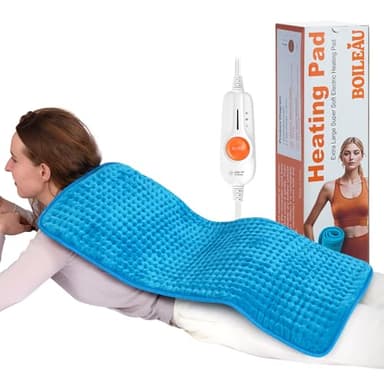
Boileau XXXL Electric Heating Pad (17 × 33 in)
Large enough to cover a whole lumbar region and both sides of it at once, which a standard pad cannot do — and area is the only heating-pad spec that changes the experience.
What it gets right
- 17 × 33 in covers the full lumbar span rather than a patch of it
- Multiple heat settings with auto shutoff
What it does not
- Bulky to store
- Takes longer to reach temperature
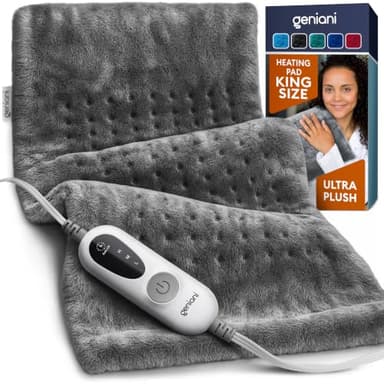
GENIANI Electric Heating Pad
Moist-heat capable with an auto-shutoff, which is the specification that decides whether a heating pad is safe to use lying down — and lying down is when you want it.
What it gets right
- Auto shutoff — the safety feature that matters if you fall asleep on it
- Moist-heat option penetrates better than dry
- Machine-washable cover
What it does not
- Corded, so your position is fixed
- Smaller than the XXL pads
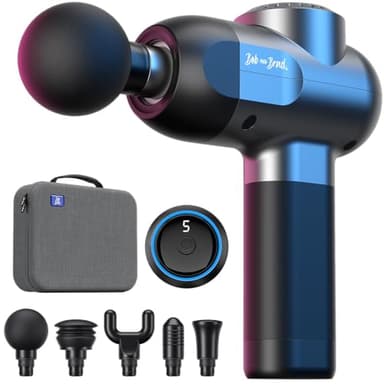
Bob and Brad C2 Massage Gun
The only gun in this roundup whose maker publishes all four numbers that decide whether it reaches the muscle — amplitude, stall force, speed range and noise — and the stall-force figure is higher than the premium units that hide theirs.
What it gets right
- Publishes amplitude, stall force, speed range and noise — the two market leaders publish none of the first three
- Published stall force of over 44 lb is higher than the figure Therabody publishes for the Prime
- 1.5 lb is light enough to hold overhead against your own shoulder without your arm giving out first
- FSA/HSA eligible, which quietly makes it cheaper again for a lot of buyers
What it does not
- 10 mm amplitude is genuinely shorter than a 16 mm premium stroke — that difference is real for glutes and thick back muscle
- No app, no pressure-feedback screen, no ecosystem
- Five fixed speeds rather than a continuous range
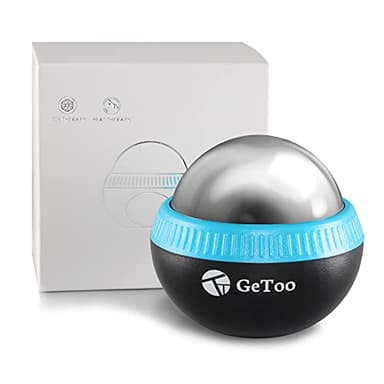
Price as of October 21, 2026. #ad How we’re funded
GeToo Cryosphere Cold Massage Roller Ball
Cold and pressure in a single pass, and the stainless ball holds temperature long enough to finish a session rather than warming up in ninety seconds.
What it gets right
- Holds cold for hours rather than minutes
- Rolls freely in its housing so you are not dragging a frozen lump across skin
What it does not
- Costs several times a frozen water bottle that does most of the same job
- Needs freezer space
Common questions
Should I use heat or a massage gun for back pain?
Heat first if the muscle is spasming or guarding — percussion on an already-contracting muscle usually makes it guard harder. Percussion is reasonable for dull, general stiffness without a sharp catch. If you have both, the productive sequence is heat, then gentle movement, then brief percussion, then stretching.
Can you use a massage gun and a heating pad together?
In sequence, yes, and it works better than either alone: 15–20 minutes of heat, two or three minutes of gentle movement, then 30–60 seconds of percussion per area. Doing it the other way round — percussion on cold, guarded tissue, then heat — wastes both tools. Do not apply both to the same spot simultaneously.
Is heat or cold better for a new muscle strain?
In the first 48 hours, cold rather than heat — heat increases blood flow to tissue that is already inflamed. Percussion is also the wrong idea on something possibly torn. If pain is severe, if there was an audible pop, if you cannot bear weight, or if there is significant swelling, that is a clinician rather than a purchase.
What size heating pad should I buy for my back?
Larger than you think. A standard pad covers a patch; a 17 × 33 in pad covers the whole lumbar region and both sides at once. Area is the only heating-pad specification that meaningfully changes the experience — the number of heat settings does not. Auto shutoff is the other must-have, because falling asleep on a warm pad is exactly what happens.
Sources
- 1.Therabody — Product Safety & Precautions — percussion contraindications, quoted above
- 2.Acute Effects of Theragun Percussive Therapy on Viscoelastic Tissue Dynamics and Hamstring Range of Motion (PMC10499144)
- 3.Percussion massage therapy and recovery from delayed onset muscle soreness — randomized controlled trial (PMC11979224)
- 4.The Effect of Percussive Therapy on Musculoskeletal Performance and Experiences of Pain: A Systematic Literature Review (PubMed 37020441)