Compare
Foam Roller vs Chirp Wheel
These are not competing versions of the same object. A foam cylinder is a general-purpose tool for quads, calves, glutes and lats. A back wheel is a single-purpose tool with a channel down the middle that lets you extend the mid-back without the bony knobs of the spine taking the pressure. If you own neither, buy the cylinder. If your problem is specifically a stiff upper back, the wheel earns its place.
By Stephen V.Published
Disclosure:Grip & Gait earns a commission when you buy through links on this page, at no extra cost to you. It never changes what we recommend or the order we rank things in — here is exactly how we’re funded.
Quick picks
Ranked on published manufacturer specs and what they mean for the job, not on testing we have not done. Tap a row for the full reasoning. How we score.
| # | Product | Best for | Score | Price |
|---|---|---|---|---|
| 1 |  Amazon Basics High-Density Foam Roller (18 in) A plain high-density cylinder covers quads, calves, hamstrings, glutes, lats and the mid-back for the price of two coffees. Nothing on this page beats it as a first purchase. | Buy this first | 8.4 | $15.29 · View on Amazon Price as of October 21, 2026. #ad How we’re funded |
| 2 |  Chirp Wheel+ 4-Inch Neck and Back Roller The shallower arch of the two, which makes it far easier to control and to get off again. Suits the base of the neck and the upper back, where most desk-driven stiffness sits. | Best wheel to start with | 8.0 | $29.99 · View on Amazon Price as of October 21, 2026. #ad How we’re funded |
| 3 |  Chirp Wheel XR 6-Inch Knot Kneader Back Roller The bigger arch, for people who already know they want thoracic extension and find the small wheel too shallow. Same spinal channel, more range, less control. | Deeper mid-back extension | 7.8 | $34.99 · View on Amazon Price as of October 21, 2026. #ad How we’re funded |
| 4 |  TriggerPoint GRID Foam Roller (13 in) A hollow core with a textured surface, so parts of the roller press harder than others. The one cylinder worth paying more for, and still cheaper than a wheel. | The cylinder upgrade | 8.3 |
The short answer
Buy the cylinder first. A plain high-density foam roller is the cheapest object on this site that works on six different body parts, and if you own no recovery tool at all it is still the right first purchase. Buy a wheelwhen your actual complaint is a stiff mid-back — the hours-at-a-desk, can’t-reach-overhead, everything-feels-locked-between-the-shoulder-blades kind — because a wheel has a channel down its center that lets the pressure fall on the muscle either side of the spine instead of on the spinous processes. That is the one thing a cylinder genuinely cannot do, and it is the whole case for the category. If you buy a wheel, start with the 4-inch.
What each one actually is
A foam roller is a cylinder, typically 13 to 36 inches long, that you lie on and move across. The contact patch is a broad strip, which is why it suits large muscle groups and why it is forgiving: your bodyweight is spread over a wide area and you control the load by how much of yourself you put on it.
A back wheel is a narrow ring, usually 4 to 6 inches in diameter, with a padded rim and a groove running around the middle. You lie on it crosswise, support your head, and roll the wheel up and down the back while the spine sits in the groove. Two things follow from that shape. The contact patch is narrow, so the same bodyweight lands on much less area — it feels stronger. And because the diameter is small, lying back over it produces an arch: the bigger the wheel, the deeper the extension. The 6-inch model arches you more than the 4-inch. That is the product line in one sentence.
Where the wheel wins, and it is narrower than the marketing
The thoracic spine — the twelve segments your ribs attach to — is built to rotate and extend, and sitting all day asks it to do neither. When people say their upper back is tight, what is usually limited is extension, and the classic way to restore it is to arch backwards over something. A cylinder works for this, and anyone who has tried it knows the problem: the roller presses on the bony knobs down the middle of your spine, which is both uncomfortable and the reason people quit after a week. The channel on a wheel removes exactly that objection. There is no cleverer mechanism underneath. It is a groove, and the groove is the product.
The second thing a wheel does well is reach the muscle beside the spine with real pressure. A narrow rim concentrates load in a way a 6-inch-wide cylinder cannot, which is useful between the shoulder blades and around the base of the neck — the two places desk work bites.
And that is the list. A wheel is awkward on a quad, bad on a calf, unpleasant on an IT band, and pointless on a glute. Those four jobs are most of what a roller is for.
| What you want to do | Use | Why |
|---|---|---|
| Own one recovery tool, full stop | Foam cylinder | Six body parts, one object, lowest price in the category. A wheel does one of those six. |
| Mid-back feels locked, hard to reach overhead | Wheel | The channel lets you extend over it without the spinous processes taking the load. This is the only job where the wheel is clearly better. |
| Stiffness at the base of the neck and between the blades | 4-inch wheel, or a ball against a wall | Narrow rim concentrates pressure where a wide cylinder bridges over it. A lacrosse ball does the same thing for a fifth of the price, with more aim and less comfort. |
| Quads, calves, hamstrings, IT band | Cylinder | Broad contact over long muscle. A narrow wheel on a quad is a worse version of a cylinder at twice the price. |
| Glutes and the side of the hip | Cylinder or a ball | You need to get a hip over the tool at an angle; the wheel's shape fights you the whole time. |
| Sore low back | Neither, mostly | Rolling the lumbar spine directly is the one place we advise against, and a deep arch over a wheel is an extension load an irritable low back does not want. Treat hips and mid-back instead. |
| Travel | A ball, or a short cylinder | A 6-inch wheel is rigid, hollow and oddly shaped. Luggage hates it. |
What the evidence supports for either of them
Foam rolling has a real if modest literature. The 2022 meta-analysis of foam rolling training effects on range of motion in Sports Medicine supports range-of-motion gains, and the meta-analysis on foam rolling and muscle soreness supports a small effect on soreness. A 2025 single-blinded randomized trial in the Journal of Sport Rehabilitation is the most relevant one here: 36 healthy adults aged 18 to 35 were randomized to foam-roller massage of the thoracolumbar fascia plus an exercise program, the exercise program alone, or no intervention, three days a week for four weeks. Flexibility (sit-and-reach), muscular endurance (one-minute sit-to-stand) and dynamic balance (star excursion) all improved significantly in both active groups, and the change scores favored the group that added the rolling. Thirty-six participants is a small trial and “healthy young adults” is not everyone, so treat it as supportive rather than decisive.
For the wheel specifically there is nothing comparable, and we are not going to imply otherwise: searching the literature turns up trials of foam rolling, not trials of back wheels. The case for a wheel is mechanical — the channel, the narrow contact, the arch — and the case is a good one. It is just not a clinical one, and no amount of “spinal decompression” language in a listing changes that. A wheel does not decompress a spine. It lets you extend comfortably over a fulcrum, which is useful and ordinary.
How you actually use each one
The cylinder, for a mid-back: lie back over it with the roller across your spine at the bottom of the shoulder blades, hands behind your head, feet planted. Lift your hips an inch, extend gently back over the roller, breathe out, then shuffle the roller up an inch or two and repeat. Three or four positions covers the thoracic spine. The limitation you will feel immediately is the bony contact down the middle, which is the problem the wheel solves.
The wheel, for the same region:sit on the floor with the wheel behind you, support your head with your hands, plant your feet and lower yourself back so the spine sits in the channel. Push through the feet to roll the wheel from the bottom of the shoulder blades to the top of them — not into the neck, not down into the low back. Move slowly and come off the moment anything pinches. Getting back up is the part nobody warns you about: keep your chin tucked, roll to one side rather than sitting straight up, and do not do your first session on a hard floor with nobody home.
The cylinder, for legs: this is the half a wheel cannot do. Quads face down with weight on your forearms, calves seated with hands behind you, hamstrings the same, glutes seated with one ankle crossed over the opposite knee, lats side-lying with the arm overhead. Thirty to sixty seconds a region, slow, and stop short of anything sharp.
Four-inch or six-inch, if you buy a wheel
Start with the 4-inch. It gives a shallower arch, which means more control, less commitment, and — the detail nobody mentions — a much easier time getting back off it. It also suits the base of the neck and the upper back, which is where most of the tightness people are buying for actually sits.
The 6-inch is for people who have already used the small one and want more range through the mid-back, or who are tall enough that the small wheel feels like nothing. It is more object than most people need and the deeper arch is specifically wrong for an irritable low back.
Either way, pair it with a cylinder rather than instead of one. The two cost less together than one premium vibrating roller, and between them they cover everything this site treats.
What each one costs you, honestly
A plain high-density cylinder is the cheapest useful object on this site — budget bracket, no moving parts, nothing to charge, nothing to replace. A textured hollow-core cylinder costs roughly double and buys a surface that presses unevenly, which some people prefer and nobody needs. A back wheel sits in the mid bracket, which means one wheel costs about what two plain cylinders do, for a tool that does one job.
Put that next to the evidence and the sensible sequence is clear: cylinder first, and add a wheel later only if the mid-back is still the complaint after a few weeks of actually using the cylinder. Buying the wheel first is how people end up owning a specialist tool for a problem they have not yet confirmed they have. Live prices for all four options are in the table above, stamped with the date they were checked.
What to read next
If you are buying your first cylinder, the beginner foam roller roundup ranks them and foam roller density covers the soft-versus-firm question with the randomized trial that found density barely matters. For the mid-back specifically, upper back pain is the symptom page and the best foam rollers for back pain is the roundup. If you are weighing a roller against the other classes, massage gun vs foam roller and roller vs massage ball are the two that decide most purchases, and acupressure mat vs foam roller covers the other passive back option people compare these to. Technique lives on how to foam roll.
Every pick, in full
Specs below are the manufacturer’s own published figures, each linked to the page it came from. Where a maker does not publish a number, the table says so and names the page we checked — that absence is information too.
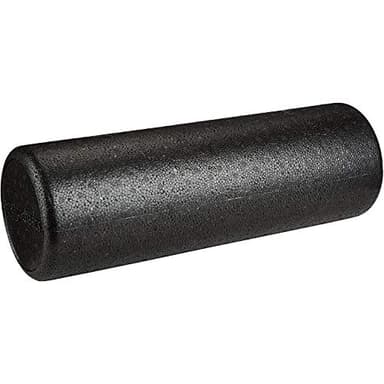
Price as of October 21, 2026. #ad How we’re funded
Amazon Basics High-Density Foam Roller (18 in)
A dense foam cylinder does the same mechanical job as a textured roller for a fraction of the money, and for a first roller that is the correct purchase.
What it gets right
- Does the actual mechanical work — sustained pressure across a broad contact area
- Nothing to break; no core, no seams, no electronics
- 18 in is long enough to lie along your spine, which the 13 in rollers are not
What it does not
- Flat surface spreads pressure rather than concentrating it
- Solid EVA softens over a few years of heavy use
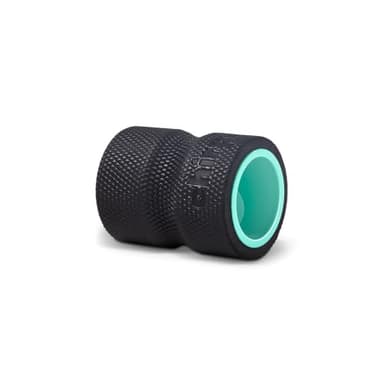
Price as of October 21, 2026. #ad How we’re funded
Chirp Wheel+ 4-Inch Neck and Back Roller
The small wheel, which is the one most people should start on: a shallower arch, more control, and a diameter that suits a neck and upper back rather than forcing a big extension nobody asked for.
What it gets right
- Shallower arch than the 6-inch, which is easier to control and far easier to get off
- Suits the base of the neck and the upper back, where most desk-driven tightness sits
- Same spinal channel as the larger wheel
What it does not
- Too small to give a mid-back extension if that is what you are after
- Still a single-purpose object next to a cylinder that does the whole body
- No published load rating, material density or weight figure to cite
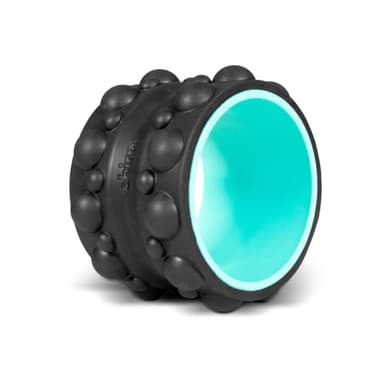
Price as of October 21, 2026. #ad How we’re funded
Chirp Wheel XR 6-Inch Knot Kneader Back Roller
A wheel rather than a cylinder, and the narrow channel down the middle is the whole idea: it lets the pressure fall on the muscle either side of the spine instead of on the spinous processes, which is the one thing a plain foam roller cannot do.
What it gets right
- The spinal channel means you can extend over it without the bony knobs taking the load
- A 6-inch diameter gives a deeper arch than a cylinder of the same width
- Far better at one specific job - mid-back extension - than a general-purpose roller
What it does not
- Costs more than a plain high-density cylinder that covers the whole body
- Narrow contact area makes it unpleasant and fiddly on quads, calves and IT bands
- Deeper arch is exactly wrong for an irritable low back; this is a thoracic tool
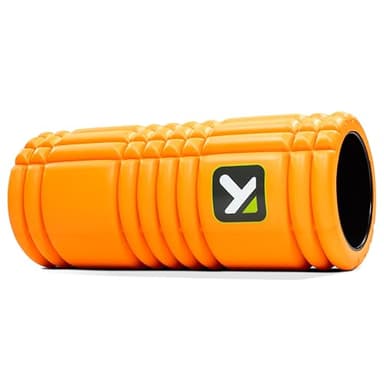
TriggerPoint GRID Foam Roller (13 in)
The multi-density surface is the reason to buy this over a plain foam cylinder: the raised sections concentrate pressure in strips instead of spreading it flat, which is what makes it usable on an IT band without needing to hold your breath.
What it gets right
- Hollow rigid core does not compress into a soft log the way plain EVA foam does after a year
- Multi-density surface gives you three pressure intensities on one roller
- 13 in length fits in a gym bag; the 26 in version does not
What it does not
- Costs roughly three times a plain high-density cylinder that also works
- The hollow core makes it noisier on a hard floor
Common questions
Is a Chirp Wheel better than a foam roller?
For one job, yes; for everything else, no. The channel down the middle of a back wheel lets you arch the mid-back without the bony knobs of the spine taking the pressure, which is the single most common reason people give up on rolling their upper back over a cylinder. For quads, calves, hamstrings, glutes and lats, a cylinder is better, cheaper and more forgiving. If you own neither, buy the cylinder first.
What size Chirp Wheel should I get?
The 4-inch, unless you already know you want a deeper arch. A smaller diameter means a shallower extension, more control, and a much easier time getting off it again, and it suits the base of the neck and the upper back where most desk-driven stiffness sits. The 6-inch gives more mid-back range and is the wrong choice for an irritable low back.
Does a back wheel decompress your spine?
No, and the phrase is listing copy rather than physiology. What a wheel does is give you a narrow fulcrum to extend your mid-back over, with a groove so the pressure misses the spinous processes. That is genuinely useful for a stiff thoracic spine. There is no trial evidence for back wheels specifically — the rolling literature studies foam rollers — so the honest claim is mechanical comfort and range, not decompression.
Can you use a Chirp Wheel on your lower back?
We would not. Rolling the lumbar spine directly is the one area we advise against on every page of this site, and a deep arch over a 6-inch wheel is an extension load that an irritable low back usually does not want. Treat the hips and the mid-back instead — the segments above and below are where the useful mobility work is — and see the lower back page for what actually helps.
Sources
- 1.The Effect of Myofascial Release Applied to Thoracolumbar Fascia on Flexibility, Muscular Endurance, and Balance in Healthy Young Adults: A Randomized Controlled Trial - Journal of Sport Rehabilitation 2025 (PubMed 39832508) — 36 adults, 4 weeks; foam rolling the thoracolumbar fascia added to exercise beat exercise alone on flexibility, endurance and balance
- 2.Foam Rolling Training Effects on Range of Motion: A Systematic Review and Meta-Analysis - Sports Medicine 2022 (PMC9474417) — the range-of-motion evidence for rolling generally
- 3.Preventive effect of foam rolling on muscle soreness after exercise: a systematic review and meta-analysis - Journal of Bodywork and Movement Therapies 2024 (PubMed 39593540) — the soreness half of the rolling literature
- 4.Comparison of Three Different Density Type Foam Rollers on Knee Range of Motion and Pressure Pain Threshold: A Randomized Controlled Trial - International Journal of Sports Physical Therapy (PMC6044602) — the randomized trial finding roller density barely changes the outcome