Rollers & Balls
TriggerPoint GRID Review
The GRID is the roller almost every list calls the upgrade, and this site recommends it on a dozen pages. So here is the honest version: it is three times the price of a plain cylinder that does the same mechanical job, the surface pattern is a real functional difference rather than a texture, and the one number worth knowing about it is published by TriggerPoint as 300 lb while retailers print 500. What you are buying, and when the cheap roller is the right answer.
By Stephen V.Published
Disclosure:Grip & Gait earns a commission when you buy through links on this page, at no extra cost to you. It never changes what we recommend or the order we rank things in — here is exactly how we’re funded.
Quick picks
Ranked on published manufacturer specs and what they mean for the job, not on testing we have not done. Tap a row for the full reasoning. How we score.
| # | Product | Best for | Score | Price |
|---|---|---|---|---|
| 1 |  TriggerPoint GRID Foam Roller (13 in) Published 13.0 x 5.5 x 5.5 in, EVA foam over a hollow core stated to support up to 300 lb, 1-year warranty. The three-zone surface is the reason to pay for it, and it is a real reason. | The roller this review is about | 8.6 | $39.99 · View on Amazon Price as of November 12, 2026. #ad How we’re funded |
| 2 |  Amazon Basics High-Density Foam Roller (18 in) A plain high-density cylinder does the actual mechanical work for a fraction of the money, and at 18 in it is long enough to lie along your spine, which the 13 in GRID is not. Buy this first. | If you have never owned a roller | 8.4 | $15.29 · View on Amazon Price as of November 12, 2026. #ad How we’re funded |
| 3 |  321 STRONG Foam Roller A patterned surface in the middle of the price range. Softer than the GRID, which some people want and others find vague under load. | The textured roller for less | 8.0 | $25.99 · View on Amazon Price as of November 12, 2026. #ad How we’re funded |
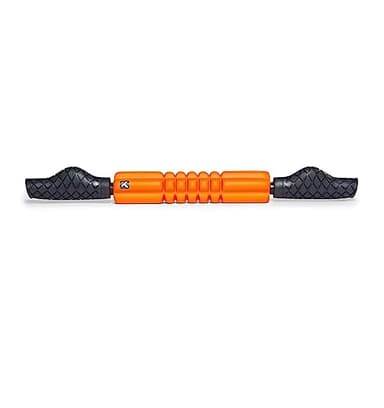
| 4 | 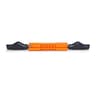 TriggerPoint GRID STK Handheld Roller (21 in) The same brand's handheld stick at 21 in. Solves calves and quads standing up, which is the GRID's real limitation for anyone with a knee or hip that objects to floor work. | If you cannot get on the floor | 8.1 | $42.99 · View on Amazon Price as of November 12, 2026. #ad How we’re funded |
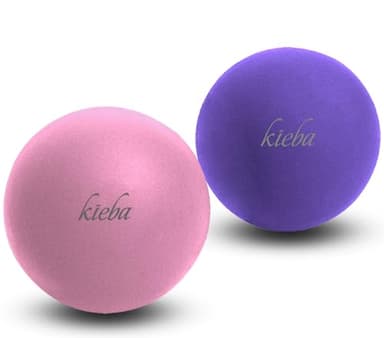
| ✕ |  Kieba Massage Lacrosse Balls A roller cannot reach a glute insertion or the muscle beside a shoulder blade with any precision. A pair of balls costs almost nothing and does what no roller does. Skip this | Skip the roller for small, precise targets | 8.3 | $7.99 · View on Amazon Price as of November 12, 2026. #ad How we’re funded |
The verdict in one paragraph
Buy the TriggerPoint GRID if you have already used a roller enough to know you will keep using one, you want a surface that concentrates pressure rather than spreading it, and you want a core that still holds its shape in three years. It is the one textured roller where the pattern is doing identifiable mechanical work instead of looking technical. The honest limitations are two: at 13 in it is too short to lie along your own spine, which a cheap 18 in cylinder manages easily, and it costs roughly three times that cylinder for a difference in how the pressure is delivered rather than in whether the work gets done. If you have never owned a roller, buy the cylinder, use it for a month, and come back.
What TriggerPoint publishes, and the number that does not match
We score equipment on what the maker puts in writing. Reading TriggerPoint’s own GRID 1.0 product page on 31 October 2026, it publishes item dimensions of 13.0 × 5.5 × 5.5 in, an EVA foam outer surface it describes as water- and sweat-resistant, a 1-year warranty, and a hollow core it says is “strong enough to support up to 300 pounds”. It describes the surface as three zones: flat areas for large muscles, “tubular ridges that knead muscles like the fingers”, and “dense nodules for applying targeted pressure like fingertips”.
What TriggerPoint does notpublish on that page is the roller’s own weight. Retailer listings give figures between roughly 1.1 and 1.4 lb, which disagree with each other, so we record no weight for this product at all rather than pick one. That absence is worth naming: it is a light object either way, and nobody’s purchase turns on it.
What the hollow core actually changes
This is the feature most reviews mention and fewest explain. A plain roller is solid EVA all the way through, so the whole cylinder deforms under your bodyweight — a little at first, permanently over a few years of heavy use, until a roller you bought as firm is a soft log. The GRID’s rigid hollow core carries the load instead, and the foam sits on top of it as a working surface rather than as the structure. Two consequences follow, one good and one not:
- The firmness you buy is the firmness you keep. This is the strongest practical argument for the GRID over a cylinder, and it is a durability argument rather than a performance one.
- It is louder. A rigid core on a hard floor drums. In an apartment with neighbors below, that is a real consideration and a mat solves it.
Does the pattern do anything? What the evidence supports
Honestly: the research on roller surface is much thinner than the research on rolling. Here is the distinction worth holding on to.
Rolling itself has reasonable support. The Sports Medicine meta-analysis of foam rolling training effects on range of motion finds range-of-motion gains, and a 2024 meta-analysis on soreness supports a preventive effect on post-exercise soreness. A 2024 review comparing static stretching against foam rolling found both produce range-of-motion improvements, which is a useful reminder that the roller is one route to an effect rather than the only one.
Roller density is where the question gets specific, and the single most relevant study is the randomized trial comparing three densities of foam roller on knee range of motion and pressure pain threshold. We also cover it on foam roller density, and the read-across is this: the differences between roller types are smaller than the difference between rolling and not rolling. A study of an acute bout of rolling on hip range of motion across different tissues makes the same point from the tissue side.
So our position on the three-zone surface is deliberately modest. It changes how the pressure is distributed, and distribution is why an IT band is tolerable on a GRID and brutal on a hard cylinder — that is a usability difference, and usability decides whether a tool gets used. It is not evidence that the pattern produces a larger physiological effect, and we are not going to claim it does.
13 inches is the real trade-off, not the price
The GRID is 13 in long. A plain cylinder is commonly 18 in, and that six inches is the difference between lying along your own thoracic spine and not. If upper-back extension over a roller is what you want a roller for — and for desk workers it very often is — the cheap long cylinder is the better tool and the GRID is the wrong shape at any price. We go through that on the best foam roller for back pain.
The flip side: 13 in fits in a gym bag and a 26 in roller does not, which is the whole reason this length exists. Pick the length for where you will use it, then pick the surface.
| Roller | Published dimensions | What it is actually for |
|---|---|---|
| TriggerPoint GRID 1.0 | 13.0 x 5.5 x 5.5 in, EVA over a hollow core, 300 lb support stated, 1-year warranty | Quads, IT band, calves and glutes, with a surface that concentrates pressure. Travels well. Too short for spinal work. |
| Amazon Basics high-density | 18 in, solid high-density EVA | The first roller anyone should own, and the right shape for lying along your spine. Spreads pressure rather than concentrating it. |
| TriggerPoint GRID STK | 21 in handheld stick | Calves and quads without getting on the floor. The answer when a knee or hip objects to floor positions. |
What a roller cannot do, whatever it costs
A roller is a broad tool. It cannot find a glute insertion, the muscle beside a shoulder blade, or the arch of a foot with any precision, because your bodyweight over a 5.5 in cylinder is spread across far too much tissue. That is not a GRID criticism, it is a class limitation, and the fix is cheap: a pair of massage balls costs a fraction of any roller and reaches what no roller reaches. Clinically, even identifying those spots reliably is harder than it sounds — the reliability work on trigger-point palpation is sobering reading, and it is why we describe pressure targets by region rather than pretending to a precision nobody has.
The four positions this roller is actually for
A 13 in roller with a concentrating surface is good at a specific list of things, and that list is worth knowing before you buy, because two of the four jobs people expect from a roller are not on it.
- Quads. Face down, forearms on the floor, roller under the front of one thigh at a time. This is the position the GRID suits best: a large muscle, a lot of bodyweight available, and a surface that stops the pressure dissipating across the whole thigh. Keep the pass slow. Speed is how people convince themselves rolling does nothing.
- IT band and lateral thigh. The reason most people upgrade. Side-lying with the roller under the outside of the thigh is the most uncomfortable mainstream rolling position there is, and the ridged zones make it survivable by biting in strips rather than crushing the whole width at once. Worth being clear about what you are treating: the band itself is dense connective tissue and is not going to lengthen under a roller. The randomized work on IT band stiffness is the honest reference, and we go through what it means on IT band trigger points.
- Calves. Seated, one leg crossed over the other for load. The nodule zones are useful here because a calf is two muscles in layers and a flat surface treats them as one. If getting down to the floor is the obstacle, the stick version does this job standing up.
- Glutes and upper hamstring — partially.You can sit on it and find the broad belly of the glute. You cannot find the insertion near the hip, which is where people with stubborn glute pain usually need pressure. That is a ball job, not a roller job, and it is the single most common reason someone concludes an expensive roller “did nothing”.
Not on the list, and worth stating plainly: the lower back, which should never be rolled directly over the lumbar spine, and the neck, which has no safe roller position at all. Both have better answers elsewhere on this site — see lower back pain and neck and shoulder tension.
How long it lasts, and the one maintenance job
The EVA surface is the part that wears, and TriggerPoint describes it as water- and sweat-resistant, which is the practical reason this roller survives gym use better than a bare foam cylinder: you can wipe it down. Do that, because the raised zones trap more than a flat surface does and a roller that lives in a gym bag gets the worst of both worlds.
On lifespan, the useful comparison is against the thing it replaces. A solid high-density cylinder stays usable for years but softens progressively, so the roller you are using in year four is meaningfully less firm than the one you bought — and because the change is gradual, most people never notice it happened. The GRID’s rigid core means the working surface sits on structure rather than being the structure, so what changes over time is surface wear rather than firmness. The warranty TriggerPoint publishes is one year, which tells you what the maker will stand behind rather than how long the object lasts; our read is that the durability case is about the core design, not about the warranty length.
The one genuine failure mode to watch for: a crack or a soft spot in the core, which you will hear as a change in sound before you feel it as a change in support. At that point the roller is done, because the whole argument for it was that the core carries the load.
Where it sits on this site
We name the GRID as the upgrade pick on a lot of pages, so it is fair to show the working. The head-to-head against the cheap cylinder is TriggerPoint GRID vs Amazon Basics, which is the purchase decision most readers arrive with. If you are earlier than that — unsure whether to buy a roller or a ball at all — start at foam roller vs massage ball. And if technique is the open question, how to foam roll is the page that will change your results more than any roller choice will.
Our read
The GRID earns its place, and it earns it on durability and pressure distribution rather than on any claim that the pattern works better. That is a narrower case than the marketing makes and a stronger one than the sceptics allow: a roller whose firmness survives three years and whose surface makes an IT band bearable is a roller you will still be using, and the one you use beats the one you bought cheaply and abandoned. But it is the second roller for most people, not the first, and the 13 in length means it is not a complete answer on its own. Buy the cylinder, learn the technique, then buy this when you know you will keep going.
Every pick, in full
Specs below are the manufacturer’s own published figures, each linked to the page it came from. Where a maker does not publish a number, the table says so and names the page we checked — that absence is information too.
Price as of November 12, 2026. #ad How we’re funded
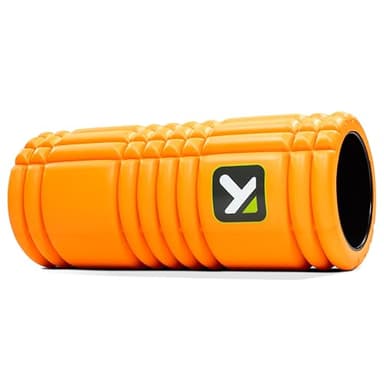
TriggerPoint GRID Foam Roller (13 in)
The multi-density surface is the reason to buy this over a plain foam cylinder: the raised sections concentrate pressure in strips instead of spreading it flat, which is what makes it usable on an IT band without needing to hold your breath.
What it gets right
- Hollow rigid core does not compress into a soft log the way plain EVA foam does after a year
- Multi-density surface gives you three pressure intensities on one roller
- 13 in length fits in a gym bag; the 26 in version does not
What it does not
- Costs roughly three times a plain high-density cylinder that also works
- The hollow core makes it noisier on a hard floor
- TriggerPoint's own page states a 300 lb support figure while retailer listings widely claim 500 lb — the maker's number is the lower one
Price as of November 12, 2026. #ad How we’re funded
Amazon Basics High-Density Foam Roller (18 in)
A dense foam cylinder does the same mechanical job as a textured roller for a fraction of the money, and for a first roller that is the correct purchase.
What it gets right
- Does the actual mechanical work — sustained pressure across a broad contact area
- Nothing to break; no core, no seams, no electronics
- 18 in is long enough to lie along your spine, which the 13 in rollers are not
What it does not
- Flat surface spreads pressure rather than concentrating it
- Solid EVA softens over a few years of heavy use
Price as of November 12, 2026. #ad How we’re funded
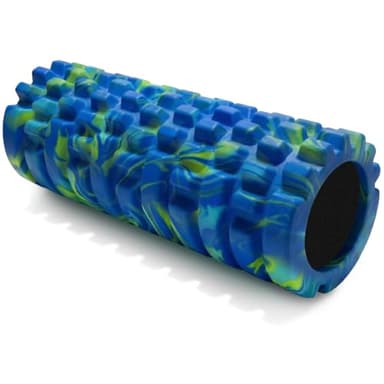
321 STRONG Foam Roller
Textured like the premium rollers at close to plain-cylinder money — the sensible middle purchase if the flat cylinder feels too blunt and the branded one feels too dear.
What it gets right
- Triple-density surface at roughly a third of the branded price
- Rigid core holds shape
What it does not
- Knobs are more aggressive than the GRID's, which some people cannot tolerate on the IT band
Price as of November 12, 2026. #ad How we’re funded
TriggerPoint GRID STK Handheld Roller (21 in)
At 21 in it is the longest stick we cover, which is the spec that decides whether you can work a whole hamstring or quad in one pass instead of three.
What it gets right
- 21 in of working length covers a hamstring or a quad end to end
- The same multi-density GRID surface as the brand's foam rollers rather than bare plastic
- Rigid core takes real pressure without flexing away
What it does not
- The most expensive stick here by a wide margin
- Too long to be a travel item in the way a short stick is
- The textured surface is a preference, not an improvement — a smooth sleeve is kinder on hairy legs
Price as of November 12, 2026. #ad How we’re funded
Kieba Massage Lacrosse Balls
The highest work-per-dollar tool on this entire site. A hard rubber sphere concentrates all your body weight into one square inch, which is more pressure than any handheld gun can generate.
What it gets right
- Concentrates body weight into a single point — more local pressure than any percussion device
- Nothing to charge, nothing to break, fits in a coat pocket
- Reaches under the shoulder blade against a wall, which a roller physically cannot
What it does not
- Unforgiving — very easy to overdo on a first session
- Wrong tool for broad surfaces like quads or lats
Common questions
Is the TriggerPoint GRID worth it?
If you already roll regularly, yes. You are paying for a rigid hollow core that keeps its firmness for years where solid foam softens, and for a three-zone surface that concentrates pressure in strips instead of spreading it flat — which is what makes an IT band tolerable. If you have never owned a roller, no: buy a plain high-density cylinder for a fraction of the price, use it for a month, and upgrade only once you know rolling is a habit rather than an intention.
What size is the TriggerPoint GRID, and what weight does it support?
TriggerPoint’s own product page publishes item dimensions of 13.0 × 5.5 × 5.5 in and states the hollow core is strong enough to support up to 300 pounds. Retailer listings for the same roller widely print 500 lb; we use the manufacturer’s lower figure, because that is the party honoring the warranty. The page does not publish the roller’s own weight, and retailer figures for it disagree, so we record none.
Is the GRID too hard for a beginner?
It is firmer than a soft foam roller and softer than a bare PVC pipe, which puts it in the middle of the usable range. The useful finding from the density research is that the differences between roller types are smaller than the difference between rolling and not rolling, so firmness is not the thing to agonize over. Technique matters more: less bodyweight, slower passes, and no rolling directly over a joint or a bony edge. See how to foam roll.
Can you use the GRID on your back?
Across the back, yes. Along it, not really — at 13 in the GRID is too short to lie along your own spine, which an 18 in cylinder does easily. If thoracic extension over a roller is the reason you are buying one, the cheap longer cylinder is the better tool, and we say which to pick on best foam roller for back pain. Never roll the lower back directly over the lumbar spine.
Did you test the GRID yourselves?
No, and the site says so on every page. There is no lab, no owned units and no clinician on staff. This review is built from TriggerPoint’s own published figures, linked above, with the absences recorded by name, plus the peer-reviewed literature on foam rolling. Our method and its limits are at how we research.
Sources
- 1.TriggerPoint — GRID 1.0 Foam Roller product page (13.0 × 5.5 × 5.5 in; hollow core stated to support up to 300 lb; EVA foam outer; 1-year warranty) — dimensions, EVA outer, 300 lb support figure, 1-year warranty and the three-zone description - read 2026-10-31; roller weight NOT published
- 2.Foam Rolling Training Effects on Range of Motion: A Systematic Review and Meta-Analysis - Sports Medicine 2022 (PMC9474417)
- 3.Preventive effect of foam rolling on muscle soreness after exercise: a systematic review and meta-analysis - Journal of Bodywork and Movement Therapies 2024 (PubMed 39593540)
- 4.Static Stretch Training versus Foam Rolling Training Effects on Range of Motion: A Systematic Review and Meta-Analysis - Sports Medicine 2024 (PMC11393112)
- 5.Comparison of Three Different Density Type Foam Rollers on Knee Range of Motion and Pressure Pain Threshold: A Randomized Controlled Trial - International Journal of Sports Physical Therapy (PMC6044602) — the one trial that compares roller densities head to head
- 6.The Effects of an Acute Bout of Foam Rolling on Hip Range of Motion on Different Tissues - International Journal of Sports Physical Therapy (PMC6088119)
- 7.The Immediate Effects of Foam Rolling and Stretching on Iliotibial Band Stiffness: A Randomized Controlled Trial - International Journal of Sports Physical Therapy (PMC8169023) — what rolling does and does not do to the IT band - the position most people upgrade for
- 8.Reliability of physical examination for diagnosis of myofascial trigger points: a systematic review of the literature - The Clinical Journal of Pain (PubMed 19158550) — why we describe pressure targets by region rather than claiming point precision
- 9.camelcamelcamel — TriggerPoint GRID price history — price history, for judging whether a given day's price is a deal