Symptoms
Best Tools for Arthritis Pain
Almost everything sold for muscle recovery works by loading tissue mechanically, and an arthritic joint is the one structure that usually cannot tolerate being loaded. That single fact rules out most of this site for this problem — and it points at the three things that do fit.
By Stephen V.Published Updated
Disclosure:Grip & Gait earns a commission when you buy through links on this page, at no extra cost to you. It never changes what we recommend or the order we rank things in — here is exactly how we’re funded.
For arthritis pain, the tools that fit are heat for a stiff joint, a TENS unit for a joint too tender to touch, and graded exercise for the muscle and function around it. Keep percussion, hard pressure and rolling off the affected joint itself — work the muscle above and below it instead. None of these treats the arthritis; they make living with it more comfortable, which is a smaller and more honest claim than the category usually makes.
What is actually happening, and why it changes the answer
“Arthritis” covers two quite different situations, and the distinction matters more for tool choice than any spec on this website.
Osteoarthritis is wear-related change to a joint surface and the structures around it — most often a knee, a hip, a thumb base or the small joints of the fingers. It is typically worse with use and better with rest, and it is mechanical. The muscles around an osteoarthritic joint frequently do get tight and sore, partly from guarding, and those muscles are a reasonable target.
Inflammatory arthritis — rheumatoid arthritis and its relatives — is a systemic disease in which the immune system attacks joint linings. It is typically worse after rest, comes with morning stiffness that lasts, and is managed with medication prescribed by a rheumatologist. Nothing on this site is a substitute for that management, and a warm, swollen, actively inflamed joint is not something to press, percuss or roll at all.
The mechanical reality both share: a joint is bone, cartilage and capsule with very little soft tissue over the front of it. Every pressure tool on this site works by putting force through soft tissue. Point one at a knuckle or a kneecap and the force lands on the structure that already hurts. That is why the routing below sends almost everything to the muscle around the joint, and why the two tools that fit the joint itself — heat and stimulation — are the two that require no pressure.
Which class of tool fits
| Tool class | Cost | Why it does or doesn’t work here | Verdict |
|---|---|---|---|
| Graded exercise | Cost: Budget | The intervention with the best trial evidence here, and it is barely a purchase. A tailored hand exercise program produced a measurable, lasting improvement in hand function in a 490-person randomized trial where drug regimens stayed the same.Where it fails: Slow, and it is a program rather than a session. It also needs to be tailored - a clinician gives you the exercises and the dosage. | Start here |
| Heat | Cost: Budget | Cheap, passive, no pressure on anything, and it suits exactly the stiff-joint, stiff-hand complaint most people arrive with. It is the oldest answer here and still one of the most reliable for comfort.Where it fails: Palliative rather than disease-modifying, and never on a joint that is hot, red or actively swollen - heat draws more fluid in. | Start here |
| TENS unit | Cost: Budget | The one tool on this site aimed at pain signaling rather than tissue mechanics, which makes it the option when a joint is too tender to press on at all. Pads go near the joint, not on it.Where it fails: The Cochrane review for knee osteoarthritis could not confirm an effect and called the evidence inconclusive. Cheap to try, and we are not going to oversell it. | Sometimes |
| Cold | Cost: Budget | The right choice when a joint is in an inflamed, swollen phase, where heat is the wrong direction. A reusable gel pack that stays pliable out of the freezer wraps a knee or a knuckle.Where it fails: Numbing cold going into activity is a bad idea, and it does nothing for the stiffness most people want help with. | Sometimes |
| Massage gun | Cost: Mid-range | Only for the muscle above and below the joint - a quadriceps over an arthritic knee, a forearm over an arthritic wrist - at the lowest setting with the softest head.Where it fails: Never on the joint itself, never on a swollen or inflamed one, and manufacturer precautions name local tissue inflammation explicitly. Grip strength also matters: some guns are too heavy for arthritic hands to hold. | Sometimes |
| Insoles / arch support | Cost: Budget | Changing how load arrives at a foot, ankle or knee is one of the few things on this site that works while you are not thinking about it. Worth trying for lower-limb osteoarthritis.Where it fails: Effects vary a lot between people, and a semi-rigid support that fights your foot is worse than nothing. Sized, not trimmed. | Sometimes |
| Compression boots | Cost: Premium | Excellent at what they are for - whole-leg circulation and post-training heaviness in healthy legs.Where it fails: That is not this problem. They are the most expensive thing on the site, they do nothing for a specific arthritic joint, and squeezing a swollen, painful joint inside an inflating sleeve is the opposite of what it needs. | Not for this |
What we would actually buy
Buy this first
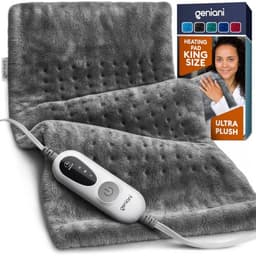
GENIANI Electric Heating Pad
Heat is the answer people actually reach for and keep reaching for. Cheap, passive, moist-heat capable and with auto-shutoff, which matters when the whole point is using it while sitting still.
When the joint cannot be touched
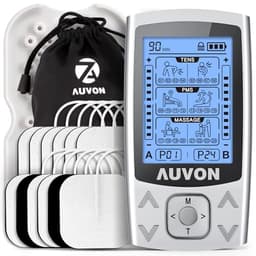
AUVON Dual Channel TENS Unit
Nothing else here works without loading tissue. This is applied near the joint rather than on it, requires no pressure and no grip, and costs less than one appointment to find out whether it helps you.
Price as of October 21, 2026. #ad How we’re funded
For the muscle, never the joint
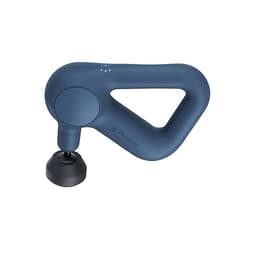
Therabody Theragun Relief
Therabody's deliberately gentle model, with a simple interface and a handle shape that is easier to hold with a weak grip. Use it on the quadriceps or the forearm - the muscle above and below - and keep it off the joint.
Price as of October 21, 2026. #ad How we’re funded
Hands are the joint nobody sells a tool for
Hands and thumb bases are among the most commonly affected joints in osteoarthritis, and they are the region where this entire category falls over. You cannot get body weight onto your own knuckle through a ball. A foam roller is irrelevant at that scale. A percussion head is wider than the joint you would be aiming at, and the bone is directly under the skin. If you arrived here searching for a massage gun for arthritic hands, the honest answer is that a gun is close to the worst-suited tool on this site for that specific job.
What actually has evidence behind it for hands is unglamorous and cheap: a tailored, progressive exercise program. The SARAH randomized controlled trial assigned 490 adults with rheumatoid arthritis of the hand to usual care or usual care plus a tailored strengthening and stretching hand program. At twelve months, overall hand function had improved by 3.6 points in the usual-care group and 7.9 in the exercise group — a mean difference of 4.3 — with no serious adverse events and a cost of about £156 per person. Pain and drug regimens did not differ between the groups; function did.
That is a stronger result than anything we can show you for a device, and the equipment it needs costs less than a coffee. A hand therapist or physiotherapist gives you the actual exercises and the progression; the putty is just the resistance.
If the hand problem is weakness rather than pain — grip that has faded, jars that have become a negotiation — the tools and the evidence are different again, and they are on weak grip and hand strength.
What the evidence actually supports
This is a page about products for a medical condition, so it is worth being precise about how thin the ground under some of these is.
Arthritis gloves. The A-GLOVES randomized controlled trial randomized 206 people with rheumatoid or undifferentiated inflammatory arthritis and persistent hand pain to arthritis gloves or loose-fitting placebo gloves. Hand pain improved by 1.0 in the glove group and 1.2 in the placebo group — an adjusted mean difference of 0.10, with a confidence interval spanning zero and a p value of 0.72. Adverse events were reported by 51% of the glove group against 36% of the placebo group. The authors concluded there was no clinically important effect on hand pain, function or stiffness, and that the results supported ceasing routine provision. We link gloves anyway, because they are cheap and some people genuinely like wearing them — but you should buy them knowing that.
TENS. The Cochrane review of transcutaneous electrostimulation for knee osteoarthritis pooled 18 small trials in 813 patients and reported poor methodological quality, high heterogeneity and an asymmetrical funnel plot. Its conclusion was that effectiveness for pain relief could not be confirmed and the review was inconclusive. That is not the same as “it does not work”, and it is a long way from “proven”. TENS is cheap, has no meaningful downside for most people, and is worth a try on those terms rather than on a promise.
Heat and cold. The Cochrane review of thermotherapy for rheumatoid arthritis found only three small trials and no effect on objective measures of disease activity. Its practical conclusion was that because patients preferred thermotherapy to no therapy, it can be used as a palliative applied at home as needed — limited by the poor methodological quality of the trials. Palliative is exactly the right word, and it is why heat is our first pick rather than our only one: it reliably makes people more comfortable and it changes nothing about the disease.
Percussion. The percussion literature this site cites — reduced tissue stiffness and improved range of motion and a systematic review of effects on performance and pain — studied healthy muscle in people without joint disease. Extending it to arthritic joints would be extrapolating well past what those studies examined, so we do not.
A sensible routine, if you want one
- Warm the area first if it is stiff rather than inflamed. Ten to twenty minutes is plenty, and it makes the next step tolerable.
- Move the joint through its available range, gently and without forcing the end of it. For hands, this is where the putty and the prescribed exercises go.
- Work the muscle above and below, not the joint. Quadriceps and calf for a knee, forearm for a wrist, glute and thigh for a hip. Low setting, soft head, short.
- Use stimulation for the hours you are not doing any of that, if a joint is too sore to touch. It requires nothing of you.
- Switch to cold instead of heat during a flare, when a joint is warm, swollen or red.
“Skin rash, open wounds, blisters, local tissue inflammation, bruises, or tumors; bone fracture or myositis ossificans; bleeding disorders; medications that thin the blood or alter sensations; neurologic conditions resulting in loss or altered sensation; recent surgery or injury.”
Two of those clauses matter unusually often for this audience. Blood-thinning medication is common in older patients, and reduced or altered sensation — from diabetes, neuropathy or nerve involvement — removes the feedback that stops you overdoing a heat pad or a percussion head. If either applies to you, ask a clinician before adding any of this, and read our page on tools where sensation is reduced.
One overlap worth separating out. Compression gloves get recommended for any aching hand, but an older trial reported worsening symptoms in most participants who also had carpal tunnel syndrome — so if your hand symptoms are tingling and numbness in the thumb, index and middle finger rather than joint pain, read carpal tunnel before buying a pair.
Common questions
What is the best tool for arthritis pain?
A heating pad for a stiff joint, a TENS unit for a joint too tender to touch, and graded exercise for function around it. Keep percussion, hard pressure and rolling off the joint itself and work the muscle above and below it instead. None of these treats the arthritis — they make living with it more comfortable, which is a smaller and more honest claim than the category usually makes.
Is a massage gun good for arthritis?
Only for the muscle around the joint, never the joint. A quadriceps over an arthritic knee or a forearm over an arthritic wrist is a reasonable target at the lowest setting with the softest head. The joint itself is bone and capsule with almost no soft tissue over it, and manufacturer precautions specifically name local tissue inflammation. For arthritic hands in particular, a gun is close to the worst-suited tool here — the head is wider than the joint and the bone is directly under the skin.
Do arthritis compression gloves actually work?
The largest randomized controlled trial says not measurably. A-GLOVES randomized 206 people with inflammatory arthritis and persistent hand pain to arthritis gloves or placebo gloves; hand pain improved 1.0 with the gloves and 1.2 with placebo, an adjusted mean difference of 0.10 with a p value of 0.72, and more adverse events were reported in the glove group. The authors concluded there was no clinically important effect and recommended ceasing routine provision. They are cheap and some people like wearing them, so buy them on that basis if you want to — not as a treatment.
Should I use heat or ice for arthritis?
Heat for the stiff, aching, long-standing version, which is what most people have most of the time. Cold during a flare, when a joint is warm, swollen or red, because heat draws more fluid into an area that already has too much. The Cochrane review of thermotherapy in rheumatoid arthritis found no effect on objective disease measures but concluded it is reasonable as a palliative applied at home, since patients preferred it to no therapy.
Does a TENS unit help arthritis pain?
It may, and the evidence is weaker than the marketing suggests. The Cochrane review of transcutaneous electrostimulation for knee osteoarthritis pooled 18 small trials in 813 patients, found poor methodological quality and high heterogeneity, and concluded that effectiveness for pain relief could not be confirmed. What TENS has going for it is that it needs no pressure and no grip, which makes it the one option for a joint that cannot be touched, and it is inexpensive enough that trying it costs less than one appointment.
What helps arthritis in the hands?
A tailored, progressive hand exercise program has the best evidence. The SARAH randomized trial gave 490 adults with rheumatoid arthritis of the hand either usual care or usual care plus tailored strengthening and stretching; at twelve months hand function had improved 3.6 points with usual care and 7.9 with exercise, with no serious adverse events. Heat helps stiffness, graded putty gives the exercises somewhere to progress, and a massage gun is the wrong shape for a knuckle. Get the specific exercises from a hand therapist.
Sources
- 1.Exercises to improve function of the rheumatoid hand (SARAH): a randomised controlled trial - The Lancet (PubMed 25308290) — hand function 3.6 vs 7.9 points at 12 months, mean difference 4.3 - quoted above
- 2.Clinical and cost effectiveness of arthritis gloves in rheumatoid arthritis (A-GLOVES): randomised controlled trial with economic analysis - BMC Musculoskeletal Disorders (PubMed 33419426) — adjusted mean difference 0.10 (95% CI -0.47 to 0.67), p = 0.72 - quoted above
- 3.Transcutaneous electrostimulation for osteoarthritis of the knee - Cochrane Database of Systematic Reviews (PubMed 19821296) — 18 trials, 813 patients; effectiveness could not be confirmed
- 4.Thermotherapy for treating rheumatoid arthritis - Cochrane Database of Systematic Reviews (PubMed 11406046) — no effect on objective disease measures; reasonable as a home palliative
- 5.Acute Effects of Theragun Percussive Therapy on Viscoelastic Tissue Dynamics and Hamstring Range of Motion (PMC10499144)
- 6.The Effect of Percussive Therapy on Musculoskeletal Performance and Experiences of Pain: A Systematic Literature Review (PubMed 37020441)
- 7.Therabody — Product Safety & Precautions — contraindications quoted verbatim above