Recovery Tech
The Best Compression Boots for Neuropathy
Two things separate a compression system that suits a neuropathic foot from one that does not, and neither of them is pressure. The first is whether the sleeve covers the foot at all - a lot of recovery boots start at the ankle, which is precisely where the symptoms are not. The second is how far the pressure adjusts downward, because when sensation is altered you cannot use discomfort as a limit and the machine has to have a low setting you can trust.
By Stephen V.Published
Disclosure:Grip & Gait earns a commission when you buy through links on this page, at no extra cost to you. It never changes what we recommend or the order we rank things in — here is exactly how we’re funded.
Quick picks
Ranked on published manufacturer specs and what they mean for the job, not on testing we have not done. Tap a row for the full reasoning. How we score.
| # | Product | Best for | Score | Price |
|---|---|---|---|---|
| 1 |  QUINEAR Leg Recovery Compression System For anyone whose symptoms are in the toes and forefoot. The sleeve runs foot to thigh rather than ankle to thigh, with multiple pressure levels and modes to work down from. | Best overall - it covers the foot | 8.6 | |
| 2 |  Musugy Sequential Leg Compression Massager For finding out whether compression suits your legs at all. Genuinely sequential inflation at the lowest price in the category, with full-leg coverage and basic controls. | Budget pick - cheapest sequential system | 8.0 | |
| 3 |  FIT KING Air Compression Recovery Boots For legs that a one-size sleeve does not suit. Sized options rather than universal, and chambers that fire ankle-upward the way the premium systems do. | Best fit control | 8.3 | |
| ✕ | 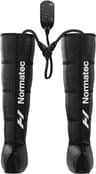 Hyperice Normatec 3 Recovery System The most refined pressure control in the category, bought by teams and clinics. For one person's own legs the price gap buys refinement rather than a different mechanism. Skip this | The one to skip at home | 7.0 |
The short version
Buy the QUINEAR Leg Recovery Compression System. Neuropathy is a feet-first problem and the QUINEAR is the system here whose sleeve actually covers the foot rather than starting at the ankle, with several pressure levels and modes so you can work upward from the lowest one instead of guessing. The budget pick is the Musugy Sequential Leg Compression Massager, the cheapest genuinely sequential system we cover and the sane way to find out whether compression suits you at all. Buy the FIT KING instead if a universal sleeve does not fit your leg, because it is sold in sizes and fit is what decides whether pressure is even.
What the evidence covers, and what it does not
We are not going to tell you there is a trial of pneumatic compression for peripheral neuropathy, because in the literature we hold there is not. What exists is adjacent and worth knowing. A systematic review of randomized trials of intermittent pneumatic compression for lower extremity lymphedema is the strongest body of work on these machines, and it is about fluid, not nerves. On the athletic side, a 2025 meta-analysis of compression, photobiomodulation and electrical stimulation for muscle recovery and a placebo-controlled trial in international youth soccer players — which found no improvement in neuromuscular, biochemical or perceptual recovery — set the realistic ceiling on what these boots do.
Meanwhile the modality with actual neuropathic-pain trials behind it is electrical stimulation: a 2025 systematic review and meta-analysis of transcutaneous electrical stimulation for neuropathic pain is the paper on that side, and it is why our TENS page for foot neuropathy exists and is the first thing we would point a neuropathy reader at. Compression boots are bought here for a different and more modest reason: heavy, swollen, tired legs feel better afterwards, and for a lot of people that is the symptom in the way.
The three specs that decide this purchase
| Spec | Does it matter | Why |
|---|---|---|
| Foot coverage | Decides it | Peripheral neuropathy is usually a toes-and-forefoot problem working upward. A sleeve that starts at the ankle treats everywhere except where it is happening. QUINEAR's includes the foot; that is the whole reason it is first here. |
| How far pressure adjusts DOWN | Decides it | With altered sensation you cannot use discomfort as the limit, so the machine needs a genuinely low setting and you need to start there. Every system here has multiple levels; the discipline is yours. |
| Timer | Yes - it is the safety control | Session length is the variable a numb leg will not report back on. A fixed cycle that ends on its own is better than a machine you decide to switch off. |
| Sequential versus single-chamber | Yes | Sequential means chambers fire ankle-upward rather than squeezing the whole leg at once, which is the mechanism these devices are sold on. All four systems here are sequential; a single-bladder cuff is a different and lesser thing. |
| Sizing | Yes, for fit | A sleeve that is loose delivers less than the number on the display and a sleeve that is tight before it inflates delivers more. FIT KING's sized options are the fix when a universal sleeve does not suit your calf. |
| Pump refinement and quietness | Real but not worth the gap at home | The Normatec 3 is the quietest and most refined system we cover and it does not use a different mechanism. That is why it is the skip row rather than the top pick. |
The picks, and who each one is for
QUINEAR — the one that covers the foot
For the reader whose numbness, burning or pins and needles are in the toes and the ball of the foot. Most recovery boots are built for athletes, and athletes care about calves and quads, so the sleeve starts at the ankle. The QUINEAR covers foot, calf and thigh in one sleeve, and the foot is where most of the swelling sits in the legs we are describing here. It has multiple pressure levels and modes, which is what lets you start at the bottom of the range. The pump is audible and the unit is not portable; neither of those is a reason to buy a system that misses the part that hurts.
Musugy — the budget pick
For the reader who wants to find out whether twenty minutes of sequential compression makes their legs feel better before committing real money. It is the cheapest genuinely sequential system we cover, which is the thing worth saying: the saving comes out of controls and build quality, not out of the mechanism. Basic controls are the trade, and for a user who is going to run one low setting every evening, basic controls are not much of a trade.
FIT KING — when fit is the problem
For legs a universal sleeve does not suit — wider calves, shorter legs, or any case where a one-size wrap gaps at one end and bites at the other. FIT KING sells sized options and fires its chambers ankle-upward in a genuine sequence, at a fraction of the category leader’s price. Sizing runs specific, so measure before buying; that is the whole reason to choose it and getting it wrong undoes the advantage.
Normatec 3 — the skip, for a home buyer
The most refined pressure control and the quietest pump in the category, and the system most likely to still be supported in five years. It is also several times the price of boots that inflate sequentially in the same way, and the refinement does not change the mechanism. For a team room it makes sense. For one person’s own legs in a living room it is the most expensive way to do a job the QUINEAR does, which is why it is our skip and why we also wrote alternatives to the Normatec.
What else belongs in the drawer
Where this sits among the compression pages
The compression boots page covers how these machines work and what sequential inflation is. Compression boots for circulation is the page for general heaviness and swelling in older legs, and best compression boots for lymphedema is where the strongest trial evidence for these devices actually lives. This page is the foot-first cut of the same category, for readers whose symptoms start in the toes.
Every pick, in full
Specs below are the manufacturer’s own published figures, each linked to the page it came from. Where a maker does not publish a number, the table says so and names the page we checked — that absence is information too.
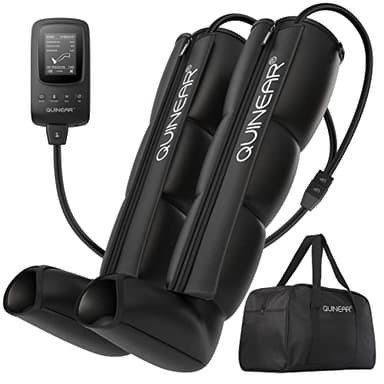
QUINEAR Leg Recovery Compression System
Covers foot, calf and thigh in one sleeve, which matters because the foot is where most budget systems stop and where a lot of the swelling sits.
What it gets right
- Includes the foot, which many systems omit
- Multiple pressure levels and modes
What it does not
- Pump noise
- Not portable
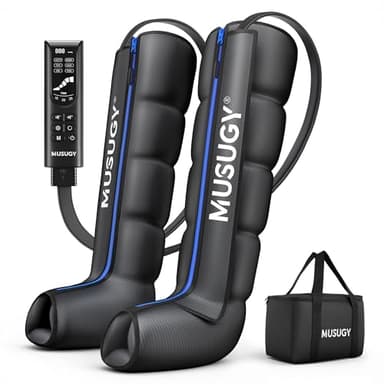
Musugy Sequential Leg Compression Massager
The cheapest genuinely sequential system here — the entry point at which compression boots stop being an aspiration and start being a thing you own.
What it gets right
- Sequential inflation at the lowest price in the category
- Full-leg coverage
What it does not
- Basic controls
- Build quality reflects the price
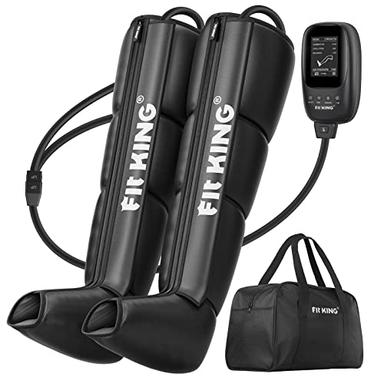
FIT KING Air Compression Recovery Boots
Sequential chamber inflation — the mechanism that actually distinguishes recovery boots from a leg-shaped pressure cuff — at a third of what the category leader charges.
What it gets right
- Genuinely sequential: chambers fire ankle-upward rather than all at once
- Sized options rather than one-size-fits-nobody
- A fraction of the premium system price
What it does not
- Louder pump than the premium units
- Bulky to store and not remotely portable
- Sizing runs specific — measure before buying
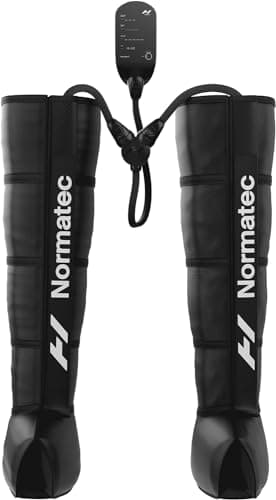
Hyperice Normatec 3 Recovery System
Still the refined end of the category and still sold by Hyperice, though the Normatec Elite line now sits above it in the range — and its price gap over a sequential competitor buys refinement rather than a different mechanism, which is why it is our skip for a home buyer.
What it gets right
- The most refined pressure control and the quietest pump of the systems we cover
- The system most likely to still be supported in five years
What it does not
- No longer the top of Hyperice's own range: the Normatec Elite line sits above it
- Several times the price of boots that inflate sequentially the same way
- The added refinement does not change the mechanism
Common questions
What are the best compression boots for neuropathy?
The QUINEAR Leg Recovery Compression System, because neuropathy is a feet-first problem and the QUINEAR is the system here whose sleeve covers the foot rather than starting at the ankle, with multiple pressure levels so you can work up from the lowest. The Musugy is the budget pick and the cheapest genuinely sequential system we cover. Choose FIT KING if a universal sleeve does not fit your leg, because it is sold in sizes.
Do compression boots help neuropathy?
There is no trial of pneumatic compression for peripheral neuropathy in the literature we hold, and we are not going to invent one. What these machines have evidence for is fluid and swelling — the strongest body of work is a systematic review of randomized trials for lower extremity lymphedema — and a modest, inconsistent effect on how recovered legs feel. If your legs are heavy and swollen as well as numb or burning, that is the half a compression system can address. For the neuropathic pain itself, electrical stimulation has the trials.
What pressure should you use with neuropathy?
The lowest setting the machine offers, for the first week at least, and then only upward in single steps. The usual advice to turn it up until it feels firm but comfortable depends on sensation reporting accurately, which is the exact thing neuropathy interferes with. Inspect your feet and calves in good light after each session, including between the toes: any mark still visible fifteen minutes later means too much pressure or a sleeve that was not sitting flat.
Should the boots cover the foot?
For neuropathy, yes, and it is the main reason one system wins this page. Peripheral neuropathy typically starts in the toes and works upward, while most recovery boots are designed for athletes and start at the ankle. A sleeve that stops above the symptoms is treating the calf of a person whose complaint is in the forefoot. It is also where a lot of the swelling sits.
Are expensive compression boots better?
They are quieter, better finished and more precisely controlled, and they use the same mechanism. That is why the Normatec 3 is our skip row rather than our winner: nothing it does to a leg is different in kind from what a sequential system at a fraction of the price does. Spend the difference on a TENS unit, which has neuropathic-pain trials behind it, and on shoes that fit.
Sources
- 1.A systematic review of contemporary randomized controlled trials for treatment of lower extremity lymphedema by intermittent pneumatic compression devices - Journal of Vascular Surgery: Venous and Lymphatic Disorders 2026 (PMC13197773) — the strongest randomized evidence for these machines, and it is about fluid rather than nerves
- 2.Neuropathic Pain Relief Through Transcutaneous Electrical Neuromuscular Stimulation: Insights From a Systematic Review and Meta-Analysis of Clinical Evidence - BioMed Research International 2025 (PMC12543013) — the neuropathic-pain evidence belongs to electrical stimulation, not compression - the reason this page routes readers to the TENS page first
- 3.Effects of photobiomodulation, intermittent pneumatic compression and neuromuscular electrical stimulation on muscle recovery: systematic review with meta-analysis - Journal of Bodywork and Movement Therapies 2025 (PubMed 40954632) — compression set against photobiomodulation and electrical stimulation for muscle recovery
- 4.Intermittent pneumatic compression does not improve post-match neuromuscular, biochemical or perceptual recovery in international-level youth soccer players: a randomized placebo-controlled trial - BMC Sports Science, Medicine and Rehabilitation 2026 (PMC12983609) — placebo-controlled trial finding no neuromuscular, biochemical or perceptual recovery benefit - the realistic ceiling on these devices