Recovery Tech
The Best TENS Units for Plantar Fasciitis
A heel is the hardest place on the body to put a TENS pad: there is almost no muscle, the skin is thick under the foot and thin around it, and the structure that hurts is a sheet of fascia rather than a nerve trunk. That makes two things decide which unit is worth buying - whether you can set pulse width and rate yourself, and whether the pads are small enough to sit either side of the heel without folding. Mode counts decide nothing.
By Stephen V.Published
Disclosure:Grip & Gait earns a commission when you buy through links on this page, at no extra cost to you. It never changes what we recommend or the order we rank things in — here is exactly how we’re funded.
Quick picks
Ranked on published manufacturer specs and what they mean for the job, not on testing we have not done. Tap a row for the full reasoning. How we score.
| # | Product | Best for | Score | Price |
|---|---|---|---|---|
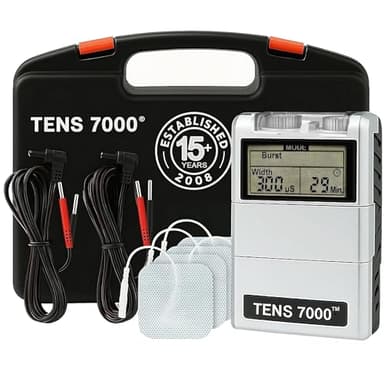
| 1 |  TENS 7000 Digital TENS Unit For anyone who wants to set the parameters themselves on a small, awkward target. Manual pulse width and rate instead of a preset menu, two channels, and the unit most clinics hand out. | Best overall - manual control | 8.6 | $38.88 · View on Amazon Price as of November 22, 2026. #ad How we’re funded |
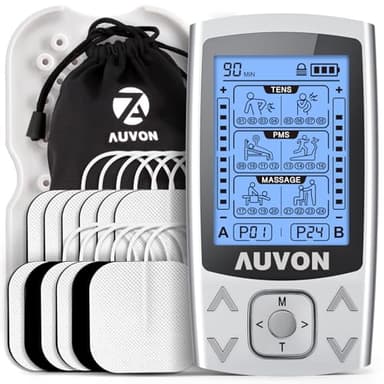
| 2 |  AUVON Dual Channel TENS Unit For finding out whether electrical stimulation does anything for your heel before you spend more. Two independent channels, rechargeable, and the simplest interface here. | Budget pick - cheapest that does the job | 8.2 | |
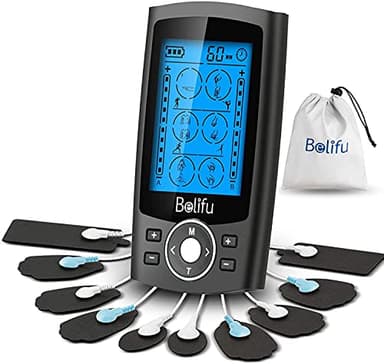
| 3 |  Belifu Dual Channel TENS EMS Unit For the common case where the heel pain comes with a permanently tight calf. TENS and EMS in one dual-channel unit, so one pair of pads can sit on the heel and one on the gastrocnemius. | If you want the calf treated too | 7.8 | |
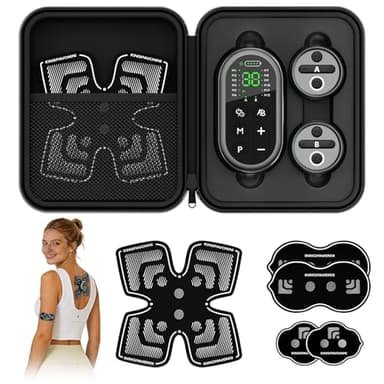
| ✕ |  KingPavonini Wireless TENS + EMS Muscle Stimulator Excellent hardware aimed at the wrong problem. A heel is treated sitting down with your foot up, which is exactly the situation where lead wires cost you nothing. Skip this | The one to skip for a foot | 6.8 |
The short version
Buy the TENS 7000. On a heel you are working on a small target with almost no muscle under the pad, and the single thing that changes whether a session helps is being able to adjust pulse width and rate yourself rather than cycling through someone else’s preset programs. The TENS 7000 is the unit that lets you do that, and its own reference manual publishes the ranges. The budget pick is the AUVON Dual Channel TENS Unit— the cheapest unit here that does the job, rechargeable, two channels, and enough to find out whether stimulation helps your foot at all. If your heel pain travels with a tight calf, the Belifu adds EMS modes so one unit covers both ends of the chain.
Be clear about what TENS is doing here
This is a symptom tool and this page is not going to pretend otherwise. The interventions with real numbers behind them for plantar fasciitis are mechanical and boring. The plantar fascia-specific stretching trial followed patients out to two years and found the fascia-specific protocol produced better long-term outcomes than the Achilles stretch most people are given instead. A randomized multimodal rehabilitation trial measured change in pain, function and plantar fascia thickness. And a JOSPT randomized trial found that adding trigger-point manual therapy to a self-stretching protocol beat self-stretching alone.
Nothing in that list is a TENS unit. What electrical stimulation offers is a way to make the first steps of the morning tolerable so you actually do the stretching, and a non-drug option for an evening when the heel will not settle. A double-blind randomized trial comparing treatment modalities for plantar fasciitis is the closest thing in our sources to a direct test of the modality question, and the honest summary of this literature is that the passive options cluster closely together while the loading and stretching work carries the long-term result. Buy a unit on that basis and you will not be disappointed by it.
Why a heel is a hard target, and what that means for the spec sheet
| Spec | Does it matter | Why |
|---|---|---|
| Manual pulse width and rate | Decides it | A foot has no muscle belly to recruit, so the setting that works is a sensory one you have to find. TENS 7000's own manual publishes a 50-300 microsecond pulse width and a 2-150 Hz pulse rate with a suggested 70-120 in both, which is the starting point a preset menu hides from you. |
| Two independent channels | Yes | The useful placement is one pair either side of the heel and one pair on the calf, and those two sites want different intensities. Every unit we rank here has two channels; a single-channel unit cannot do it. |
| Pad size | Yes, and it is the part people get wrong | Large pads fold and lift on the curve of a heel, and a lifted pad stings instead of working. 2 x 2 in squares are the size that sits flat there. |
| Mode count | No | Twenty-four modes and forty-eight modes are listing features. The underlying hardware is a dual-channel stimulator in all three cases, and we say so on every TENS page here. |
| Wireless pods | Not for a foot | Wireless earns its premium when you need to move around under clothing. A heel is treated sitting with your foot up, which is the one scenario where a lead wire is irrelevant. |
| Battery type | Running cost only | The TENS 7000 runs on a 9 V battery; the AUVON and Belifu recharge. Neither changes what the current does to your heel. |
The picks, and who each one is for
TENS 7000 — the best choice for an awkward target
This is for the reader who is prepared to learn two dials. The maker’s own reference manual publishes what almost nothing else in this category publishes: a pulse width range of 50 to 300 microseconds with a suggested 70 to 120, a pulse rate range of 2 to 150 Hz with the same suggested band, five named modes, two channels, a 1 to 60 minute timer and a 9 V battery. On a big muscle a preset works fine. On a heel, where the right sensation is a steady tingle rather than a twitch and the wrong one is a sharp sting under the arch, being able to drop the pulse width and raise the rate yourself is the difference between a unit you keep using and one that goes in a drawer.
AUVON Dual Channel — the budget pick
This is for the person who does not yet know whether stimulation does anything for their foot, and sensibly does not want to find out at a high price. Two independent channels with separate intensity control, rechargeable rather than eating 9 V batteries, and the simplest interface of the three. It is the cheapest unit on this page that does the job. The honest limitation is the one that applies to every preset-driven unit: when a program does not suit your heel, your only lever is the intensity dial.
Belifu Dual Channel TENS EMS — for the heel-and-calf case
Plantar fasciitis very often arrives attached to a calf that has not been at full length in years, and that is the version of this problem where one unit can usefully do two jobs. The Belifu is a competent dual-channel stimulator with EMS modes as well as TENS, so one channel can sit either side of the heel and the other on the gastrocnemius. Its twenty-four modes are marketing and we will keep saying so; the hardware underneath is not.
KingPavonini Wireless — the skip, on this page only
There is nothing wrong with this unit. Two wireless pods, dual-zone independent control, three pad sizes including a 4.3 in butterfly, a published 20 hours per pod over USB-C. It is a strong pick on the wireless versus wired page, where moving around under clothing is the whole point. A heel is treated sitting in a chair with your foot on a stool. You are paying several times a wired unit’s price to delete a wire that was not in your way.
What to own alongside it
If you buy only one thing for a sore heel, it should not be the TENS unit. The two tools below are what the stretching and trigger-point trials actually used, and they cost less than a month of parking.
How this page fits the rest of the foot coverage
The plantar fasciitis page is the one to read first if you are still working out what is wrong; it covers the loading and stretching side, which is where the long-term result comes from. This page is the product-selection half for people who have decided they want electrical stimulation in the mix. Rolling the plantar fascia is the technique page, and insoles and arch support covers the part that works while you are walking around rather than while you are sitting with a machine.
Every pick, in full
Specs below are the manufacturer’s own published figures, each linked to the page it came from. Where a maker does not publish a number, the table says so and names the page we checked — that absence is information too.
Price as of November 22, 2026. #ad How we’re funded
TENS 7000 Digital TENS Unit
The unit clinics hand out, with manual control over pulse width and rate rather than a menu of preset programs — which is what you want once you know what setting helps.
What it gets right
- Manual pulse-width and rate control instead of fixed presets
- The long-standing clinic default, so accessories are everywhere
What it does not
- Runs on a 9 V battery
- Manual control is only an advantage if you know what you are adjusting
AUVON Dual Channel TENS Unit
Two independent channels so you can treat both sides of a problem at once, at a price where trying TENS costs less than one session of anything else.
What it gets right
- Two independent channels with separate intensity control
- Rechargeable rather than eating 9 V batteries
- Cheap enough to find out whether TENS does anything for you
What it does not
- Pad adhesive life is the real running cost, not the unit
- Interface is fiddly with cold hands
Belifu Dual Channel TENS EMS Unit
Twenty-four modes at the lowest price in the category, and the mode count is marketing — but the hardware underneath is a competent dual-channel stimulator.
What it gets right
- Cheapest dual-channel unit here
- Rechargeable
- Pads and leads included
What it does not
- Mode count is noise, not a feature
- Thin documentation of what each mode does
KingPavonini Wireless TENS + EMS Muscle Stimulator
TENS and EMS from two pods you stick on and wear, with no lead wires anywhere — which is the whole reason to pay this much, because it is the only version of the device you can use under a shirt and still move around in. The 48-mode count is marketing; the dual-zone independent control underneath it is not.
What it gets right
- Wireless pods rather than lead wires, so it works under clothing and while moving
- Two pods run independently — separate mode and intensity each, so a shoulder and a leg can run different settings at once
- Published 20 hours per pod on the 1040 mAh cell, charged over USB-C rather than off a disposable battery
- Ships with three pad sizes including a 4.3 in butterfly pad, which is the one that actually covers a lower back
What it does not
- Forty-eight modes is a mode count, not a specification — the same marketing this site flags on every cheap unit
- Several times the price of a wired dual-channel unit that treats a back just as well
- Two pods and a remote are three things to keep charged and not lose
- Listed only in December 2025 and rated 4.1 across 69 reviews, so there is very little ownership history behind it
Common questions
What is the best TENS unit for plantar fasciitis?
The TENS 7000, because a heel is a small target with no muscle under it and the thing that decides whether a session helps is manual control over pulse width and rate — which its own reference manual publishes at 50 to 300 microseconds and 2 to 150 Hz, with 70 to 120 suggested in both. The AUVON Dual Channel is the budget pick and the cheapest unit here that does the job. Pick the Belifu instead if the heel pain comes with a chronically tight calf you want to treat on the second channel.
Does a TENS unit help plantar fasciitis?
It can make the pain more tolerable, which is not the same as treating the problem. The trials that produced lasting change in plantar fasciitis used plantar fascia-specific stretching, multimodal rehabilitation and trigger-point manual therapy added to stretching — none of them used a TENS unit. The sensible way to buy one is as the thing that makes the first steps of the morning bearable so that the stretching actually happens, not as the treatment itself.
Where do you put TENS pads for plantar fasciitis?
One pad on the inside of the heel and one on the outside, so the current crosses the band of fascia at the front of the heel bone. Not on the sole: the skin there is thick and dry, pads lift, and a lifted pad concentrates current at its edge, which is the sharp sting people describe. If you are running a second channel, put it on the calf. Use the small 2 x 2 in pads — larger ones fold on the curve of the heel.
What settings should you use for heel pain?
Start inside the manufacturer’s own suggested band rather than at the extremes. TENS 7000’s manual suggests 70 to 120 microseconds of pulse width and 70 to 120 Hz of pulse rate out of ranges of 50 to 300 and 2 to 150 respectively, and that is a reasonable starting point on any unit that lets you set it. Raise intensity until you feel a strong but comfortable tingle with no muscle twitch, and run it for the length of one timer cycle. If it stings rather than tingles, the pad has lifted.
Is a wireless TENS unit better for a foot?
No, and this is one of the few places where we say that flatly. Wireless pods exist so you can treat a back or a shoulder under a shirt while moving around. A heel is treated sitting down with your foot up, which is the exact situation where a lead wire costs you nothing. Spend the difference on a second set of pads and a foot roller.
Sources
- 1.TENS 7000 — Reference Manual (pulse width 50-300 µs, suggested 70-120 µs; pulse rate 2-150 Hz, suggested 70-120 Hz; 5 modes; 1-60 minute or continuous timer; two channels; 9 V battery) — the published pulse width and pulse rate ranges, suggested bands, mode count, channel count and timer quoted above
- 2.Plantar fascia-specific stretching improves outcomes in chronic plantar fasciitis — two-year follow-up (PubMed 16882901) — two-year follow-up; the fascia-specific stretch outperformed the Achilles stretch most patients are given
- 3.Effect of a multimodal rehabilitation program on pain, function and plantar fascia thickness in plantar fasciitis — RCT (PMC12930778) — randomized trial measuring pain, function and plantar fascia thickness after a multimodal program
- 4.Effectiveness of myofascial trigger point manual therapy combined with a self-stretching protocol for the management of plantar heel pain: a randomized controlled trial - JOSPT (PubMed 21285525) — trigger-point manual therapy added to self-stretching beat self-stretching alone
- 5.Comparing the Role of Different Treatment Modalities for Plantar Fasciitis: A Double Blind Randomized Controlled Trial (PubMed 32257015) — double-blind randomized comparison of treatment modalities for plantar fasciitis - the closest direct test of the modality question in our source set