Rollers & Balls
The Best Foam Rollers for Legs
Quads, hamstrings, calves and IT bands are the job this tool was built for - large, accessible muscle you can load with your own body weight, with no spine to work around. That makes the decision unusually simple: how firm, how long, and whether the surface concentrates pressure or spreads it. Nothing else on a roller's listing changes a session on a leg.
By Stephen V.Published
Disclosure:Grip & Gait earns a commission when you buy through links on this page, at no extra cost to you. It never changes what we recommend or the order we rank things in — here is exactly how we’re funded.
Quick picks
Ranked on published manufacturer specs and what they mean for the job, not on testing we have not done. Tap a row for the full reasoning. How we score.
| # | Product | Best for | Score | Price |
|---|---|---|---|---|
| 1 |  TriggerPoint GRID Foam Roller (13 in) For quads and IT bands, where you want pressure concentrated in strips rather than spread flat. 13 x 5.5 x 5.5 in over a hollow core that does not compress into a soft log. | Best overall for legs | 8.8 | |
| 2 |  Amazon Basics High-Density Foam Roller (18 in) For a first roller, and genuinely good on legs. 18 in is long enough to take both hamstrings or both calves at once, and a dense cylinder does the actual mechanical work. | Budget pick - cheapest that does the job | 8.4 | |
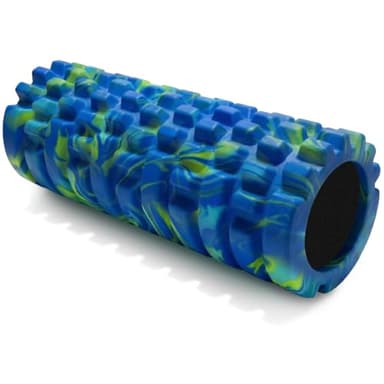
| 3 |  321 STRONG Foam Roller For someone who finds a flat cylinder too blunt but will not pay branded money. Triple-density surface, rigid core, knobs more aggressive than the GRID's. | Textured, without the brand price | 8.0 | $25.99 · View on Amazon Price as of November 22, 2026. #ad How we’re funded |
| 4 |  Therabody Wave Roller For quads and lats specifically, and for people who will not roll at all without the discomfort taken off. It is the most expensive way there is to press on a quad. | Vibration on big muscle | 7.6 | |
| ✕ |  Chirp Wheel XR 6-Inch Knot Kneader Back Roller An excellent tool pointed at the wrong body part. The narrow spinal channel that makes a wheel brilliant on a mid-back makes it fiddly and unpleasant on a quad or a calf. Skip this | The one to skip for legs | 6.4 |
The short version
Buy the TriggerPoint GRID. On a leg you want the pressure concentrated rather than spread, because a flat cylinder under a quad distributes your body weight across a wide contact patch and you end up pressing harder to feel anything. The GRID’s multi-density surface gives you three intensities on one roller and its hollow core does not slowly flatten into a soft log the way plain foam does. The budget pick is the Amazon Basics High-Density Roller— the cheapest thing here that does the job, and at 18 in it is actually longer than the GRID, which matters if you want both hamstrings at once. If a flat cylinder feels blunt and the branded one feels dear, the 321 STRONG sits exactly between them.
What rolling a leg actually does
The evidence for foam rolling is better than the evidence for most things on this site, and it is also narrower than the marketing. A Sports Medicine meta-analysis of foam rolling training effects on range of motion is the central paper: rolling reliably improves range of motion. A separate meta-analysis on the preventive effect of foam rolling on muscle soreness covers the day-after half. And a 2024 meta-analysis comparing static stretch training with foam rolling training puts the two side by side rather than letting either claim the territory.
Two findings change how you buy. An RCT comparing three different roller densities on knee range of motion and pressure pain threshold is the only direct test of the firmness question we hold, and it is the reason this page refuses to tell you that firmer is better. And a study of an acute bout of foam rolling on hip range of motion across different tissues is why the right answer on a quad is not automatically the right answer on an IT band.
The three specs that decide it
| Spec | Does it matter | Why |
|---|---|---|
| Surface: textured or flat | Decides it | A textured roller concentrates your body weight into raised strips instead of spreading it over the full contact patch. On a quad or an IT band that is the difference between feeling the tool and holding your breath to feel anything. |
| Length | Yes, and it is underrated | 18 in takes both calves or both hamstrings at once and lies along a spine if you want it to. 13 in fits in a gym bag. Pick for where you will actually use it; both lengths work on a single leg. |
| Core | Yes, over time | A hollow rigid core holds its shape; solid EVA softens over a few years of heavy use and quietly stops delivering the pressure you bought it for. The hollow core is noisier on a hard floor, which is the trade. |
| Density | Yes, but not the way you think | The one RCT comparing three densities on knee range of motion and pressure pain threshold is the reason we will not claim firmer is simply better. Start softer than you think on an IT band. |
| Vibration | Real, for one reason | Vibration reduces the discomfort of rolling, which means some people actually do it. That is a behavioural benefit, not a mechanical one, and it costs many times a plain cylinder. |
| Shape: cylinder or wheel | Decides which body part | A wheel's narrow channel exists to straddle a spine. On a leg it just means a small contact area and an awkward balance problem - which is why the Chirp Wheel is the skip row here and a strong pick on the back pages. |
The picks, and who each one is for
TriggerPoint GRID — the default for legs
For anyone whose main targets are quads and IT bands. The multi-density surface is the reason to buy it over a plain cylinder: the raised sections concentrate pressure in strips rather than spreading it flat, which is what makes an IT band pass bearable without needing to hold your breath. TriggerPoint’s own page publishes 13.0 x 5.5 x 5.5 in, an EVA outer over a hollow core stated to support up to 300 lb, and a one-year warranty. Worth noting: retailer listings widely print 500 lb, and the maker’s own number is the lower one. It costs roughly three times a plain cylinder and it is noisier on a hard floor.
Amazon Basics High-Density Roller — the budget pick
For a first roller, and for the reader who suspects the expensive ones are mostly branding. A dense foam cylinder does the actual mechanical work — sustained pressure over a broad contact area — and it is the cheapest thing here that does it. At 18 in it is the longest roller on this page, which is a real advantage on legs: you can take both hamstrings or both calves in one pass instead of doing each separately. The flat surface spreads pressure rather than concentrating it, and solid EVA softens over a few years of heavy use. Neither is a reason to buy something else first.
321 STRONG — the middle purchase
For the reader who has tried a flat cylinder and found it blunt. A triple-density surface at close to plain-cylinder money, with a rigid core that holds shape. Its knobs are more aggressive than the GRID’s, which some people cannot tolerate on an IT band at all — if that is you, the GRID is the gentler textured option and the Amazon Basics is the gentlest.
Therabody Wave Roller — for quads, if vibration is the thing that gets you rolling
The wave-pattern surface works well on quads and lats, and vibration genuinely takes the edge off, which for some people is the difference between rolling three times a week and never. That is a legitimate reason to buy it and we will say so. It is also the most expensive way to apply pressure to a quad that exists, it is heavy, and the mechanical work is being done by the same thing a $15 cylinder does.
Chirp Wheel XR 6-inch — the skip, for legs only
The spinal channel down the middle is the entire idea of a wheel: it lets pressure fall on the muscle either side of the spine instead of on the bony knobs, which is the one thing a cylinder cannot do. On a leg there is no spine to avoid, so all you are left with is a narrow contact area and a balance problem. It is a strong pick on the back page and the wrong tool here.
What a leg kit actually looks like
A roller is the right tool for quads, hamstrings and IT bands. For calves and for one specific knot it is not the best tool at any price, and both of the alternatives cost less than the roller.
Where this page sits
The main foam roller roundup ranks the whole field across the whole body; foam roller density is the deep dive on firmness, and how to foam roll is the technique page. If you have a specific leg problem rather than general tightness, start at quad tightness, hamstring tightness, IT band pain or tight calves and shins instead.
Every pick, in full
Specs below are the manufacturer’s own published figures, each linked to the page it came from. Where a maker does not publish a number, the table says so and names the page we checked — that absence is information too.
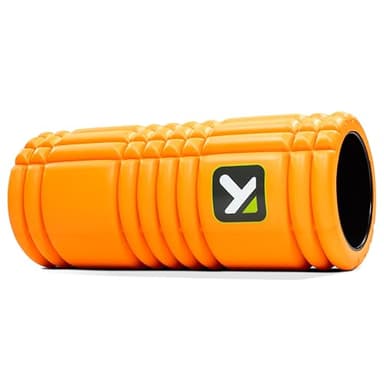
TriggerPoint GRID Foam Roller (13 in)
The multi-density surface is the reason to buy this over a plain foam cylinder: the raised sections concentrate pressure in strips instead of spreading it flat, which is what makes it usable on an IT band without needing to hold your breath.
What it gets right
- Hollow rigid core does not compress into a soft log the way plain EVA foam does after a year
- Multi-density surface gives you three pressure intensities on one roller
- 13 in length fits in a gym bag; the 26 in version does not
What it does not
- Costs roughly three times a plain high-density cylinder that also works
- The hollow core makes it noisier on a hard floor
- TriggerPoint's own page states a 300 lb support figure while retailer listings widely claim 500 lb — the maker's number is the lower one
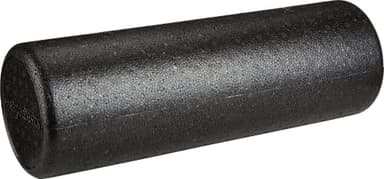
Amazon Basics High-Density Foam Roller (18 in)
A dense foam cylinder does the same mechanical job as a textured roller for a fraction of the money, and for a first roller that is the correct purchase.
What it gets right
- Does the actual mechanical work — sustained pressure across a broad contact area
- Nothing to break; no core, no seams, no electronics
- 18 in is long enough to lie along your spine, which the 13 in rollers are not
What it does not
- Flat surface spreads pressure rather than concentrating it
- Solid EVA softens over a few years of heavy use
Price as of November 22, 2026. #ad How we’re funded
321 STRONG Foam Roller
Textured like the premium rollers at close to plain-cylinder money — the sensible middle purchase if the flat cylinder feels too blunt and the branded one feels too dear.
What it gets right
- Triple-density surface at roughly a third of the branded price
- Rigid core holds shape
What it does not
- Knobs are more aggressive than the GRID's, which some people cannot tolerate on the IT band
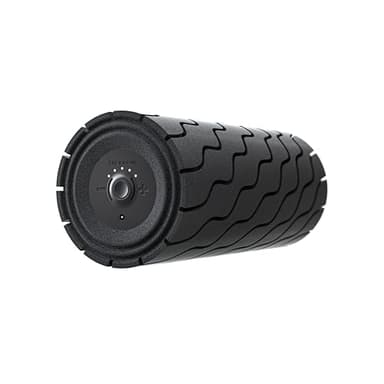
Therabody Wave Roller
The wave-pattern surface plus vibration is a real combination, and it is also the most expensive way to apply pressure to a quad that exists.
What it gets right
- Wave surface works well on quads and lats
- Bluetooth-guided routines if you want them
What it does not
- Very expensive against a foam cylinder
- Heavy
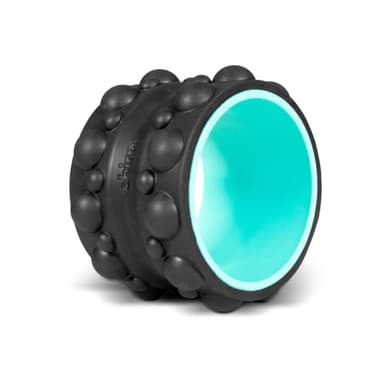
Chirp Wheel XR 6-Inch Knot Kneader Back Roller
A wheel rather than a cylinder, and the narrow channel down the middle is the whole idea: it lets the pressure fall on the muscle either side of the spine instead of on the spinous processes, which is the one thing a plain foam roller cannot do.
What it gets right
- The spinal channel means you can extend over it without the bony knobs taking the load
- A 6-inch diameter gives a deeper arch than a cylinder of the same width
- Far better at one specific job - mid-back extension - than a general-purpose roller
What it does not
- Costs more than a plain high-density cylinder that covers the whole body
- Narrow contact area makes it unpleasant and fiddly on quads, calves and IT bands
- Deeper arch is exactly wrong for an irritable low back; this is a thoracic tool
Common questions
What is the best foam roller for legs?
The TriggerPoint GRID. On a leg you want pressure concentrated rather than spread, and its multi-density surface does that while the hollow core keeps its shape over years. Buy the Amazon Basics High-Density Roller if you want the cheapest thing that genuinely works — it is 18 in long, which takes both hamstrings or both calves in one pass. The 321 STRONG is the textured option at close to plain-cylinder money.
Should a foam roller for legs be soft or firm?
Firmer for quads and hamstrings, softer than you think for an IT band. The only direct test we hold is a randomized trial comparing three roller densities on knee range of motion and pressure pain threshold, and it is not a clean win for the hardest roller. The practical rule: if you are holding your breath, the roller is too firm for that tissue today. A textured mid-density roller like the GRID gives you three intensities on one tool, which is why it ends up first here.
How long should you foam roll your legs?
Thirty to sixty seconds per muscle, moving at about an inch a second, which comes to five or six minutes for both legs front and back. The range-of-motion gains in the meta-analyses arrive quickly and do not keep growing the longer you grind. Going longer mostly buys you sore skin and an IT band that is more irritable tomorrow than it was today.
Is a long or short foam roller better for legs?
For legs specifically, longer is slightly better and it is a smaller difference than the surface. An 18 in roller lets you take both calves or both hamstrings at once, which halves the session; a 13 in roller fits in a gym bag, which is the reason it exists. Both work on a single leg. If you only ever roll at home, buy the longer one.
Is a foam roller or a massage stick better for calves?
For calves specifically, the stick is the better buy for most people. You set the pressure with your arms rather than your body weight, you can do it sitting in a chair, it never needs charging and it costs a fraction of a branded roller. The roller earns its place on quads, hamstrings and IT bands, where body weight is the only practical way to produce enough pressure.
Does foam rolling legs help sore muscles?
Yes, modestly, and the effect is best documented for range of motion rather than for soreness. The Sports Medicine meta-analysis on range of motion is the strongest finding; the separate meta-analysis on preventing soreness after exercise is the day-after half, and the effects there are real but smaller. Treat it as something that makes tomorrow’s session possible, not as something that repairs the muscle faster.
Sources
- 1.Foam Rolling Training Effects on Range of Motion: A Systematic Review and Meta-Analysis - Sports Medicine 2022 (PMC9474417) — the central range-of-motion meta-analysis, and the best-supported claim made on this page
- 2.Preventive effect of foam rolling on muscle soreness after exercise: a systematic review and meta-analysis - Journal of Bodywork and Movement Therapies 2024 (PubMed 39593540) — preventive effect on muscle soreness after exercise - real, and smaller than the range-of-motion effect
- 3.Comparison of Three Different Density Type Foam Rollers on Knee Range of Motion and Pressure Pain Threshold: A Randomized Controlled Trial - International Journal of Sports Physical Therapy (PMC6044602) — three roller densities compared on knee range of motion and pressure pain threshold - the reason this page will not claim firmer is better
- 4.The Effects of an Acute Bout of Foam Rolling on Hip Range of Motion on Different Tissues - International Journal of Sports Physical Therapy (PMC6088119) — an acute bout of rolling across different tissue types, which is why a quad and an IT band are not the same job
- 5.Static Stretch Training versus Foam Rolling Training Effects on Range of Motion: A Systematic Review and Meta-Analysis - Sports Medicine 2024 (PMC11393112) — static stretch training set directly against foam rolling training for range of motion
- 6.TriggerPoint — GRID 1.0 Foam Roller product page (13.0 × 5.5 × 5.5 in; hollow core stated to support up to 300 lb; EVA foam outer; 1-year warranty) — 13.0 x 5.5 x 5.5 in, EVA over a hollow core stated to support up to 300 lb, 1-year warranty - the maker's figures, which are lower than the 500 lb retailers print