Rollers & Balls
The Best Foam Rollers
Buy the TriggerPoint GRID: at 13 inches on a hollow core its maker states will take 300 lb, it is the one roller here with published construction figures and a warranty behind them. The budget pick is the Amazon Basics 18-inch high-density cylinder, which does the same mechanical job for a third of the money and is genuinely the right answer for most people. Here is the whole category ranked, including the shapes that are not cylinders.
By Stephen V.Published
Disclosure:Grip & Gait earns a commission when you buy through links on this page, at no extra cost to you. It never changes what we recommend or the order we rank things in — here is exactly how we’re funded.
Quick picks
Ranked on published manufacturer specs and what they mean for the job, not on testing we have not done. Tap a row for the full reasoning. How we score.
| # | Product | Best for | Score | Price |
|---|---|---|---|---|
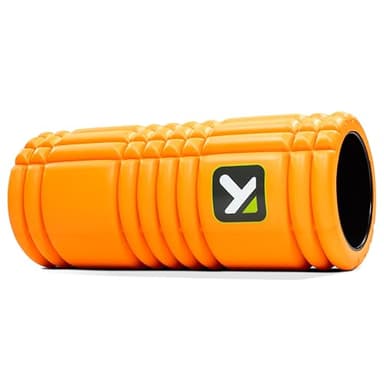
| 1 |  TriggerPoint GRID Foam Roller (13 in) For anyone buying one roller to keep for years: the only roller here whose maker publishes dimensions, core construction and a warranty, and the ridged surface is genuinely more comfortable on a first pass. | Best overall | 8.8 | $39.99 · View on Amazon Price as of November 12, 2026. #ad How we’re funded |
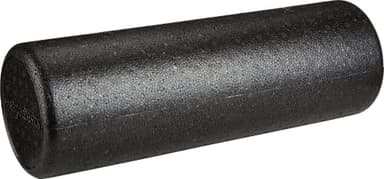
| 2 |  Amazon Basics High-Density Foam Roller (18 in) For almost everyone who has never owned a roller. An 18-inch firm cylinder covers the longest muscles on the body and does every job on this page except the spinal ones. | Budget pick - cheapest that does the job | 8.5 | $15.29 · View on Amazon Price as of November 12, 2026. #ad How we’re funded |
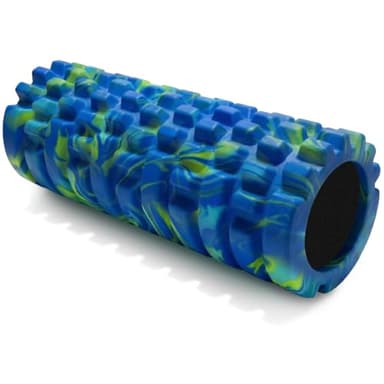
| 3 |  321 STRONG Foam Roller For experienced rollers who want more bite than a smooth cylinder gives. The knobbled surface concentrates pressure, which is the point and also the reason beginners dislike it. | Deeper, more aggressive texture | 8.0 | $25.99 · View on Amazon Price as of November 12, 2026. #ad How we’re funded |
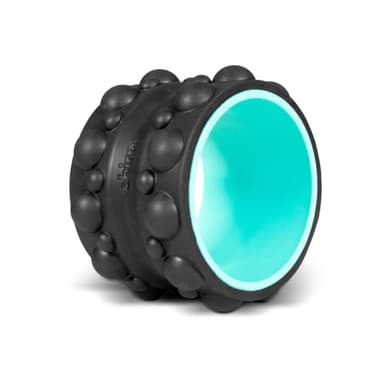
| 4 |  Chirp Wheel XR 6-Inch Knot Kneader Back Roller For the one job a cylinder cannot do safely: pressing either side of the spine without pressing on it. A different shape for a different problem, not a better roller. | Mid-back and the spine groove | 7.8 | |
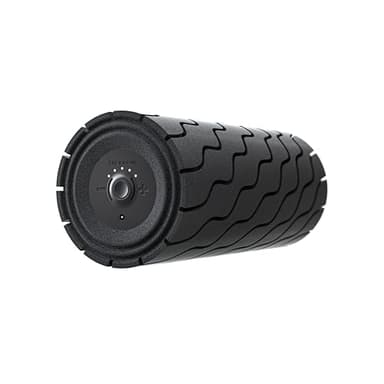
| 5 |  Therabody Wave Roller For someone who already rolls consistently and wants the one upgrade with any supporting argument. Expensive, needs charging, and the plain cylinder does the mechanical part. | If you want vibration and will use it | 7.4 | $179.99 · View on Amazon Price as of November 12, 2026. #ad How we’re funded |
| ✕ |  Hyperice Vyper 3 Vibrating Foam Roller A good device at the highest price in the category, which is reason enough on its own - and the density evidence does not support paying a premium for firmness anyway. Skip this | The one to skip | 6.3 |
The short version
Buy the TriggerPoint GRID if you want one roller that will still be in your house in five years. It is 13.0 by 5.5 by 5.5 inches over a hollow core TriggerPoint states is strong enough to support up to 300 pounds, with a one-year warranty — and it is the only roller in this ranking whose maker publishes any of that. Buy the Amazon Basics 18-inch high-density cylinder if you want the budget pick, and do not feel short-changed: it is the cheapest thing here, it is longer than the GRID, and for a first roller it is the one we recommend most often. If your problem is specifically the mid-back either side of the spine, the shape you want is not a cylinder at all — it is the Chirp Wheel XR 6-inch.
Pick the shape before you pick the brand
The firmness argument that dominates this category is mostly noise. The shape is not.
| If you want to roll | Buy this shape | Why |
|---|---|---|
| Quads, hamstrings, calves, lats - the long muscles | A plain 18 in cylinder | Length is the spec that matters: an 18 in roller spans a thigh and lets you lie across it. A 13 in roller is a travel compromise on these. |
| IT band, glutes, a specific sore patch | A 13 in textured roller | Shorter is easier to aim, and ridges concentrate pressure into a smaller contact area without you having to balance on one limb. |
| Either side of the spine, mid and upper back | A back wheel | A wheel has a channel down the middle so the bony spine is never loaded. On a cylinder the spine takes the pressure, which is the one thing to avoid. |
| A muscle too sore to tolerate body weight | A ball, not a roller | You control the load on a ball against a wall. On the floor you get all of your body weight whether you want it or not. |
| Calves and shins specifically, standing up | A stick | A stick puts the pressure where your hands decide, which is far better tolerated on a shin than a floor roller. |
Two of those five rows send you somewhere other than a foam roller, and we would rather say so. Massage balls and massage sticks have their own rankings.
What the research supports, in plain terms
Foam rolling has a better evidence base than most things in this shop, and it is narrower than the marketing. The Sports Medicine meta-analysis of foam rolling training effects on range of motion supports the range-of-motion claim. The 2024 meta-analysis of foam rolling and post-exercise soreness supports a preventive effect on soreness. And the 2024 meta-analysis comparing static stretch training against foam rolling is the useful one for a buyer: the two are broadly comparable for range of motion, which means a roller is a convenience and a comfort, not a unique mechanism.
Now the part that decides which roller to buy. The randomized controlled trial comparing three different roller densities on knee range of motion and pressure pain threshold is why this page refuses to rank on firmness. If density were the differentiator, the expensive rigid rollers would have an argument. It is not, so they do not, and the sensible reading is to buy on length, surface comfort, published construction and whether you will use it. The study of acute foam rolling on hip range of motion across different tissues adds the other half: the response differs by what you are rolling, which is an argument for owning the right shape rather than the firmest cylinder.
How we ranked these
- Published construction figures. Dimensions, core, load rating, warranty. TriggerPoint publishes all four; most makers in this category publish none, and the spec tables below name the page we checked in each case.
- Length, for a general-purpose roller. 18 inches spans a thigh and a back. 13 inches is easier to aim and easier to pack.
- Surface comfort on the first session. The roller people abandon is the one that hurt too much on day one. This is why a ridged EVA surface scores above bare knobbles for a first purchase.
- Shape fitness for the stated job — a wheel is not competing with a cylinder, it is answering a different question, and it is ranked on that question.
- We do not rank on firmness, and we do not rank on vibration. The density trial is the reason for the first. The second is a comfort upgrade on top of a mechanical job the cheap cylinder already does.
Which one for which person, in one line each
- You have never owned a roller: the Amazon Basics 18-inch cylinder. Spend the saving on nothing; find out whether you will use it first.
- You want one roller, for years, and you want it to be nice: the TriggerPoint GRID. Published construction, a warranty, and the ridges make the first pass over a sore quad tolerable.
- You have rolled for years and want more bite: the 321 STRONG. Deeper texture, more concentrated pressure, not a beginner’s roller.
- Your mid-back is the problem: the Chirp Wheel XR 6-inch. The channel down the centre is the entire reason it exists, and a cylinder cannot do this safely.
- You already roll consistently and want the upgrade: the Therabody Wave Roller. Vibration is pleasant and it is the only premium feature with an argument; it is still the fifth thing to buy, not the first.
- Skip anything our price feed cannot show a live offer for. That is the Vyper 3 today, and a roller you cannot currently buy at a price we can show you is not a recommendation we are willing to make.
How to roll, without the parts that do nothing
Thirty to sixty seconds per muscle group, moving slowly, breathing. Pause on a tender spot rather than sawing over it. Two or three groups per session is plenty. If you want the long version, how to foam roll has the technique by body part, and foam roller density has the firmness argument in full.
One mechanical note worth having before you start: the 2025 randomized trial of myofascial release applied to the thoracolumbar fascia found effects on flexibility, muscular endurance and balance from work on the back’s broad fascial sheet. That is a reasonable argument for including the upper back and lats in a routine most people run entirely on legs.
Where a foam roller is the wrong purchase
If the problem is a specific trigger point rather than a whole muscle, a ball does it better — roller vs ball settles that. If you cannot get down onto the floor, a stick or a gun is the realistic option: roller vs stick. If you are weighing a roller against percussion, massage gun vs foam roller is the honest comparison and the roller wins more of it than you would expect. And if your back is the reason you are here, the roller ranking for back pain and roller vs Chirp Wheel are the two pages to read instead of this one. If a back wheel is what you were really pricing, alternatives to a Chirp Wheel separates the channel from the arch and names a cheaper tool for each.
Every pick, in full
Specs below are the manufacturer’s own published figures, each linked to the page it came from. Where a maker does not publish a number, the table says so and names the page we checked — that absence is information too.
Price as of November 12, 2026. #ad How we’re funded
TriggerPoint GRID Foam Roller (13 in)
The multi-density surface is the reason to buy this over a plain foam cylinder: the raised sections concentrate pressure in strips instead of spreading it flat, which is what makes it usable on an IT band without needing to hold your breath.
What it gets right
- Hollow rigid core does not compress into a soft log the way plain EVA foam does after a year
- Multi-density surface gives you three pressure intensities on one roller
- 13 in length fits in a gym bag; the 26 in version does not
What it does not
- Costs roughly three times a plain high-density cylinder that also works
- The hollow core makes it noisier on a hard floor
- TriggerPoint's own page states a 300 lb support figure while retailer listings widely claim 500 lb — the maker's number is the lower one
Price as of November 12, 2026. #ad How we’re funded
Amazon Basics High-Density Foam Roller (18 in)
A dense foam cylinder does the same mechanical job as a textured roller for a fraction of the money, and for a first roller that is the correct purchase.
What it gets right
- Does the actual mechanical work — sustained pressure across a broad contact area
- Nothing to break; no core, no seams, no electronics
- 18 in is long enough to lie along your spine, which the 13 in rollers are not
What it does not
- Flat surface spreads pressure rather than concentrating it
- Solid EVA softens over a few years of heavy use
Price as of November 12, 2026. #ad How we’re funded
321 STRONG Foam Roller
Textured like the premium rollers at close to plain-cylinder money — the sensible middle purchase if the flat cylinder feels too blunt and the branded one feels too dear.
What it gets right
- Triple-density surface at roughly a third of the branded price
- Rigid core holds shape
What it does not
- Knobs are more aggressive than the GRID's, which some people cannot tolerate on the IT band
Chirp Wheel XR 6-Inch Knot Kneader Back Roller
A wheel rather than a cylinder, and the narrow channel down the middle is the whole idea: it lets the pressure fall on the muscle either side of the spine instead of on the spinous processes, which is the one thing a plain foam roller cannot do.
What it gets right
- The spinal channel means you can extend over it without the bony knobs taking the load
- A 6-inch diameter gives a deeper arch than a cylinder of the same width
- Far better at one specific job - mid-back extension - than a general-purpose roller
What it does not
- Costs more than a plain high-density cylinder that covers the whole body
- Narrow contact area makes it unpleasant and fiddly on quads, calves and IT bands
- Deeper arch is exactly wrong for an irritable low back; this is a thoracic tool
Price as of November 12, 2026. #ad How we’re funded
Therabody Wave Roller
The wave-pattern surface plus vibration is a real combination, and it is also the most expensive way to apply pressure to a quad that exists.
What it gets right
- Wave surface works well on quads and lats
- Bluetooth-guided routines if you want them
What it does not
- Very expensive against a foam cylinder
- Heavy
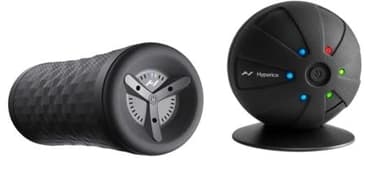
Hyperice Vyper 3 Vibrating Foam Roller
Three speeds of vibration on a 34 W motor, and the honest question is whether vibration adds enough over a $13 cylinder to justify twenty times the price — for most people it does not.
What it gets right
- Published motor, weight, dimensions and battery — more transparency than Hyperice gives its guns
- Vibration genuinely reduces the discomfort of rolling, which means people actually do it
What it does not
- Twenty times the price of a foam cylinder that does the mechanical part
- 2.7 lb and a 2-hour battery — it is a device, not a lump of foam
Common questions
What size foam roller should I buy?
Eighteen inches for a first, general-purpose roller. It spans a thigh, it lets you lie across it to open the chest and upper back, and it is stable enough that you are not balancing. Thirteen inches is the travel and precision size: easier to aim at an IT band or a glute, easier to pack, and too short to be comfortable under a back. Thirty-six inch rollers exist for clinics and are more roller than a home needs.
Does an expensive foam roller work better than a cheap one?
Not mechanically. A randomized controlled trial comparing three different roller densities on knee range of motion and pressure pain threshold is the reason we refuse to rank this category on firmness, and it is why the cheapest roller on this page sits second rather than last. What money buys is surface comfort, published construction and a warranty — real things, and reasons the TriggerPoint GRID is our top pick. They are not extra effect.
Is a foam roller or stretching better?
For range of motion, broadly comparable. The 2024 Sports Medicine meta-analysis comparing static stretch training against foam rolling training found similar effects, which makes this a question about what you will actually do rather than about mechanism. Rolling also has a separate preventive effect on post-exercise soreness in its own meta-analysis, which stretching does not, so if soreness is the complaint the roller has the edge.
Can you foam roll your lower back?
Not on a cylinder, and this is the one firm rule in the category. A cylinder under the lower back loads the lumbar spine and the kidney area and encourages you to hyperextend, which is how people make an irritable back worse. Use a wheel, which has a channel so the spine is never loaded, or a peanut-shaped ball that straddles the spine and presses the muscle either side. Upper back across a cylinder, with the ribs supporting you, is a different and much safer movement.
Sources
- 1.TriggerPoint — GRID 1.0 Foam Roller product page (13.0 × 5.5 × 5.5 in; hollow core stated to support up to 300 lb; EVA foam outer; 1-year warranty) — the published dimensions, core load rating and warranty behind the top pick
- 2.Comparison of Three Different Density Type Foam Rollers on Knee Range of Motion and Pressure Pain Threshold: A Randomized Controlled Trial - International Journal of Sports Physical Therapy (PMC6044602) — why this page does not rank on firmness
- 3.Foam Rolling Training Effects on Range of Motion: A Systematic Review and Meta-Analysis - Sports Medicine 2022 (PMC9474417) — the range-of-motion claim, which holds up
- 4.Preventive effect of foam rolling on muscle soreness after exercise: a systematic review and meta-analysis - Journal of Bodywork and Movement Therapies 2024 (PubMed 39593540) — preventive effect on post-exercise soreness
- 5.Static Stretch Training versus Foam Rolling Training Effects on Range of Motion: A Systematic Review and Meta-Analysis - Sports Medicine 2024 (PMC11393112) — rolling and static stretch training are broadly comparable for range of motion
- 6.The Effects of an Acute Bout of Foam Rolling on Hip Range of Motion on Different Tissues - International Journal of Sports Physical Therapy (PMC6088119) — response differs by tissue - an argument for shape over firmness
- 7.The Effect of Myofascial Release Applied to Thoracolumbar Fascia on Flexibility, Muscular Endurance, and Balance in Healthy Young Adults: A Randomized Controlled Trial - Journal of Sport Rehabilitation 2025 (PubMed 39832508) — why the upper back and lats belong in a routine most people run on legs only
- 8.camelcamelcamel — TriggerPoint GRID price history — price history for the top pick
- 9.camelcamelcamel — Amazon Basics foam roller price history — price history for the budget pick