Symptoms
Jaw Pain and TMJ
Almost everything searched here - "massage gun for TMJ", "facial massage gun" - points a percussion tool at the one region of the body where percussion makes least sense. The muscle that clenches is reachable with two fingers. The joint behind it is reachable with nothing you can buy, and the review evidence for the whole category is honest about how uncertain it is.
By Stephen V.Published
Disclosure:Grip & Gait earns a commission when you buy through links on this page, at no extra cost to you. It never changes what we recommend or the order we rank things in — here is exactly how we’re funded.
The thirty-second version
If your jaw aches, feels tight on waking, clicks when you chew, or gets tired halfway through a meal, the useful interventions are the boring ones: heat over the masseter and the side of the neck, gentle self-massage with your fingers rather than any device, a deliberate habit of unclenchingthrough the day, and soft food for a week when it is flared. If you only buy one thing, buy heat shaped for the neck and jaw line. What you should not buy is a percussion gun aimed at your face — and the reason is not squeamishness, it is that the structure doing the hurting is either a thin sheet of muscle over bone or a joint two centimetres from your ear canal.
What is actually going on
“TMJ” is the joint; the problem is usually called TMD, temporomandibular disorder, and it comes in two broad flavours that want different things. The common one is muscular: the masseter (the slab you can feel bulge at the angle of the jaw when you bite), the temporalis (fanning above and in front of the ear) and the pterygoids (inside, unreachable) get overworked by clenching, grinding, gum, stress and jaw posture. That is a muscle problem and it responds to the things muscle problems respond to — warmth, gentle pressure, and doing less of what overloads it.
The less common one is articular: the disc inside the joint, or the joint surfaces themselves. Clicking without pain is extremely common and usually not a problem. Locking — a jaw that will not open past a couple of centimetres, or will not close — is a different matter and needs a dentist or a maxillofacial clinic rather than a device.
Telling them apart at home is imperfect, but a useful question is whether it hurts more to chew (muscular, usually) or more at the joint right in front of the ear with a mechanical catch (articular, more likely). Most people have some of both.
What the evidence says, including how uncertain it is
The largest synthesis is a rapid review of 62 systematic reviews and nine clinical guidelines published in the International Journal of Oral and Maxillofacial Surgery in 2022. Its headline finding is that moderate evidence supports a multi-modal conservative approach as initial management— that is, self-care, education, exercise and manual therapy together, not a single magic intervention. Its most striking finding is what it says next: contrary to existing guidelines, occlusal splint therapy is not recommended due to a lack of supporting evidence. If you were told a night guard is the answer, that is the current state of the review evidence on it.
On the hands-on half specifically, a systematic review and meta-analysis in Physical Therapy analysed 48 randomized controlled trials of manual therapy and therapeutic exercise for TMD. The overall evidence was rated low, the included trials had unclear or high risk of bias, and effect sizes were mostly low to moderate with no clear superiority of exercise over other conservative treatments. Its one positive signal: manual therapy alone, or combined with exercise at the jaw or the neck, showed promising effects. The authors’ own conclusion is that there is great uncertainty.
That is a thinner base than most of this site’s symptom pages, and it tells you how to spend. Cheap, low-risk, reversible things: yes. Expensive devices and irreversible dental work aimed at a problem whose conservative evidence is this soft: not without a clinician you trust.
Which class of tool fits a jaw
| Tool class | Cost | Why it does or doesn’t work here | Verdict |
|---|---|---|---|
| Heat | Cost: Budget | Warmth over the masseter, the temple and the side of the neck is the most useful purchasable thing here, and it is the self-care half of the multi-modal approach the guidelines support. A shaped neck pad covers the jaw line and the traps at once.Where it fails: Not over a swollen, hot jaw with fever or a dental infection. Heat makes an infection worse, and that is a same-day dental problem. | Start here |
| Your own fingers | Cost: Budget | The masseter is a sheet of muscle a centimetre or two thick that you can pin against the jawbone with two fingertips, hold for twenty seconds, and release. This is the manual therapy the 48-trial review found promising, at zero cost.Where it fails: Hard pressure, inside the mouth, or chasing a click. Firm and tolerable, outside only, and stop if it sets off a headache. | Start here |
| Massage ball | Cost: Budget | Not for the jaw - for the upper traps and the muscle at the base of the skull that almost always come along with a clenched jaw. A ball against a wall reaches those precisely.Where it fails: Never on the face or the temple, and never on the front or sides of the neck. The ball lives below the skull line, not above it. | Sometimes |
| Massage gun | Cost: Mid-range | There is a legitimate use for a light gun on the traps and the back of the shoulders, which is a different region that often needs attention at the same time.Where it fails: Not on the face, the temple, the jaw joint or the front of the neck. Thin tissue over bone, with the ear canal and the joint capsule inches away - and no amount of attachment-swapping changes that. | Not for this |
| TENS unit | Cost: Budget | Clinic-applied electrotherapy for TMD exists and sits inside the uncertain conservative evidence base above.Where it fails: Pads near the face, the front of the neck or the carotid area are outside every consumer unit's safe-use instructions. If electrical therapy for your jaw is on the table, it is applied by a clinician, not bought. | Not for this |
| Night splint | Cost: Budget | Wrist splinting has Cochrane evidence behind it for a different problem - see the carpal tunnel page - which is why that page recommends one and this page does not.Where it fails: For the jaw, the 2022 rapid review of 62 reviews explicitly does not recommend occlusal splint therapy for pain, on the grounds of insufficient supporting evidence. A dentist may still want one to protect your teeth, which is a separate reason. | Not for this |
What we would actually buy
The one to buy first
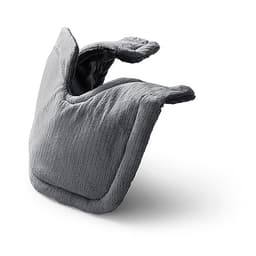
Sunbeam Neck and Shoulder Heating Pad
Shaped to sit over the traps and up the sides of the neck, which is the span that matters for a clenching jaw - the masseter, the muscle under the ear, and the neck that has been bracing with it. Moist-heat option and an auto shutoff, because this is an evening-in-an-armchair purchase.
Price as of October 21, 2026. #ad How we’re funded
For the neck and traps underneath
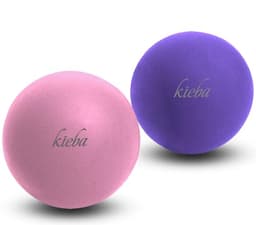
Kieba Massage Lacrosse Balls
Jaw tension almost never arrives alone. A ball against a wall reaches the upper traps and the muscle at the base of the skull, which is where a lot of jaw-and-headache patterns are driven from. Below the skull line only.
Price as of October 21, 2026. #ad How we’re funded
For the fingertip work
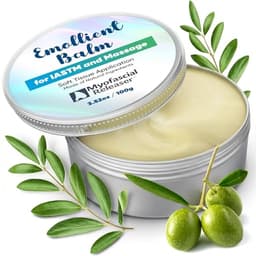
Myofascial Releaser Emollient Balm
A little glide makes self-massage of the masseter and the temple more comfortable than dry fingers dragging on skin, which is the difference between doing it daily and doing it once. Avoid the eyes, and wash your hands first.
Price as of October 21, 2026. #ad How we’re funded
The five-minute routine that is actually the treatment
- Heat, ten to fifteen minutes. Over the angle of the jaw and the side of the neck, comfortably warm, with fabric against skin.
- Masseter, twenty seconds a side. Bite gently to find the bulge at the angle of the jaw, let go, then press two fingertips into it with the jaw slack. Firm, not fierce. Breathe out while you hold.
- Temporalis, twenty seconds a side. Flat fingers above and in front of the ear, small slow circles.
- Open and close, six times, slowly. Tongue tip resting behind the top teeth, jaw opening straight rather than drifting to one side. Stop short of pain and short of a click.
- Then the habit. Teeth apart, lips together, tongue up. Check it whenever you notice it. This unglamorous item outperforms every object on this page.
Where to go from here
Jaw pain travels with two other patterns on this site. If your headaches are the main complaint, start at tension headaches— the neck-and-jaw overlap is substantial and the evidence there is better. If the neck is the bigger problem, tight neck and shoulders has the technique and the off-limits list. If heat is the thing you are buying, the ranked roundup is the best heating pads for neck and shoulders. And if you were about to buy a percussion device for your face, massage gun vs handheld massager explains what each class can and cannot reach.
Common questions
Can you use a massage gun on your jaw for TMJ?
We would not, and no amount of attachment-swapping changes the anatomy: the masseter is a thin sheet of muscle over bone, the jaw joint sits a couple of centimetres from the ear canal, and percussion against bone transmits straight through it. The masseter responds perfectly well to two fingertips held against it for twenty seconds, which is the manual therapy the 48-trial review found promising. Use a light gun on the traps and shoulders if they need it, and keep it below the jaw line.
What actually helps TMJ pain at home?
A combination rather than one thing, which is also what the guidelines say: heat over the masseter and side of the neck, gentle self-massage of the masseter and temporalis with fingertips, slow controlled opening and closing short of pain, softer food while it is flared, and a deliberate habit of keeping the teeth apart. The 2022 rapid review of 62 systematic reviews found moderate evidence for exactly this kind of multi-modal conservative approach as initial management.
Do night guards work for TMJ pain?
For pain, the current review evidence does not support them as first-line. The 2022 rapid review of 62 systematic reviews and nine guidelines concluded that, contrary to existing guidelines, occlusal splint therapy is not recommended because supporting evidence is lacking. That is a statement about pain relief, not about tooth protection — if you are grinding enamel away, a dentist may well want you in a guard for a completely different and valid reason.
Why does my jaw hurt more in the morning?
Because of what happens while you are asleep: clenching and grinding load the masseter for hours without the feedback that stops you doing it awake. Morning tightness, a tired-feeling face and a dull ache in front of the ear are the classic pattern. Heat and gentle massage before breakfast help the symptom; what helps the cause is managing the daytime clenching habit, sleep quality and stress load, and a dental opinion if your teeth show the wear.
Sources
- 1.Management of temporomandibular disorders: a rapid review of systematic reviews and guidelines - International Journal of Oral and Maxillofacial Surgery 2022 (PubMed 35339331) — 62 systematic reviews and 9 guidelines; moderate evidence for multi-modal conservative care; occlusal splints not recommended
- 2.Effectiveness of Manual Therapy and Therapeutic Exercise for Temporomandibular Disorders: Systematic Review and Meta-Analysis - Physical Therapy 2016 (PMC4706597) — 48 RCTs; overall evidence low, effects low to moderate, manual therapy at jaw or neck promising
- 3.Use of Heat for the Self-Management of Non-Specific Neck Pain: A Systematic Review - Journal of Pain Research 2026 (PMC13269032) — the heat-for-neck-pain evidence the first pick leans on
- 4.Therabody — Product Safety & Precautions — manufacturer precautions - the basis for keeping percussion off the head and neck