Symptoms
Tension Headaches
A band of pressure around the head, both sides, worse by late afternoon, with traps and the base of the skull that feel like cable. The thing with the most evidence behind it is not a device at all - it is neck and shoulder strength work. Tools earn their place by making that possible and making the bad evenings tolerable.
By Stephen V.Published
Disclosure:Grip & Gait earns a commission when you buy through links on this page, at no extra cost to you. It never changes what we recommend or the order we rank things in — here is exactly how we’re funded.
The thirty-second version
If your headache is a dull band or vice around both sides of the head, builds through the day, and comes with a neck and shoulders that feel braced, you are describing tension-type headache. The intervention with the best evidence is neck and shoulder strengthening plus deliberate muscle relaxation— a meta-analysis of nine randomized trials found both reduced headache intensity, duration and frequency. Nothing you buy replaces that. What is worth owning is heat shaped for the neck and traps for the evening, and a ballto reach the two spots that reliably refer pain into a head: the base of the skull and the top of the shoulder blade. Buy the heat first. And if your headache is one-sided, throbbing, with light sensitivity or nausea, this is the wrong page — that is a migraine pattern and it wants a different conversation.
Why a neck produces a headache
The muscles at the base of the skull — the suboccipitals, a group the size of a thumbprint each — and the upper trapezius both refer pain upward and forward into the head rather than staying where they are. That is why a headache from a desk day feels like it sits behind the eyes or wraps the temples while the thing that is actually irritable is at the back of the neck. Hold a head forward of its shoulders for eight hours and those muscles work isometrically the entire time, which is a request they eventually decline.
This is also why the useful fix is strength rather than stretching. A muscle that has been holding a load all day is not short, it is tired. Tired muscle wants either less load (the head further back over the shoulders, the screen higher) or more capacity (stronger neck and scapular muscles). Both of those are free.
The evidence, and it is better than this category usually manages
A 2025 systematic review and meta-analysis in the Journal of Oral & Facial Pain and Headache pooled nine randomized controlled trials of physiotherapy approaches in chronic tension-type headache, with trial quality assessed on the PEDro scale. Neck-shoulder strength exercises, electroacupuncture and approaches targeting muscle relaxation improved headache intensity (standardised mean difference −1.17, 95% CI −1.86 to −0.49, p < 0.01) and reduced headache duration (−0.71, 95% CI −1.31 to −0.12, p = 0.02). Muscle relaxation and neck-shoulder strength work also significantly reduced headache frequency(−1.36, 95% CI −2.47 to −0.26, p = 0.02) compared with controls. Nine trials is not a mountain of evidence, and those are real effects on all three of the outcomes that matter to someone who gets these.
Note which words appear in that list: strength, relaxation, acupuncture. Not percussion, not vibration, not any purchasable device. The honest role for the objects below is to make the neck comfortable enough to do the work, and to take the edge off an evening when the work has not had time to help yet. The systematic review of heat for self-management of non-specific neck pain is where the case for the first pick sits, and it is a modest case for a cheap thing.
Which class of tool fits a tension headache
| Tool class | Cost | Why it does or doesn’t work here | Verdict |
|---|---|---|---|
| Heat | Cost: Budget | A pad shaped for the neck and shoulders sits over the traps and up both sides without being held there, which is the thing a flat rectangle cannot do on a sloping shoulder. Fifteen minutes in the evening, and before the strength work.Where it fails: Not a treatment for the headache mechanism, and not for a headache with fever, a stiff neck or any of the red flags above. | Start here |
| Massage ball | Cost: Budget | The two referral spots that matter - the base of the skull and the upper trap near the top corner of the shoulder blade - are both reachable precisely with a ball against a wall or lying on the floor. Thirty to sixty seconds each, firm and tolerable.Where it fails: Never on the front or sides of the neck, and never pressed into the hollow right behind the ear. If pressure produces dizziness, visual change or tingling into the arm, stop. | Start here |
| Strength work | Cost: Budget | This is the one with the meta-analysis behind it: neck and shoulder strengthening reduced headache intensity, duration and frequency across nine trials. It costs nothing and it is the only item here that changes how often you get them.Where it fails: Not during a bad attack, and not loaded heavily from day one. Little and often beats a session that triggers one. | Start here |
| Massage gun | Cost: Mid-range | A light gun is useful on the upper traps and the muscle between the shoulder blades - the compensating region - and a lighter unit is the one you can hold at head height one-handed.Where it fails: Never on the front or sides of the neck, the skull, the temples or the base of the ear. Percussion near the suboccipitals is where people turn a headache into a worse headache; a ball gives you far more control there. | Sometimes |
| Acupressure mat | Cost: Budget | Cheap, pleasant for some people, and plausibly a relaxation intervention of the kind the meta-analysis grouped as effective. Ten minutes on the upper back with the neck pillow is the usual way in.Where it fails: The evidence specific to these mats is thin and we have said so on the mat page. Treat it as comfort, not therapy, and do not spend a lot. | Sometimes |
| TENS unit | Cost: Budget | TENS on the upper traps and shoulders is within normal use and is covered by the neck and shoulder roundup.Where it fails: Pads do not go on the head, the face or the front or sides of the neck. Headache-specific electrical devices exist and are a clinician's call, not a shelf purchase. | Not for this |
What we would actually buy
The one to buy first
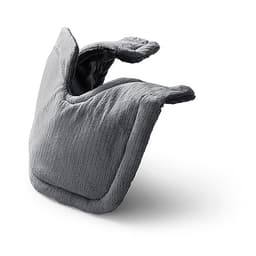
Sunbeam Neck and Shoulder Heating Pad
Cut to the shape of the problem: it covers the traps and both sides of the neck without a hand holding it there. Moist-heat option and an auto shutoff, which matters because this gets used in an armchair at the end of a bad day.
Price as of October 21, 2026. #ad How we’re funded
For the two spots that refer into a head
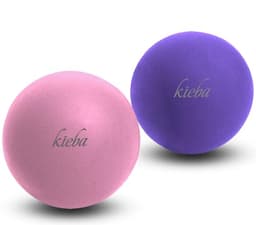
Kieba Massage Lacrosse Balls
The base of the skull and the top corner of the shoulder blade. A ball against a wall puts pressure exactly there and lets you control it to the ounce, which is the opposite of what a percussion head does. Thirty to sixty seconds per spot.
Price as of October 21, 2026. #ad How we’re funded
For the traps, if you want a gun
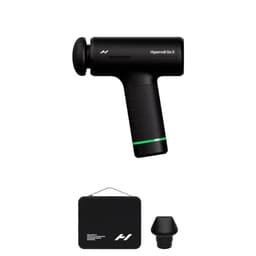
Hyperice Hypervolt Go 3
At a published 1.6 lb and 55 dB it is the lightest Hyperice handheld, which decides whether you can hold it up to your own shoulder without the arm tiring. Traps and between the shoulder blades only - never above the jaw line or on the front of the neck.
Price as of October 21, 2026. #ad How we’re funded
The ten-minute evening routine
- Heat, fifteen minutes over the traps and the base of the neck. Comfortably warm, fabric against skin, never asleep.
- Ball at the base of the skull, 45 seconds a side. Lie on your back with the ball just below the bony ridge at the back of the head, head weight only, jaw slack. Breathe out slowly. Stop for dizziness or any visual change.
- Ball on the upper trap, 45 seconds a side. Against a wall, near the top corner of the shoulder blade. Lean, do not grind.
- Chin nods, ten slow reps. Lying down, gently tuck the chin as if nodding yes a centimetre, hold three seconds. This is the smallest useful dose of the neck strengthening the trials used.
- Shoulder blade squeezes, ten slow reps. Then, over weeks, add load. The meta-analysis effect comes from the strength half, not the massage half.
Where to go from here
If the neck itself is the main complaint rather than the headache, tight neck and shouldersis the fuller page on technique and off-limits areas. If your jaw is tight too — waking up clenched, aching when chewing — the overlap is real and jaw pain and TMJ covers it. If the upper back between the shoulder blades is the thing that aches, upper back pain is aimed there. For the heat purchase, the best heating pads for neck and shoulders is the ranked roundup, and the best massage balls covers the ball.
Common questions
What actually relieves a tension headache?
In the trial evidence, neck and shoulder strength work and deliberate muscle relaxation. A 2025 meta-analysis of nine randomized trials found those approaches improved headache intensity (SMD −1.17) and duration (−0.71), and that relaxation plus neck-shoulder strengthening also reduced headache frequency (−1.36) against controls. For the evening itself: heat over the traps and base of the neck, and thirty to sixty seconds of ball pressure on the base of the skull and the upper trap.
Can a massage gun help tension headaches?
Indirectly, on the traps and the muscle between the shoulder blades, with a light unit and a low setting. It must never go on the skull, the temples, behind the ear, or the front or sides of the neck, and we would use a ball rather than a gun at the base of the skull because you can control the pressure to the ounce there. The device is not treating the headache; it is treating the muscle that refers into your head.
How do I know if it is a tension headache or a migraine?
Tension-type headache is typically both sides, a dull pressing or tightening band rather than a throb, mild to moderate, not made worse by routine activity, and without nausea or vomiting. Migraine is more often one-sided, pulsating, moderate to severe, worsened by activity, and comes with nausea or sensitivity to light and sound. People get both, and a device page is not a diagnosis — if headaches are frequent, disabling or changing, that is a doctor’s visit.
Does massaging the base of the skull help headaches?
For a lot of people it takes the edge off within minutes, which fits the referral pattern: the suboccipital muscles refer pain up into the head. Do it with your head’s own weight on a ball rather than with hard thumb pressure or a device, 45 seconds a side, and stop immediately for dizziness, ringing, visual change or tingling down an arm. Treat it as relief rather than as the fix — the thing that reduces how often you get them is the strength work.
Sources
- 1.The efficacy of physiotherapy approaches in chronic tension-type headache: a systematic review and meta-analysis - Journal of Oral & Facial Pain and Headache 2025 (PMC11934752) — 9 RCTs; intensity SMD -1.17, duration -0.71, frequency -1.36 for strength and relaxation approaches
- 2.Use of Heat for the Self-Management of Non-Specific Neck Pain: A Systematic Review - Journal of Pain Research 2026 (PMC13269032) — the heat-for-neck-pain self-management evidence behind the first pick
- 3.Reliability of physical examination for diagnosis of myofascial trigger points: a systematic review of the literature - The Clinical Journal of Pain (PubMed 19158550) — how reliably trigger points can be located at all - the caveat on the ball work
- 4.Therabody — Product Safety & Precautions — manufacturer precautions: why nothing mechanical goes on the head or front of the neck