Rollers & Balls
Alternatives to a Foam Roller
The tool we would buy instead for most people is a roller stick: it does the same thing to a quad or a calf while you stay in a chair, it costs less than the cheapest cylinder, and it fits in a bag. The budget pick is a pair of lacrosse balls. But read the next section before you replace anything - a foam roller is the best-studied object on this site, and three of the five reasons people go looking for an alternative are solved by a better roller rather than a different tool.
By Stephen V.Published
Disclosure:Grip & Gait earns a commission when you buy through links on this page, at no extra cost to you. It never changes what we recommend or the order we rank things in — here is exactly how we’re funded.
Quick picks
Ranked on published manufacturer specs and what they mean for the job, not on testing we have not done. Tap a row for the full reasoning. How we score.
| # | Product | Best for | Score | Price |
|---|---|---|---|---|
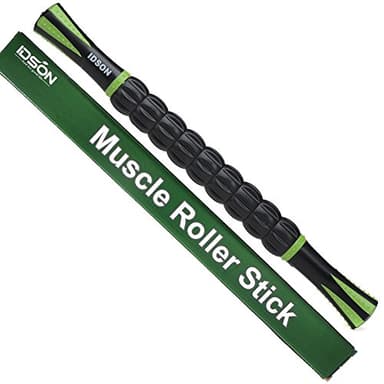
| 1 |  Idson Muscle Roller Stick Everything a cylinder does to a quad, hamstring or calf, done sitting in a chair with two hands providing the pressure instead of the floor. Costs less than the cheapest foam roller on the site. | Best overall, and the budget pick | 8.6 | $8.89 · View on Amazon Price as of November 22, 2026. #ad How we’re funded |
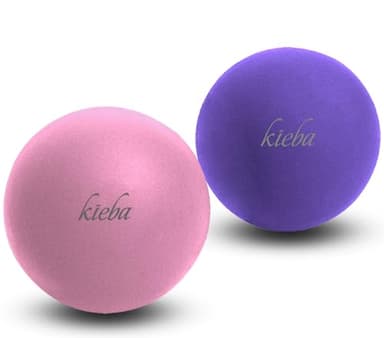
| 2 |  Kieba Massage Lacrosse Balls Where a cylinder spreads force across a whole muscle, a hard ball concentrates it. Against a wall it needs no floor at all, which is the single most useful property on this page. | Best for one specific spot | 8.4 | $7.99 · View on Amazon Price as of November 22, 2026. #ad How we’re funded |
| 3 |  Chirp Wheel XR 6-Inch Knot Kneader Back Roller The reason a lot of people want an alternative: a round roller sits on the bony knobs of the spine. The channel in a back wheel clears them and loads the muscle either side instead. | Best for a back a cylinder rolls off | 8.0 | |
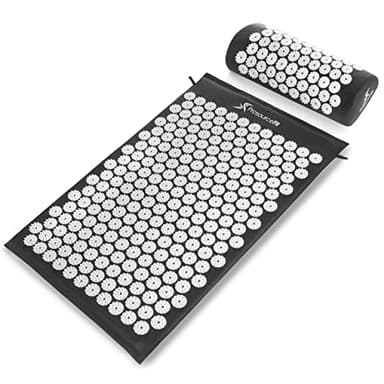
| 4 |  ProsourceFit Acupressure Mat and Pillow Set The only tool here that requires no technique: lie on it and let bodyweight do the work across your whole back at once. It is a comfort tool, not a range-of-motion tool - a real distinction. | Best hands-off option | 7.5 | $29.99 · View on Amazon Price as of November 22, 2026. #ad How we’re funded |
| 5 |  Bob and Brad C2 Massage Gun A different mechanism rather than a cheaper cylinder, and the only option here that works on a completely slack muscle while you sit still. Costs several times everything above it. | Best if you want percussion instead | 7.8 | |
| ✕ |  Therabody Wave Roller A good object and not an alternative to anything - it is a foam roller with a motor inside, at many times the price of a foam roller. If the floor is the problem, this does not solve it. Skip this | The one to skip as an alternative | 6.5 |
The short version
Buy the Idson roller stick. It reproduces the part of foam rolling that actually matters on a limb — sustained pressure dragged along the length of a muscle — without requiring you to get down on the floor, balance your bodyweight on a cylinder, and get back up again. It costs less than the cheapest foam roller we recommend and it travels. For one deep spot rather than a whole muscle, a pair of lacrosse balls is the cheaper and better answer, and used against a wall they need no floor either.
Two specialist cases. If the reason you dislike a roller is that it rides over the bony knobs of your spine, you want a channel, not a cylinder — that is the Chirp Wheel XR. If you want something that needs no technique at all, the acupressure mat is the only tool here you simply lie down on.
What a foam roller is actually known for
Worth being fair about, because this is the one tool in the shop with a genuine literature behind it. A cylinder is the cheapest way ever devised to press your own bodyweight across the full length of a large muscle, and it is dual-purpose: the same object is a mobility prop for thoracic extension and a balance tool. Nothing on this page does that combination.
The evidence is narrower than the marketing but it is real. A Sports Medicine meta-analysis of foam rolling training effects on range of motion supports the range-of-motion claim. A 2024 meta-analysis of foam rolling and post-exercise soreness supports a preventive effect on soreness. And the 2024 meta-analysis comparing static stretch training against foam rolling is the one a buyer should read: the two come out broadly comparable for range of motion, which tells you a roller is a convenient delivery mechanism rather than a unique one.
That last point is the key to this whole page. If rolling and stretching produce comparable range-of-motion outcomes, then the specific object is negotiable and the pressure is what you are replacing. A stick, a ball and a pair of hands all apply pressure along a muscle. What changes between them is who supplies the force, how much area it covers, and whether you have to be on the floor to use it.
The five reasons people want an alternative
1. You cannot get down on the floor and back up comfortably. By far the most common reason, and the one we take most seriously. A stiff knee, an unhappy hip, a recent operation or simply being older turns a floor-based tool into a tool you do not use. This is the case the roller stick was made for, and a ball against a wall solves it too.
2. No space, or you travel. An 18-inch cylinder does not go in a carry-on. A stick does, and two lacrosse balls go in a jacket pocket.
3. Your back is the target and the roller rolls off the spine. A round cylinder laid along the spine sits on the spinous processes, which is both uncomfortable and the wrong place to load. Laid crosswise it works well for thoracic extension, but it is still a round surface on a bumpy structure. A channel solves it properly.
4. You want one specific spot, not a whole muscle.A cylinder distributes force over a wide contact patch, which is exactly wrong for a single dense knot in a glute or under a shoulder blade. That is a ball’s job.
5. Rolling hurts more than it helps. Sometimes the answer is not a different tool at all. A randomized trial comparing three roller densities on knee range of motion and pressure pain threshold found density was not the differentiator people assume, which means a softer roller is a legitimate fix and not a cop-out. Before you replace the category, read the density page and how to foam roll — the most common cause of rolling hurting is rolling too fast, too hard, over a bone.
Which alternative replaces which part
| Why you want an alternative | Buy | Why it works |
|---|---|---|
| Cannot get on the floor, or will not | Idson roller stick | Same stroke along the same muscle, with your arms supplying the pressure instead of your bodyweight. Works in a chair, at a desk, on the side of a bed. |
| Travelling, or no storage space | Roller stick or lacrosse balls | The stick is under a foot and a half and weighs nothing; two balls fit a pocket. An 18-inch cylinder fits neither. |
| One deep knot, not a whole muscle | Kieba lacrosse balls | Concentrating force is the opposite of what a cylinder does. Against a wall for a shoulder blade, on the floor for a glute, under a foot for a fascia. |
| The roller rides on the bones of your spine | Chirp Wheel XR 6-inch | The channel down the middle clears the spinous processes and puts pressure on the erector muscles either side of them, which is where it belongs. |
| You want zero technique | Acupressure mat | Lie down. That is the whole method. It is a comfort and relaxation tool rather than a mobility one, and we would not claim otherwise. |
| You want depth on a muscle you cannot load | Bob and Brad C2 massage gun | A different mechanism. The gun's real advantage is treating a fully slack muscle while you sit still, which no floor tool can do. It costs several times any stick or ball here. |
| Calves, hamstrings and quads only | A stick, and stop shopping | Two hands on a stick produce more pressure on a calf than bodyweight on a cylinder, with more control and less floor. This is the clearest win on the page. |
| You actually want a motor in a cylinder | Not an alternative - that is a foam roller | A vibrating roller is the same object with a battery. Fine purchase if the cylinder shape was never the problem; useless if the floor was. |
The roller stick, specifically, and why it is the top pick
The thing a stick changes is who supplies the force. On a cylinder, the pressure comes from your bodyweight, so it is fixed by physics and awkward to modulate — you adjust it by shifting your weight around, which is why rolling an IT band hurts and rolling a hamstring barely registers. With a stick in two hands you dial the pressure directly, and you can do it sitting in a chair with the muscle completely slack.
That matters more than it sounds for one specific reason the study on acute foam rolling across different tissues hints at: the response is not uniform across the body, so a tool whose pressure you can tune per area has a real advantage over one whose pressure is set by how you happen to be balanced.
The honest limits. A stick cannot do your own upper back — you have no leverage behind you — and it cannot reproduce the thoracic-extension stretch a cylinder gives you when you lie crosswise over it. It is also short, so a long hamstring takes more passes. If your main target is your back, buy a wheel or keep a roller. If your main target is legs, the stick wins on every axis including price. The full head-to-head is in foam roller vs massage stick, and the ranked stick options are in the massage stick roundup.
About the things in your kitchen
People search for a foam roller alternative at home, so here is the honest version. A frozen water bottle under the arch of a foot is a genuinely good tool and we recommend the idea on the plantar fascia page. A tennis ball works like a soft lacrosse ball and will do for a glute or a foot, though it deforms and loses pressure. A rolling pin on a quad works and is uncomfortable to hold at the angle required. A paint roller, a wine bottle and a length of PVC pipe all come up in forums; the first two are the wrong shape and the third has no give at all, which is a lot of force on a small contact patch.
None of this is a reason not to try it tonight if you have nothing. The relevant comparison is that the tools on this page start at single digits, and a dedicated stick or a pair of balls will be used for years rather than for one evening.
What the evidence says about swapping tools
Three findings are worth knowing before you spend.
First, the stretch-versus-rolling meta-analysis above, which is the real permission slip for this page: if a stretching program gets you comparable range of motion, then nothing about the cylinder is magic and swapping the delivery method is reasonable.
Second, the direct comparison of foam rolling and percussive massage for DOMS. Read it before you spend gun money to replace roller money — the two come out closer together than the price difference between them suggests.
Third, a randomized trial of myofascial release applied to the thoracolumbar fascia reported effects on flexibility, muscular endurance and balance in healthy young adults — which is the mechanism half of this whole category, delivered by hands rather than by any object. A tool is a way of applying pressure to tissue. The pressure is the active ingredient, not the foam.
How we ranked these
- Does it work without the floor? Weighted first, because this is the reason most people are on this page. A stick and a ball-against-a-wall pass; a wheel and a mat do not.
- Does it reproduce a sustained stroke along a muscle? That is the mechanical thing a cylinder does. A stick reproduces it exactly; a ball trades it for concentration; a mat does not attempt it.
- Does it cost less than the thing it replaces? An alternative that costs more than a good foam roller has to earn that difference with a genuinely different capability, which is why the gun is ranked where it is and the vibrating roller is the skip.
- Will it still be in use in a year? Portability and simplicity decide this more than specifications do. The tool you keep in a drawer by the sofa beats the better tool in the garage.
- Honest about what it cannot do. Every pick here loses to a cylinder on at least one job, and each row says which.
Where an alternative is the wrong move
If your reason for wanting out is that rolling hurts, the fix is usually technique or a softer cylinder rather than a different category — start with how to foam roll and foam roller density. If you want the whole-surface, bodyweight-loaded version of this done properly, the ranked cylinders are in the foam roller roundup, with a beginner-specific version in the roller for beginners page. And if you are weighing pressure against percussion as a category decision rather than a product one, that argument lives in massage gun vs foam roller and foam rolling vs stretching. For legs in particular, the ranked guns are in the massage gun for legs roundup.
Every pick, in full
Specs below are the manufacturer’s own published figures, each linked to the page it came from. Where a maker does not publish a number, the table says so and names the page we checked — that absence is information too.
Price as of November 22, 2026. #ad How we’re funded
Idson Muscle Roller Stick
The segmented-bead stick that every team bag has, for less than a pair of socks — it does the core job of a stick, and the independently spinning beads are both its feature and its flaw.
What it gets right
- Costs a fraction of the branded sticks and does the same basic job on a calf
- Independently spinning beads roll with the limb rather than dragging the skin
- Light, short and genuinely packable
What it does not
- Segmented beads can pinch skin and leg hair — the one complaint the smooth-sleeve sticks exist to solve
- Shorter than the full-size sticks, so you cover less per pass
- No published dimensions or load rating of any kind
Price as of November 22, 2026. #ad How we’re funded
Kieba Massage Lacrosse Balls
The highest work-per-dollar tool on this entire site. A hard rubber sphere concentrates all your body weight into one square inch, which is more pressure than any handheld gun can generate.
What it gets right
- Concentrates body weight into a single point — more local pressure than any percussion device
- Nothing to charge, nothing to break, fits in a coat pocket
- Reaches under the shoulder blade against a wall, which a roller physically cannot
What it does not
- Unforgiving — very easy to overdo on a first session
- Wrong tool for broad surfaces like quads or lats
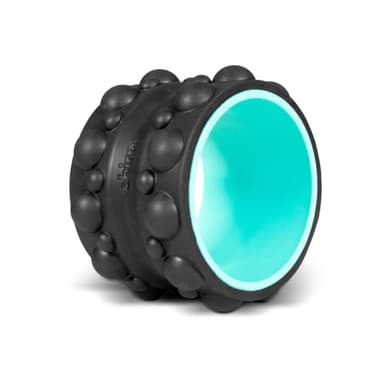
Chirp Wheel XR 6-Inch Knot Kneader Back Roller
A wheel rather than a cylinder, and the narrow channel down the middle is the whole idea: it lets the pressure fall on the muscle either side of the spine instead of on the spinous processes, which is the one thing a plain foam roller cannot do.
What it gets right
- The spinal channel means you can extend over it without the bony knobs taking the load
- A 6-inch diameter gives a deeper arch than a cylinder of the same width
- Far better at one specific job - mid-back extension - than a general-purpose roller
What it does not
- Costs more than a plain high-density cylinder that covers the whole body
- Narrow contact area makes it unpleasant and fiddly on quads, calves and IT bands
- Deeper arch is exactly wrong for an irritable low back; this is a thoracic tool
Price as of November 22, 2026. #ad How we’re funded
ProsourceFit Acupressure Mat and Pillow Set
Thousands of plastic spikes and a very thin evidence base — cheap enough to try, and we are not going to tell you it does more than the research supports.
What it gets right
- Costs very little
- Some people find it genuinely relaxing
- Nothing to charge or break
What it does not
- The published evidence is thin and mostly small-sample
- Uncomfortable for the first several sessions
- Not usable on bare skin by everyone
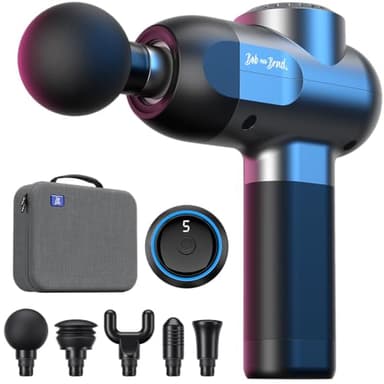
Bob and Brad C2 Massage Gun
The only gun in this roundup whose maker publishes all four numbers that decide whether it reaches the muscle — amplitude, stall force, speed range and noise — and the stall-force figure is higher than the premium units that hide theirs.
What it gets right
- Publishes amplitude, stall force, speed range and noise — the two market leaders publish none of the first three
- Published stall force of over 44 lb is higher than the figure Therabody publishes for the Prime
- 1.5 lb is light enough to hold overhead against your own shoulder without your arm giving out first
- FSA/HSA eligible, which quietly makes it cheaper again for a lot of buyers
What it does not
- 10 mm amplitude is genuinely shorter than a 16 mm premium stroke — that difference is real for glutes and thick back muscle
- No app, no pressure-feedback screen, no ecosystem
- Five fixed speeds rather than a continuous range
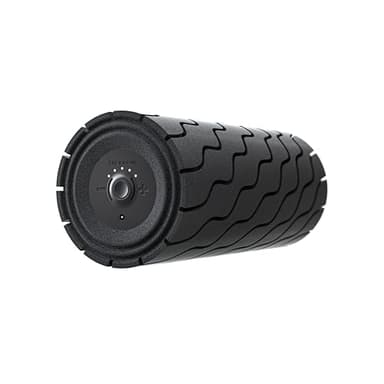
Therabody Wave Roller
The wave-pattern surface plus vibration is a real combination, and it is also the most expensive way to apply pressure to a quad that exists.
What it gets right
- Wave surface works well on quads and lats
- Bluetooth-guided routines if you want them
What it does not
- Very expensive against a foam cylinder
- Heavy
Common questions
What can I use instead of a foam roller?
A roller stick is the closest substitute for legs: it drags the same sustained pressure along a quad, hamstring or calf, but your arms supply the force instead of your bodyweight, so you can do it sitting in a chair. For one specific knot, a pair of lacrosse balls beats both a stick and a cylinder, and used against a wall they need no floor at all. For a back that a round roller rides over, you want a wheel with a channel down the middle. In a pinch, a frozen water bottle under a foot or a tennis ball against a wall genuinely works.
Is a massage stick as good as a foam roller?
On legs, better for most people; on a back, not a substitute at all. The stick wins because you control the pressure directly instead of balancing your bodyweight, it works with the muscle completely slack, it needs no floor and it costs less. It loses because you have no leverage behind your own back, and it cannot give you the thoracic-extension stretch you get from lying crosswise over a cylinder. If your targets are quads, hamstrings and calves, buy the stick. If your target is your back, keep the roller or buy a wheel.
Can I use a tennis ball instead of a foam roller?
Yes, with a caveat about what you are replacing. A tennis ball is a soft, small-contact pressure tool, so it substitutes for a lacrosse ball rather than for a cylinder — good for a glute, a foot or a spot under a shoulder blade, useless for covering a whole quad. It also deforms under load and loses pressure, which is exactly why dedicated massage balls are firmer. As a free way to find out whether concentrated pressure helps you before spending anything, it is a perfectly sensible test.
What is the best foam roller alternative for your back?
A back wheel with a channel down the middle, because the specific complaint about cylinders and backs is that a round surface sits on the bony processes of the spine. The channel clears them and loads the erector muscles either side instead. A peanut ball does the same thing more cheaply and with less reach. What neither does is the other half of what a cylinder gives a back — lying crosswise over it to extend the mid-spine — so if that is the part you value, keep a roller as well.
Is a massage gun a good replacement for a foam roller?
It is a different mechanism rather than a cheaper cylinder, and it costs several times a stick or a pair of balls. Its genuine advantage is that it works on a completely slack muscle while you sit still, which no floor tool can do. Its genuine disadvantage is contact area: a head the size of a plum cannot cover a whole IT band the way bodyweight on a cylinder does. A direct comparison of foam rolling against percussive massage for post-exercise soreness is worth reading first, because the two land closer together than the prices imply.
Why does foam rolling hurt, and is that a reason to switch tools?
Usually not. The three common causes are rolling too fast, pressing far too hard on a first attempt, and rolling over bone rather than muscle — the IT band and the front of the shin being the classic offenders. A randomized trial comparing three roller densities on knee range of motion and pressure pain threshold found firmness was not the differentiator it is marketed as, which means dropping to a softer cylinder costs you nothing in results. Fix the technique and the density first; switch category only if the floor itself is the problem.
Sources
- 1.Foam Rolling Training Effects on Range of Motion: A Systematic Review and Meta-Analysis - Sports Medicine 2022 (PMC9474417) — the range-of-motion claim for the tool being replaced, which holds up
- 2.Preventive effect of foam rolling on muscle soreness after exercise: a systematic review and meta-analysis - Journal of Bodywork and Movement Therapies 2024 (PubMed 39593540) — preventive effect on post-exercise soreness
- 3.Static Stretch Training versus Foam Rolling Training Effects on Range of Motion: A Systematic Review and Meta-Analysis - Sports Medicine 2024 (PMC11393112) — rolling and static stretch training are broadly comparable for range of motion - the basis for saying the cylinder is a delivery method rather than a mechanism
- 4.Comparison of Three Different Density Type Foam Rollers on Knee Range of Motion and Pressure Pain Threshold: A Randomized Controlled Trial - International Journal of Sports Physical Therapy (PMC6044602) — density was not the differentiator on knee range of motion or pressure pain threshold - why a softer roller is a legitimate fix for rolling that hurts
- 5.The Effects of an Acute Bout of Foam Rolling on Hip Range of Motion on Different Tissues - International Journal of Sports Physical Therapy (PMC6088119) — response differs by tissue - an argument for a tool whose pressure you can tune per area
- 6.Foam Rolling or Percussive Massage for Muscle Recovery: Insights into DOMS (PMC12286022) — direct foam rolling versus percussive massage comparison for DOMS - closer together than the price gap implies
- 7.The Effect of Myofascial Release Applied to Thoracolumbar Fascia on Flexibility, Muscular Endurance, and Balance in Healthy Young Adults: A Randomized Controlled Trial - Journal of Sport Rehabilitation 2025 (PubMed 39832508) — myofascial release applied by hand to the thoracolumbar fascia affected flexibility, endurance and balance - the pressure is the active ingredient, not the foam
- 8.TriggerPoint — GRID 1.0 Foam Roller product page (13.0 × 5.5 × 5.5 in; hollow core stated to support up to 300 lb; EVA foam outer; 1-year warranty) — the published construction figures for the category reference cylinder these alternatives are measured against