Rollers & Balls
The Best Foam Roller for Neck and Shoulders
Buy the Chirp Wheel+ 4-Inch: the channel down the middle keeps pressure off the spinous processes, and the small diameter suits the base of the neck rather than forcing an extension nobody asked for. The budget pick is a pair of Kieba lacrosse balls at less than a sandwich, used against a wall. Read the first section before you buy anything, because the thing you want to roll is not the thing you should roll.
By Stephen V.Published
Disclosure:Grip & Gait earns a commission when you buy through links on this page, at no extra cost to you. It never changes what we recommend or the order we rank things in — here is exactly how we’re funded.
Quick picks
Ranked on published manufacturer specs and what they mean for the job, not on testing we have not done. Tap a row for the full reasoning. How we score.
| # | Product | Best for | Score | Price |
|---|---|---|---|---|
| 1 |  Chirp Wheel+ 4-Inch Neck and Back Roller The 4-inch wheel has the same spinal channel as its bigger sibling with a shallower arch, which is what makes it controllable at the top of the back. The one object here built for this region rather than borrowed for it. | Best overall, base of the neck and upper back | 8.6 | |
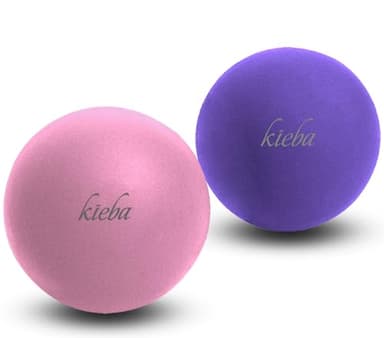
| 2 |  Kieba Massage Lacrosse Balls Your body weight through roughly one square inch, aimed at the exact spot between the shoulder blade and the spine that no cylinder can reach. Cheaper than a sandwich for two, and the pressure is harsh until you learn to lean rather than lie. | Budget pick - the trapezius against a wall | 8.4 | $7.99 · View on Amazon Price as of November 28, 2026. #ad How we’re funded |
| 3 |  5BILLION Peanut Massage Ball The gap between the two lobes straddles the spinous processes, so the load lands on the muscle on each side. The one shape that lets you work the upper back lying down without pressing on the spine itself. | Either side of the spine, nothing on the bone | 8.3 | |
| 4 |  Amazon Basics High-Density Foam Roller (18 in) An 18-inch cylinder across the mid-back opens the position that a day at a desk closes, and it is the only pick here long enough to lie along your spine. Flat surface spreads pressure instead of concentrating it. | Thoracic extension, cheapest that works | 8.2 | |
| 5 |  TriggerPoint GRID Foam Roller (13 in) The multi-density surface concentrates pressure in strips rather than spreading it flat, and the rigid core will not go soft in a year. Three times the price of a plain cylinder doing a similar job. | Firmer surface that holds its shape | 8.0 | |
| ✕ |  Hyperice Vyper 3 Vibrating Foam Roller A premium vibrating roller is a fine tool for quads and glutes and the wrong answer here: it is a big, heavy cylinder you have to balance on, it costs more than every other pick on this page combined, and vibration adds nothing a wall and a ball cannot do at the top of your back. Skip this | The one to skip for a neck | 6.4 |
The short version
Nothing on this page goes on your neck. The cervical spine has small vertebrae, a shallow muscle layer and the vertebral arteries running up through it, and pressing a hard cylinder into it is the one self-treatment move we actively tell people not to make. What makes a neck feel tight is almost always the muscle around and below it: the upper trapezius sloping from neck to shoulder, the levator scapulae down the side, the rhomboids between the shoulder blades, and a mid-back that has been held in flexion since breakfast.
For that region, buy the Chirp Wheel+ 4-Inch. It is the only product here shaped for the job rather than borrowed from leg day: a narrow channel down the center keeps the load off the bony knobs of the spine while the muscle either side takes it, and the small 4-inch diameter gives a shallow, controllable arch at the top of the back instead of the deep extension a 6-inch wheel forces.
If you want to spend as little as possible, buy Kieba lacrosse balls and use them standing against a wall. Two balls cost less than a sandwich and they put more pressure per square inch into the upper trapezius than any roller or any motor on this site. That is arithmetic, not opinion: the same body weight through a smaller contact patch.
Why the roller never touches the neck
Three reasons, in order of how much they should change your behavior.
The anatomy is wrong for it.On the quads or the glutes a roller presses a thick muscle against a big, strong bone. At the neck there is very little muscle between a roller and the transverse processes of the vertebrae, and the structures that pass through that region do not tolerate being compressed. The useful target is a hand’s width lower: the upper trapezius, where it crosses the top of the shoulder, and the muscle either side of the spine between the shoulder blades.
A cylinder cannot get into the right place anyway. The space between the shoulder blade and the spine is a trench a couple of inches wide. A 5 or 6 inch roller bridges straight across it and rests on bone at both edges. A ball drops into it. This is why the cheapest pick on the page ranks second rather than last, and it is the single most useful sentence in this roundup.
What a neck usually needs is movement, not more pressure. The pattern we see most often is a neck that has not been moved through range for hours rather than a neck full of knots. Rolling the mid-back and then taking the neck through gentle range does more than grinding on a tender spot for ten minutes, and the evidence below is the reason we say so.
What the research actually shows
We would rather print the uncomfortable version than the flattering one, and here the evidence is genuinely mixed.
Pressure sensitivity improves; pain scores and range mostly do not. A 2023 systematic review and meta-analysis in Clinical Rehabilitation pooled 13 randomized trials and 601 participants with chronic mechanical neck pain. Myofascial release improved pressure pain thresholds at the trapezius and the suboccipital muscles — standardized mean differences of 0.41 and 0.47 — which means the tissue tolerated more pressure before it hurt. The differences were not significant for pain itself, for neck flexion, extension, rotation or lateral flexion, or for the Neck Disability Index, and the authors rate the evidence low to moderate. No trial reported an adverse event. Read that honestly: this is a cheap intervention that makes a sore area less tender to touch, not a treatment that has been shown to fix a painful neck.
Rolling does move range of motion, at least briefly. The 2022 Sports Medicine meta-analysis of foam rolling training on range of motion found a small but real effect, and a 2024 meta-analysis comparing static stretch training with foam rolling found the two broadly comparable for range. That is the mechanism to expect from the mid-back work on this page: a few more degrees of extension and rotation, for a while.
The soreness case is weaker than the marketing. A 2024 review and meta-analysis on foam rolling and muscle soreness reports a preventive effect that is modest. And for the headaches that often travel with a stiff neck, the 2025 meta-analysis of physiotherapy for chronic tension-type headache is the better guide to what helps than any product page.
One more finding worth your skepticism about the whole “knot” framing: a systematic review of the reliability of physical examination for trigger points found that clinicians agree poorly on where they are. If trained hands cannot reliably locate a knot, a page selling you a ball to destroy one should be modest about its claims. What you can feel reliably is a tender spot, and pressing a tender spot in the trapezius for a minute is a legitimate, harmless thing to do with a rubber ball that costs pocket change.
What to look for, in order
| What to check | What you want | Why it matters at the neck and shoulders |
|---|---|---|
| Does it clear the spine? | A channel, a gap, or a single ball | Pressure on the spinous processes is uncomfortable and pointless. A wheel with a channel or a peanut with a gap puts the load on muscle either side; a flat cylinder puts it on bone. |
| Diameter | Smaller for the neck end, larger for the mid-back | A 4-inch wheel gives a shallow arch you can control at the top of the back. A 6-inch wheel forces more extension - good lower down, too much at the base of the neck. |
| Can it get between the shoulder blade and the spine? | A ball, not a cylinder | That trench is about two inches wide. Nothing cylindrical reaches into it, which is why a lacrosse ball against a wall beats every roller here for that one job. |
| Density | Firm enough to transmit pressure, not so hard you brace | A randomized comparison of three roller densities found pressure pain threshold and range responded differently by density. If you tense against it, you are not treating anything. |
| Can you use it standing? | Yes, ideally | Lying on the floor to treat a neck means holding your head up with the same muscles you are trying to settle. A ball against a wall removes that problem entirely. |
| Length | 18 in if you want to roll along the spine | A 13-inch roller sits across the back. An 18-inch cylinder can lie lengthways under the spine for an opening position, which is a different and useful job. |
On density specifically, the randomized comparison of three roller densities is the one piece of evidence in this category that speaks directly to a purchase decision, and our longer treatment of it is on the foam roller density page.
The picks, and who each one is for
Chirp Wheel+ 4-Inch — the one to buy first.The spinal channel is the reason. You can lie back over it with the wheel under the upper back and extend without the bony knobs of the spine taking the load, which is exactly the move a desk-shaped upper back wants and exactly the move a plain cylinder makes unpleasant. The small diameter is the other reason: a shallower arch is easier to control and far easier to get off, which matters when the thing you are arching over sits near your neck. The honest cons: it is too small to give a proper mid-back extension if that is what you are after, it is a single-purpose object next to a cylinder that does your whole body, and Chirp publishes no load rating, density or weight figure we can cite for it — so nothing on this page claims one.
Kieba lacrosse balls — the budget pick, and the best tool for the traps. Stand with your back to a wall, put the ball between the wall and the muscle beside your shoulder blade, and lean. That is it. The pressure is higher than anything else here because the contact patch is tiny, and you control it to the ounce by how much weight you transfer into the wall. A pair costs less than lunch. The cons are real: the pressure is harsh if you go straight to lying on the floor, a hard rubber sphere has no give at all, and it is very easy to spend ten minutes grinding one tender spot when the evidence above does not support that being useful. A minute per spot, then move.
5BILLION peanut ball — for the muscle either side of the spine, lying down. Two lacrosse balls joined with a gap between them. Lie on it with the gap over your spine and it loads the paraspinal muscle on both sides at once while touching none of the bone in between — the lying-down version of the wall drill, and better than a ball for working upward from the mid-back toward the shoulder blades. Cons: the gap only fits one spine reasonably well, so it is more or less comfortable depending on your build, and like the single ball it is hard rubber with no give.
Amazon Basics 18-inch roller — the cheapest thing that opens a desk-shaped back. For thoracic extension and for the lats and the outside of the shoulder blade, a dense foam cylinder does the mechanical work for the price of lunch. Eighteen inches is long enough to lie along your spine, which the 13-inch rollers are not. The cons are the ones you would expect: the flat surface spreads pressure rather than concentrating it, it rests on the spine rather than clearing it, and solid foam softens over a few years of heavy use.
TriggerPoint GRID — firmer, and it will not go soft.The multi-density surface concentrates pressure into strips rather than spreading it flat, and the hollow rigid core keeps its shape long after a plain cylinder has begun to compress. Worth it if you want one roller for both the upper back and the legs and you intend to keep it for a decade. Cons: roughly three times the price of a plain cylinder that also works, noisier on a hard floor, and the 13-inch length means it works across your back rather than along it. Note also that TriggerPoint’s own page states a 300 lb support figure while retailer listings widely claim 500 lb — we quote the maker’s lower number.
Hyperice Vyper 3 — the skip row here. We do not think it is a bad product; it is on our vibrating roller page because vibration on a big muscle group has a case. For a neck and shoulders it is the wrong purchase at a price that makes being wrong expensive: it is a heavy full-size cylinder you have to balance on, it rests across the spine like any cylinder, and nothing about adding vibration solves the problem that the muscle you want is in a two-inch trench a ball reaches and a roller does not.
How to actually use these, above the shoulder blades
The sequence that makes sense given the evidence: warm the area, work the muscle briefly, then move the joint through range. Heat is genuinely supported here — a systematic review of heat for the self-management of non-specific neck pain is the basis for the heating pad in the list above — and it takes ten minutes while you do something else.
For the trapezius and rhomboids: ball against a wall, lean in until it is a six or seven out of ten, hold for about a minute, then take your shoulder blade through a slow circle with the ball still in place. For the mid-back: wheel or cylinder across the spine at the level of the shoulder blades, arms crossed over your chest, and extend back over it slowly for a handful of repetitions rather than rolling up and down for minutes. Then move the neck: slow rotations and side bends, no force, no stretching into pain. Our full technique write-up is how to foam roll, and the region-specific version is on the neck and shoulder page.
How we ranked these
- Does it clear the spine? Weighted first, because at the top of the back the spinous processes are prominent and a tool that rests on them is a tool you will not use. A channel, a gap or a ball beats a cylinder here.
- Can it reach the muscle that actually refers to a neck? The upper trapezius and the strip between shoulder blade and spine. This is the criterion that moves a pocket-change ball above a mid-priced roller.
- Can you use it standing? Treating a neck while holding your own head off the floor is self-defeating. A wall drill removes the problem.
- Is the density usable rather than impressive? If you brace against the tool, nothing relaxes. Firm enough to transmit pressure, not so hard you flinch.
- What does the evidence support?A modest, short-lived range gain and a tissue that tolerates more pressure — not a cure for neck pain. We rank on that, which is why the cheap picks score well and the expensive one is the skip.
Where a roller is the wrong purchase
If your neck is tight because you spend nine hours looking down at a laptop, the roller is a ten-minute patch on a nine-hour problem; raising the screen does more. If what you want is heat rather than pressure, buy the pad and skip all of this — the best heating pad for neck and shoulders ranks those, and it is the page we send most desk-driven stiffness to first. If you want a motor, read the best massage gun for neck and shoulders: a gun reaches the trapezius one-handed, which is its real advantage over everything here, and massage gun versus foam roller is the honest comparison of the two. And if the problem is mid-back stiffness rather than neck tightness, the larger wheel-versus-roller comparison and the best foam roller for back pain cover the 6-inch option we deliberately left off this list.
Every pick, in full
Specs below are the manufacturer’s own published figures, each linked to the page it came from. Where a maker does not publish a number, the table says so and names the page we checked — that absence is information too.
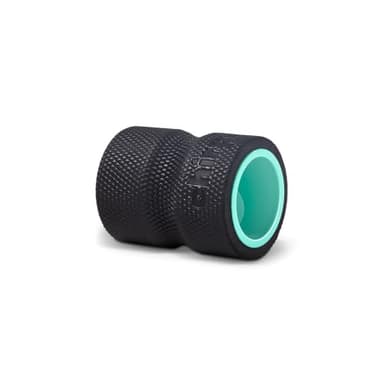
Chirp Wheel+ 4-Inch Neck and Back Roller
The small wheel, which is the one most people should start on: a shallower arch, more control, and a diameter that suits a neck and upper back rather than forcing a big extension nobody asked for.
What it gets right
- Shallower arch than the 6-inch, which is easier to control and far easier to get off
- Suits the base of the neck and the upper back, where most desk-driven tightness sits
- Same spinal channel as the larger wheel
What it does not
- Too small to give a mid-back extension if that is what you are after
- Still a single-purpose object next to a cylinder that does the whole body
- No published load rating, material density or weight figure to cite
Price as of November 28, 2026. #ad How we’re funded
Kieba Massage Lacrosse Balls
The highest work-per-dollar tool on this entire site. A hard rubber sphere concentrates all your body weight into one square inch, which is more pressure than any handheld gun can generate.
What it gets right
- Concentrates body weight into a single point — more local pressure than any percussion device
- Nothing to charge, nothing to break, fits in a coat pocket
- Reaches under the shoulder blade against a wall, which a roller physically cannot
What it does not
- Unforgiving — very easy to overdo on a first session
- Wrong tool for broad surfaces like quads or lats
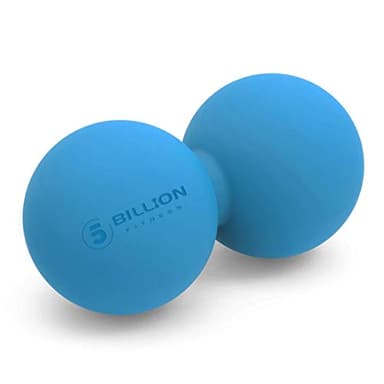
5BILLION Peanut Massage Ball
The waist between the two lobes straddles the spine, so you get pressure on the muscle either side of it and none on the bone — the specific problem a single ball cannot solve.
What it gets right
- Straddles the spine by design — the one shape that solves the paraspinal problem safely
- Works against a wall as well as on the floor
What it does not
- Too bulky for the foot arch
- The double lobe rolls awkwardly on carpet
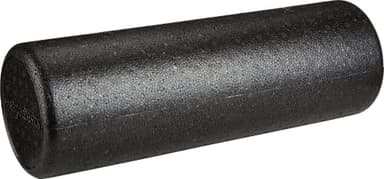
Amazon Basics High-Density Foam Roller (18 in)
A dense foam cylinder does the same mechanical job as a textured roller for a fraction of the money, and for a first roller that is the correct purchase.
What it gets right
- Does the actual mechanical work — sustained pressure across a broad contact area
- Nothing to break; no core, no seams, no electronics
- 18 in is long enough to lie along your spine, which the 13 in rollers are not
What it does not
- Flat surface spreads pressure rather than concentrating it
- Solid EVA softens over a few years of heavy use
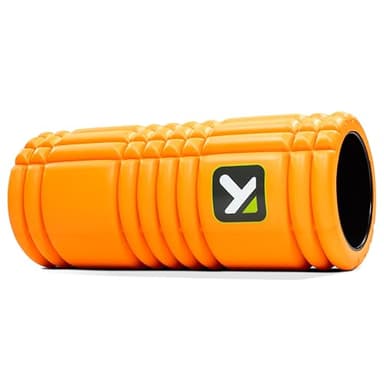
TriggerPoint GRID Foam Roller (13 in)
The multi-density surface is the reason to buy this over a plain foam cylinder: the raised sections concentrate pressure in strips instead of spreading it flat, which is what makes it usable on an IT band without needing to hold your breath.
What it gets right
- Hollow rigid core does not compress into a soft log the way plain EVA foam does after a year
- Multi-density surface gives you three pressure intensities on one roller
- 13 in length fits in a gym bag; the 26 in version does not
What it does not
- Costs roughly three times a plain high-density cylinder that also works
- The hollow core makes it noisier on a hard floor
- TriggerPoint's own page states a 300 lb support figure while retailer listings widely claim 500 lb — the maker's number is the lower one
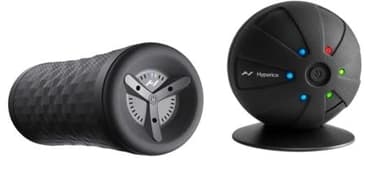
Hyperice Vyper 3 Vibrating Foam Roller
Three speeds of vibration on a 34 W motor, and the honest question is whether vibration adds enough over a $13 cylinder to justify twenty times the price — for most people it does not.
What it gets right
- Published motor, weight, dimensions and battery — more transparency than Hyperice gives its guns
- Vibration genuinely reduces the discomfort of rolling, which means people actually do it
What it does not
- Twenty times the price of a foam cylinder that does the mechanical part
- 2.7 lb and a 2-hour battery — it is a device, not a lump of foam
Common questions
Can you foam roll your neck?
Not the neck itself. There is very little muscle between a roller and the vertebrae of the cervical spine, the arteries that supply the brain run through that region, and nothing useful is achieved by compressing it. Roll the mid-back and work the upper trapezius and the muscle between the shoulder blade and the spine — that is where the tightness a neck complains about usually lives — then take the neck itself through gentle range without pressure.
What is the best foam roller for neck and shoulder tightness?
The Chirp Wheel+ 4-Inch, because the channel down its center keeps pressure off the spinous processes while loading the muscle either side, and its small diameter gives a shallow arch you can control at the top of the back. For the strip between the shoulder blade and the spine — which no cylindrical roller can reach — a pair of Kieba lacrosse balls used against a wall does more, for pocket change.
Does foam rolling help neck pain?
Modestly, and the honest version is narrower than most pages admit. A 2023 systematic review and meta-analysis of 13 trials in 601 people with chronic mechanical neck pain found myofascial release improved pressure pain thresholds at the trapezius and suboccipital muscles, but produced no significant improvement in pain itself, in cervical range of motion or in the Neck Disability Index, on low to moderate certainty evidence. No adverse events were reported. So: a cheap, safe thing that makes a sore area less tender to pressure, not a treatment for a painful neck.
Lacrosse ball or foam roller for the upper back?
Both, for different jobs. The space between your shoulder blade and your spine is roughly two inches wide; a 5 or 6 inch roller bridges across it and rests on bone at each edge, while a ball drops into it. So the ball wins for the trapezius and rhomboids. The roller wins for thoracic extension — lying back over it to open a position a desk has closed — which a ball cannot do at all. If you buy one thing, buy the ball; if you buy two, add an 18-inch cylinder.
How long should I roll my upper back and shoulders?
Short. About a minute on a tender spot with the ball, then move; for the mid-back, a handful of slow extensions over the wheel or roller rather than minutes of rolling up and down. Grinding on one spot for ten minutes is the most common mistake in this category and the evidence does not support it being more effective — what it reliably produces is a bruise. Then use the range you just bought: slow neck rotations and side bends, and a shoulder-blade circle or two.
Should I use heat before or after rolling my shoulders?
Before, if you are using it to make movement easier, which is the main reason to own a pad. A systematic review of heat for self-management of non-specific neck pain supports it as a low-risk self-care measure, and ten minutes of heat on a stiff upper back makes the rolling and the range work that follows more comfortable. Heat afterwards is fine too and mostly a comfort decision. What matters more than the order is that something moves afterwards.
Sources
- 1.Myofascial release for the treatment of pain and dysfunction in patients with chronic mechanical neck pain: systematic review and meta-analysis of randomised controlled trials - Clinical Rehabilitation 2023 (13 studies, 601 participants; trapezius PPT SMD 0.41, suboccipital PPT SMD 0.47; no significant effect on pain, cervical range or NDI) (PubMed 36305079) — the honest headline on this page: pressure pain thresholds improved at the trapezius and suboccipital muscles, while pain, cervical range and the Neck Disability Index did not
- 2.Foam Rolling Training Effects on Range of Motion: A Systematic Review and Meta-Analysis - Sports Medicine 2022 (PMC9474417) — the small but real range-of-motion effect that is the mechanism we claim for the mid-back work here
- 3.Static Stretch Training versus Foam Rolling Training Effects on Range of Motion: A Systematic Review and Meta-Analysis - Sports Medicine 2024 (PMC11393112) — foam rolling and static stretch training produce broadly comparable range gains - relevant because the cheapest option on this page is a ball plus movement
- 4.Preventive effect of foam rolling on muscle soreness after exercise: a systematic review and meta-analysis - Journal of Bodywork and Movement Therapies 2024 (PubMed 39593540) — the modest preventive effect on soreness, against which the marketing in this category should be read
- 5.Comparison of Three Different Density Type Foam Rollers on Knee Range of Motion and Pressure Pain Threshold: A Randomized Controlled Trial - International Journal of Sports Physical Therapy (PMC6044602) — the randomized density comparison behind the density row of the criteria table
- 6.Reliability of physical examination for diagnosis of myofascial trigger points: a systematic review of the literature - The Clinical Journal of Pain (PubMed 19158550) — clinicians agree poorly on where trigger points are, which is why this page talks about tender spots rather than knots
- 7.Use of Heat for the Self-Management of Non-Specific Neck Pain: A Systematic Review - Journal of Pain Research 2026 (PMC13269032) — heat as low-risk self-management for non-specific neck pain - the basis for the heating pad recommendation
- 8.The efficacy of physiotherapy approaches in chronic tension-type headache: a systematic review and meta-analysis - Journal of Oral & Facial Pain and Headache 2025 (PMC11934752) — for readers whose neck tightness arrives with headaches, the better guide to what physiotherapy approaches achieve