Symptoms
Rotator Cuff Pain
The thing with numbers behind it is exercise - a 2026 meta-analysis of 21 randomized trials found large pain and function gains from cuff and scapular work, and more limited gains in strength. Nothing you can buy treats a tendon. What tools do is make the shoulder warm enough and loose enough to do that work, and make the night tolerable while it happens.
By Stephen V.Published Updated
Disclosure:Grip & Gait earns a commission when you buy through links on this page, at no extra cost to you. It never changes what we recommend or the order we rank things in — here is exactly how we’re funded.
The thirty-second version
If reaching overhead hurts, lying on that shoulder wakes you up, and putting a coat on is the hardest thing you do all day, you are describing the pattern clinicians call rotator cuff-related shoulder pain. The treatment with evidence behind it is loaded exercise for the cuff and the scapular stabilisers, and it is free. The useful purchases are the ones that get you to that work and through the night: heat shaped for the shoulder girdle, a light gun for the muscles around the joint, and something to hold a stretch at length. If you only buy one thing, buy the heat.
What the rotator cuff is, and why that changes what helps
Four small muscles wrap the ball of your shoulder and hold it centred in a shallow socket: supraspinatus over the top, infraspinatus and teres minor behind, subscapularis in front. Their tendons are thin, they run through tight spaces under bone, and they are the price your shoulder pays for being the most mobile joint in the body. When one is irritated, the pain shows up on the outside of the upper arm rather than on the point of the shoulder, it is worse above shoulder height, and it is worse at night because lying down compresses the space those tendons run through.
That anatomy rules things out. A tendon under bone is not reachable by a massage gun, a rolling ball, or anything else you can buy, and percussion directly over the bony point of the shoulder is both useless and a good way to aggravate the thing that already hurts. What is reachable is everything working overtime to compensate: upper traps, deltoid, pec, the muscles between the shoulder blades. Treating those is a legitimate use of a gun. Treating them and calling it rotator cuff rehab is not.
The evidence, and it is better than most of this category
A 2026 systematic review and meta-analysis in BMC Musculoskeletal Disorders pooled 21 randomized controlled trials covering 1,152 participants with rotator cuff-related shoulder pain in middle-aged and older adults. The interventions were what you would expect: strengthening, stretching, stabilisation and neuromuscular programs aimed at the cuff and the scapular stabilisers, measured with validated instruments such as SPADI, DASH and the Constant-Murley score. The conclusion was that exercise-based intervention is effective for reducing pain and improving function and range of motion, with a large pooled effect on pain (Hedges’ g = −1.454), while effects on strength appeared more limited. The authors asked for standardised protocols and longer follow-up, which is the usual and fair caveat.
Read that honestly and it says two things. Exercise works, and the gains are mostly in how much it hurts and how well the arm functions rather than in raw strength numbers — so if you are judging progress by what you can lift, you will conclude it is not working when it is. The other thing it says is what is not in that list: no device, no modality, no massage tool carried the result.
For the stubborn cases, there is a clinic route worth knowing about. The 2026 network meta-analysis of extracorporeal shockwave therapy covered 65 publications and 3,921 patients across five tendinopathies, rotator cuff tendinopathy among them. That is a machine in a clinician’s room, not a purchase, and it is the thing to ask about rather than buying a more expensive gun. We compare the two directly in massage gun vs shockwave therapy.
Which class of tool fits rotator cuff pain
| Tool class | Cost | Why it does or doesn’t work here | Verdict |
|---|---|---|---|
| Heating pad | Cost: Budget | Warm tissue moves more willingly, and the whole point of a tool here is to make the exercise session and the evening tolerable. Shaped pads stay on a shoulder; flat ones slide off.Where it fails: Not on a shoulder that is hot, red and swollen, and never while asleep. Heat does not treat a tendon. | Start here |
| Stretch strap | Cost: Budget | The mobility half of the program - holding external rotation or a doorway stretch at a set length - is what a non-elastic strap is for, and it beats hauling the arm around by hand.Where it fails: It supports a program; it is not a treatment. Forcing range on an irritable shoulder makes the next night worse. | Start here |
| Massage gun | Cost: Mid-range | Good on the traps, deltoid, pec and the muscles between the shoulder blades, which are the structures doing the compensating. A light gun you can hold at head height is the requirement.Where it fails: Never over the bony point of the shoulder, the joint line, the armpit or the front of the neck. It cannot reach a cuff tendon and pretending otherwise is how people aggravate one. | Sometimes |
| Massage ball | Cost: Budget | A ball against a wall is the cheapest way to get at the back of the shoulder and the pec, and it needs no grip strength from the sore arm.Where it fails: Painful and pointless directly on the shoulder blade's bony ridge or over the joint itself. | Sometimes |
| TENS unit | Cost: Budget | Cheap symptom relief for an evening, and the shallow tissue here is the kind surface stimulation can actually reach.Where it fails: Pads must stay off the front of the neck and the carotid area. It modulates pain while running and does nothing for the tendon. | Sometimes |
| Compression boots | Cost: Mid-range | A legitimate recovery tool that a lot of people already own.Where it fails: They are leg devices. There is nothing to compress on a shoulder and no reason to try. | Not for this |
What to look for, if you are buying for a shoulder
- A gun light enough to hold at head height. This is the only specification that matters for self-treating a shoulder. A 2.5 lb gun held above your own shoulder for ninety seconds is a workout for the thing you are trying to settle.
- Heat shaped for the shoulder girdle. A flat rectangle slides off a sloping trapezius the moment you relax. The pads cut for neck and shoulders stay put without a hand holding them.
- A non-elastic strap, not a resistance band, for the mobility work. Elastic quietly gives back the range you gained. For the strengtheninghalf you want light resistance bands, which we do not currently cover — say what you need at a physiotherapy appointment rather than guessing.
- Something you can use one-handed. The sore arm is not going to help. Balls against a wall and shaped heat pads both pass this test; a long foam roller does not.
- Nothing that promises to fix a tendon.Any product claiming to repair or “break up” cuff tissue is describing something no home device does.
What we would actually buy
One of these makes the exercise session possible, one makes the night tolerable, and one is for the muscles that are compensating. In that order of usefulness.
The one to buy first
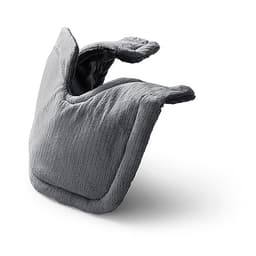
Sunbeam Neck and Shoulder Heating Pad
Cut to the shape of a neck and shoulder, so it sits over the traps and down both sides without being held there - which is the thing a flat pad cannot do on a sloping shoulder. Moist-heat option and an auto shutoff.
Price as of October 21, 2026. #ad How we’re funded
For the compensating muscles
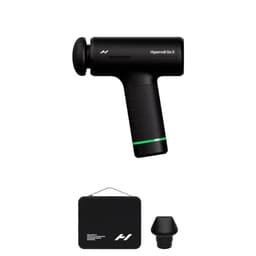
Hyperice Hypervolt Go 3
At a published 1.6 lb it is the lightest Hyperice handheld, which is exactly what decides whether you can reach your own shoulder without the other arm getting tired. Published 55 dB and a 1,500-2,500 RPM range, which the pricier Hypervolt 2 does not state. Traps, deltoid and pec only - never the joint.
Price as of October 21, 2026. #ad How we’re funded
For the mobility half
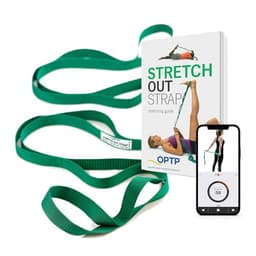
OPTP Original Stretch Out Strap
Non-elastic with sewn loops, so an external-rotation or overhead stretch holds at the length you set instead of springing back. Makes the mobility work possible without a partner and without yanking the arm into position.
How to make the night survivable
Night pain is the symptom that sends most people looking, and most of the fix is arrangement rather than purchase. Do not sleep on the painful side. On your back, a thin pillow or folded towel under the upper arm stops the shoulder rolling forward and closing down the space the tendons run through. On the good side, hug a pillow so the sore arm is supported in front of you rather than hanging across your body. Heat for fifteen to twenty minutes before bed, never during sleep.
For the daytime half: work the arm below shoulder height while it is irritable, keep doing the exercises you were given even on the days it aches afterwards, and take the overhead stuff out of the gym program for a few weeks rather than out of your life. The meta-analysis above measured people doing graded cuff and scapular work, not people resting.
Where to go next
If the pain is across the top of the shoulders and up into the neck rather than on the outside of the arm, neck and shoulder pain is the closer page, and the gun roundup for necks and shoulders covers the light guns in more detail. If the shoulder is losing range in every direction and stiffness is the main complaint rather than pain on reaching, frozen shoulder is a different problem with a different timeline. If the ache sits between the shoulder blades, upper back pain. And for the heat half, the shaped heating pad roundup is the page with the live prices. And if you swim, the sport-specific version of this page is recovery tools for swimmers, which leads with the review that found shoulder pain in 91.3% of adolescent competitive swimmers.
Common questions
How do you relieve rotator cuff pain at night?
Mostly by arrangement rather than by purchase. Do not sleep on the painful side. On your back, put a thin pillow or folded towel under the upper arm so the shoulder cannot roll forward and close down the space the tendons run through; on your good side, hug a pillow so the sore arm is supported in front of you. Fifteen to twenty minutes of heat before bed helps a lot of people, and a heating pad shaped for the neck and shoulders stays put where a flat one slides off. Never sleep on a heating pad.
Can you use a massage gun on a rotator cuff?
On the muscles around it, yes. On the cuff itself, no — those tendons run under bone and no handheld device reaches them. Use a light gun on the upper traps, the deltoid, the pec and the muscles between the shoulder blades, which are the structures compensating for an irritable shoulder. Keep it off the bony point of the shoulder, the joint line, the armpit and the neck. If a pass causes pins and needles or weakness, stop.
What actually fixes rotator cuff pain?
Loaded exercise for the cuff and the scapular stabilisers. A 2026 systematic review and meta-analysis of 21 randomized controlled trials covering 1,152 middle-aged and older adults with rotator cuff-related shoulder pain found exercise-based interventions effective for pain, function and range of motion, with a large pooled effect on pain, though effects on strength were more limited. The authors called for standardised protocols and longer follow-up. No device in that review carried the result.
Is heat or ice better for rotator cuff pain?
Heat before you move it, cold after you have overdone it. Warm tissue tolerates range-of- motion work better, which is why a shaped heating pad before the exercise session and before bed is the most useful purchase here. Cold is the better choice for the few hours after a day that clearly aggravated the shoulder, and for anything hot and swollen. Neither treats the tendon.
Sources
- 1.Exercise interventions for rotator cuff-related shoulder pain in middle-aged and older adults: a systematic review and meta-analysis - BMC Musculoskeletal Disorders 2026 (PMC13471655) — 21 RCTs, 1,152 participants; large pooled effect on pain (g = -1.454), limited effect on strength
- 2.The Effect of Extracorporeal Shockwave Therapy in Tendinopathy: A Systematic Review and Network Meta-Analysis of Randomized Controlled Trials - Orthopaedic Surgery 2026 (PMC13572833) — 65 publications, 3,921 patients; rotator cuff tendinopathy one of five tendinopathies covered
- 3.Hyperice — Hypervolt Go 3 product page — 1.6 lb, 55 dB, 1,500-2,500 RPM - the published figures behind the gun pick
- 4.Use of Heat for the Self-Management of Non-Specific Neck Pain: A Systematic Review - Journal of Pain Research 2026 (PMC13269032) — the heat review covering the adjacent region
- 5.Therabody — Product Safety & Precautions — manufacturer precautions for percussive devices