Massage Guns
Theragun Prime Review
The Prime is a well-built percussion device with the longest stroke most people will ever need and a pressure sensor that prevents the single most common user error. It is also sold from a page that does not publish amplitude, stall force, percussions per minute or noise - the four numbers a buyer would use to compare it with anything else. This review is about both of those facts.
By Stephen V.Published
Disclosure:Grip & Gait earns a commission when you buy through links on this page, at no extra cost to you. It never changes what we recommend or the order we rank things in — here is exactly how we’re funded.
Quick picks
Ranked on published manufacturer specs and what they mean for the job, not on testing we have not done. Tap a row for the full reasoning. How we score.
| # | Product | Best for | Score | Price |
|---|---|---|---|---|
| 1 |  Therabody Theragun Prime (6th Gen) Long stroke, real-time pressure feedback, a drop rating, and a product page that publishes 2.0 lb, 2 hours of battery, two attachments and a 1-year warranty while leaving amplitude, stall force, PPM and noise blank. | The gun this review is about | 7.5 | $329.99 · View on Amazon Price as of October 24, 2026. #ad How we’re funded |
| 2 |  Bob and Brad C2 Massage Gun Published 10 mm amplitude, over 44 lb stall force, 2,000-3,200 PPM, 1.5 lb and under 60 dB, at a fraction of the price. Shorter stroke, better paperwork, lighter in the hand. | The documented alternative | 8.7 | |
| 3 | 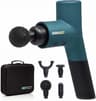 Ekrin Athletics B37v2 Massage Gun The mid-priced option for people who want the depth argument but not the flagship price. Fewer accessories and no ecosystem, which for most buyers is not what they were using anyway. | Long stroke without the Therabody premium | 8.0 | $224.99 · View on Amazon Price as of October 24, 2026. #ad How we’re funded |
The verdict in one paragraph
Buy the Theragun Primeif you specifically want a long stroke on thick muscle — glutes, quads, a heavy lumbar region — and you value build quality, the pressure sensor and the fact that the brand will still exist in five years. Do not buy it expecting the numbers to justify the price, because the numbers are not on the page: Therabody publishes a 2.0 lb weight, a 2-hour battery, two attachments, a 1-year limited warranty and the device dimensions, and publishes no amplitude, no stall force, no PPM range and no decibel figure for this model. If you want a gun whose maker tells you how far the head travels and how hard you can press it, that gun costs a fraction as much and it is the Bob and Brad C2.
What Therabody actually publishes
We score on published manufacturer specifications. Here is the complete set for the Prime from Therabody’s current US product page, which is the page you buy from: five speeds, 2.0 lb, approximately 2 hours of battery, a 1-year limited warranty, two attachments, and dimensions of 238 × 153 × 61 mm. That is a real spec sheet as far as it goes. What is absent is every figure that would let you compare this device against another one on how it behaves against tissue.
The company’s marketing elsewhere cites a 16 mm stroke, and we quote that as marketing rather than as a published specification, because it is not on the product page we cite and we will not launder one into the other. Stroke length is the single most important spec in this category: it determines how far tissue is displaced per hit. A brand whose entire positioning rests on deep reach, declining to print that number where buyers shop, is the most interesting fact about this product.
| Specification | What Therabody publishes | What that means for a buyer |
|---|---|---|
| Amplitude (stroke length) | Not published | The number that sets depth. Marketing cites 16 mm; the product page states nothing, so there is no citable figure to compare against the 10 mm a budget rival publishes. |
| Stall force | Not published | How hard you can press before the motor bogs down. A $70 gun publishes over 44 lb. Here you are asked to take the pressure sensor's word for it. |
| Percussions per minute | Not published | Five speeds are published without a stroke-rate range, so 'five speeds' is a count of settings rather than a description of behavior. |
| Noise | Not published | Hyperice publishes 51 dB for its flagship and 55 dB for its small gun, so the figure plainly can be measured and printed. Therabody does not print it for this model. |
| Weight | 2.0 lb | Half a pound heavier than the C2, which you notice holding it up to your own shoulder rather than down on a quad. |
| Battery | About 2 hours | Quoted at the lowest speed setting - not the setting you will use. Treat it as a ceiling, not an expectation. |
| Attachments | Two | Against five on guns costing a fifth as much. Head shape changes what a stroke does, so this is a real limitation rather than a packaging quibble. |
| Warranty | 1-year limited | Short for a premium device. The drop rating is the more reassuring durability claim. |
What the Prime genuinely does better
- The long stroke, taken on trust.Therabody’s 16 mm marketing figure is longer than anything published in the budget bracket, and longer strokes displace more tissue per hit. On a glute or a thick lumbar region, that is the difference people are paying for and it is not imaginary.
- Real-time pressure feedback. The commonest mistake with any percussion device is leaning on it far too hard for far too long. A device that tells you how hard you are pressing fixes that in a way no instruction page reliably does. Of everything Therabody charges for, this is the feature we would actually miss.
- Build and drop rating. Therabody rates the Prime to survive drops from 10 feet. For an object you use on a hard floor, that is more relevant than it sounds.
- The ergonomic handle. The triangular grip reaches the mid-back more easily than a pistol grip does. Whether that is worth the premium depends entirely on whether your own mid-back is the target.
- It will still be supported. Not a specification, but a real consideration: attachments, service and replacement parts exist for this brand in five years in a way they may not for an Amazon-native label.
The pressure sensor, which is the feature we would actually miss
The commonest way people hurt themselves with a percussion device is not buying the wrong model, it is leaning on the right one for five minutes because harder feels like progress. A gun that shows you how much pressure you are applying, in real time, turns that from a habit you have to remember into a thing you can see. Of everything Therabody charges a premium for, this is the one we would call genuinely useful rather than merely refined.
Keep it in proportion, though: a timer and the rule "one to two minutes per muscle group, keep it moving, firm not fierce" achieves the same outcome for nothing. The sensor is a convenience that enforces good technique, not a capability no cheaper gun can match.
Who it is for, in one line each
- Someone with thick muscle treating glutes and a heavy lumbar region: the long-stroke argument is strongest here, and it is the main reason to pay this much.
- Someone who presses too hard: the pressure sensor fixes the error that actually causes problems.
- Someone treating their own mid-back: the triangular handle reaches round further than a pistol grip, which is a real ergonomic difference rather than a styling one.
- Someone who wants the device supported in five years: attachments, service and parts exist for this brand in a way they may not for an Amazon-native label.
- Not for a first gun, and not for a shoulder you treat one-handed: at 2.0 lb the holding arm tires first, and a documented budget gun answers the same question for a fraction of the money.
What it does not do, and who should skip it
It does not reach a tendon under bone, an arthritic joint surface or a disc, and no price point changes that — see rotator cuff pain and arthritis tools for what those problems actually want. It does not come with the attachment range that makes a gun versatile. It is not the gun to hold against your own shoulder for three minutes; at 2.0 lb the arm doing the holding tires first, and the neck and shoulder roundup leads with lighter units for exactly that reason. And it is not where a first-time buyer should start: the honest sequence is a ball, then a roller, then a documented budget gun, and only then the premium stroke.
Skip it outright if you are on anticoagulants or have a clotting disorder without clinician sign-off, if what you want is comfort rather than targeted work (massage gun vs handheld massager covers that), or if the thing you are treating is a joint rather than a muscle.
What the evidence says about paying more
Nothing in the literature rewards brand or price. The systematic review of percussive therapy on musculoskeletal performance and pain found acute effects on range of motion and pain perception rather than structural change, and the study of Theragun percussive therapy on hamstring range of motion measured exactly that kind of short-lived effect. When percussion has been put head to head with the cheapest mechanical alternative, the foam rolling versus percussive massage comparison for delayed onset soreness found no decisive winner. So the premium buys stroke length, a pressure sensor, build quality and support — not a different category of outcome.
What to check on the listing before you order
Generation and colorway. Therabody has revised the Prime across generations and sells it in more than one color; our registry entry points at the Navy 6th-generation listing because the Black colorway went unavailable with no featured offers in September 2026. Specs differ between generations, so check which one a given listing is selling before trusting a review you read elsewhere.
What is in the box. Two attachments is the published count, and bundles sometimes add a case or extra heads at a different price. Warranty registration— one year limited is short enough that registering it matters. And refurbished and third-party sellers: at this price the gap between a manufacturer-backed unit and a gray-market one is the warranty you will want if the motor goes.
How we assessed it
No testing, and no pretending. We compiled every figure Therabody publishes for this model on its current US product page, linked it, recorded each missing figure as missing with the page we checked, compared it against what rival manufacturers publish for their own devices, and read the trial literature on percussive therapy. That compiled, sourced comparison is the original work here — and on a category where the premium brands withhold the headline number, it tells you more than another unverifiable account of how a gun felt on somebody’s calf. Our full method is at how we research.
The alternatives, honestly
The Bob and Brad C2 publishes everything this gun does not, weighs half a pound less and costs a fraction as much; its shorter 10 mm published stroke is the real trade-off, and Bob and Brad vs Theragun is the head-to-head. The Ekrin B37v2 is the mid-priced long-stroke option — Ekrin B37v2 vs Theragun Prime. Inside Therabody’s own line, Prime vs Pro and Prime vs Mini cover the step up and the step down, and cheap vs expensive massage guns is the page that asks whether any of this premium is worth paying at all.
Every pick, in full
Specs below are the manufacturer’s own published figures, each linked to the page it came from. Where a maker does not publish a number, the table says so and names the page we checked — that absence is information too.
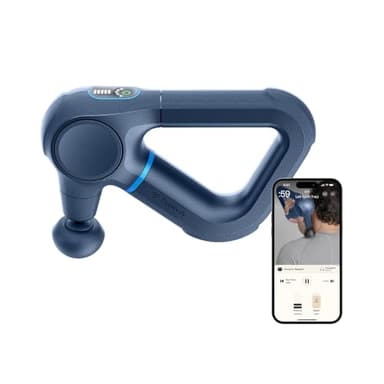
Price as of October 24, 2026. #ad How we’re funded
Therabody Theragun Prime (6th Gen)
The long-stroke option, and the build quality is not in question — but Therabody's current US product page publishes dimensions, weight, battery and warranty and does not publish amplitude, stall force, PPM or noise, so the numbers most buyers are shopping on are not on the page they are shopping from.
What it gets right
- The 16 mm stroke Therabody quotes is genuinely long, and stroke length is what determines depth
- Real-time pressure feedback stops the most common user error — leaning on it far too hard
- Rated by Therabody to survive drops from 10 feet, which matters more than it sounds for a thing you use on a hard floor
What it does not
- Amplitude, stall force, PPM and dB are absent from the current US product page — we checked
- Two attachments in the box, against five on guns costing a fifth as much
- 120 minutes of battery is quoted at the LOWEST speed setting, which is not the setting you will use
- One-year limited warranty on a device at this price
| Amplitude | Not published page we checked |
|---|---|
| Stall force | Not published page we checked |
| Speed range | Not published page we checked |
| Speed settings | 5 source |
| Weight | 2 lb source |
| Noise | Not published page we checked |
| Battery | 2 h source |
| Attachments | 2 source |
| Warranty | 1-year limited source |
| Dimensions | 238 × 153 × 61 mm source |
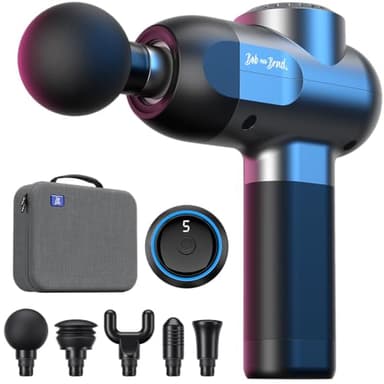
Bob and Brad C2 Massage Gun
The only gun in this roundup whose maker publishes all four numbers that decide whether it reaches the muscle — amplitude, stall force, speed range and noise — and the stall-force figure is higher than the premium units that hide theirs.
What it gets right
- Publishes amplitude, stall force, speed range and noise — the two market leaders publish none of the first three
- Published stall force of over 44 lb is higher than the figure Therabody publishes for the Prime
- 1.5 lb is light enough to hold overhead against your own shoulder without your arm giving out first
- FSA/HSA eligible, which quietly makes it cheaper again for a lot of buyers
What it does not
- 10 mm amplitude is genuinely shorter than a 16 mm premium stroke — that difference is real for glutes and thick back muscle
- No app, no pressure-feedback screen, no ecosystem
- Five fixed speeds rather than a continuous range
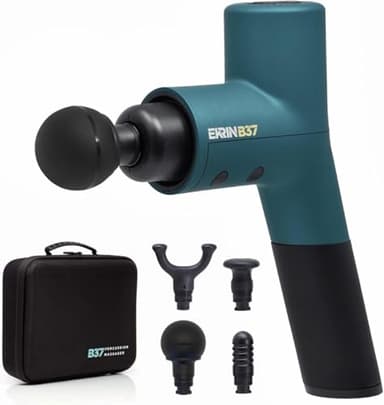
Price as of October 24, 2026. #ad How we’re funded
Ekrin Athletics B37v2 Massage Gun
The 15-degree angled handle is the one genuine ergonomic idea in this category — it is the difference between reaching your own mid-back and asking someone else to.
What it gets right
- Angled handle materially extends self-treatment reach
- Lifetime warranty is unusual at any price in this category
- Quieter than most mid-priced guns
What it does not
- Costs several times a fully-specified budget gun
- Heavier than the lightest premium handhelds
Common questions
Is the Theragun Prime worth the money?
It is worth it if you want a long stroke for thick muscle, you value the pressure sensor that stops you pressing too hard, and brand support matters to you. It is not worth it on specifications, because the specifications that would justify it are not published: Therabody’s current US page for the Prime gives weight, battery, warranty, attachment count and dimensions, and gives no amplitude, stall force, PPM or decibel figure. A gun at a fraction of the price publishes all four.
What is the Theragun Prime's amplitude?
Therabody’s marketing cites a 16 mm stroke, and the current US product page we cite publishes no amplitude figure at all. We record that as “not published” with the page we checked rather than repeating the marketing number as a specification, because the two are not the same thing. If you need a citable amplitude figure to compare against, the Bob and Brad C2 publishes 10 mm on its own product page.
Theragun Prime or Bob and Brad C2?
The C2 for most buyers: published 10 mm amplitude, over 44 lb stall force, 2,000-3,200 PPM, 1.5 lb and under 60 dB, at a fraction of the price. The Prime if you want the longer stroke on glutes and thick lumbar muscle, the pressure sensor, and the ergonomic handle that reaches a mid-back more easily. You are choosing between documentation and value on one side and stroke length and refinement on the other.
How long does the Theragun Prime battery last?
Therabody publishes about two hours, and the figure is quoted at the lowest speed setting, which is not the setting most people use. Treat it as a ceiling. In practice a percussion session is one to two minutes per muscle group, so even a fraction of that figure covers several sessions between charges.
Does the Theragun Prime come with attachments?
Therabody publishes two attachments for the Prime, against five on guns costing a fifth as much. Head shape changes what a stroke does more than most spec-sheet differences do, so this is a genuine limitation rather than a packaging complaint. A generic attachment set is cheap, but fitment varies by gun, so check your shaft diameter before ordering.
Sources
- 1.Therabody — Theragun Prime product page — 5 speeds, 2.0 lb, ~2 h battery, 1-year limited warranty, 2 attachments, 238 x 153 x 61 mm; amplitude, stall force, PPM and noise absent - checked
- 2.Bob and Brad — C2 massage gun product page — the comparison set: 10 mm, 44+ lb, 2,000-3,200 PPM, 1.5 lb, under 60 dB, all published
- 3.The Effect of Percussive Therapy on Musculoskeletal Performance and Experiences of Pain: A Systematic Literature Review (PubMed 37020441) — acute range-of-motion and pain-perception effects, not structural change
- 4.Acute Effects of Theragun Percussive Therapy on Viscoelastic Tissue Dynamics and Hamstring Range of Motion (PMC10499144) — Theragun percussive therapy on hamstring range of motion
- 5.Foam Rolling or Percussive Massage for Muscle Recovery: Insights into DOMS (PMC12286022) — no decisive winner between foam rolling and percussion for DOMS
- 6.camelcamelcamel — Theragun Prime (6th Gen) price history — price history, for judging whether a given day's price is a deal