Recovery Tech
Alternatives to Compression Boots
The honest substitute for most people is a roller stick worked up the leg from ankle to hip: the same distal-to-proximal direction, with the pressure set by your hands rather than by a pump, for a small fraction of the price of the cheapest sequential system. Cold handles a hot, swollen leg; a TENS unit handles pain the boots were never treating. And there is one group we would not talk out of boots at all, which is the section after the picks.
By Stephen V.Published
Disclosure:Grip & Gait earns a commission when you buy through links on this page, at no extra cost to you. It never changes what we recommend or the order we rank things in — here is exactly how we’re funded.
Quick picks
Ranked on published manufacturer specs and what they mean for the job, not on testing we have not done. Tap a row for the full reasoning. How we score.
| # | Product | Best for | Score | Price |
|---|---|---|---|---|
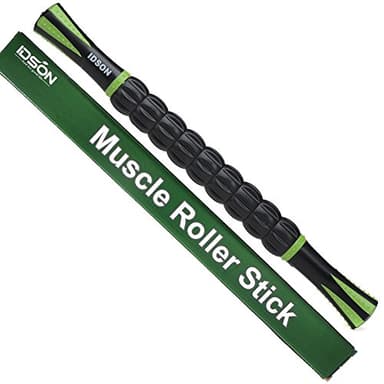
| 1 |  Idson Muscle Roller Stick Worked ankle-to-hip it copies the one thing boots do that matters - pressure traveling up a limb toward the body - at a fraction of the price, in a drawer rather than a cupboard. Your arms do the work, which is the trade. | Best overall, and the budget pick | 8.3 | $8.89 · View on Amazon Price as of November 22, 2026. #ad How we’re funded |
| 2 |  FlexiKold Gel Ice Pack, Medium When the complaint is heat and puffiness after a hard session rather than tightness, cold is the cheaper answer. Read the note on blunting training adaptations before you make it a nightly habit. | Best for a hot, swollen leg | 8.0 | |
| 3 |  AUVON Dual Channel TENS Unit Boots do not treat pain and were never shown to; electrical stimulation does, with a real literature behind it. Silent, hands-free once the pads are on, and a tenth of the price of boots. | Best if the problem is pain, not heaviness | 8.1 | |
| 4 |  TriggerPoint GRID Foam Roller (13 in) The soreness literature behind a plain foam cylinder is stronger than the post-match recovery literature behind pneumatic compression. It needs the floor, which is the reason some buyers wanted boots in the first place. | Best evidence base for soreness | 8.1 | |
| 5 |  Bob and Brad C2 Massage Gun Percussion treats a slack leg while you sit, which is closer to the boot experience than any floor tool. It works one muscle at a time rather than a whole limb, and it needs a hand on it throughout. | Best if you want a machine doing the work | 7.9 | |
| ✕ | 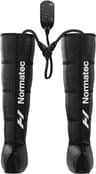 Hyperice Normatec 3 Recovery System Not an alternative to boots - it is boots, at several times the price of the cheapest system that does the same sequential job. If cost sent you to this page, this is the wrong end of the shelf. Skip this | The one to skip as an alternative | 6.8 |
The short version
Buy a roller stickand use it the way the boots work: start at the ankle and push upward, toward the body, in overlapping passes. That direction is the credible part of the compression story, and a stick in two hands lets you set the pressure yourself rather than accept whatever the pump is programmed to deliver — for a small fraction of what the cheapest sequential system costs.
Then match the rest to your actual complaint. A leg that feels hot and swollen after a hard session wants cold, not squeezing. A leg that hurts in a nervy, specific way wants a TENS unit, which boots were never designed to treat. Legs that are simply sore from training want a foam roller, which has the better paper trail of the two categories. And if your legs swell for a medical reason rather than an athletic one, read the lymphedema section below before you replace anything — that is the one case where the boots are the tool and nothing here substitutes.
What compression boots are actually known for
Worth stating fairly, because intermittent pneumatic compression is not a gimmick with a marketing budget — it is a hospital technique that moved into the recovery market. The chambers inflate in sequence from the foot upward, which pushes venous blood and lymph toward the body in the direction the valves already work. Nothing else on this page does that to a whole limb, hands-free, for thirty minutes, while you read.
Where that pedigree is strongest is medical rather than athletic. A systematic review of randomized trials of intermittent pneumatic compression for lower-extremity lymphedema is the serious end of the evidence, and it is why we keep a lymphedema-specific boots page on the site at all.
For sport recovery the picture is thinner than the price tags suggest. A 2025 systematic review and meta-analysis of pneumatic compression alongside other recovery modalities puts it in context, and a randomized placebo-controlled trial in international-level youth soccer players found no improvement in neuromuscular, biochemical or perceptual recovery after a match. That trial is the reason this page exists: if the measured recovery benefit after hard exercise is this hard to demonstrate, then a $150–$700 machine is a comfort purchase for an athlete, and comfort has cheaper forms.
The five reasons people want an alternative
1. Price. The cheapest genuinely sequential system we recommend costs more than every other pick on this page, and the category reference costs several times that again. If price is the only objection, the honest first stop is the budget compression boots page and alternatives to Normatec — the format may still be right for you at a third of the money.
2. Storage, setup and noise. Boots are two leg-length sleeves, a pump, a hose and a controller. They live in a cupboard, they take a minute to get into and out of, and the pump is audible in a quiet room. A stick lives in a drawer and a gel pack lives in the freezer.
3. The thirty-minute sit. A session is a half-hour commitment during which you cannot get up. Some people love that; for anyone with a toddler, a shift pattern or a short evening it is the reason the boots stop getting used. Every alternative here works in five minutes.
4. The evidence does not justify the price. Covered above, and it is a legitimate reason to buy something cheaper rather than a reason to do nothing. Our are compression boots worth it page is the long version of that argument.
5. You are treating the wrong thing. The commonest mistake we see. Boots move fluid; they do not treat knots, nerve pain, stiffness or a specific injured tendon. If your actual complaint is a tight calf, a sore IT band or a burning nerve, boots were never the right purchase at any price.
Which alternative replaces which part
| Why you want an alternative | Buy | Why it works |
|---|---|---|
| Heavy, tired legs after training | Idson roller stick | Worked ankle-to-hip it keeps the distal-to-proximal direction that makes the boots credible, with the pressure set by your hands rather than by a program. |
| Hot, puffy legs right after a hard session | FlexiKold gel pack | Cold reduces the swollen, inflamed feeling that boots are often bought for, for a few dollars. Keep it occasional if you are training for strength. |
| The legs hurt rather than feel heavy | AUVON dual-channel TENS | Pain is a nerve problem, not a fluid problem. TENS has a real literature for pain relief; boots have none for it. |
| Plain post-training soreness | TriggerPoint GRID roller | The best-studied object on the site for soreness, at a tenth of the price of the cheapest boots. |
| You want a machine to do the work | Bob and Brad C2 massage gun | The closest thing here to the boot experience - it treats a slack leg while you sit - but one muscle at a time, with a hand on it. |
| Swelling from a medical cause | Boots, after a clinician's advice | Lymphedema and venous insufficiency are the indications with the real trial support. This is the case where we would not substitute anything. |
| Standing or flying all day | Graduated compression socks | A garment worn all day beats a machine used for thirty minutes for this specific problem. We do not sell them and still think they are the better buy here. |
| You wanted boots, just cheaper | Not an alternative - buy cheaper boots | A sequential system at a third of the reference price does the same job. Change the price, not the category. |
The stick, specifically, and why it is the top pick
The mechanism argument for boots is a pressure wave traveling toward the heart. A stick reproduces the direction and exceeds the pressure: you start at the achilles, push up through the calf, then the hamstring, then the quad, in overlapping passes of a few seconds each. It is not a lymphatic treatment and we will not dress it up as one — what it reliably does is apply sustained, directional pressure along a muscle, which is the same thing a boot does with air and a foam roller does with your bodyweight.
Its advantages over a boot are mostly practical, which is exactly why people keep using it: it costs about as much as a sandwich, it fits in a bag, it needs no power, it takes four minutes rather than thirty, and you can use it on one leg and not the other. It also gives you control — more pressure on a dense calf, less on a sore quad — where a boot runs the same program on both legs regardless.
The honest limits. Your arms do the work, so it is not hands-off, and after a marathon that matters. It cannot reach a glute properly. It does nothing for fluid in a foot. And it will not deliver the specific pleasant, passive half-hour that is, in truth, a real part of what boot owners are buying. The ranked stick options are in the massage stick roundup, and the technique transfers from how to foam roll.
The free alternatives nobody can sell you
Two things work and cost nothing, and a page that only lists products is not being straight with you.
Legs up the wall, twenty minutes. Gravity moves venous blood and lymph in the same direction the boots do, without a pump. It is the single cheapest thing in this whole category and it is genuinely effective for the heavy-legged feeling after a long run or a long shift.
Ten minutes of easy walking or cycling. The calf is a pump, and using it moves more fluid than squeezing it from outside. This is also why we rate active recovery above any machine on this page for athletes.
The third honest option is a garment rather than a machine: graduated compression socks. A Cochrane review of graduated compression stockings for varicose veins is worth reading for how modest the evidence is even there — but for standing all day or a long flight, something you wear for twelve hours is a different and better proposition than a machine you use for thirty minutes. We do not carry socks and would still send you to them for that specific problem.
When the alternative is cold
If the sensation you want gone is heat and puffiness in the hours after a hard session, cold is cheaper and quicker than compression. A network meta-analysis of hydrotherapy and cryotherapy for post-exercise muscle damage is the fairest summary of what cold does for recovery.
One caveat we always print, because it is the thing nobody selling recovery gear mentions: post-exercise cold water immersion has been shown to attenuate anabolic signalling and long-term strength adaptations. If you are lifting to get stronger, routine cold after every session is working against you. Use it when you need to feel better tomorrow, not as a nightly ritual. The full argument is in compression boots vs ice bath and ice vs heat for sore muscles.
When boots are genuinely the right tool
We are not trying to talk everyone out of a category we also recommend. Three cases where we would buy the boots and skip everything above:
Lymphedema or chronic venous insufficiency. This is the indication with real randomized trial support, and the equipment is doing something no stick or ball imitates. Our lymphedema page and varicose veins page cover it, and both say the same thing: ask the clinician who manages it before buying a machine.
Reduced mobility.If getting onto the floor is not an option and holding a stick or a gun for five minutes is tiring, the hands-off machine is not a luxury — it is the only one of these tools you can actually use. See compression boots for circulation.
Very high training volume. If you are running serious weekly mileage or racing back-to-back, the passive half-hour has value precisely because it costs you no additional effort, and the perceived-recovery effect is worth something even where the measured one is hard to find. That case is argued in the best compression boots for runners.
How we ranked these
- Does it move pressure up the limb? That is the mechanism boots claim. A stick does it directionally, a roller does it partially, cold and TENS do not attempt it and are ranked for the complaints they actually address.
- Does it solve the reason people leave? Price, storage, the thirty-minute sit, or the realization that the complaint was never fluid. The table above is organized by reason rather than by score for that reason.
- Does the evidence favor it?Where the alternative has the better paper trail — rolling for soreness, TENS for pain, cold for the swollen feeling — we say so and link it.
- Does it cost materially less? Every non-boot pick here costs under a fifth of the cheapest sequential system, which is the whole point of the page.
- Honest about what it cannot do. None of these is hands-off for thirty minutes, and none treats lymphedema. Both limits are stated rather than buried.
Where an alternative is the wrong move
If the only problem was the price of the best-known brand, the answer is a cheaper sequential system rather than a different category: alternatives to Normatec and the best budget compression boots both rank those. If you have not bought anything yet and are still deciding whether the category is worth it, are compression boots worth it answers that directly, and when to use compression boots covers timing. If what you actually wanted was pain relief, the one-to-one comparison is compression boots vs TENS. And if the machine you were really shopping for was a percussion device, alternatives to a massage gun covers the cheap end of that shelf the same way.
Every pick, in full
Specs below are the manufacturer’s own published figures, each linked to the page it came from. Where a maker does not publish a number, the table says so and names the page we checked — that absence is information too.
Price as of November 22, 2026. #ad How we’re funded
Idson Muscle Roller Stick
The segmented-bead stick that every team bag has, for less than a pair of socks — it does the core job of a stick, and the independently spinning beads are both its feature and its flaw.
What it gets right
- Costs a fraction of the branded sticks and does the same basic job on a calf
- Independently spinning beads roll with the limb rather than dragging the skin
- Light, short and genuinely packable
What it does not
- Segmented beads can pinch skin and leg hair — the one complaint the smooth-sleeve sticks exist to solve
- Shorter than the full-size sticks, so you cover less per pass
- No published dimensions or load rating of any kind
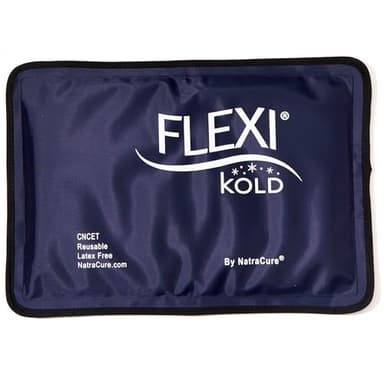
FlexiKold Gel Ice Pack, Medium
The cheap half of the ice-or-heat question. It stays pliable out of the freezer, which is the only property that matters — a pack that freezes into a board does not contact a shoulder or a knee.
What it gets right
- Stays flexible at freezer temperature, so it wraps a joint instead of bridging it
- 7.5 × 11 in covers a knee, a shoulder or a lower back without being unwieldy
- Reusable indefinitely, with nothing to charge
What it does not
- A bag of frozen peas is free and does most of this, which the ice vs heat page says plainly
- Needs a thin layer between it and skin — it is cold enough to burn
- Only useful if it lives in the freezer where you will reach for it
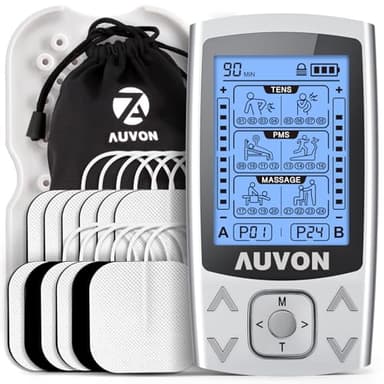
AUVON Dual Channel TENS Unit
Two independent channels so you can treat both sides of a problem at once, at a price where trying TENS costs less than one session of anything else.
What it gets right
- Two independent channels with separate intensity control
- Rechargeable rather than eating 9 V batteries
- Cheap enough to find out whether TENS does anything for you
What it does not
- Pad adhesive life is the real running cost, not the unit
- Interface is fiddly with cold hands
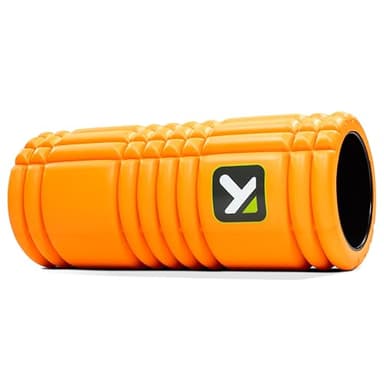
TriggerPoint GRID Foam Roller (13 in)
The multi-density surface is the reason to buy this over a plain foam cylinder: the raised sections concentrate pressure in strips instead of spreading it flat, which is what makes it usable on an IT band without needing to hold your breath.
What it gets right
- Hollow rigid core does not compress into a soft log the way plain EVA foam does after a year
- Multi-density surface gives you three pressure intensities on one roller
- 13 in length fits in a gym bag; the 26 in version does not
What it does not
- Costs roughly three times a plain high-density cylinder that also works
- The hollow core makes it noisier on a hard floor
- TriggerPoint's own page states a 300 lb support figure while retailer listings widely claim 500 lb — the maker's number is the lower one
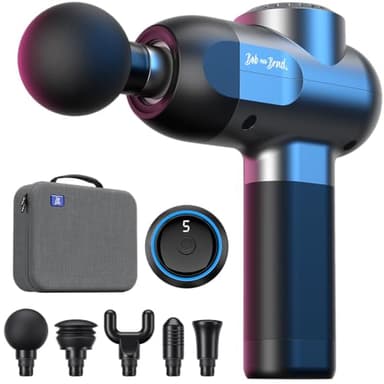
Bob and Brad C2 Massage Gun
The only gun in this roundup whose maker publishes all four numbers that decide whether it reaches the muscle — amplitude, stall force, speed range and noise — and the stall-force figure is higher than the premium units that hide theirs.
What it gets right
- Publishes amplitude, stall force, speed range and noise — the two market leaders publish none of the first three
- Published stall force of over 44 lb is higher than the figure Therabody publishes for the Prime
- 1.5 lb is light enough to hold overhead against your own shoulder without your arm giving out first
- FSA/HSA eligible, which quietly makes it cheaper again for a lot of buyers
What it does not
- 10 mm amplitude is genuinely shorter than a 16 mm premium stroke — that difference is real for glutes and thick back muscle
- No app, no pressure-feedback screen, no ecosystem
- Five fixed speeds rather than a continuous range
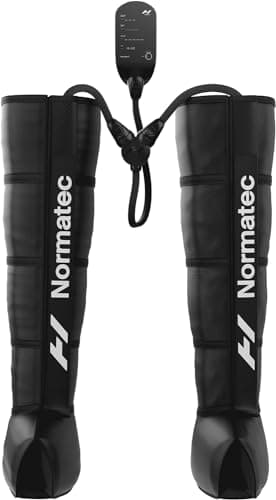
Hyperice Normatec 3 Recovery System
Still the refined end of the category and still sold by Hyperice, though the Normatec Elite line now sits above it in the range — and its price gap over a sequential competitor buys refinement rather than a different mechanism, which is why it is our skip for a home buyer.
What it gets right
- The most refined pressure control and the quietest pump of the systems we cover
- The system most likely to still be supported in five years
What it does not
- No longer the top of Hyperice's own range: the Normatec Elite line sits above it
- Several times the price of boots that inflate sequentially the same way
- The added refinement does not change the mechanism
Common questions
What can I use instead of compression boots?
A roller stick worked from ankle to hip is the closest cheap substitute: it keeps the distal-to-proximal direction that makes compression credible, with the pressure set by your hands rather than by a program. For a hot, swollen leg use a cold pack; for pain rather than heaviness use a TENS unit; for plain training soreness use a foam roller, which has the better evidence base of the two categories. And twenty minutes with your legs up a wall costs nothing and works on exactly the heavy-legged feeling boots are bought for.
Are compression boots actually worth the money?
For an athlete, the measured case is weaker than the price implies: a randomized placebo-controlled trial in international-level youth soccer players found no improvement in neuromuscular, biochemical or perceptual recovery after a match, and the broader recovery meta-analysis is cautious. For lymphedema and chronic venous insufficiency, the randomized trial support is real and the boots are a legitimate medical tool. So the honest answer depends which of those two buyers you are — and if it is the first, the thirty-minute passive session is the thing you are paying for.
Do compression socks work as well as compression boots?
For different problems. Socks apply a constant, graduated squeeze you can wear for twelve hours, which suits standing all day, long flights and venous complaints; boots apply a far higher, rhythmic, sequential squeeze for half an hour, which suits a post-training flush and medically managed swelling. A Cochrane review of graduated compression stockings for varicose veins is a reminder that the evidence is modest even in their home territory. We do not sell socks, and for the standing-all-day case we would still point you to them.
Is a massage gun a good alternative to compression boots?
It is the closest thing here to the boot experience, because it treats a slack leg while you sit still, but it is not doing the same job. A gun works one muscle at a time with a small contact patch and needs a hand on it throughout; a boot squeezes a whole limb hands-free. If your legs feel knotted, the gun is the better buy. If they feel heavy and puffy, it is not, and a cold pack or twenty minutes of legs-up will do more.
What is the cheapest way to get the benefit of compression boots?
Legs up the wall for twenty minutes, then ten easy minutes of walking or cycling. Gravity and the calf muscle pump move fluid in the same direction the boots do, at no cost. If you want to buy something, a roller stick is the cheapest object that reproduces directional pressure along the leg, and a pair of hard massage balls covers the single spots a whole-limb squeeze never reaches.
I have lymphedema. Should I use one of these alternatives instead?
No — not on the strength of a page like this one. Lower-extremity lymphedema is the indication where intermittent pneumatic compression has genuine randomized trial support, and it is also a condition that needs managing rather than treating with gadgets. Ask the clinician who manages it which pressure and which program, and read our lymphedema page for what to look for in a machine. Rolling, percussion and cold are not substitutes for that care.
Sources
- 1.A systematic review of contemporary randomized controlled trials for treatment of lower extremity lymphedema by intermittent pneumatic compression devices - Journal of Vascular Surgery: Venous and Lymphatic Disorders 2026 (PMC13197773) — the indication where pneumatic compression has real randomized trial support - and the one case this page does not substitute
- 2.Intermittent pneumatic compression does not improve post-match neuromuscular, biochemical or perceptual recovery in international-level youth soccer players: a randomized placebo-controlled trial - BMC Sports Science, Medicine and Rehabilitation 2026 (PMC12983609) — placebo-controlled trial finding no neuromuscular, biochemical or perceptual recovery benefit after a match
- 3.Effects of photobiomodulation, intermittent pneumatic compression and neuromuscular electrical stimulation on muscle recovery: systematic review with meta-analysis - Journal of Bodywork and Movement Therapies 2025 (PubMed 40954632) — pneumatic compression set against other recovery modalities in a 2025 meta-analysis
- 4.Preventive effect of foam rolling on muscle soreness after exercise: a systematic review and meta-analysis - Journal of Bodywork and Movement Therapies 2024 (PubMed 39593540) — preventive effect of foam rolling on soreness - the evidence behind the cheap pressure picks
- 5.The effects of hydrotherapy and cryotherapy on recovery from acute post-exercise induced muscle damage - a network meta-analysis - BMC Musculoskeletal Disorders 2024 (PMC11409518) — network meta-analysis of cold and water immersion for post-exercise muscle damage
- 6.Post-exercise cold water immersion attenuates acute anabolic signalling and long-term adaptations in muscle to strength training - Journal of Physiology 2015 (PubMed 26174323) — routine post-exercise cold attenuates anabolic signalling and long-term strength adaptation - why cold is occasional, not nightly
- 7.Graduated compression stockings for the initial treatment of varicose veins in people without venous ulceration - Cochrane Database of Systematic Reviews 2021 (PMC8407251) — graduated compression stockings for varicose veins - the garment alternative, and how modest its evidence is
- 8.Transcutaneous electrostimulation for osteoarthritis of the knee - Cochrane Database of Systematic Reviews (PubMed 19821296) — Cochrane review of electrostimulation for knee osteoarthritis - the pain-rather-than-fluid swap
- 9.Neuropathic Pain Relief Through Transcutaneous Electrical Neuromuscular Stimulation: Insights From a Systematic Review and Meta-Analysis of Clinical Evidence - BioMed Research International 2025 (PMC12543013) — TENS for neuropathic pain - relief boots were never designed to provide
- 10.Foam Rolling or Percussive Massage for Muscle Recovery: Insights into DOMS (PMC12286022) — foam rolling against percussive massage for DOMS - how the two cheap mechanical options compare